22 Easter Kitchen Island Decorations for Spring

Easter is one of those holidays that gives a kitchen an especially inviting sense of seasonal charm. Because the kitchen island is often the visual and functional center of the room, it offers an ideal place to introduce Easter colors, natural textures, spring flowers, and playful seasonal details without overwhelming the entire space. The best Easter kitchen island decorations combine festive character with practical styling, allowing the island to remain useful for preparing meals, serving guests, or enjoying everyday family time.
From simple bowls of pastel eggs to layered floral arrangements, bunny accents, woven baskets, and elegant Easter centerpieces, there are plenty of ways to decorate an island for the season. You do not need to completely redesign your kitchen to achieve a beautiful result. A carefully selected centerpiece, a few coordinated accessories, and natural spring elements can transform an ordinary countertop into an inviting Easter display.
The ideas below cover a range of decorating styles, including farmhouse, rustic, modern, traditional, minimalist, cottage-inspired, and elegant Easter kitchen decor. Whether your island is large or compact, these Easter kitchen island decorating ideas can be adapted to suit your available space, existing color palette, and personal style. They are also designed with Pinterest-friendly visual appeal in mind, making them useful inspiration for anyone looking to create a fresh and memorable spring kitchen.
1. Create a Pastel Easter Egg Bowl Centerpiece
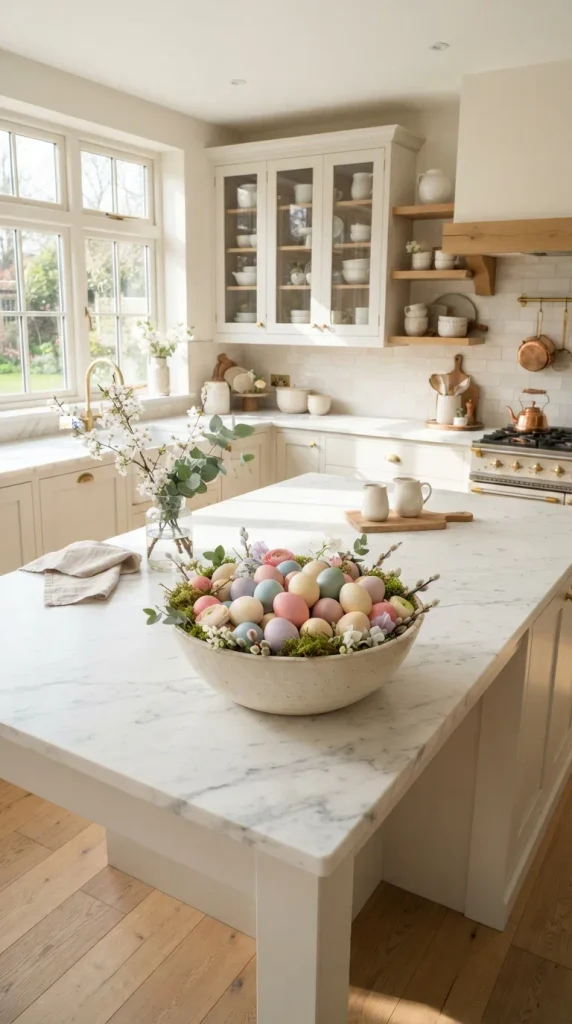
A large decorative bowl filled with pastel Easter eggs creates an effortless centerpiece for a kitchen island while keeping the overall arrangement simple and uncluttered. Choose a ceramic, wooden, glass, or woven bowl that complements the finishes already present in your kitchen, then fill it with eggs in soft shades of blush pink, pale blue, lavender, buttery yellow, cream, and sage green. For added texture, place shredded paper grass, preserved moss, or a linen napkin underneath the eggs. A few small faux flowers tucked between the eggs can make the arrangement feel more organic. Keep the bowl centered on the island if the countertop is spacious, or position it slightly to one side when you need room for everyday activities.
2. Style an Easter Bunny Tray for the Kitchen Island
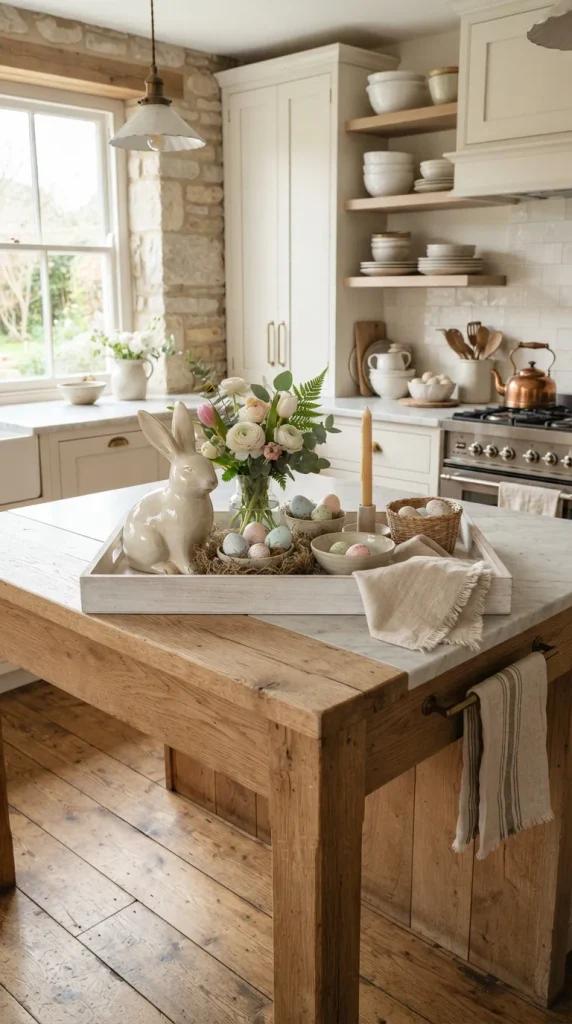
A decorative tray provides an excellent foundation for an Easter kitchen island display because it visually groups several small accessories into one intentional arrangement. Start with a rectangular wooden or whitewashed tray and place a ceramic bunny, a small vase of spring flowers, a candle, and a bowl of pastel eggs inside it. The tray can be styled with neutral colors if you prefer sophisticated Easter decor, or you can introduce brighter pastels for a more traditional holiday look. Mixing materials such as ceramic, wood, glass, and linen keeps the arrangement visually interesting. The tray also makes seasonal decorating practical because the entire centerpiece can be moved easily when you need additional counter space.
3. Add a Fresh Tulip Arrangement for Spring
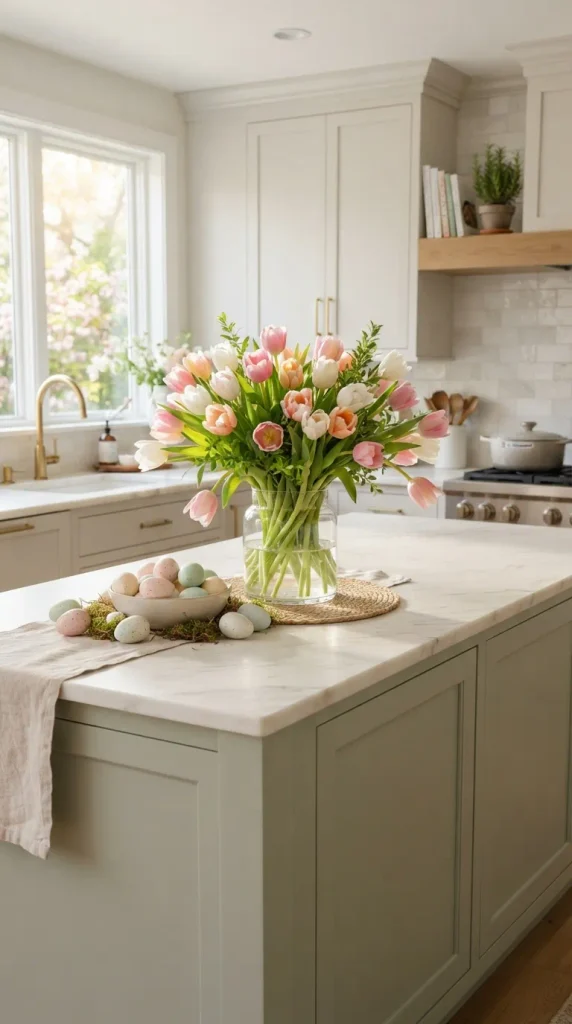
Fresh tulips instantly connect Easter decorating with the arrival of spring, making them a natural choice for an island centerpiece. Select white, pink, peach, yellow, or soft purple tulips and display them in a simple glass vase, ceramic pitcher, or vintage-style container. Allow the stems to retain their natural movement rather than arranging every flower at exactly the same height. For a fuller display, combine tulips with delicate greenery or small branches. Place the vase on a wooden board alongside a few painted eggs or a petite bunny figure to reinforce the Easter theme without making the island look overly decorated. Fresh flowers also add height, color, and a natural focal point that works beautifully in photographs.
4. Use a Rustic Wooden Crate with Easter Decor
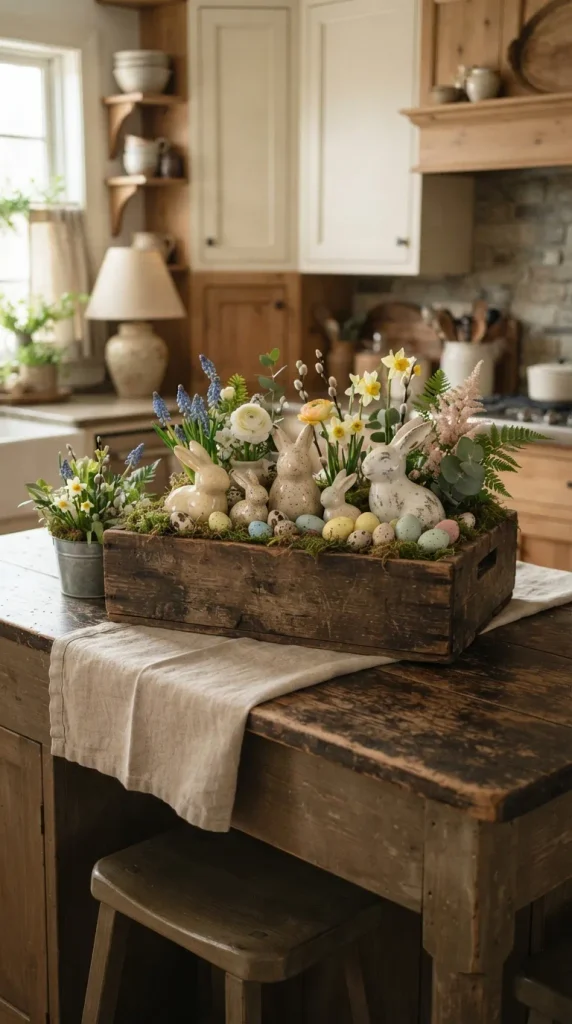
A rustic wooden crate can become the foundation of a warm farmhouse-style Easter kitchen island centerpiece. Choose a shallow crate with a naturally weathered finish and fill it with small potted flowers, faux greenery, ceramic rabbits, and decorated eggs. You can place a folded neutral linen towel underneath the accessories to soften the arrangement and introduce another layer of texture. White, cream, muted green, and natural wood create a particularly timeless combination. For a more casual farmhouse appearance, add a small galvanized metal container or vintage-inspired pitcher. The crate gives the arrangement visual structure while allowing you to group multiple seasonal elements without scattering decorations across the countertop.
Also Read: 21 U-Shaped Kitchen Island Ideas for Stylish Homes
5. Build an Elegant White and Neutral Easter Display
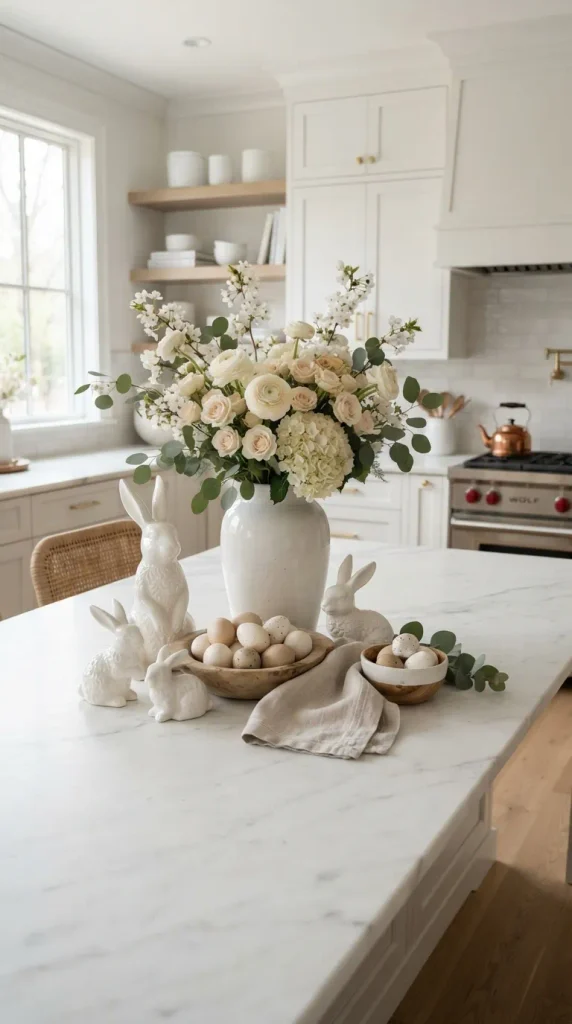
Easter decor does not have to rely on bright pastel colors. A sophisticated white and neutral arrangement can create a refined look that blends seamlessly into modern or transitional kitchens. Use white ceramic bunnies, ivory eggs, cream-colored flowers, beige linen, and natural wood to build a soft monochromatic centerpiece. A large white vase filled with eucalyptus or delicate spring branches can provide height, while smaller ceramic eggs add subtle holiday detail around the base. Incorporating different textures is important when working with a restrained palette; woven baskets, matte ceramics, linen, and lightly weathered wood prevent the arrangement from appearing flat. This approach is especially effective for kitchens where the existing decor already emphasizes neutral tones.
6. Decorate with a Woven Easter Basket
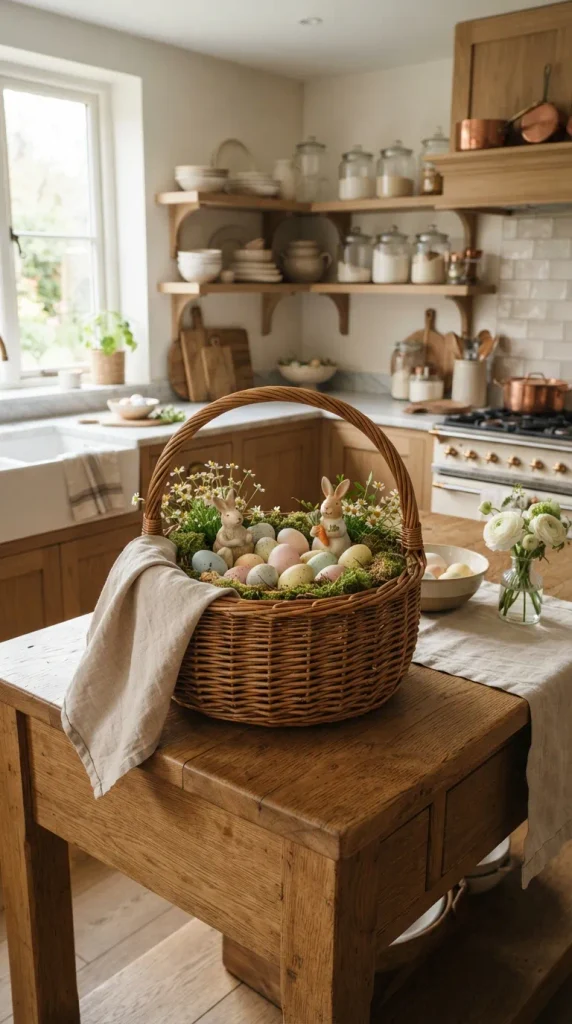
A woven basket can bring natural warmth to an Easter kitchen island while providing a charming way to display seasonal accessories. Select a basket with a wide opening and fill it with decorative eggs, faux moss, small flowers, and a few bunny ornaments. A neutral linen cloth can be allowed to drape slightly over the edge for a relaxed farmhouse or cottage feel. If your kitchen features wood cabinets, rattan stools, or natural fiber accessories, the basket will naturally coordinate with the surrounding materials. For a more polished centerpiece, place the basket on a large wooden cutting board and surround it with two or three smaller accents rather than filling the entire island with decorations.
7. Make a Charming Easter Bunny Village
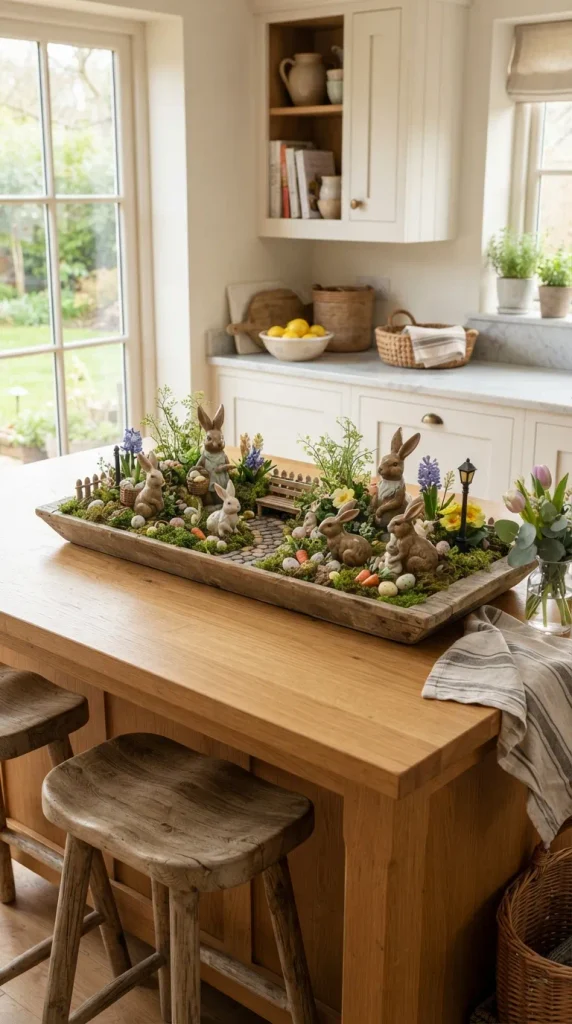
For a playful Easter kitchen island centerpiece, arrange several bunny figurines together to create a miniature spring-inspired scene. Use rabbits in different sizes, poses, and materials, such as ceramic, wood, felt, or stoneware. Place them among small potted plants, moss, miniature flowers, and pastel eggs to create the feeling of a tiny Easter garden. Keeping the color palette consistent will prevent the display from becoming visually chaotic. A long wooden tray works particularly well for this idea because it provides enough surface area to create a layered scene without spreading the decorations too far across the island. This style is especially appealing in family kitchens where a little seasonal whimsy feels appropriate.
8. Create a Farmhouse Easter Centerpiece with Mason Jars
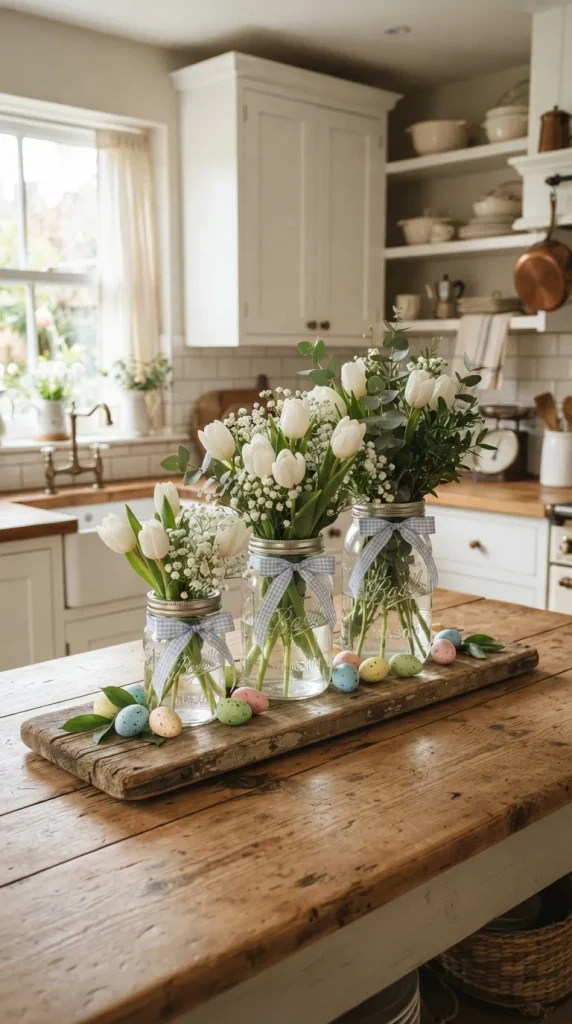
Mason jars offer a simple and affordable way to introduce farmhouse charm to Easter kitchen island decor. Use three jars of varying heights as small vases and fill them with tulips, baby’s breath, greenery, or delicate spring stems. Tie narrow gingham, cotton, or linen ribbons around the jars for subtle seasonal detail. Arrange the containers on a distressed wooden board and add a handful of decorative eggs around their bases. Whitewashed wood, soft greenery, and pale flowers create a relaxed farmhouse palette that feels fresh without appearing overly themed. This arrangement can also be recreated with recycled glass jars, making it a practical option for homeowners who prefer budget-friendly seasonal decorating.
Also Read: 22 Kitchen Island Designs for Every Kitchen Style
9. Add a Layered Easter Cake Stand Display
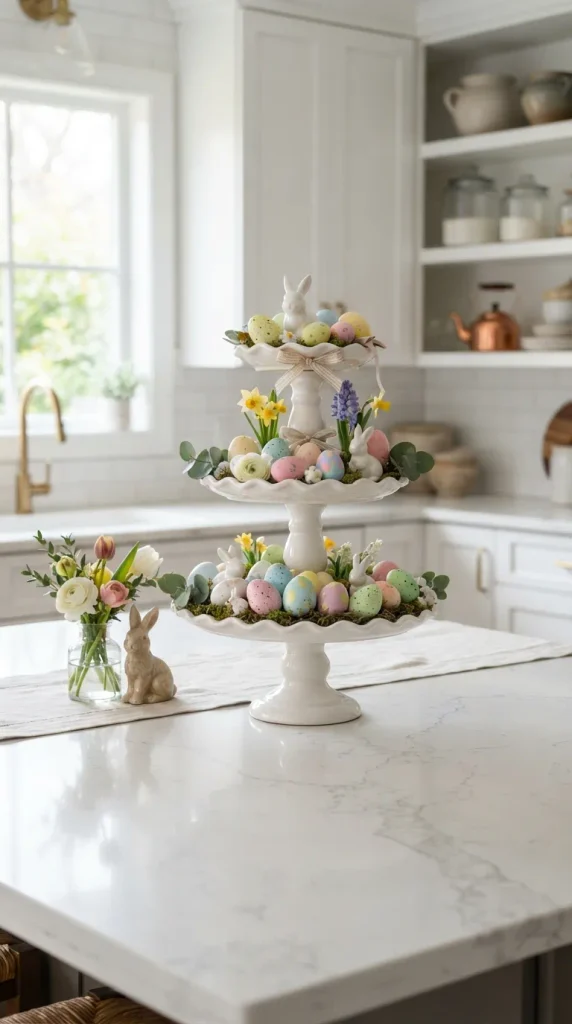
A tiered cake stand can turn an otherwise ordinary kitchen island into a visually interesting Easter display. Instead of using the stand for food, layer it with decorative eggs, small ceramic bunnies, faux greenery, and miniature flowers. Place the largest pieces on the lower level and lighter, smaller accessories toward the top so the arrangement has a natural sense of balance. A white ceramic or wooden cake stand works particularly well because it allows pastel decorations to become the focal point. If your island is narrow, the vertical design saves valuable countertop space while still creating an impressive seasonal display. This idea is especially useful when you want Easter decor that feels organized rather than crowded.
10. Combine Lemon Yellow with Easter Pastels
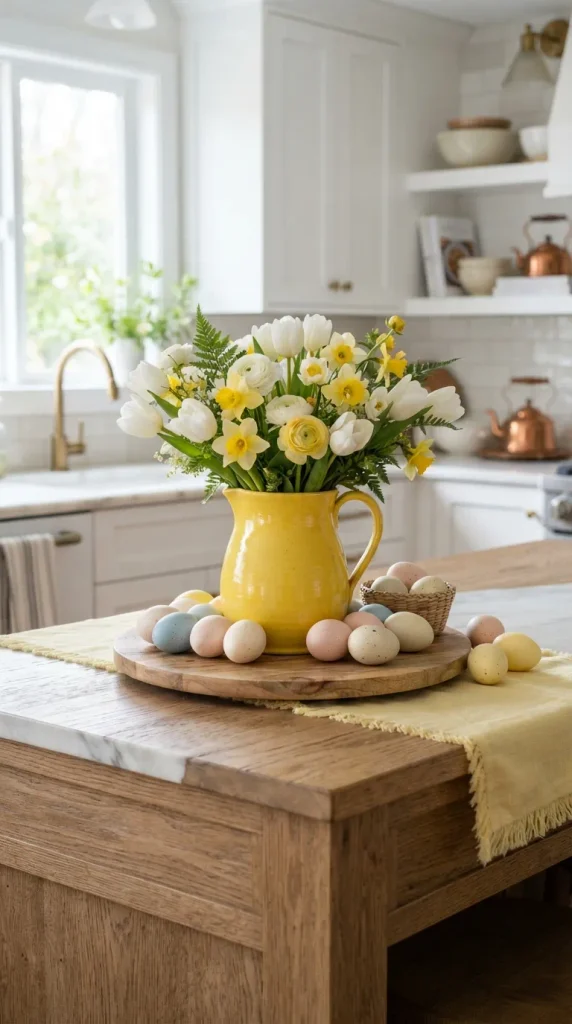
Bring a fresh spring mood to your kitchen island by pairing traditional Easter pastels with cheerful lemon yellow. A yellow ceramic pitcher filled with white tulips or daffodils can become the centerpiece, surrounded by eggs in pale blue, pink, cream, and soft green. Add a small yellow linen napkin or a few lemon-colored accessories to repeat the accent without overusing it. The combination works particularly well in kitchens with white cabinetry because the bright spring tones stand out against a clean background. Natural wood, woven textures, and simple greenery can be introduced to keep the arrangement grounded. The result feels distinctly seasonal while remaining suitable for the entire spring period.
11. Use a Dough Bowl Filled with Easter Eggs
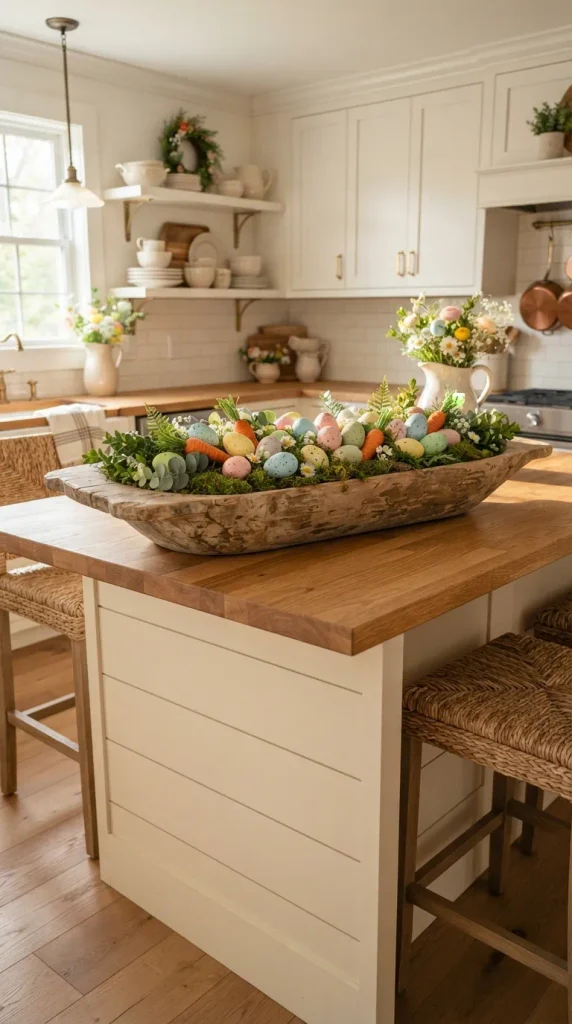
A wooden dough bowl provides a substantial yet natural-looking base for an Easter island centerpiece. Fill the bowl with preserved moss, decorative eggs, small faux carrots, greenery, and miniature flowers to create a relaxed spring arrangement. Choose a bowl with an elongated shape if your island is rectangular, as its proportions will naturally follow the countertop. The warmth of the wood works beautifully with pastel colors and soft greenery, creating a farmhouse-inspired appearance without requiring numerous accessories. To maintain a sophisticated look, limit the color palette to three or four complementary shades. The finished display can remain on the island throughout the Easter season and easily transition into general spring decor by removing the most obviously holiday-themed pieces.
12. Style a Cottage-Inspired Easter Island
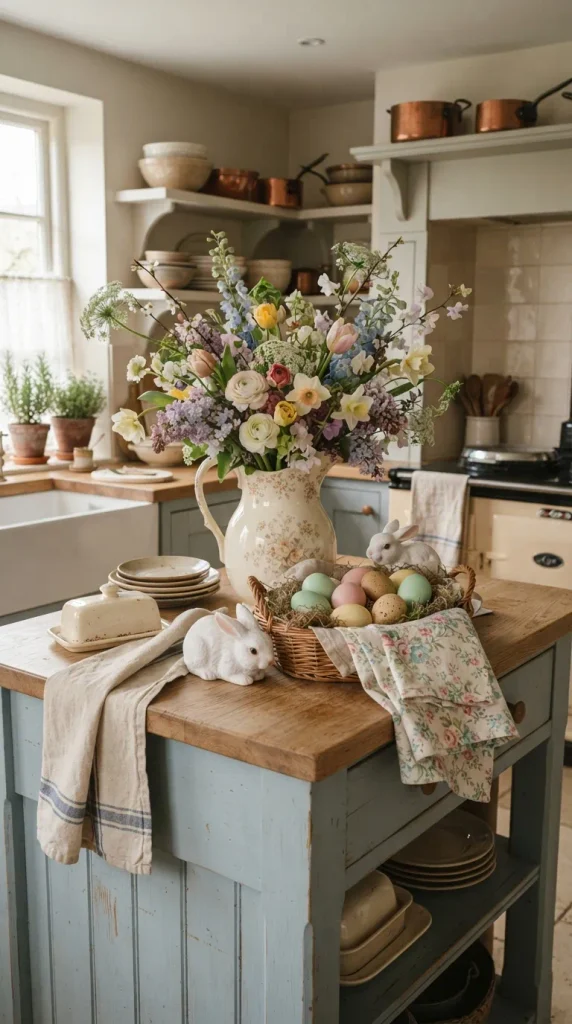
A cottage-style Easter island can combine vintage charm, soft florals, natural textures, and delicate seasonal accents. Begin with an antique-inspired ceramic pitcher filled with loosely arranged spring flowers, then surround it with small white rabbits, painted eggs, and a woven basket. Soft gingham or floral fabric can be folded beneath the arrangement to introduce pattern without dominating the display. Look for slightly imperfect finishes, hand-painted details, and weathered materials because these characteristics contribute to the relaxed cottage aesthetic. Rather than matching every object perfectly, choose pieces that share a similar color story. The result should feel collected over time, giving the kitchen island a welcoming spring personality rather than the appearance of a themed retail display.
Also Read: 27 Kitchen Island Back Panel Ideas That Elevate Design
13. Arrange Easter Decor on a Marble Serving Board
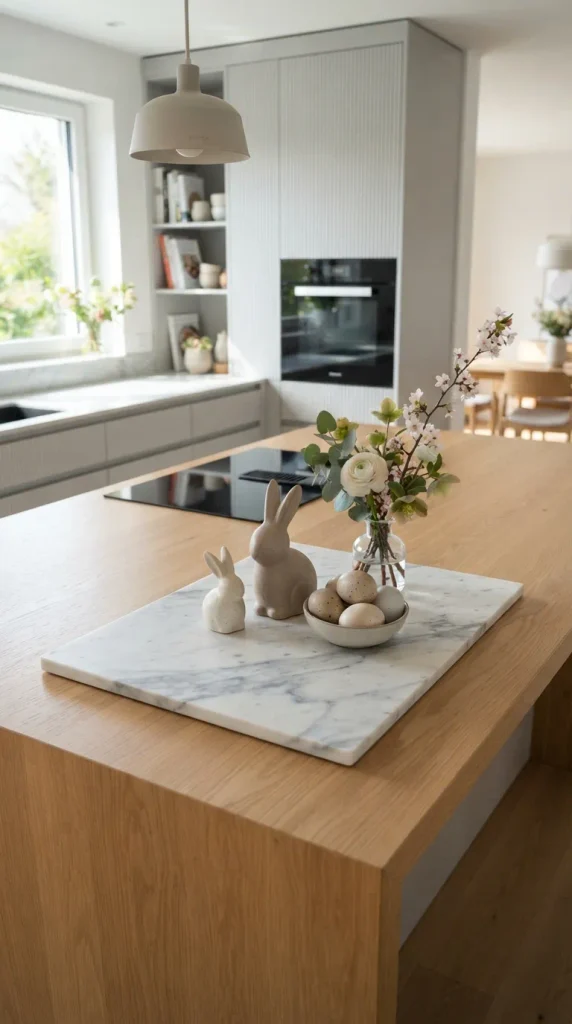
A marble serving board can provide an elegant foundation for Easter decorations in a contemporary kitchen. Place a small vase of spring flowers at one end, followed by a pair of minimalist ceramic bunnies and several neutral-colored eggs. Add a small glass candle or a delicate greenery accent to fill the remaining space without overcrowding the composition. The contrast between cool marble and soft spring colors creates a sophisticated centerpiece that works especially well with white, gray, beige, or black kitchen finishes. Because the arrangement stays compact, it leaves plenty of usable countertop space. Choose accessories with simple silhouettes if your kitchen already contains strong architectural features such as waterfall countertops or statement lighting.
14. Create an Easter Egg Garland Around a Tray
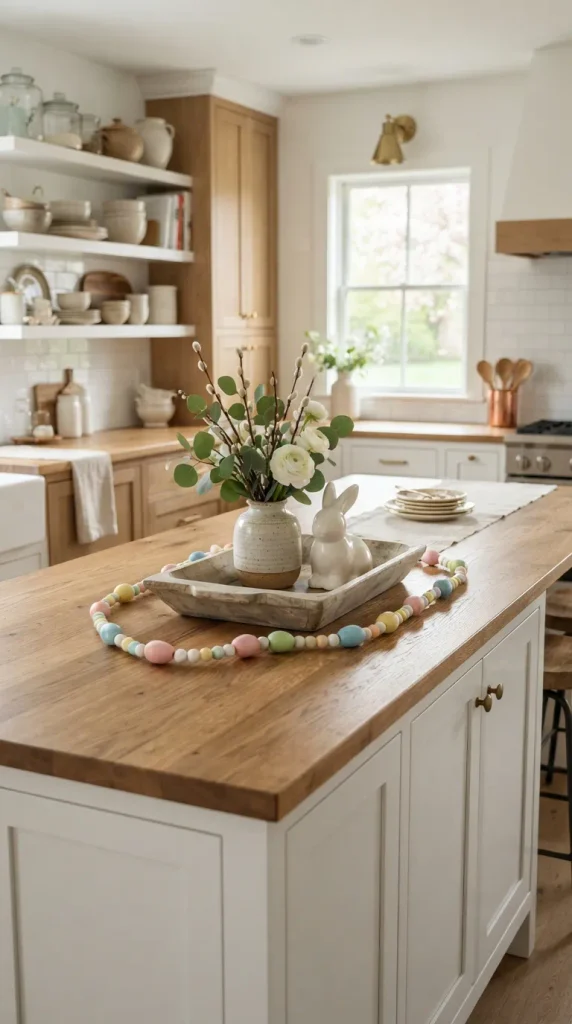
An Easter egg garland can add movement and visual interest to a kitchen island without requiring a large centerpiece. Place a shallow tray in the middle of the island and arrange a few decorative objects inside it, then loosely drape a pastel egg garland around the tray. Wooden eggs, felt eggs, or painted ceramic eggs can all work depending on the style of the kitchen. Keep the colors coordinated with nearby textiles and accessories so the garland feels integrated rather than randomly added. A small vase of greenery or a single ceramic bunny can complete the composition. This approach is particularly effective on long islands where a linear arrangement helps fill the surface while preserving functional workspace.
15. Decorate with Potted Spring Bulbs
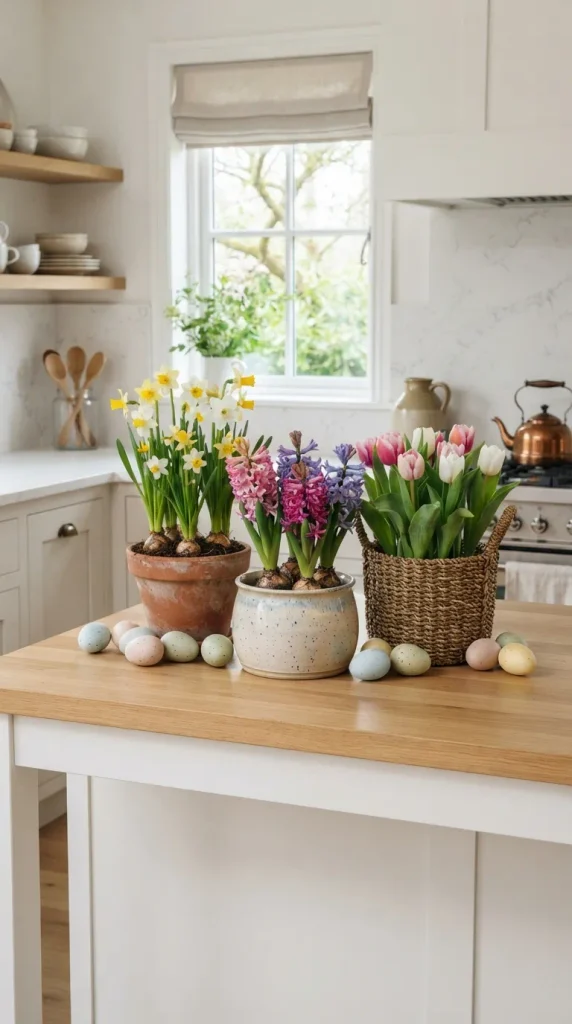
Potted spring bulbs offer a fresh alternative to traditional cut-flower arrangements for Easter kitchen island decorating. Hyacinths, daffodils, tulips, and other seasonal bulbs can be displayed in simple ceramic pots, woven containers, or small galvanized planters. Arrange two or three pots together at different heights to create a natural focal point, then introduce a handful of decorative eggs around the bases. The visible soil and greenery bring an organic quality to the display, while the flowers provide soft color and seasonal fragrance. If using living plants, choose containers with suitable drainage and protect the countertop from moisture. Once Easter has passed, the plants can remain as part of the kitchen’s broader spring decor.
16. Add a Soft Pink and Green Easter Palette
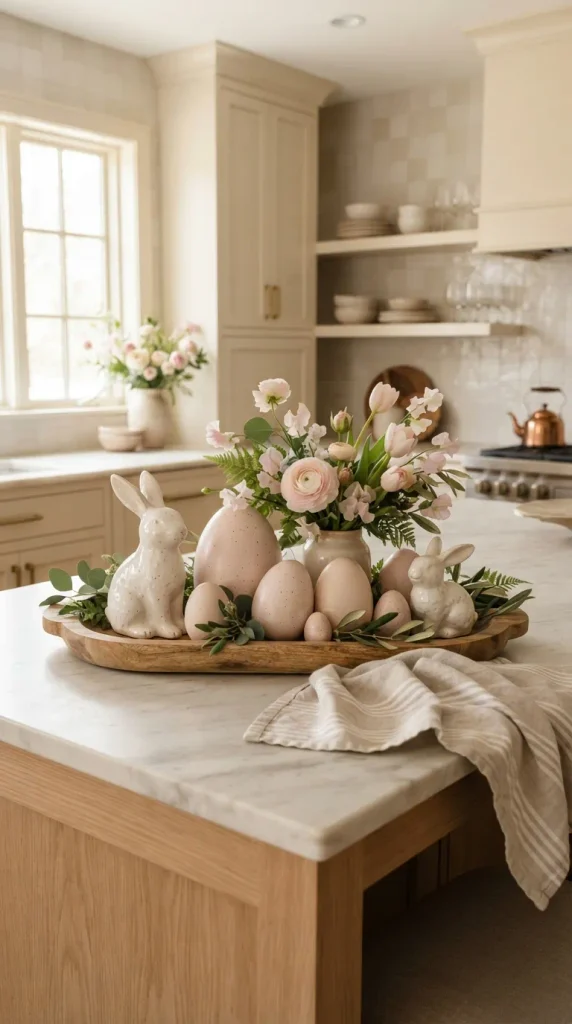
Soft pink and sage green create a gentle color combination that works beautifully for an Easter kitchen island. Use blush ceramic eggs, pale pink flowers, sage greenery, and perhaps one or two white bunny figures to build the centerpiece. A natural wood tray or woven basket can provide a neutral foundation and prevent the pastel colors from feeling overly sweet. For additional texture, include a linen napkin, moss, or a small rattan container. This palette suits both traditional and modern interiors because the colors can be adjusted from delicate and romantic to muted and sophisticated. Repeating pink and green in only a few carefully chosen pieces keeps the island cohesive without making the decor look excessive.
Also Read: 24 Sleek Black Kitchen Island Ideas for Modern Homes
17. Make a Simple Minimalist Easter Centerpiece
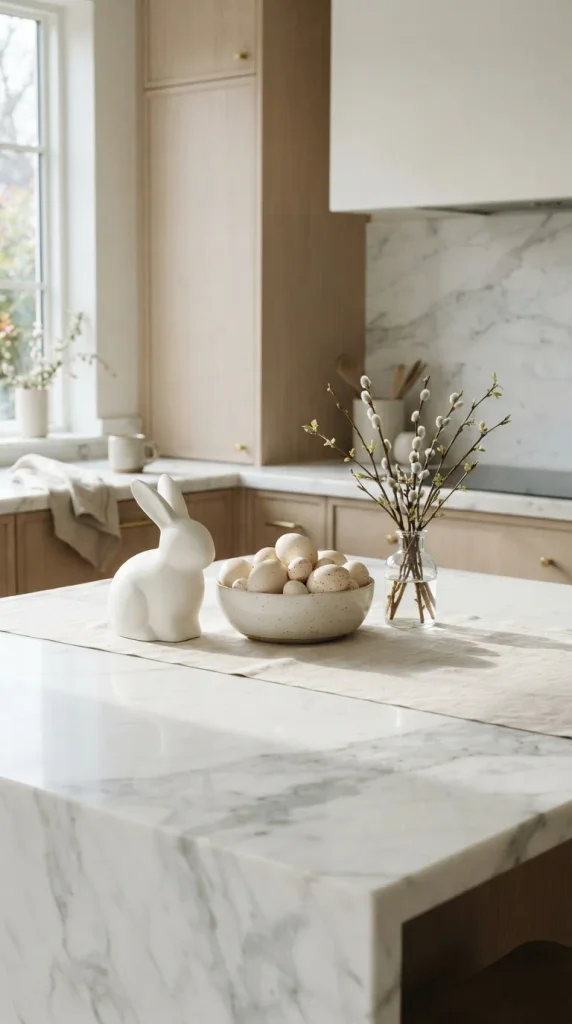
Minimalist Easter decorating works best when a few carefully selected objects are given enough space to stand out. Choose one sculptural ceramic bunny, a low bowl containing several neutral eggs, and a small vase holding a few spring branches. Arrange them on a simple rectangular tray or leave them grouped directly on the countertop. White, beige, taupe, pale green, and natural wood create a calm palette that suits contemporary kitchens. Avoid filling every available area; negative space is part of the design. The key is to let shape, texture, and proportion create visual interest instead of relying on numerous seasonal accessories. This approach delivers unmistakable Easter character while preserving the clean lines of a modern kitchen.
18. Use Faux Carrots for a Playful Easter Arrangement
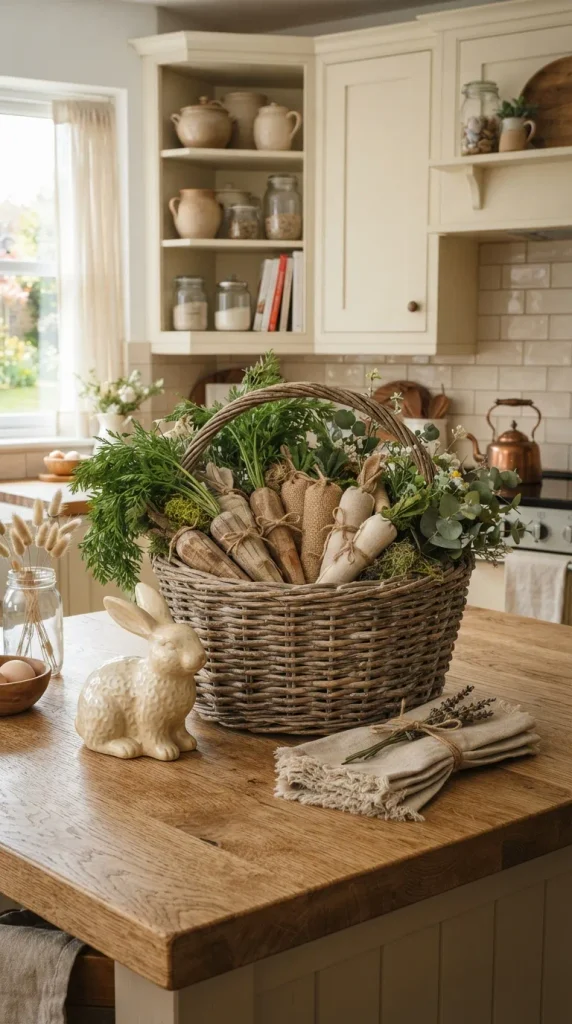
Faux carrots can add an unmistakable Easter touch to a kitchen island, particularly when used alongside natural materials. Gather several fabric, wooden, or ceramic carrots and place them in a woven basket, wooden crate, or dough bowl with greenery and moss. Add a small bunny figurine nearby to establish a cohesive seasonal theme. To prevent the arrangement from appearing too cartoon-like, select carrots in muted orange, natural linen, or soft fabric finishes rather than highly glossy colors. Pairing playful elements with rustic wood and greenery creates a balanced look that works especially well in farmhouse and country kitchens. This idea is also easy to adapt for families who enjoy more cheerful holiday decorating.
19. Create a Black-and-White Easter Kitchen Island
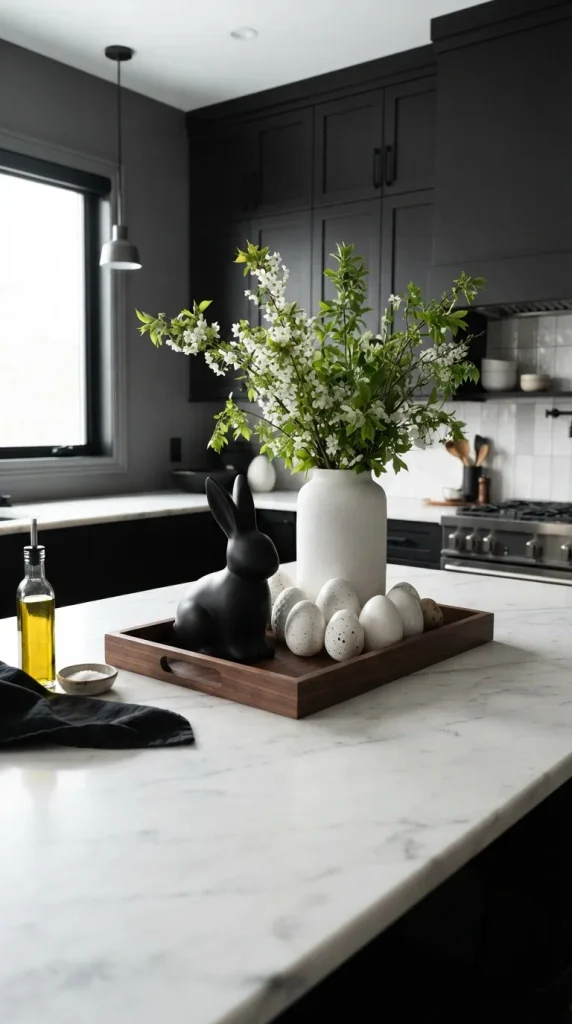
For a dramatic yet sophisticated Easter display, use black and white as the primary palette and introduce the holiday theme through recognizable shapes rather than bright colors. A black ceramic bunny, white eggs, a white vase of spring branches, and a dark wooden tray can create a striking centerpiece. A few natural green leaves can provide a subtle connection to spring without disrupting the monochromatic scheme. This approach is particularly effective in kitchens with black hardware, pendant lights, countertops, or dark island cabinetry because the seasonal display feels connected to the room’s existing design. Keep the shapes clean and the arrangement relatively restrained so the contrast remains elegant rather than visually heavy.
20. Style a Long Easter Island with Three Zones
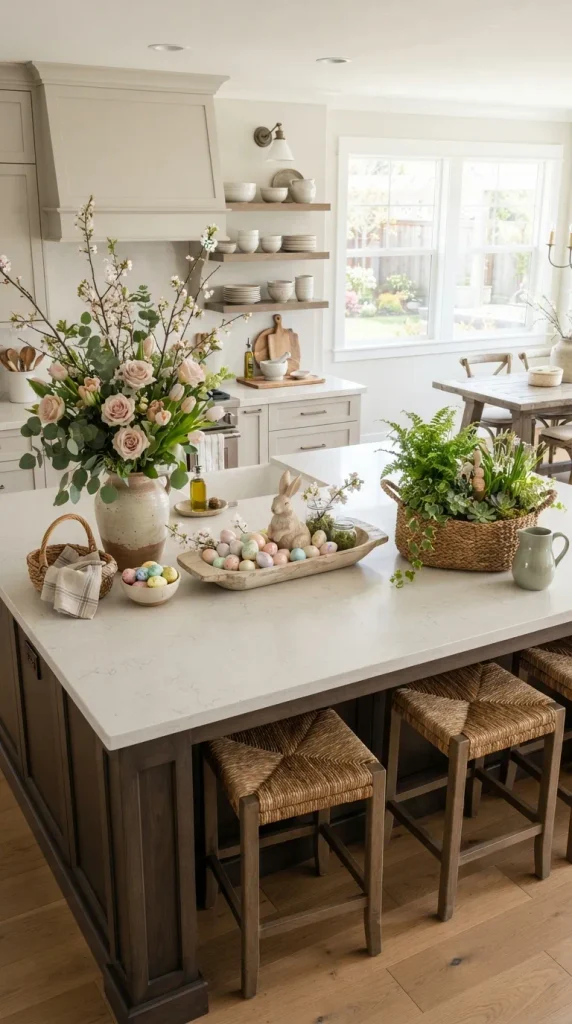
A large kitchen island benefits from a multi-zone arrangement rather than one tiny centerpiece floating in the middle. Divide the countertop visually into three sections: a taller floral arrangement on one side, a central tray containing Easter eggs and a bunny, and a smaller basket or candle grouping on the opposite side. Maintain a consistent color palette throughout the three zones so they read as one composition. Leave enough space between each group to preserve visual breathing room and practical workspace. This strategy is particularly useful for open-concept kitchens because it gives the island enough visual weight to hold its own against surrounding dining and living areas while still keeping the decor organized.
21. Add Vintage Easter Ceramics to the Island
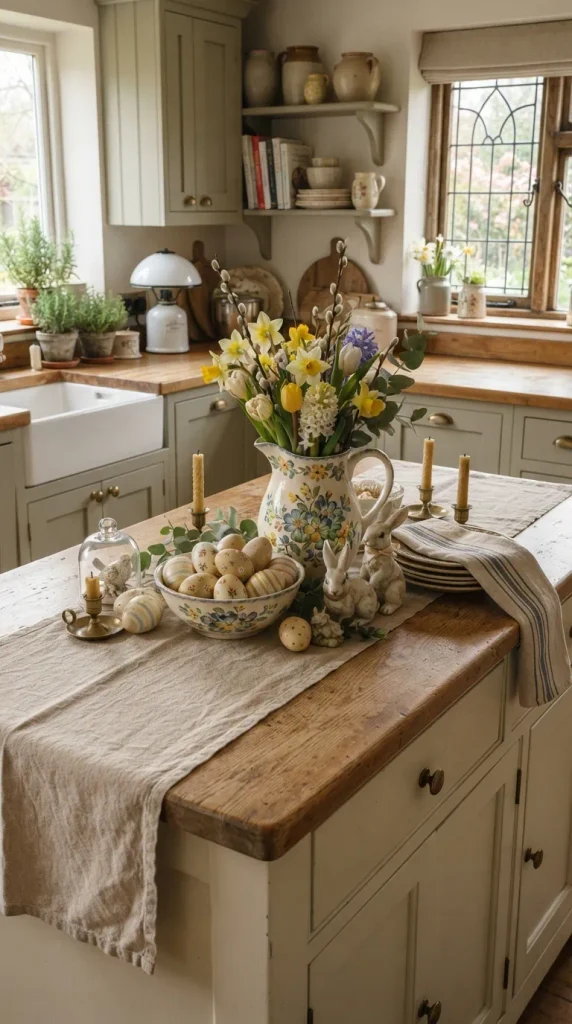
Vintage-inspired Easter ceramics can give a kitchen island a sense of nostalgia without requiring a complicated decorating scheme. Look for hand-painted eggs, floral pitchers, porcelain rabbits, patterned bowls, or small ceramic chicks with slightly aged finishes. Arrange a few pieces together on a linen runner or wooden board, mixing heights and shapes for a collected appearance. Soft blue, faded pink, cream, and muted yellow can create a traditional Easter palette, while natural wood keeps the arrangement from feeling too formal. Avoid displaying too many similar objects; a carefully edited collection will look more intentional. This style works especially well in kitchens featuring traditional cabinetry, antique finishes, or cottage-inspired furnishings.
22. Finish the Island with a Fresh Easter Brunch Display
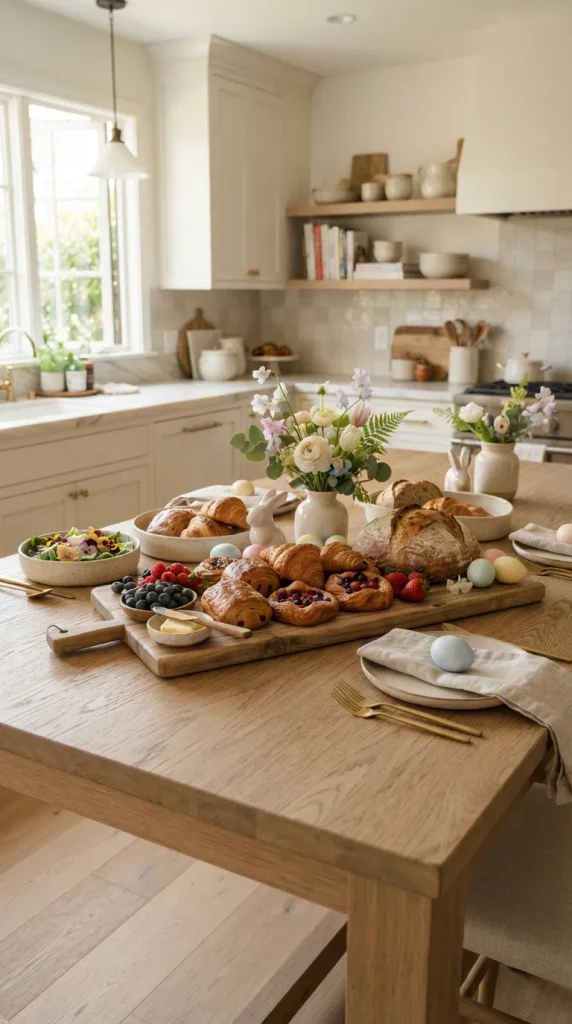
Turn your kitchen island into a festive Easter brunch station by combining functional serving pieces with seasonal decoration. Place a large wooden or marble board in the center and arrange pastries, fruit, or bread on attractive serving dishes, then surround the food with small Easter eggs, spring flowers, and one or two understated bunny accents. Use linen napkins in soft spring colors to connect the serving area with the rest of the decor. A small vase of fresh flowers can provide height without taking up much space. This approach makes the decoration feel purposeful because the island becomes both the centerpiece of the room and a welcoming gathering spot for Easter breakfast or brunch.
Conclusion
Beautiful Easter kitchen island decorations do not need to be complicated to make an impact. The most successful arrangements balance seasonal details with the existing style and function of the kitchen. A simple bowl of pastel eggs can feel just as intentional as an elaborate floral centerpiece when its colors, proportions, and textures are thoughtfully chosen. Likewise, natural materials such as wood, wicker, linen, greenery, and fresh flowers can make Easter decorations feel connected to the broader transition into spring.
When choosing your own Easter kitchen island centerpiece, consider the size of the island, the amount of workspace you need, and the colors already present in the room. Large islands can support layered displays or multiple decorative zones, while smaller surfaces often benefit from one compact tray, bowl, vase, or basket. Whether you prefer farmhouse Easter decor, elegant neutrals, cheerful pastels, rustic textures, or minimalist styling, the goal is to create a display that feels festive while still belonging naturally in your kitchen.


