

25 Navy Cabinet Kitchen Ideas for a Timeless Look
Navy blue cabinetry has become a favorite choice for homeowners who want a kitchen that feels sophisticated without becoming overly formal. Unlike brighter shades of blue, navy offers depth, versatility, and a timeless quality that works beautifully with both traditional and contemporary interiors. Whether you are planning a complete kitchen renovation or simply looking for ways to refresh existing cabinets, navy cabinet kitchen ideas can provide an elegant foundation for countless design styles.
The richness of navy cabinets pairs naturally with white countertops, warm wood, brass hardware, marble backsplashes, brushed metal finishes, and neutral flooring. It can also be used strategically rather than throughout the entire room. A navy kitchen island, lower cabinets, pantry wall, or built-in storage area can introduce color while keeping the overall space bright and balanced.
The key to making dark cabinetry successful is understanding proportion, lighting, materials, and contrast. In a compact kitchen, navy can create a dramatic focal point when balanced with pale walls and reflective surfaces. In a large kitchen, floor-to-ceiling navy cabinetry can produce a sophisticated, cohesive appearance. From farmhouse kitchens to modern spaces, there is a navy cabinet combination to suit nearly every decorating preference.
Here are 25 practical and visually distinctive navy blue kitchen cabinet ideas to inspire your next kitchen project.
1. Navy Cabinets with White Marble Countertops
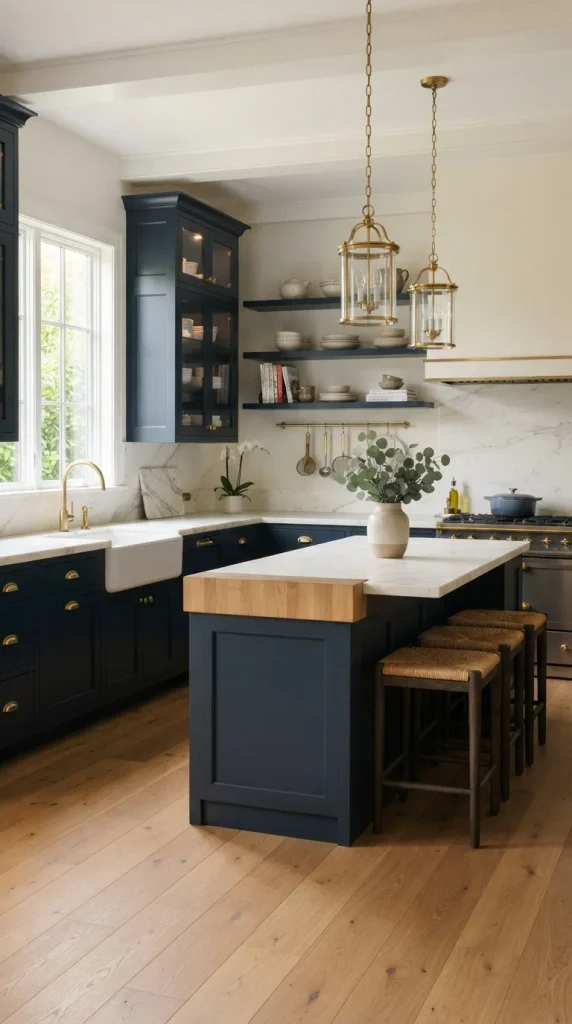
Navy cabinets and white marble countertops create one of the most timeless combinations in kitchen design. The deep blue cabinetry provides visual weight, while the pale marble keeps the room feeling open and luminous. Choose a marble with subtle gray veining if you prefer a refined appearance, or select stronger veining for a more dramatic focal point. Brass cabinet pulls and pendant lights can add warmth against the cool navy-and-white palette. For the backsplash, extending the same marble from the countertop upward can create a seamless appearance and make the kitchen feel more luxurious. Light oak flooring works particularly well because its natural warmth prevents the dark cabinets from feeling too heavy.
2. Navy Kitchen Cabinets with Brass Hardware
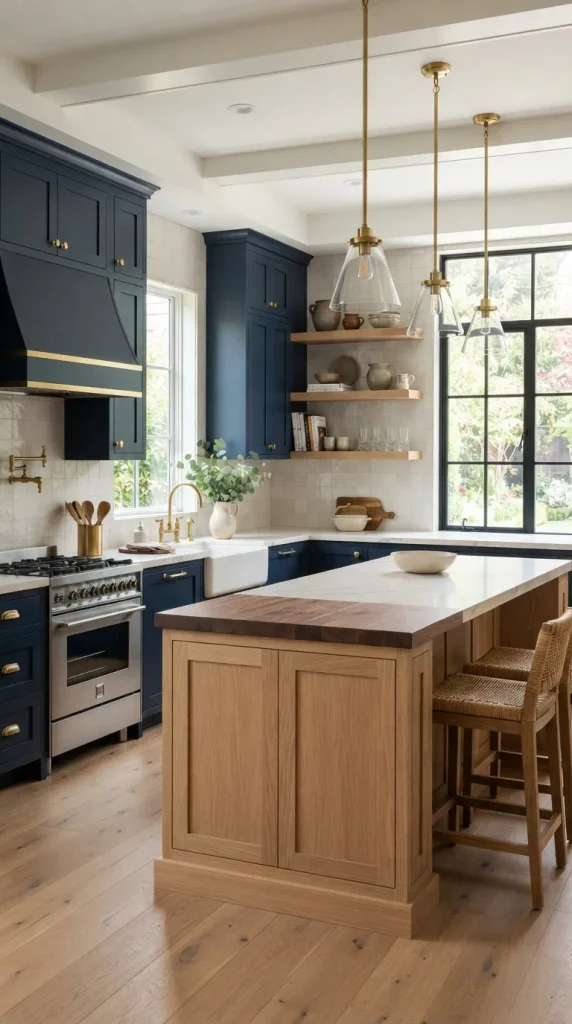
Brass hardware can transform simple navy cabinetry into a sophisticated kitchen feature. The warm metallic finish creates a beautiful contrast against the cool, saturated blue, giving the room a polished but welcoming character. For a classic appearance, consider cup pulls and traditional knobs; sleek bar pulls are better suited to contemporary kitchens. Repeat the brass finish through lighting fixtures, faucet details, or shelf brackets so the hardware feels intentionally connected throughout the room. Keep surrounding finishes relatively restrained, using white, cream, beige, or natural wood to allow the navy cabinets and golden accents to remain the primary visual statement.
3. Two-Tone Kitchen with Navy Lower Cabinets

Using navy on the lower cabinets and a lighter shade on the upper cabinets is an excellent solution for homeowners who love dark cabinetry but want to preserve an airy atmosphere. White, warm ivory, or pale greige upper cabinets can visually lift the walls while the navy base anchors the kitchen. This arrangement is particularly effective in smaller kitchens because the darker color remains concentrated closer to the floor rather than covering the entire room. A light backsplash, pale countertop, and simple hardware complete the balanced composition. Natural wood accents can further soften the contrast and introduce an organic element into the two-tone kitchen design.
4. Navy Kitchen Island as the Main Focal Point

A navy kitchen island can deliver the impact of blue cabinetry without requiring the entire kitchen to be remodeled. Keep the perimeter cabinets white, cream, light gray, or natural wood, then use navy exclusively on the island to create a strong central focal point. A contrasting countertop, such as white quartz or marble-look porcelain, makes the island feel even more prominent. Pendant lights positioned directly above the island can reinforce its importance while providing practical task lighting. This approach is especially useful when you want a colorful kitchen centerpiece that remains versatile enough to coordinate with existing cabinetry and finishes.
Also Read: 24 Outdoor Kitchen Ideas for Stylish Backyard Living
5. Navy Cabinets with Warm Wood Accents
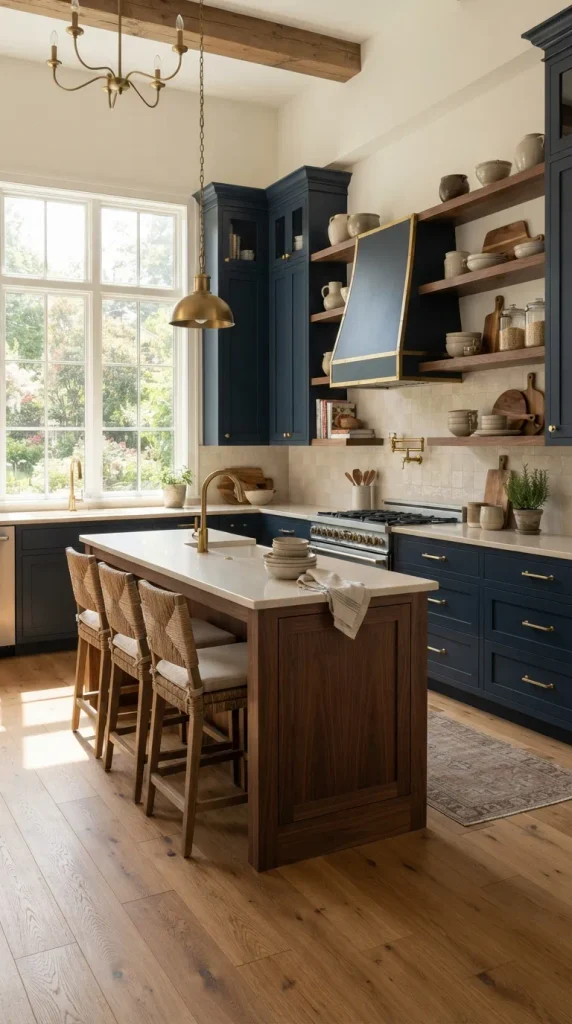
Pairing navy cabinetry with warm wood introduces a relaxed, organic quality that prevents the kitchen from appearing too formal. Consider a walnut island, oak floating shelves, wood bar stools, or exposed timber beams against deep blue cabinets. The combination works because the cool depth of navy contrasts naturally with the warmth and texture of wood. For countertops, creamy quartz or softly veined stone can bridge the two materials. Matte black or aged brass hardware can finish the look without overwhelming it. This navy and wood kitchen concept is particularly effective in transitional, modern farmhouse, Scandinavian-inspired, and contemporary interiors where natural texture plays an important role.
6. Navy Shaker Cabinets for a Classic Kitchen
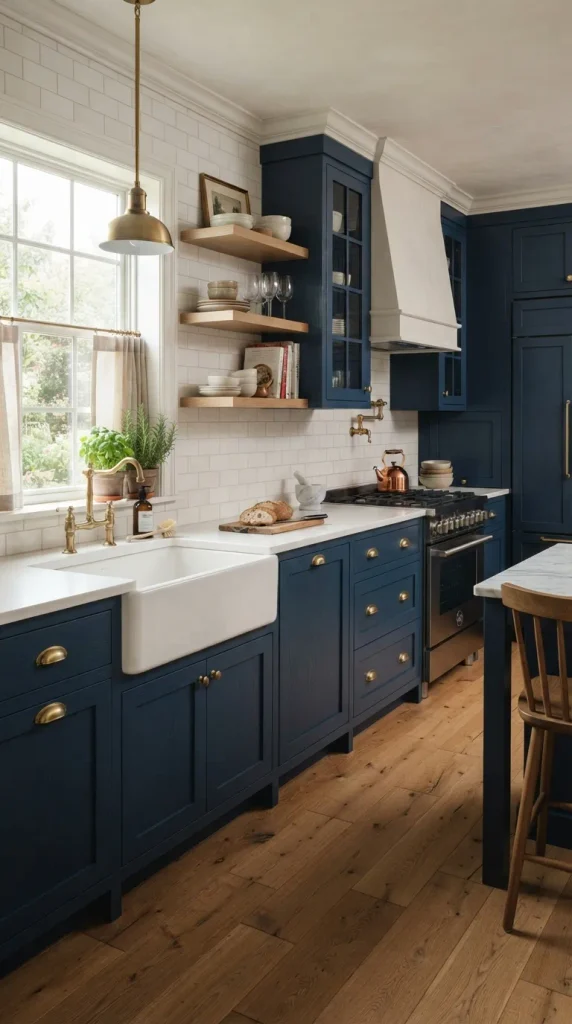
Shaker-style navy cabinets offer a dependable combination of traditional craftsmanship and modern color. Their simple recessed-panel doors provide enough architectural detail to prevent the deep blue finish from looking flat, while the clean profile keeps the kitchen current. Pair the cabinets with white subway tile, quartz countertops, and understated hardware for a classic arrangement that can remain attractive for years. If you want a slightly more sophisticated interpretation, use handmade-look tile with irregular edges and subtle variation. A farmhouse sink, traditional faucet, and natural wood accessories can further reinforce the timeless character without making the room feel overly themed.
7. Navy Cabinets with a White Subway Tile Backsplash
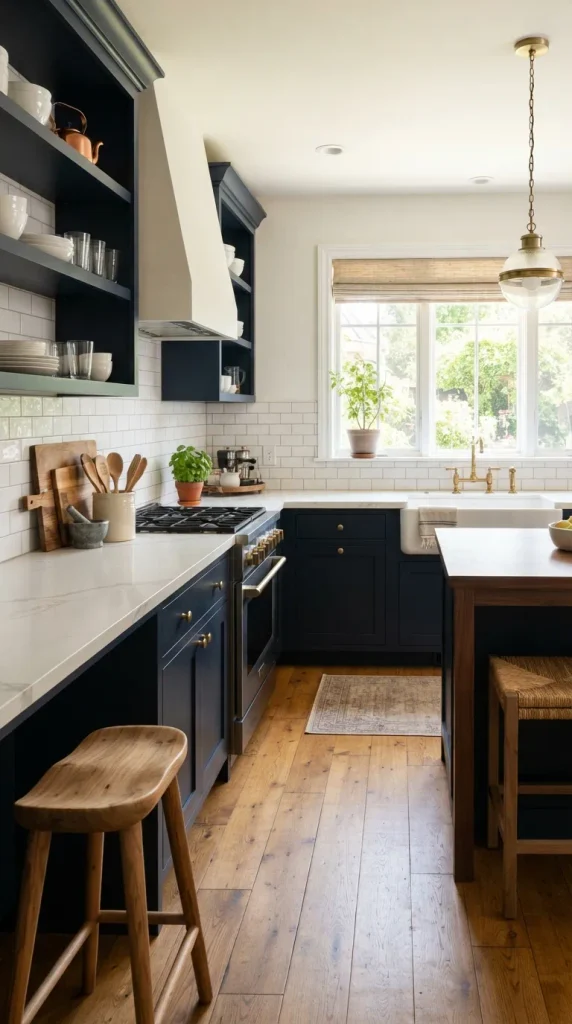
White subway tile provides a crisp counterpoint to dark blue cabinetry and is one of the easiest ways to brighten a navy kitchen. Classic rectangular tiles work particularly well with Shaker cabinets, while elongated subway tiles can create a more contemporary appearance. Consider using light grout for a clean, seamless look or a soft gray grout to emphasize the tile pattern. White quartz countertops can continue the bright palette across the work surfaces. To introduce warmth, add woven stools, wooden cutting boards, or brass fixtures. This combination is versatile enough for traditional kitchens while still fitting modern farmhouse and transitional decorating styles.
8. Floor-to-Ceiling Navy Cabinetry
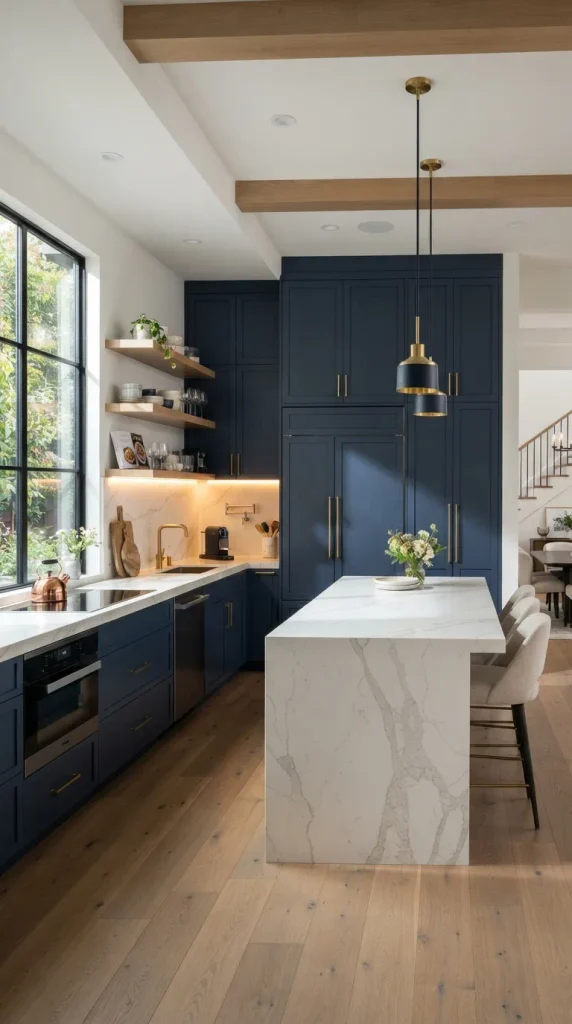
For a dramatic and cohesive kitchen, consider extending navy cabinetry from the floor to the ceiling. Tall pantry cabinets, integrated appliances, and upper storage can be finished in the same deep blue, creating a visually continuous wall. This approach works particularly well in spacious kitchens where there is enough natural or layered artificial light to prevent the darker color from becoming oppressive. Break up the cabinetry with a light countertop, glass-front doors, open shelving, or a contrasting backsplash. Integrated lighting beneath upper cabinets can highlight the surfaces at night and make the rich navy finish feel atmospheric rather than overly dark.
9. Navy Cabinets with Natural Stone Backsplash

Natural stone can add movement and texture to a kitchen dominated by navy cabinetry. A backsplash featuring marble, quartzite, limestone, or another softly patterned stone creates an organic contrast against the uniform cabinet color. Choose stone with white, cream, gray, or muted taupe undertones to maintain visual balance. Rather than stopping the backsplash at the bottom of the upper cabinets, consider extending it to the ceiling behind a range hood for greater architectural impact. Simple hardware allows the stone and cabinetry to remain the stars. This approach suits high-end transitional kitchens particularly well because it combines rich color with authentic material variation.
Also Read: 24 Small Dorm Kitchen Ideas for Stylish Small Spaces
10. Navy Cabinets in a Small Kitchen
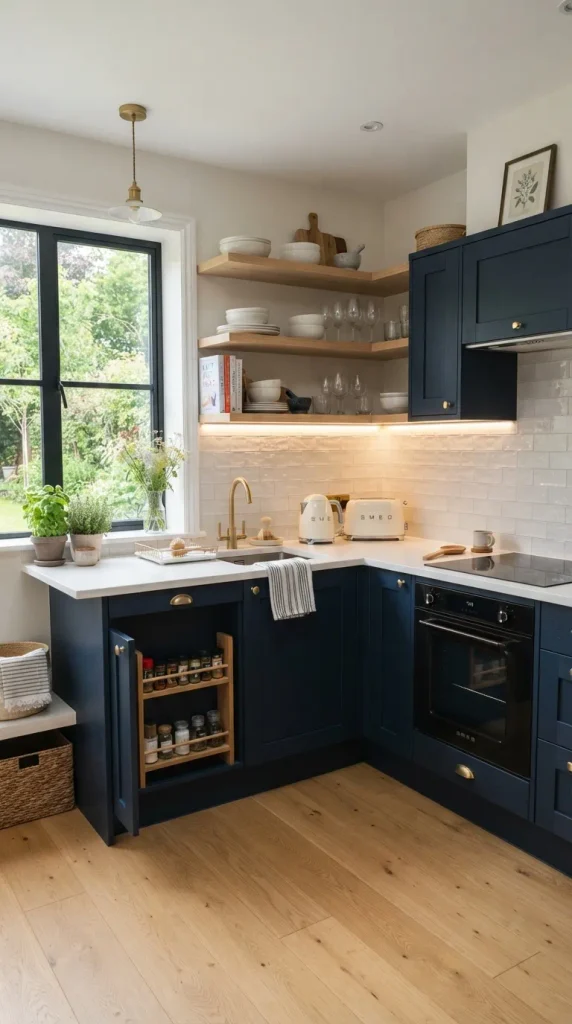
Dark cabinetry can work surprisingly well in a small kitchen when the surrounding elements are carefully selected. Instead of avoiding navy altogether, use it strategically with reflective and light-colored surfaces. White walls, pale countertops, glossy backsplash tile, and under-cabinet lighting can help distribute light throughout the room. Choosing flat-panel or slim Shaker doors can also reduce visual clutter. If the kitchen receives strong natural daylight, navy cabinets can provide depth without making the space feel closed in. Keep flooring and major appliances visually simple, and use glass doors or open shelving in selected areas to introduce breathing room between the darker cabinet sections.
11. Navy Cabinets with Gold Pendant Lighting

Gold or warm brass pendant lights can become striking decorative features above a navy kitchen island. The combination works especially well because the deep blue backdrop makes metallic fixtures visually prominent without requiring excessive decoration. Choose sculptural pendants for a contemporary kitchen or lantern-style fixtures for a more traditional room. Keep the rest of the lighting coordinated with the pendant finish for a cohesive appearance. White countertops and a pale backsplash can maintain brightness, while wood stools add additional warmth. The result is a kitchen that feels carefully designed rather than simply decorated, with lighting functioning as both an architectural necessity and an important visual element.
12. Navy Cabinets with Butcher Block Countertops
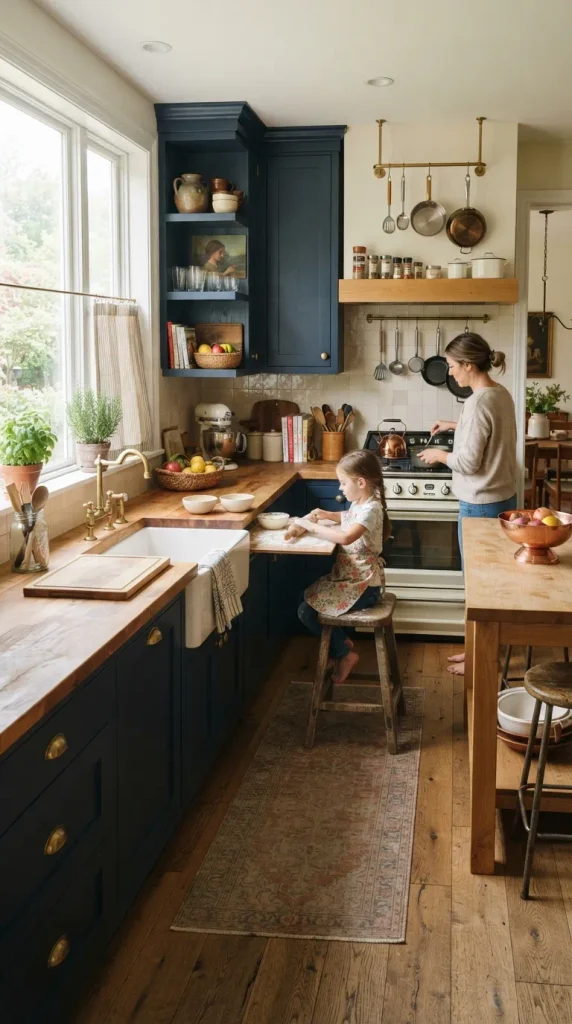
Butcher block countertops bring warmth and tactile character to navy cabinetry, making the combination especially appealing in casual family kitchens. The natural wood surface softens the intensity of deep blue while providing a practical work area for food preparation. Maple, oak, walnut, and other wood tones can produce different effects, from light and airy to rich and sophisticated. Pair the cabinets with cream walls, ceramic backsplash tile, and simple black or brass hardware. Regular countertop maintenance should be considered when selecting real wood, but the lived-in character it develops over time can enhance the relaxed personality of a navy kitchen.
13. Navy and Cream Kitchen Cabinet Combination
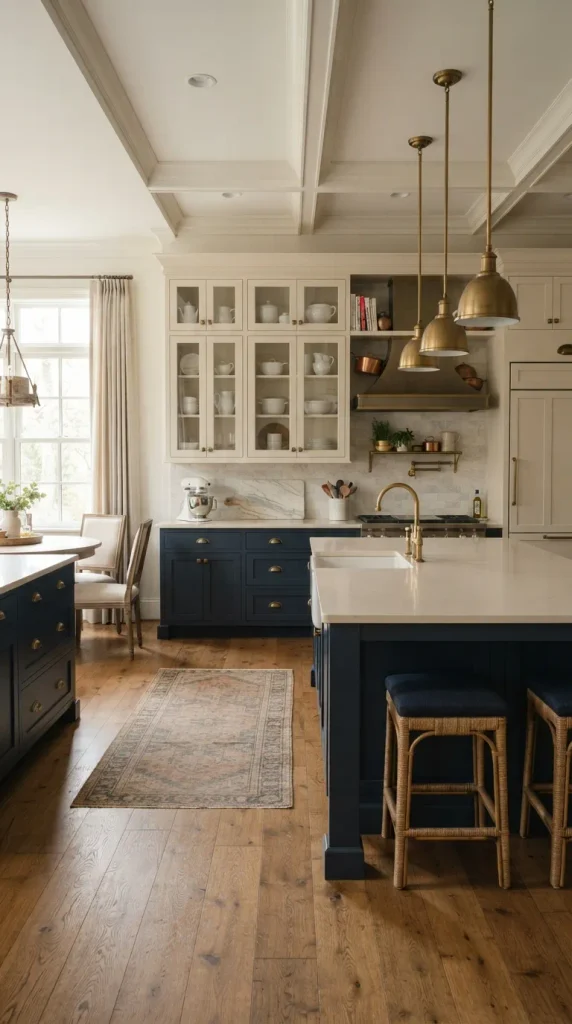
Cream cabinetry provides a softer alternative to stark white when paired with navy. The slightly warm undertone creates a comfortable, sophisticated atmosphere and works particularly well in kitchens with traditional architectural details. Use navy for the island or base cabinets while keeping cream on upper cabinetry, or reverse the arrangement depending on the desired visual emphasis. A creamy quartz countertop can connect both colors, while aged brass hardware adds another warm layer. Natural stone flooring, woven pendant shades, and wood accessories can complete the palette. This combination is ideal for homeowners who want a navy kitchen that feels elegant and welcoming rather than sharply contemporary.
Also Read: 23 Earthy Kitchen Ideas for a Warm, Natural & Cozy Home
14. Modern Navy Flat-Panel Cabinets

Flat-panel navy cabinets create a streamlined foundation for a modern kitchen. Their uninterrupted surfaces emphasize the richness of the blue finish and allow architectural elements such as lighting, countertops, and appliances to take a supporting role. Matte navy cabinetry works particularly well with quartz countertops, slab backsplashes, integrated appliances, and minimal hardware. For a sophisticated monochromatic effect, use several related shades of blue throughout the space while keeping the countertop light. Alternatively, introduce warm oak through an island or open shelving to soften the modern lines. Minimal decoration is important here because the clean cabinet profile provides much of the room’s visual character.
15. Navy Cabinets with a Farmhouse Sink

A white farmhouse sink creates a strong focal point when installed beneath navy kitchen cabinets. Its bright ceramic surface contrasts beautifully with the saturated cabinet finish while reinforcing the comfortable character associated with farmhouse interiors. Pair the sink with a bridge-style faucet, Shaker doors, white or cream backsplash tile, and natural wood shelving for a relaxed composition. If you prefer a modern farmhouse approach, choose cleaner cabinet profiles and contemporary lighting rather than heavily rustic accessories. The combination works particularly well around a window because daylight can illuminate the white sink and countertop, creating a bright work zone against the deeper surrounding cabinetry.
16. Navy Cabinets with Matte Black Hardware
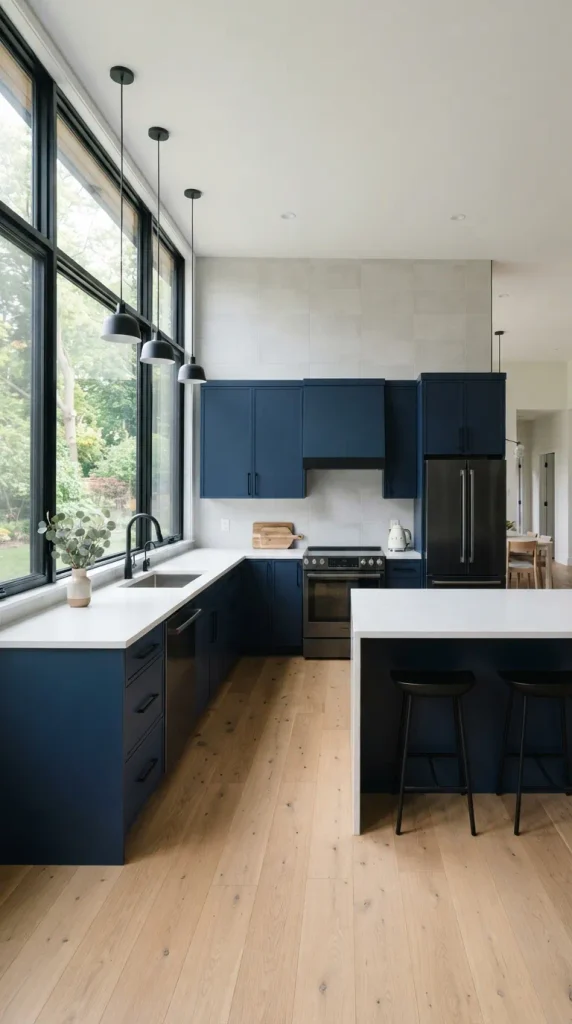
For a contemporary interpretation of navy cabinetry, matte black hardware provides a subtle and sophisticated contrast. Unlike polished metals, black pulls and knobs create a quieter visual transition while emphasizing the architectural lines of the cabinet doors. This pairing works especially well with white quartz, concrete-look surfaces, pale oak, and simple ceramic tile. Keep the faucet and lighting in a related black finish to establish continuity. Because both navy and black are relatively deep colors, generous natural light or layered ceiling and under-cabinet lighting is important. The resulting kitchen feels modern and confident without relying on excessive decorative elements.
17. Navy Cabinets with Open Wood Shelving
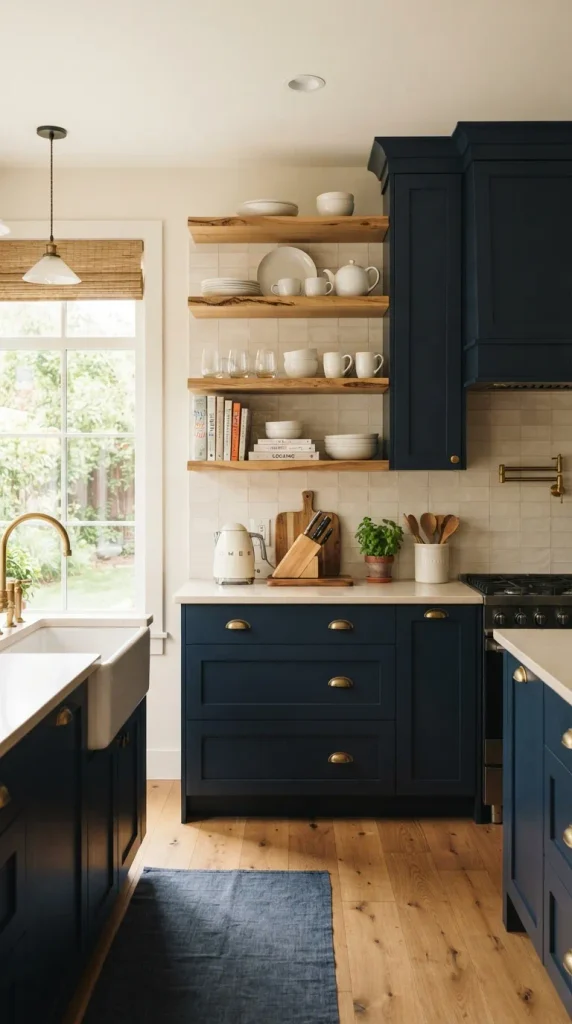
Replacing a few upper cabinets with open wood shelves can make a navy kitchen feel lighter and more personal. Warm oak or walnut shelving introduces natural texture while providing a place to display ceramics, cookbooks, glassware, and everyday kitchen essentials. Keep the number of displayed objects controlled so the shelves remain attractive rather than cluttered. Against navy cabinetry, light-colored dishes and handmade ceramics stand out beautifully. A pale backsplash behind the shelves can provide additional contrast and reflect light. This arrangement works particularly well in transitional and modern farmhouse kitchens where storage needs to coexist with decorative styling.
18. Navy Cabinets with a Statement Range Hood

A statement range hood can add architectural interest to a kitchen featuring navy cabinetry. Instead of allowing the hood to disappear into the cabinet wall, make it a deliberate focal point using plaster, natural wood, stainless steel, or painted cabinetry. A white plaster hood against navy cabinets creates a particularly elegant contrast, while wood introduces warmth and texture. Extend the backsplash material behind the range for visual continuity and keep surrounding accessories relatively restrained. The navy cabinets then function as a sophisticated backdrop for the hood. This strategy is especially useful in open-plan kitchens where the cooking wall needs a strong architectural feature.
19. Navy Cabinets with a Marble-Look Quartz Countertop

Marble-look quartz offers the visual appeal of natural stone with a practical surface for everyday kitchen use. Against navy cabinets, bright white quartz with soft gray veining creates a high-contrast palette that feels polished and timeless. Use the same material on the island and perimeter counters for consistency, or reserve dramatic veining for the island to create a focal point. Brass or brushed nickel hardware can complement the palette depending on the desired mood. A simple backsplash allows the quartz pattern to remain visible. This combination is particularly effective for homeowners who want an elegant navy kitchen without relying on delicate natural marble throughout the workspace.
20. Navy Cabinets with Sage Green Accents

Sage green provides an unexpected but harmonious companion to navy cabinetry. Rather than competing with the dark blue, the muted green adds an earthy quality that makes the kitchen feel softer and more connected to nature. Introduce sage through backsplash tile, bar stools, window treatments, artwork, or carefully selected accessories rather than covering large areas. Warm white walls and natural oak can help unify the colors. Aged brass hardware adds another layer of warmth without becoming visually dominant. This palette suits homeowners who want something more distinctive than the traditional navy-and-white combination while still maintaining a calm and sophisticated kitchen environment.
21. Navy Cabinets with Integrated Appliances

Integrated appliances can make navy cabinetry appear more cohesive by reducing visual interruptions across the kitchen. Panel-ready refrigerators and dishwashers can be concealed behind matching navy fronts, creating a continuous cabinet composition. Pair this streamlined approach with minimal hardware, a pale stone countertop, and a restrained backsplash. Integrated appliances are particularly effective in open-plan kitchens because the cabinetry resembles built-in furniture rather than a collection of separate kitchen units. Add a contrasting island or warm wood details if the space needs additional variation. Careful planning is essential because appliance dimensions, ventilation, and cabinet construction must be coordinated before installation.
22. Navy Cabinets with Coastal-Inspired Decor
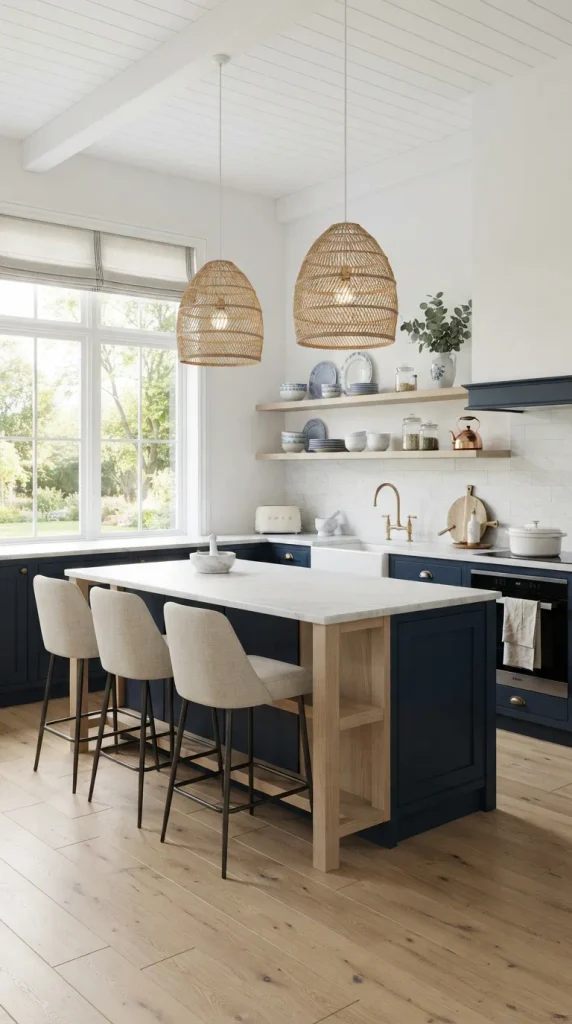
Navy cabinetry naturally lends itself to coastal kitchen design, but the look can remain sophisticated rather than overly nautical. Combine deep blue cabinets with white walls, pale oak, woven pendant lights, linen textures, and light stone surfaces. Instead of using obvious seaside motifs, let the color palette and natural materials communicate the coastal influence. A soft blue-and-white backsplash can reinforce the theme without becoming visually repetitive. Brushed brass or polished nickel hardware provides a refined finishing touch. Large windows, natural daylight, and uncluttered countertops help maintain the airy feeling associated with coastal interiors while allowing the navy cabinets to provide a strong architectural foundation.
23. Navy Cabinets with Glass-Front Upper Doors
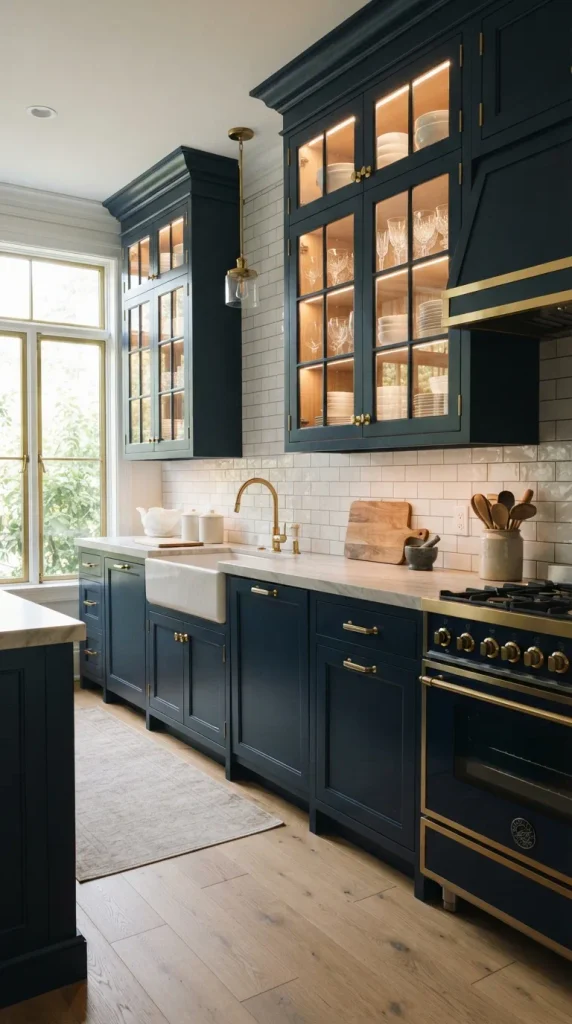
Glass-front upper cabinets can break up a wall of navy cabinetry while providing a practical display area for attractive kitchenware. Clear glass is ideal for an open, contemporary effect, while seeded or reeded glass offers more texture and conceals some visual clutter. Install interior cabinet lighting to make the contents glow softly in the evening. White ceramics, glassware, and natural wood objects contrast beautifully against the dark blue interior. Keep the surrounding backsplash relatively light so the glass doors remain visually distinct. This idea works particularly well when homeowners want the storage capacity of upper cabinets without making the entire kitchen feel visually dense.
24. Moody Navy Kitchen with Layered Lighting
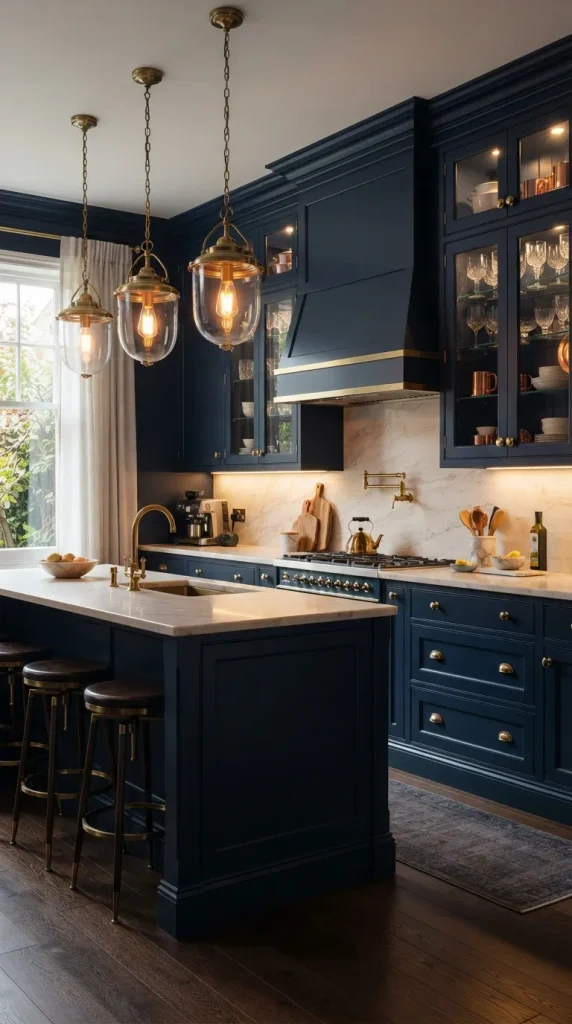
A moody navy kitchen can feel incredibly sophisticated when darkness is treated as an intentional design feature rather than something to avoid. Use navy cabinetry throughout the main kitchen and balance it with warm white countertops, subtle backsplash materials, and carefully layered lighting. Combine recessed ceiling lights with under-cabinet illumination, pendant fixtures, and accent lighting inside glass-front cabinets. Warm light temperatures can make the deep blue cabinetry feel richer and more inviting in the evening. Add natural wood, aged brass, or soft textiles for warmth. This approach is especially effective in large kitchens, dining-connected spaces, and homes with dramatic architectural features.
25. Navy Cabinets with a Warm Neutral Color Palette

A warm neutral palette can make navy cabinetry feel timeless and approachable. Instead of surrounding the blue with bright white, use shades such as oatmeal, taupe, warm beige, ivory, and light greige across walls, countertops, flooring, and textiles. These softer neutrals reduce the visual contrast and create a more relaxed atmosphere. Introduce natural wood through stools or shelving, then select brass, bronze, or aged nickel hardware depending on the desired character. The result is a balanced kitchen where navy remains the defining color without dominating the entire room. This approach is particularly useful for open-plan homes where the kitchen needs to transition naturally into adjoining living spaces.
Conclusion
Navy cabinetry offers remarkable flexibility for kitchen design because it can shift from classic and traditional to modern, coastal, rustic, or dramatically sophisticated depending on the surrounding materials. The most successful navy cabinet kitchen ideas balance the depth of blue with thoughtful contrasts such as white countertops, warm wood, natural stone, brass hardware, pale tile, and layered lighting.
When choosing your own navy kitchen design, consider the amount of natural light, the size of the room, the existing architectural style, and the finishes you already have. You do not necessarily need navy cabinets throughout the entire kitchen; a carefully designed island, lower cabinet run, pantry wall, or built-in section can create just as much impact. With the right combination of color, texture, lighting, and proportion, navy cabinets can create a kitchen that feels distinctive today while remaining timeless for years to come.


