24 Backsplash Ideas for Dark Kitchen Cabinets

Dark cabinetry can give a kitchen an unmistakably sophisticated character, but the backsplash plays a major role in determining whether that depth feels warm and inviting, bright and balanced, or dramatic and luxurious. The right backsplash for a dark cabinet kitchen can introduce contrast, connect countertops with cabinetry, add texture, and make the entire cooking area feel more intentional. From creamy handmade tiles and classic marble to bold stone slabs, patterned ceramics, and modern glass, there are plenty of ways to complement navy, charcoal, espresso, walnut, or black kitchen cabinets without making the room feel visually heavy. These backsplash concepts for dark cabinet kitchens focus on practical combinations that work across different decorating styles while also providing inspiration for kitchen remodels, small kitchens, modern spaces, and Pinterest-worthy interiors.
1. Warm White Subway Tile With Dark Cabinets
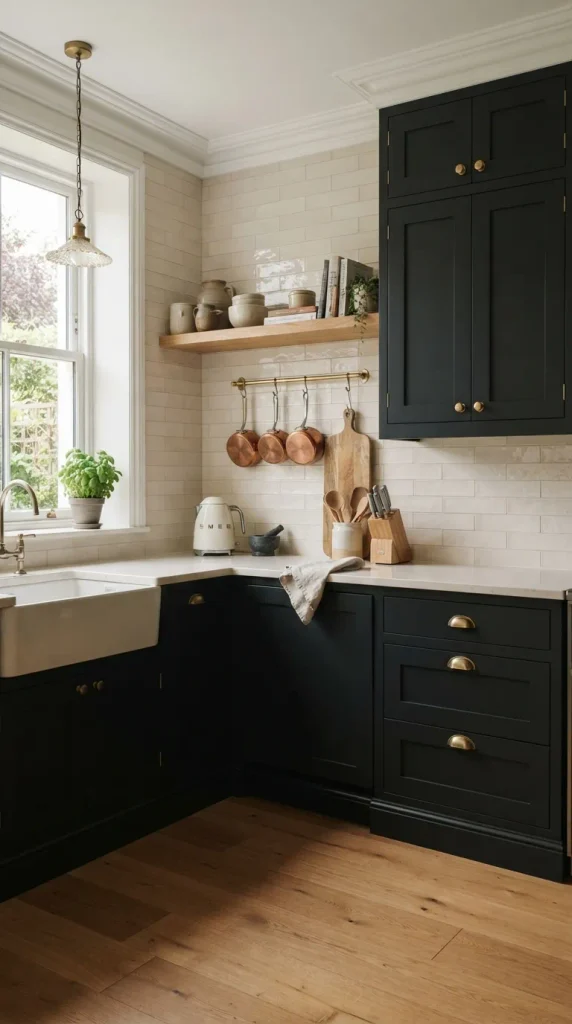
Warm white subway tile creates one of the most reliable backsplash combinations for dark kitchen cabinets because its light surface immediately offsets the visual weight of deep cabinetry. Instead of choosing a stark, cool white, consider an ivory or softly creamy tile with a subtle handmade variation that introduces warmth and dimension. A light grout can preserve the seamless appearance, while a slightly darker neutral grout emphasizes the classic brick pattern. This combination works particularly well with black, espresso, charcoal, and deep green cabinets. Pairing the backsplash with natural wood accessories, brushed brass hardware, or warm quartz countertops can prevent the kitchen from feeling overly stark while maintaining a clean, timeless appearance.
2. Calacatta Marble Backsplash for a Luxurious Kitchen
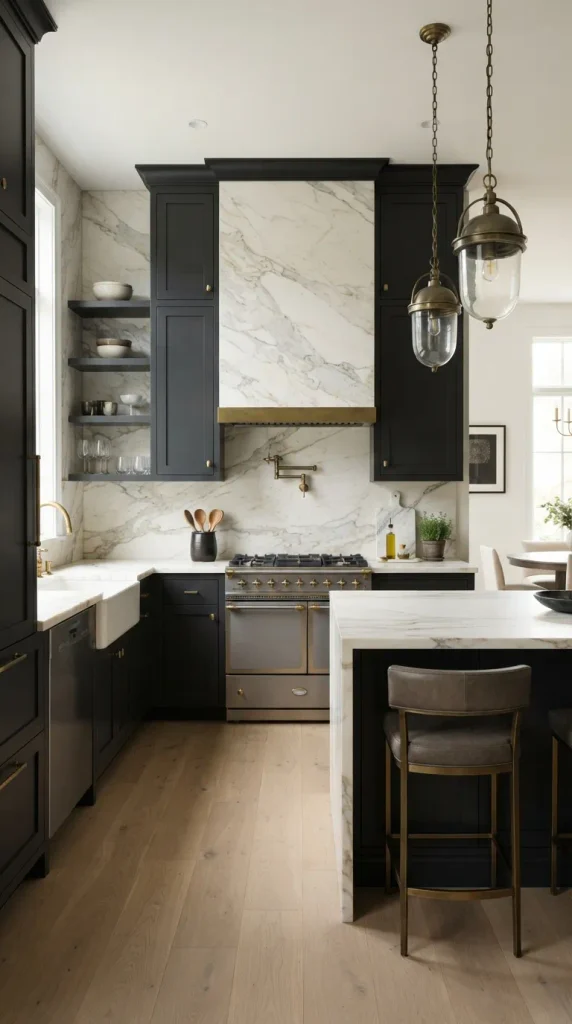
Calacatta marble brings movement, brightness, and natural elegance to a kitchen dominated by dark cabinetry. Its creamy white background and distinctive gray or soft gold veining create a sophisticated contrast against black, navy, or deep brown cabinets. For a high-end appearance, extend the marble from the countertop upward as a full-height backsplash rather than stopping at the underside of the upper cabinets. This approach allows the veining to become a major architectural feature and visually connects the work surfaces. Dark cabinetry provides a dramatic frame around the stone, while brass fixtures, elegant pendant lighting, and minimal countertop accessories can reinforce the luxurious kitchen design without competing with the marble.
3. Beige Zellige Tile Against Charcoal Cabinets
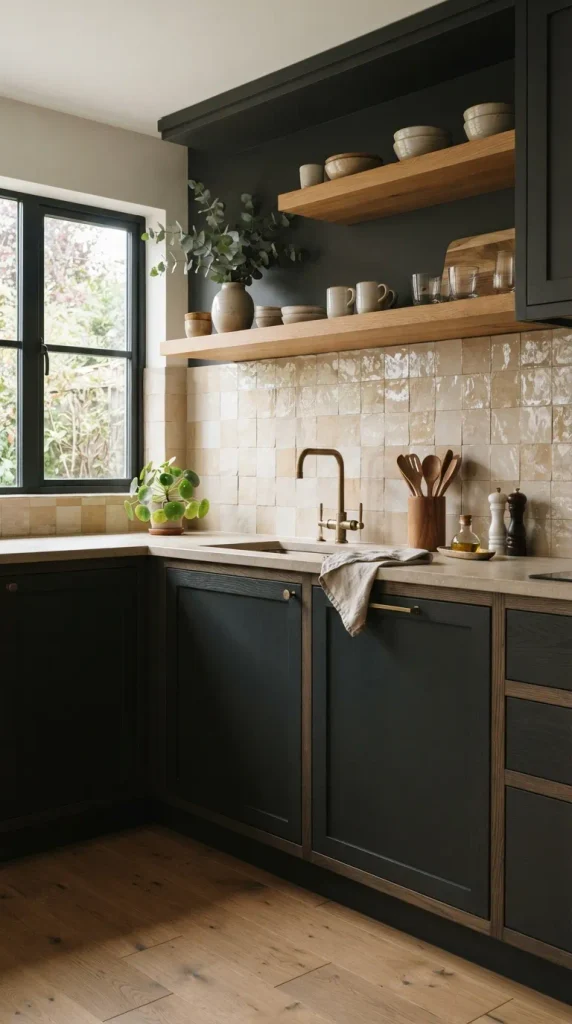
Beige Zellige tile is an excellent choice when dark cabinetry needs softness rather than strong visual contrast. Each tile typically has slight differences in color, texture, and reflective quality, creating a handcrafted surface that changes subtly as natural light moves through the kitchen. Against charcoal or near-black cabinets, warm beige tones can make the room feel more relaxed and organic. The uneven surface also adds character without requiring a complicated pattern. Choose simple neutral grout to keep attention on the tile variation, then introduce oak shelving, aged brass fixtures, woven accents, or stone countertops to build a warm contemporary palette. This backsplash works especially well in kitchens inspired by European, Mediterranean, or organic-modern interiors.
4. Full-Slab Marble Backsplash With Black Cabinets
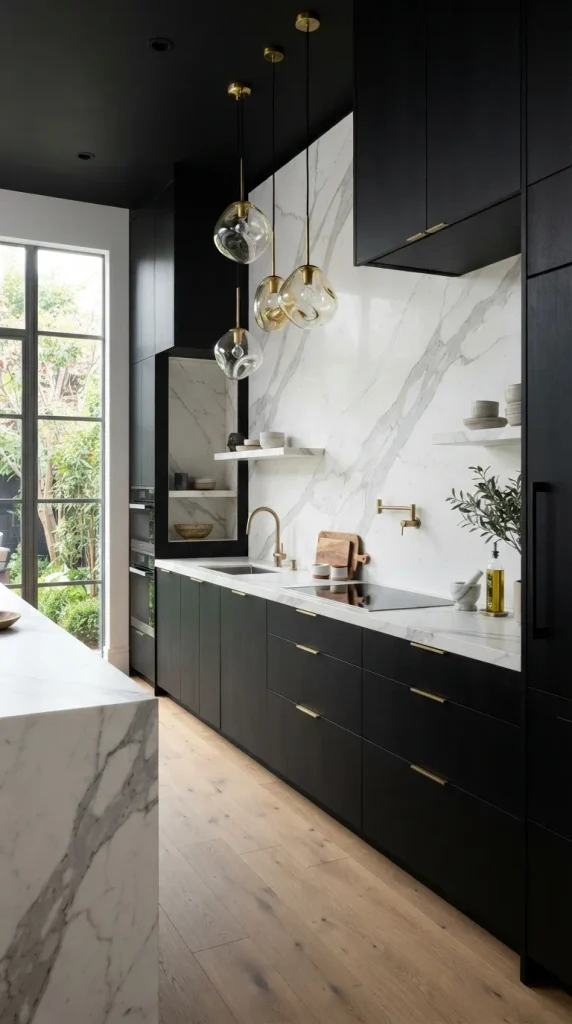
A full-slab marble backsplash offers a streamlined alternative to individual tiles and can make dark cabinetry look exceptionally refined. Rather than breaking the wall into small geometric units, one continuous slab creates a broad visual field with uninterrupted veining. This is especially effective behind a range or cooktop, where the backsplash can become a dramatic focal point. White marble with gray veining provides strong contrast against black cabinets, while warmer stone varieties can complement espresso or dark walnut finishes. Keeping grout lines out of the composition gives the kitchen a cleaner contemporary appearance. To preserve the sophisticated effect, use restrained hardware and let the natural pattern of the stone remain the primary decorative feature.
5. Soft Gray Backsplash for a Modern Dark Kitchen
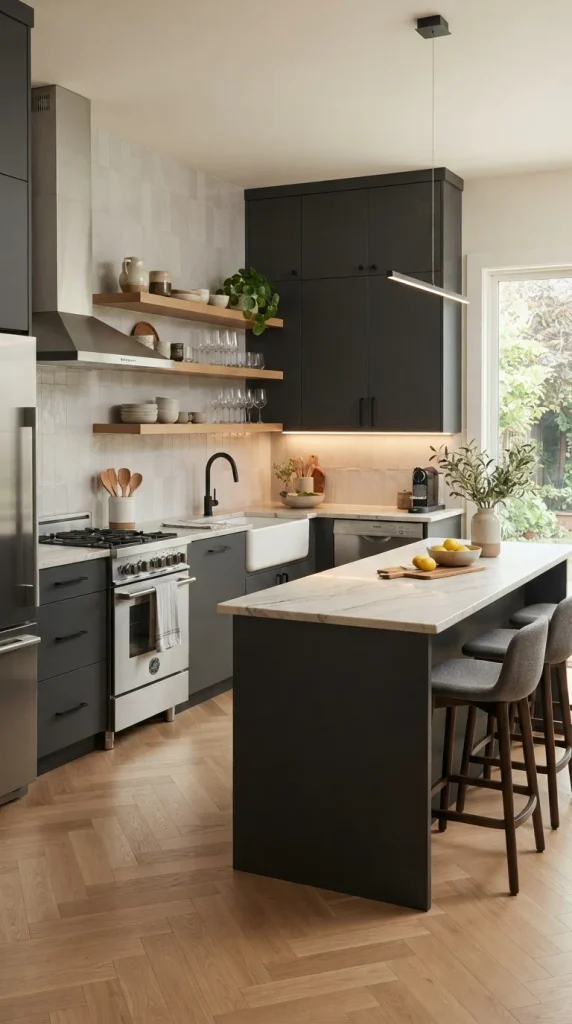
Soft gray tile provides a more understated contrast than white while still preventing dark cabinets from visually overwhelming the room. A pale gray backsplash works beautifully with charcoal, black, navy, and deep brown cabinetry because it sits between light and dark values, creating a balanced transitional palette. Consider elongated rectangular tiles for a contemporary look or small square tiles for a more traditional kitchen. Matte gray surfaces create a calm, sophisticated mood, while glossy finishes reflect daylight and help brighten darker spaces. Pair the backsplash with concrete-look quartz, stainless steel appliances, or natural wood details depending on the desired style. This neutral approach is particularly useful when you want a modern kitchen that feels polished without appearing overly decorative.
6. Handmade Cream Tile With Black Kitchen Cabinets
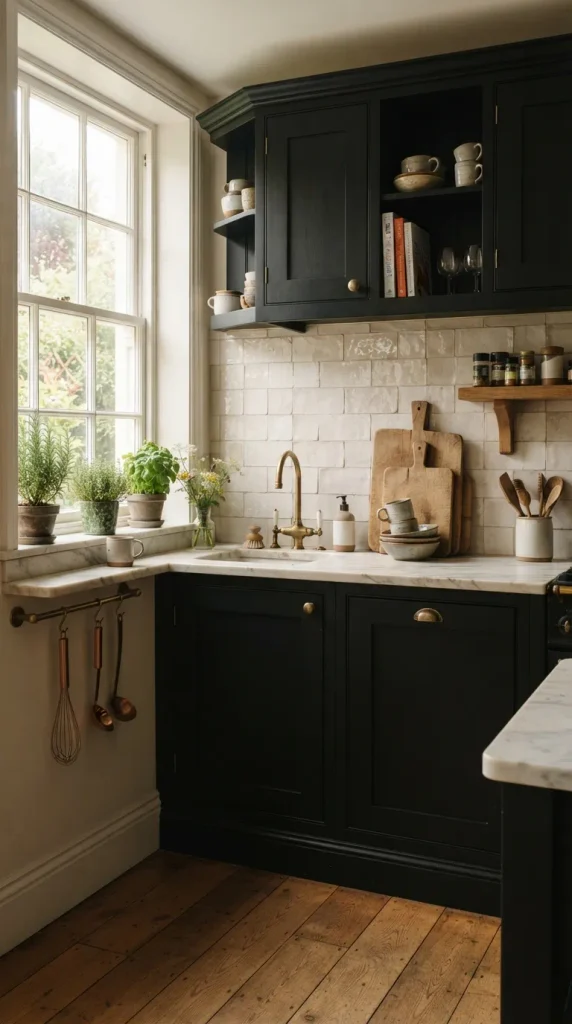
Handmade cream backsplash tile can soften the boldness of black cabinetry while introducing subtle craftsmanship to the kitchen. Look for tiles with irregular edges, gentle tonal shifts, and a lightly glazed finish rather than perfectly uniform factory-made surfaces. The cream background reflects natural light, while the handmade variation prevents the wall from looking flat. Black cabinets then provide a crisp visual outline around the warmer tile. This pairing suits farmhouse, cottage, transitional, and contemporary kitchens alike. Natural oak cutting boards, ceramic vessels, aged metal hardware, and stone countertops can further emphasize the tactile quality of the materials. The result feels collected and comfortable rather than overly coordinated or showroom-like.
Also Read: 24 Kitchen Backsplash Ideas for Every Style & Budget
7. Dark Green Glass Tile With Deep Cabinetry
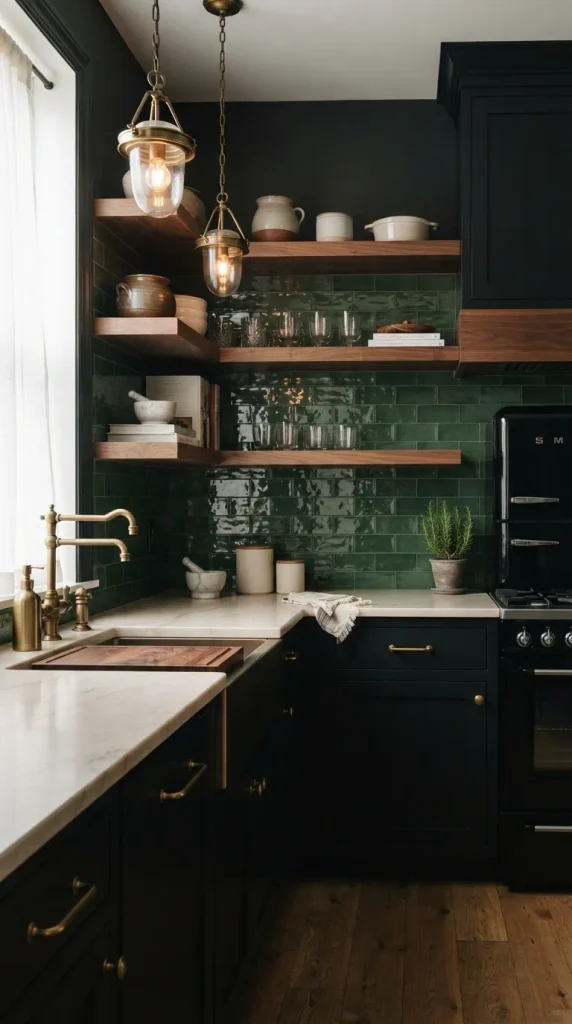
For homeowners who want a richer, more immersive palette, dark green glass tile can complement deep cabinetry without relying on conventional light-colored contrast. Forest, moss, or bottle-green tiles work particularly well with black, espresso, and walnut cabinets, creating a layered tonal kitchen. Because glass reflects light, even a darker backsplash can retain a sense of luminosity when positioned near windows or under-cabinet lighting. Keep the surrounding materials relatively restrained so the color remains intentional. Warm wood, antique brass, creamy countertops, and natural stone can prevent the combination from becoming too cool. This concept is particularly attractive for kitchens where the goal is moody sophistication rather than maximum brightness.
8. White Herringbone Backsplash With Navy Cabinets
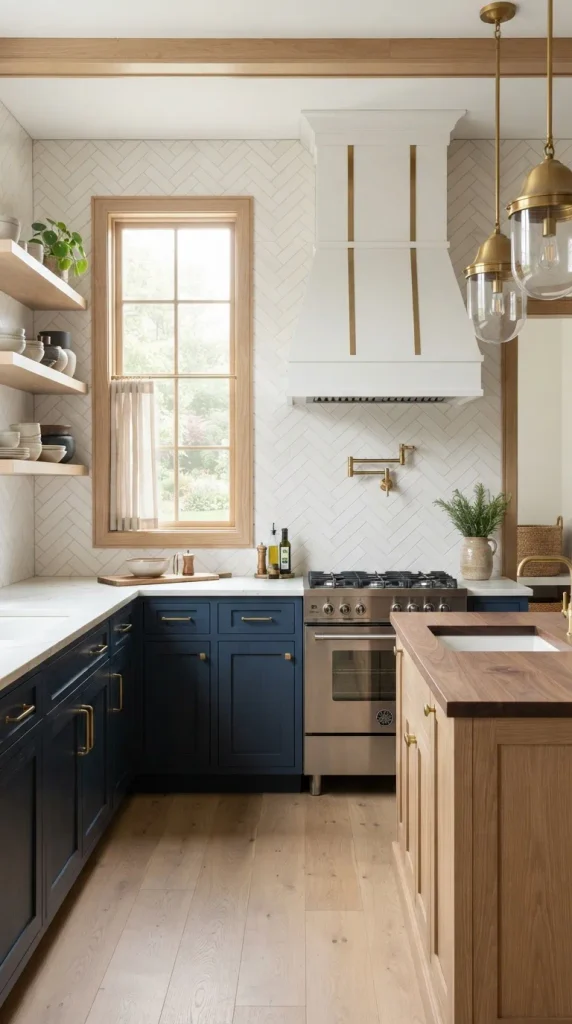
A white herringbone backsplash introduces pattern without overwhelming a kitchen with dark cabinetry. The diagonal arrangement creates movement across the wall, while the bright tile surface contrasts beautifully with navy, midnight blue, charcoal, or black cabinets. For a sophisticated result, choose a slightly warm white instead of an icy shade and use grout that clearly defines the pattern without becoming the dominant feature. Herringbone is especially effective behind a range hood because the pattern naturally draws the eye toward the cooking zone. Brass or aged bronze hardware can add warmth, while pale quartz countertops help continue the light visual balance. This arrangement works across transitional and classic kitchen designs while remaining highly photogenic.
9. Natural Stone Backsplash for a Rustic Dark Kitchen
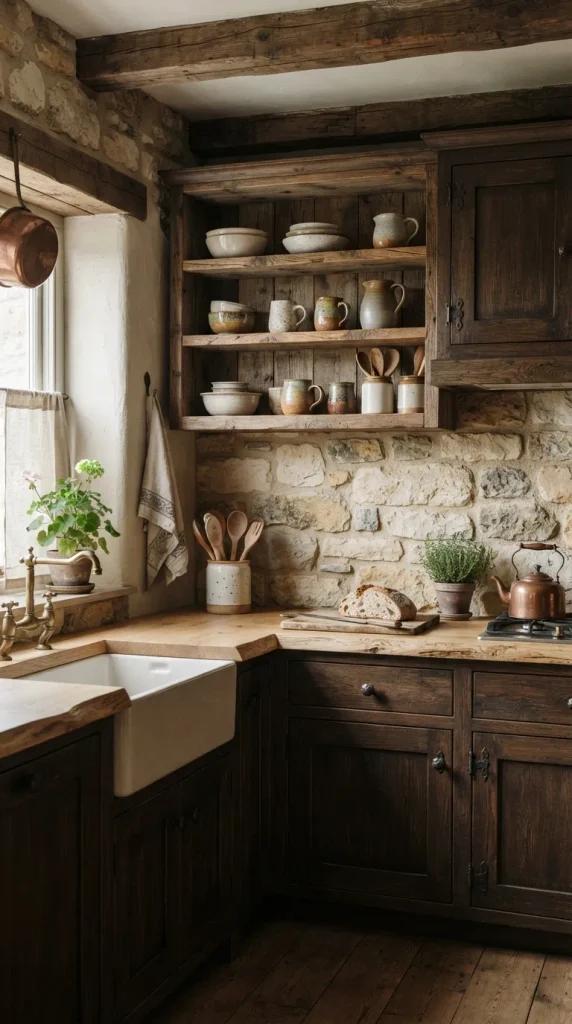
Natural stone can make dark cabinetry feel warmer and more connected to the architecture of a home. Instead of polished marble, consider limestone, travertine, slate-inspired stone, or softly textured quartzite with earthy variation. A backsplash containing tan, cream, gray, and brown undertones can bridge dark cabinets with wood flooring and rustic architectural elements. The irregularity of natural stone also provides visual texture that smooth cabinetry may lack. Keep the stone installation relatively simple so its organic character remains visible. Open wood shelving, aged hardware, linen textiles, and handmade ceramics can reinforce the relaxed aesthetic. This approach works particularly well in rustic, Mediterranean, mountain, farmhouse, and organic-modern kitchens.
10. Glossy White Ceramic Tile to Reflect Natural Light
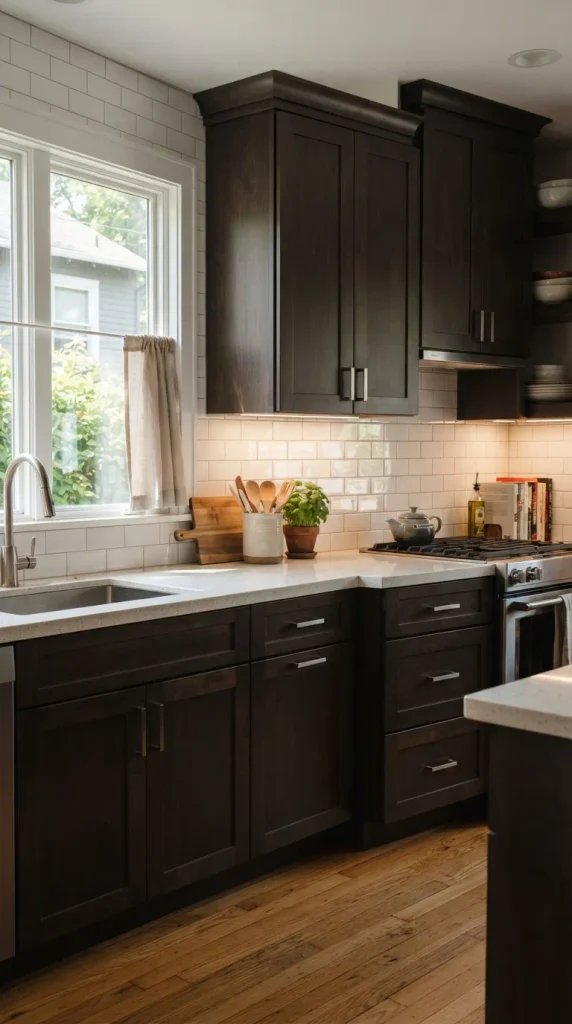
Glossy white ceramic tile is a practical way to maximize reflected light when a kitchen features very dark cabinets. Its reflective surface can bounce daylight around the backsplash area while creating a crisp contrast against black or dark brown cabinetry. A simple rectangular format keeps the look versatile, allowing the kitchen to move toward modern, transitional, or traditional styling depending on the surrounding details. Consider installing the tile in a stacked layout for a contemporary appearance or a traditional running-bond arrangement for a more familiar feel. Under-cabinet lighting can further emphasize the glaze and make the backsplash glow in the evening. Warm countertops and wood accents help maintain balance and prevent the room from feeling sterile.
Also Read: 26 Kitchen With Black Backsplash Ideas That Elevate Style
11. Dramatic Black Marble With Dark Cabinets
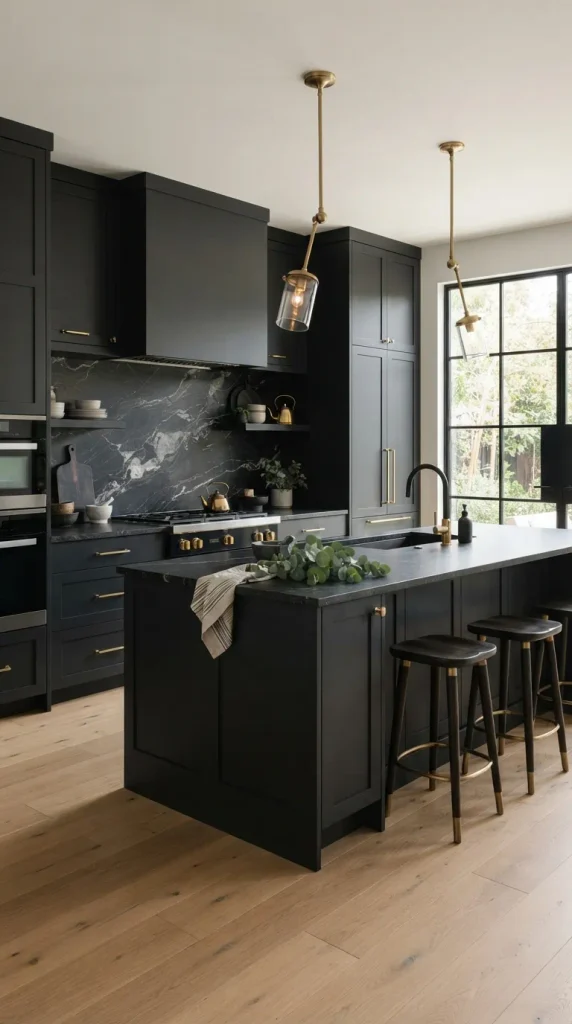
Using a dark backsplash with dark cabinetry creates a sophisticated monochromatic kitchen where texture and material variation become more important than color contrast. Black marble or another richly veined dark stone can add movement while maintaining the dramatic palette. This concept works best when the stone has visible gray, white, or warm mineral veining that separates the backsplash subtly from the cabinetry. Adequate natural or layered artificial lighting is essential because a completely flat dark wall can absorb too much light. Brushed brass hardware, warm pendant fixtures, and lighter flooring can introduce small points of contrast. The overall effect is architectural and intimate, particularly suited to spacious kitchens with strong lighting and carefully selected materials.
12. Cream and Taupe Patterned Tile
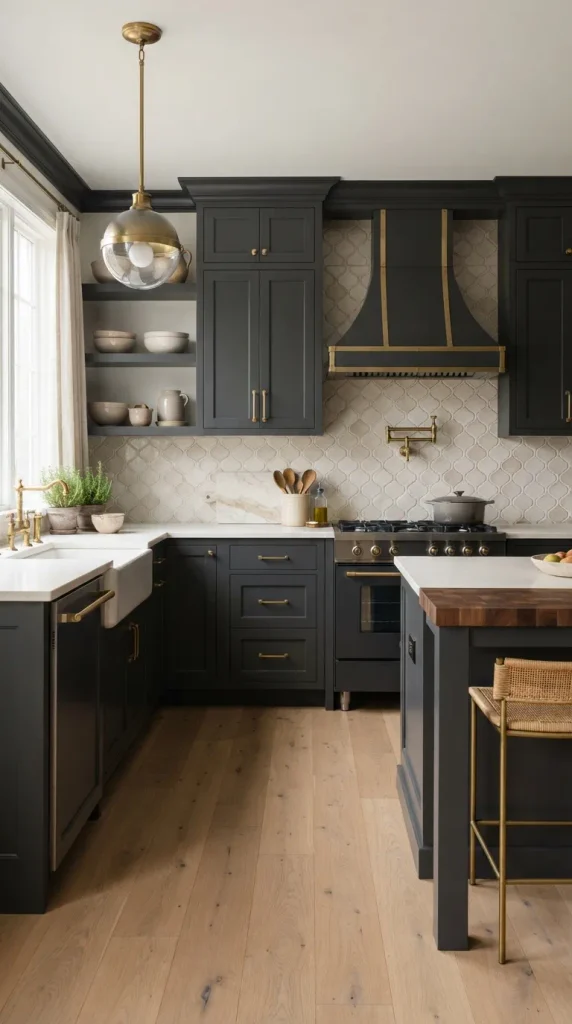
A cream and taupe patterned backsplash provides visual interest while keeping a dark-cabinet kitchen grounded in warm neutrals. Geometric motifs, understated botanical designs, or traditional-inspired patterns can introduce personality without requiring bright colors. Because the background remains light, the backsplash still provides enough contrast against deep cabinetry, while taupe details connect naturally with wood flooring, beige countertops, or warm metal finishes. This is a useful approach for homeowners who find plain subway tile too predictable but do not want a highly colorful accent wall. Keep the cabinetry relatively simple and allow the pattern to serve as the decorative element. Neutral textiles and restrained countertop styling will keep the finished kitchen cohesive.
13. Terracotta Tile for Warm Dark Cabinets
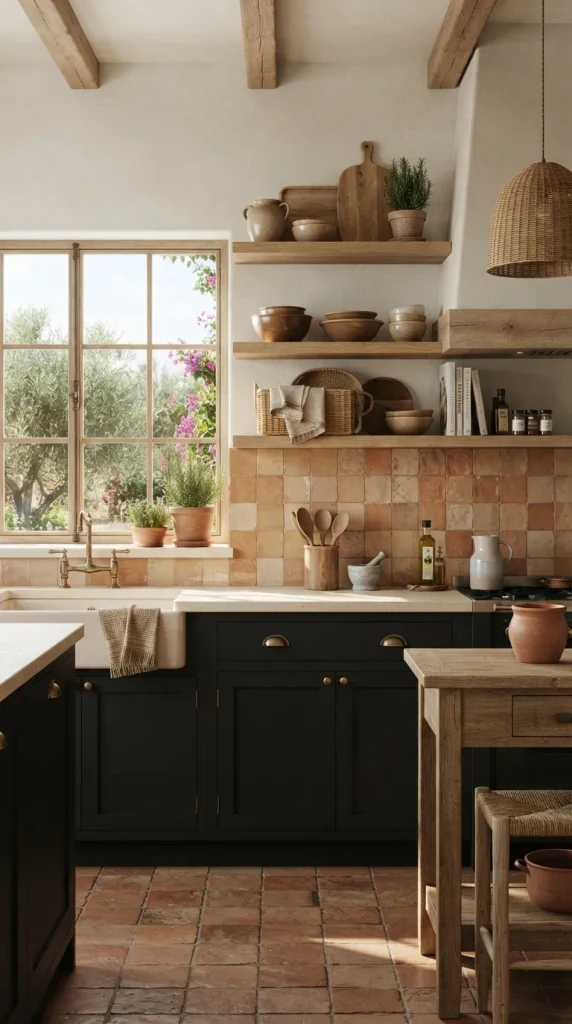
Terracotta backsplash tile can dramatically warm up a kitchen dominated by black, charcoal, or dark brown cabinetry. Its earthy orange, clay, and muted red undertones introduce natural color while creating a welcoming Mediterranean or rustic atmosphere. Handmade terracotta tiles are particularly effective because their tonal variation gives the backsplash an authentic, lived-in appearance. Against dark cabinets, the warm tile becomes a visual bridge between cabinetry and natural wood elements. Choose a simple installation pattern to keep the material from feeling too busy, then incorporate aged brass, oak, woven textures, and creamy countertops. This combination is ideal for kitchens where warmth and character are more important than a crisp minimalist appearance.
Also Read: 29 Black Kitchen Cabinets Ideas for a Modern Look
14. Vertical Stack Tile for a Contemporary Kitchen
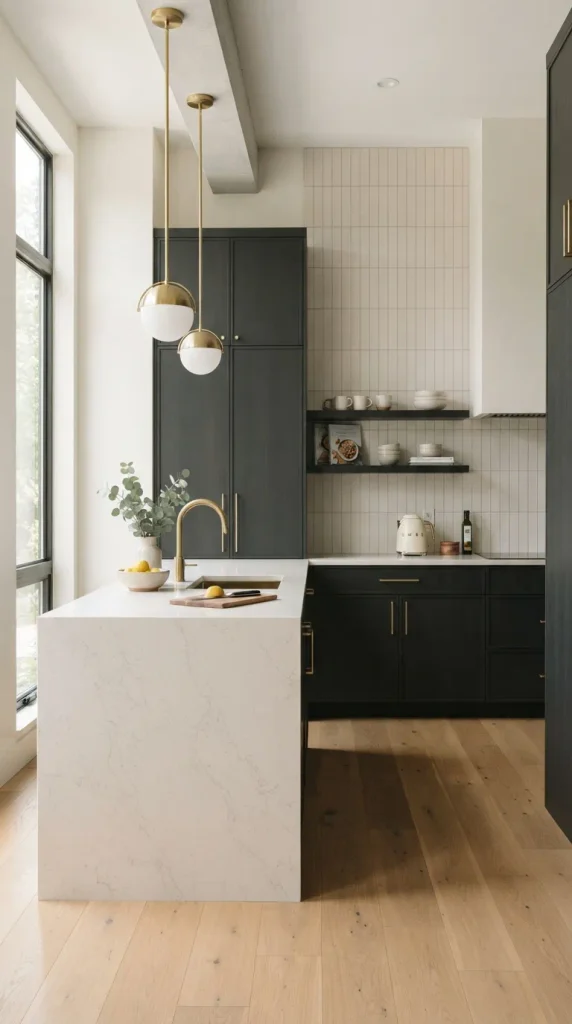
Vertical stacked tile gives a familiar backsplash material a distinctly modern interpretation. Installing narrow rectangular tiles vertically can visually emphasize ceiling height while creating a clean architectural rhythm behind dark cabinetry. A warm white, pale greige, soft beige, or muted gray tile can provide sufficient contrast without introducing a complicated pattern. This layout pairs especially well with slab-front cabinets, streamlined countertops, and contemporary lighting. If the kitchen has low ceilings, the vertical orientation can contribute to a taller visual impression, although the effect remains subtle rather than structural. Select a grout color close to the tile for a quieter surface, or use contrasting grout when the geometric grid should become part of the design.
15. Quartzite Slab Backsplash for Dark Wood Cabinets
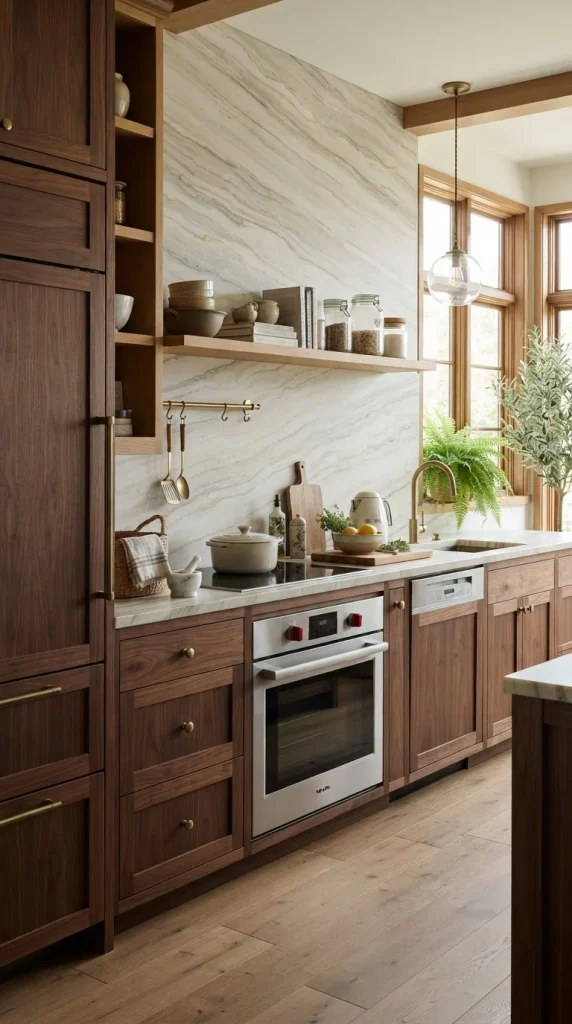
Quartzite can be an excellent backsplash material when dark wood cabinets need a natural stone surface with substantial visual presence. A pale quartzite with soft gray, cream, or taupe movement creates contrast while retaining a connection to organic materials. Extending the same stone from the countertop onto the backsplash produces a cohesive surface and eliminates visual interruptions between the worktop and wall. Dark walnut, espresso, and stained oak cabinets can all benefit from this combination because the stone’s natural variation introduces light without making the kitchen feel excessively white. Simple cabinet hardware, integrated appliances, and understated lighting allow the quartzite to provide the primary visual interest while preserving a sophisticated, long-lasting aesthetic.
16. Pale Green Subway Tile With Espresso Cabinets
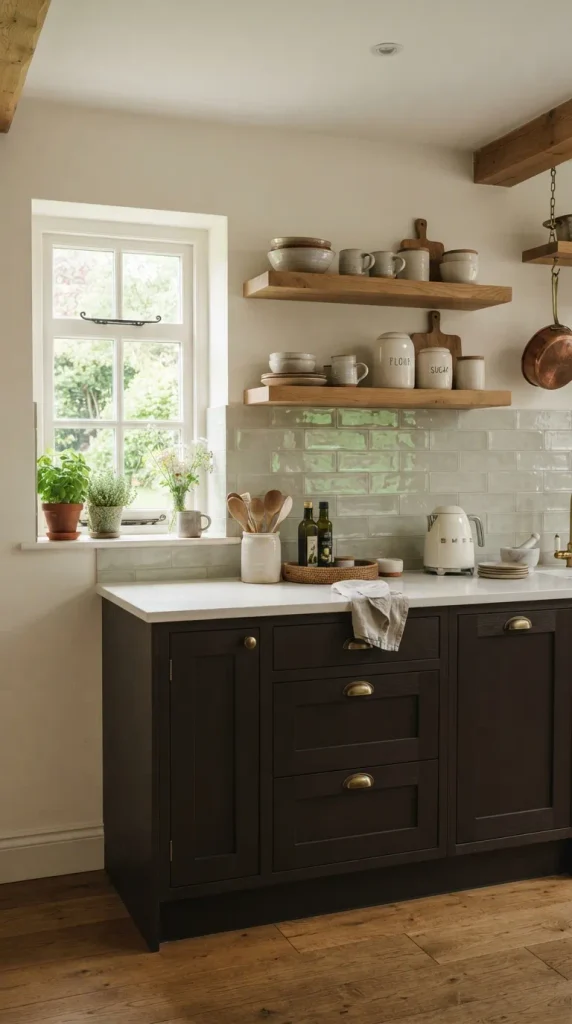
Pale sage or muted green subway tile introduces color in a restrained way, making it particularly effective with espresso or dark walnut cabinetry. The combination feels warmer and more distinctive than a standard white backsplash while remaining neutral enough for long-term use. A softly glazed green tile can reflect natural light and highlight the variations between individual pieces, while a matte finish gives the kitchen a calmer appearance. Warm white countertops can help connect the lighter backsplash to the dark cabinets, and brass or bronze fixtures can add additional warmth. This palette works beautifully in cottage, transitional, vintage-inspired, and nature-focused kitchens where subtle color is preferred over a dramatic accent.
17. Marble Mosaic Backsplash With Charcoal Cabinets
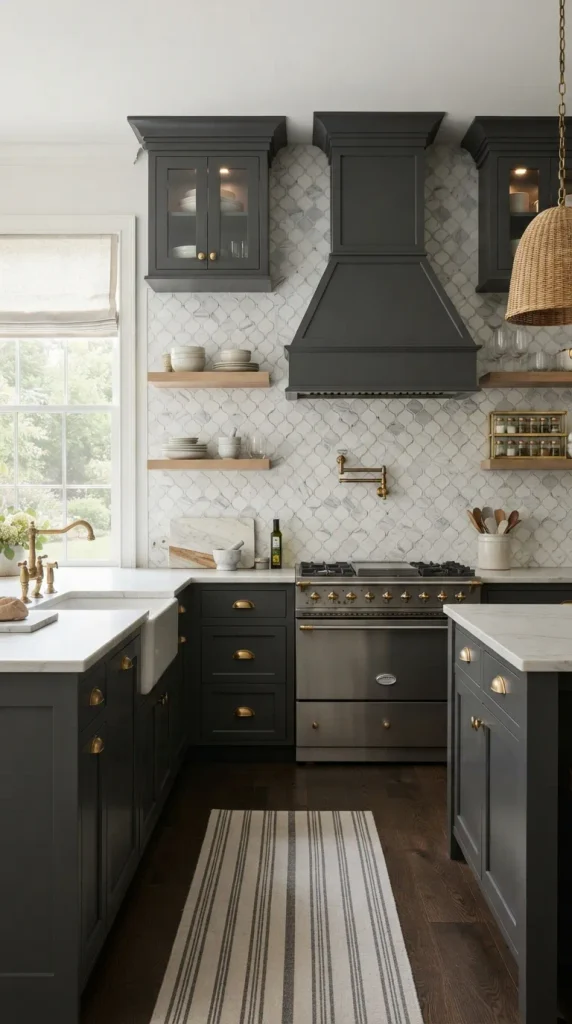
A marble mosaic backsplash offers more pattern and detail than large-format stone while retaining the timeless appeal of natural marble. Small hexagons, diamonds, elongated mosaics, or basketweave patterns can create a decorative surface behind charcoal or black cabinetry. White and gray marble provides a classic contrast, while warmer varieties containing beige or gold tones can complement walnut and espresso finishes. Because mosaics naturally contain many grout lines, choose a grout color that supports the overall palette rather than creating unnecessary visual noise. This concept works especially well in transitional kitchens where traditional detailing meets modern cabinetry. Keep surrounding accessories relatively minimal so the intricate backsplash remains visually legible.
18. Blue and White Backsplash With Black Cabinets
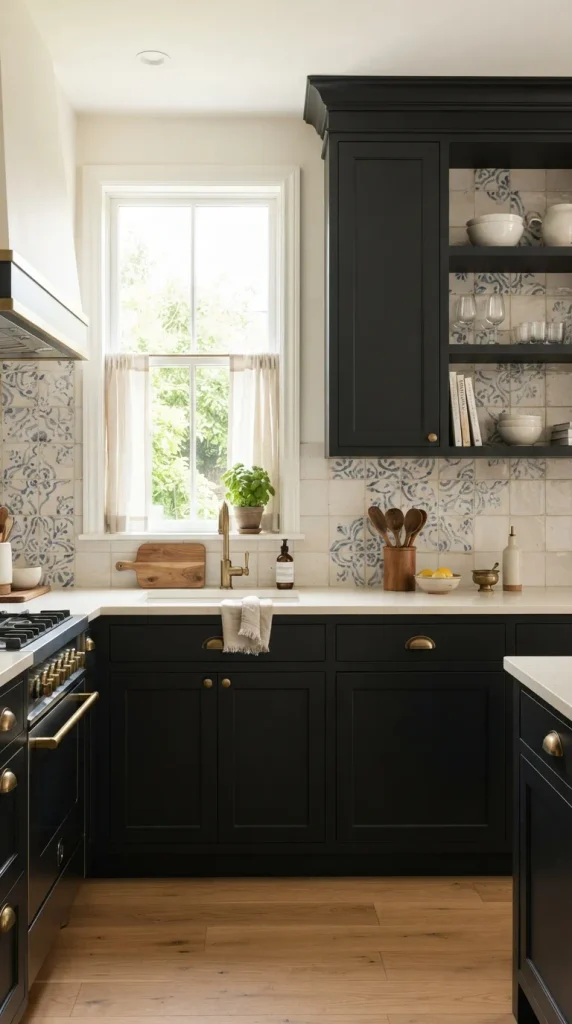
Blue and white tile can give a dark-cabinet kitchen a fresh, collected character while maintaining strong visual contrast. Depending on the design, the blue can range from dusty denim and muted slate to deep cobalt or soft coastal blue. A white background keeps the backsplash bright, while blue pattern or detailing connects the wall visually to dark cabinetry without making the room entirely monochromatic. Consider small-format decorative tile behind the range and simpler tiles elsewhere if you want a focal point. Natural wood, woven materials, aged brass, and creamy stone countertops can soften the contrast. This combination works particularly well for classic, coastal, cottage, and eclectic kitchen interiors.
19. Concrete-Look Backsplash With Matte Black Cabinets
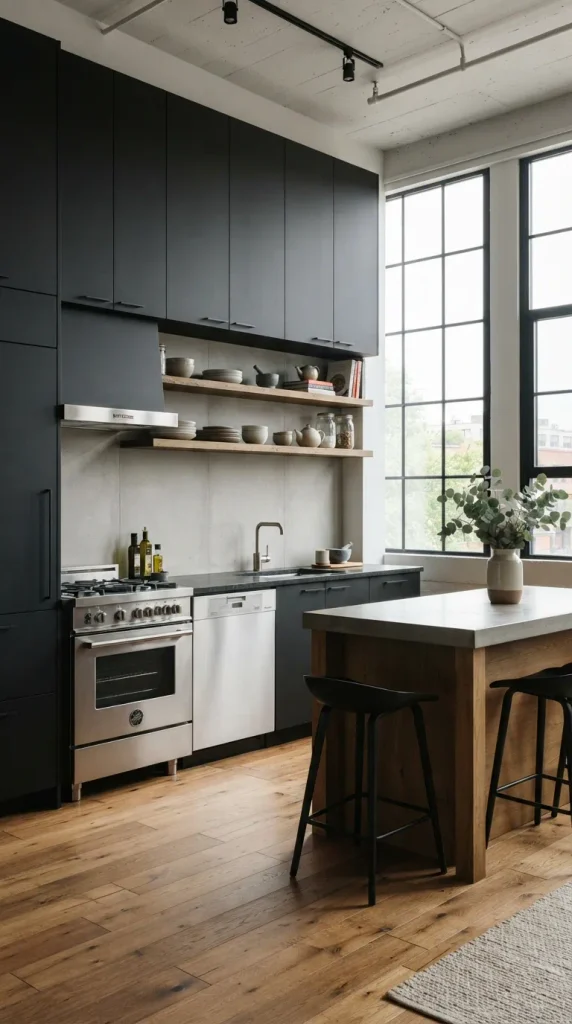
A concrete-look backsplash creates an understated industrial foundation for matte black cabinetry. Large-format porcelain or ceramic panels that mimic concrete can provide the appearance of a raw architectural surface while offering a more practical and consistent finish. Choose a light or medium gray tone to maintain enough contrast against the cabinets. The absence of strong pattern makes this approach especially suitable for minimalist kitchens where cabinet shapes, lighting, and hardware provide the primary visual details. Stainless steel appliances can reinforce the industrial direction, while warm wood flooring or shelving prevents the room from feeling too cold. The resulting palette is restrained, contemporary, and particularly effective in urban-style kitchen designs.
20. Handmade Blue Tile for a Moody Kitchen
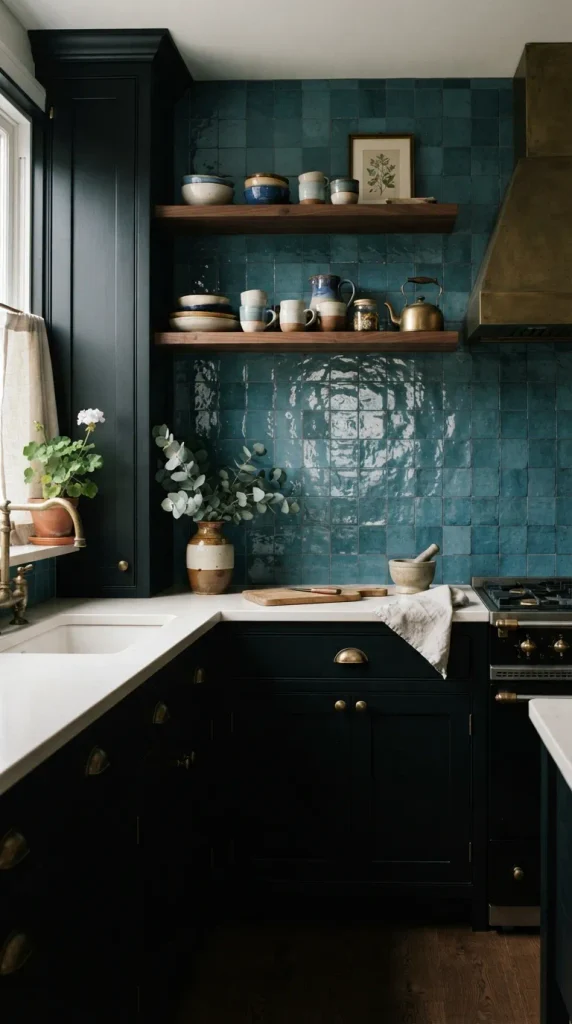
Handmade blue tile can create a layered, atmospheric backsplash that works beautifully with deep cabinetry. Rich teal, muted navy, blue-gray, or petrol tones can sit alongside black or dark wood cabinets while providing enough color variation to keep the wall visually interesting. The irregular glaze found on artisan-style tile catches natural light differently across the surface, giving the backsplash depth without requiring a printed pattern. Use warm white countertops or pale natural stone to keep the darker palette balanced. Brass hardware can add warmth, while wood accessories reinforce the organic quality of the tile. This concept is especially suitable for homeowners who want a kitchen that feels intimate, expressive, and carefully curated.
21. Arabesque Tile Backsplash With Deep Cabinets
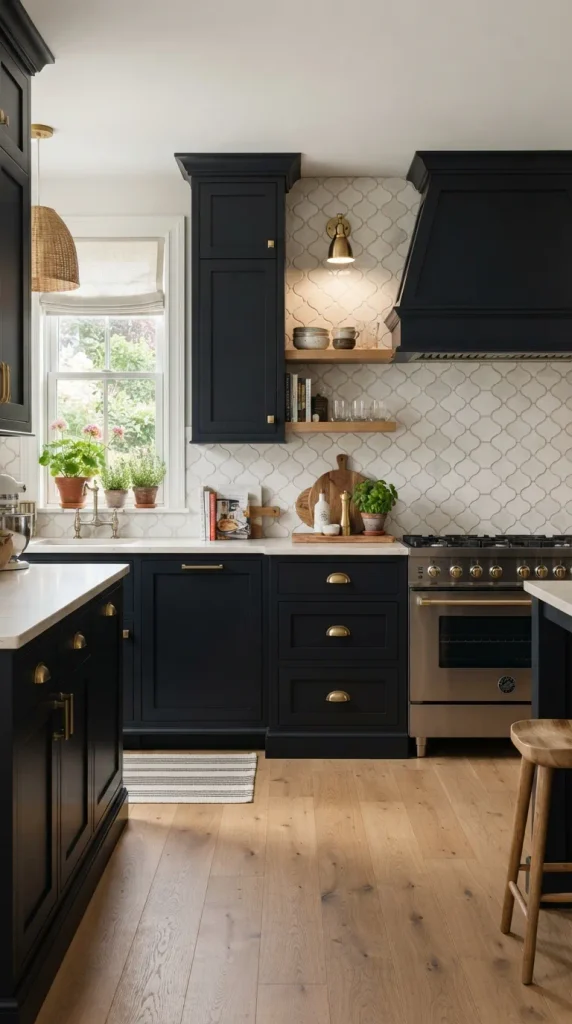
Arabesque tile introduces a graceful curved silhouette that can soften the strong horizontal and vertical lines of dark cabinetry. A creamy, ivory, or pale gray arabesque backsplash creates a light decorative layer without relying on bold color. The shape becomes particularly noticeable when paired with contrasting grout, although a tonal grout produces a quieter and more sophisticated appearance. This design works well behind traditional range hoods, shaker cabinets, and decorative hardware, but it can also provide an interesting counterpoint to contemporary dark cabinetry. To avoid visual competition, choose relatively simple countertops and keep the remainder of the kitchen palette restrained. The result combines classic ornament with the drama of deep cabinet finishes.
22. Large-Format Porcelain Backsplash for Minimalist Kitchens
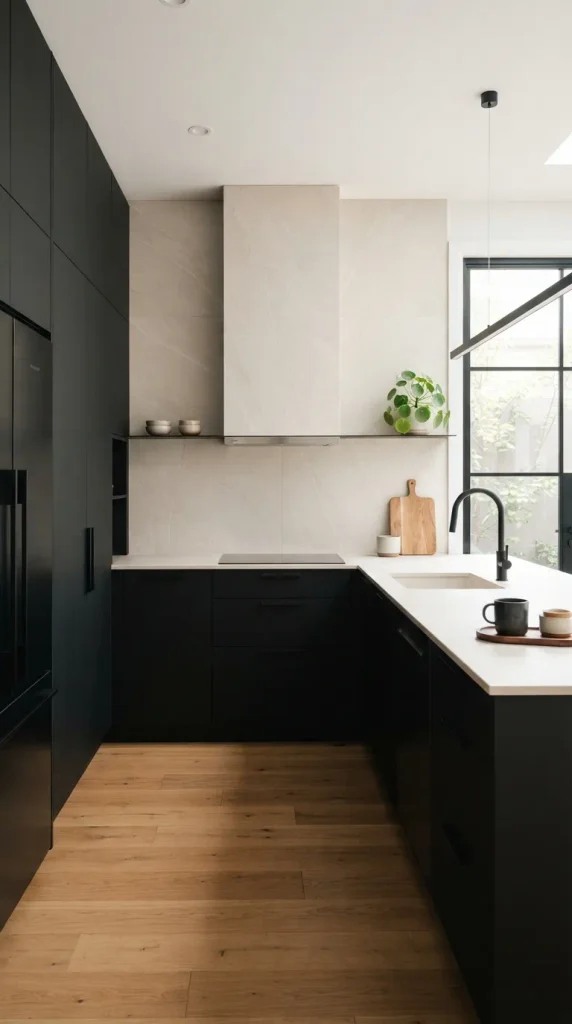
Large-format porcelain is an effective solution for homeowners who want a minimalist backsplash with very few visual interruptions. Oversized panels can imitate marble, limestone, concrete, or other natural surfaces while reducing the number of grout joints across the wall. With dark cabinets, a pale stone-effect porcelain creates a strong but controlled contrast and helps the kitchen appear visually expansive. This approach is particularly effective in modern kitchens with flat-panel cabinetry because both materials emphasize clean lines. Select a finish that complements rather than exactly duplicates the countertop if you want subtle variation. Integrated appliances, streamlined hardware, and simple lighting can complete the minimalist composition without making it feel unfinished.
23. Warm Limestone Backsplash With Walnut Cabinets
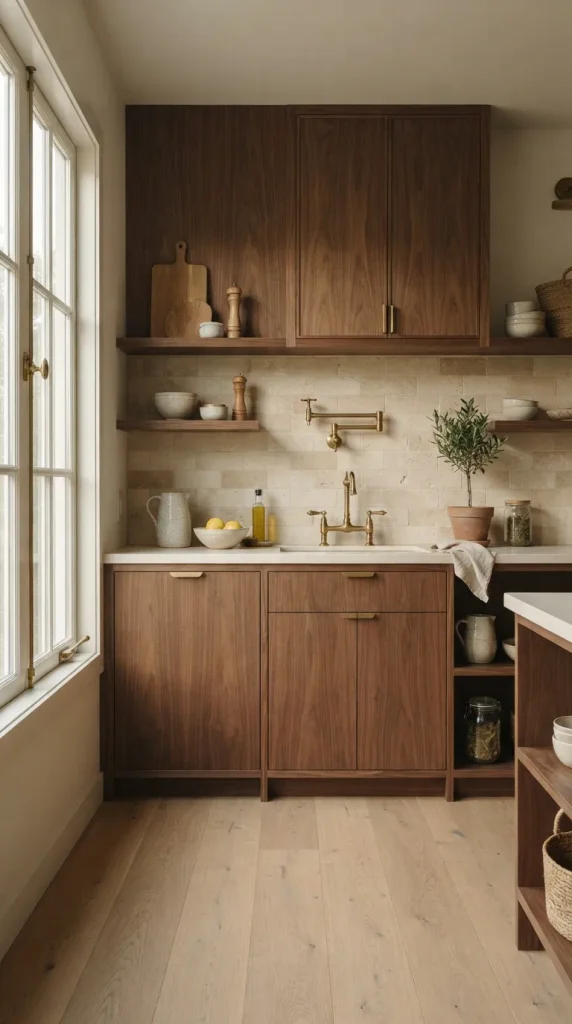
Warm limestone creates a natural transition between dark walnut cabinetry and the lighter surfaces often found in contemporary kitchens. Its creamy beige, sandy, and subtle gray tones can echo the warmth of wood while adding enough brightness to the backsplash area. Honed or lightly textured limestone has a soft visual quality that works particularly well in organic-modern, European, and transitional interiors. Instead of introducing another strong pattern, allow the stone’s natural mineral variation to provide understated interest. Pair it with warm white countertops, aged brass fixtures, and simple ceramic accessories for a cohesive material palette. The combination feels grounded and elegant while avoiding the high-contrast appearance of pure white tile against dark cabinets.
24. Mixed Material Backsplash With Dark Kitchen Cabinets
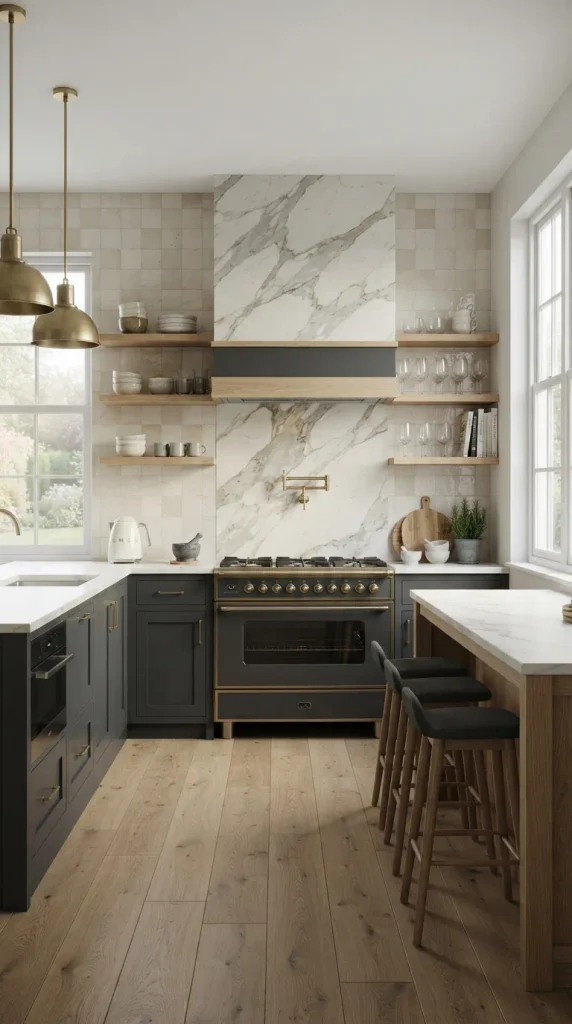
A mixed-material backsplash can bring together two complementary surfaces to make a dark kitchen more personalized and architecturally interesting. For example, a full-height stone slab behind the range can serve as the dramatic focal point, while smaller ceramic tile continues across the remaining walls. Another option is pairing a simple light tile with a narrow stone ledge or decorative accent strip. The key is to establish a clear hierarchy so the materials feel intentionally connected rather than randomly combined. Dark cabinetry provides a strong foundation, allowing the backsplash materials to introduce light, texture, and variation. Coordinating undertones across the stone, tile, countertops, and hardware will keep the overall kitchen visually cohesive.
Conclusion
A thoughtfully selected backsplash can completely change how a dark-cabinet kitchen looks and feels. Light marble, creamy handmade tile, warm limestone, soft gray porcelain, colorful artisan tile, and even dramatic dark stone each create a different relationship with deep cabinetry. The most successful choice will depend on the room’s natural light, cabinet undertones, countertop, flooring, and decorating style rather than on a single universal trend. Whether the goal is a bright transitional kitchen, a warm organic space, a luxurious modern interior, or a moody design with layered materials, these backsplash concepts for dark cabinet kitchens offer practical directions for creating a cohesive and enduring kitchen


