

24 Kitchen Backsplash Ideas for Every Style & Budget
A kitchen backsplash does far more than protect the wall behind your countertops from splashes and stains. It can become one of the most noticeable design features in the room, tying together cabinetry, countertops, flooring, hardware, and lighting while adding personality to an otherwise functional space. Whether you are planning a complete kitchen renovation or simply looking for an affordable way to refresh your existing kitchen, the right backsplash can dramatically change the atmosphere.
Today’s kitchen backsplash ideas range from timeless subway tile and elegant marble to bold geometric patterns, handmade ceramic finishes, natural stone, and contemporary slab materials. The best choice depends on the style of your kitchen, how much maintenance you are comfortable with, and whether you want the backsplash to quietly complement the room or act as a focal point.
Color, texture, scale, grout, installation pattern, and material all influence the final appearance. A small kitchen, for example, may benefit from a light reflective backsplash that creates visual openness, while a large kitchen can accommodate dramatic patterns or darker materials without feeling overwhelmed.
Also Read: 22 Kitchen Island Designs for Every Kitchen Style
If you are searching for kitchen backsplash ideas, these 24 designs offer inspiration for modern, farmhouse, traditional, minimalist, transitional, and eclectic kitchens. Each option combines visual appeal with practical considerations so you can choose a backsplash that looks beautiful and works well for everyday cooking.
1. Classic White Subway Tile Backsplash
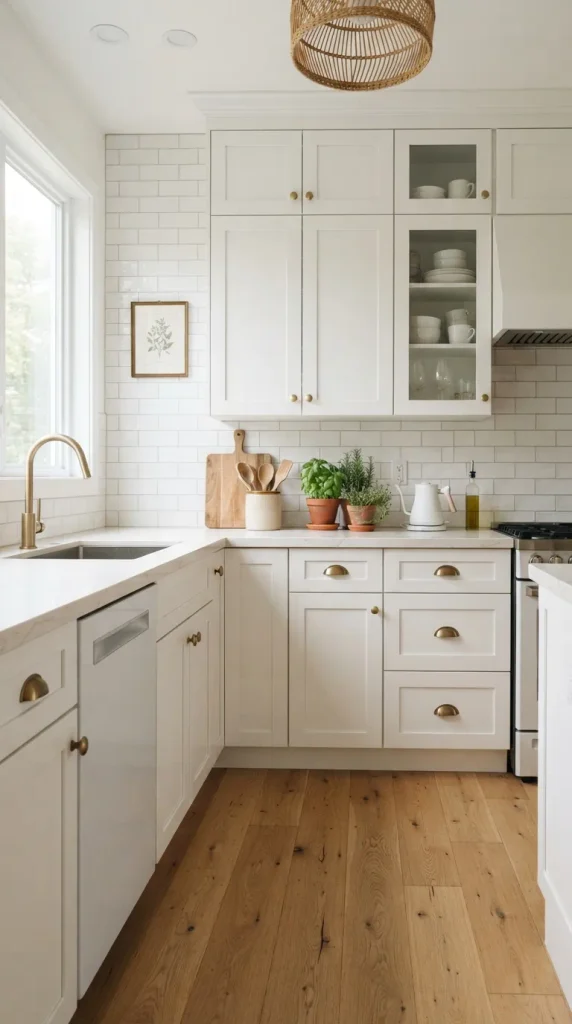
White subway tile remains one of the most versatile kitchen backsplash ideas because its simple rectangular shape works with almost every decorating style. Traditionally installed in a running-bond pattern, these tiles create clean horizontal lines that can make a kitchen feel organized and spacious. Pair glossy white subway tiles with white or light-gray cabinets for a bright, timeless appearance, or use them behind dark green, navy, or charcoal cabinetry to create stronger contrast. Grout can completely change the finished look: white grout produces a seamless appearance, while dark gray grout emphasizes the individual tiles. For a slightly more contemporary interpretation, choose elongated subway tiles or handmade versions with subtle variations in surface texture.
2. Marble Slab Kitchen Backsplash

A marble slab backsplash brings an unmistakably elegant quality to the kitchen while eliminating many of the grout lines associated with smaller tiles. White marble with soft gray veining pairs beautifully with warm wood cabinetry, white cabinets, brass hardware, and neutral countertops. Using the same marble on the countertop and backsplash creates visual continuity and can make the kitchen appear more substantial and thoughtfully designed. For maximum impact, allow the natural veining to remain visible rather than covering it with excessive decoration. Because natural marble can be porous and sensitive to acids, proper sealing and routine care are important, particularly in areas directly behind a cooktop or food preparation zone.
3. Handmade Zellige Tile Backsplash

Handmade zellige-style tiles are ideal for homeowners who want a backsplash with warmth, movement, and artisanal character. Unlike perfectly uniform factory-made tiles, these tiles often feature subtle variations in color, shape, texture, and glaze that become more noticeable as natural light moves across the surface. Soft white, creamy beige, sage green, dusty blue, and earthy terracotta are particularly effective in kitchens with natural wood cabinetry. The irregular surface works beautifully in Mediterranean, organic modern, farmhouse, and transitional interiors. Keep the surrounding finishes relatively restrained so the backsplash has room to become a feature. Natural variations are part of the appeal, making each installation feel less mass-produced and more handcrafted.
4. Bold Geometric Tile Backsplash
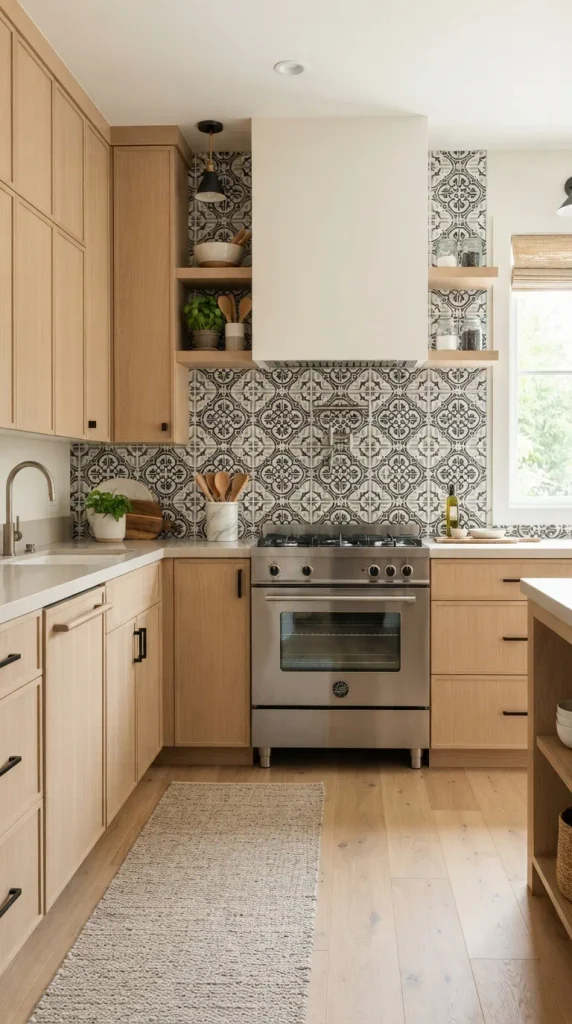
Geometric tiles can transform a plain kitchen into a more expressive space without requiring dramatic changes to the cabinets or countertops. Hexagons, diamonds, triangles, chevrons, and interlocking shapes introduce visual rhythm and can become an architectural-looking feature behind the range. To prevent a geometric backsplash from becoming visually chaotic, consider keeping the color palette limited to two or three related tones. A black-and-white pattern creates a crisp contemporary effect, while muted clay, cream, and olive tones feel softer and more organic. In smaller kitchens, a repeating geometric design can add personality without consuming physical space, making it an effective alternative to heavily decorative cabinetry.
Also Read: 16 Kitchen Rug Ideas to Add Style & Comfort
5. Green Tile Backsplash for a Fresh Kitchen
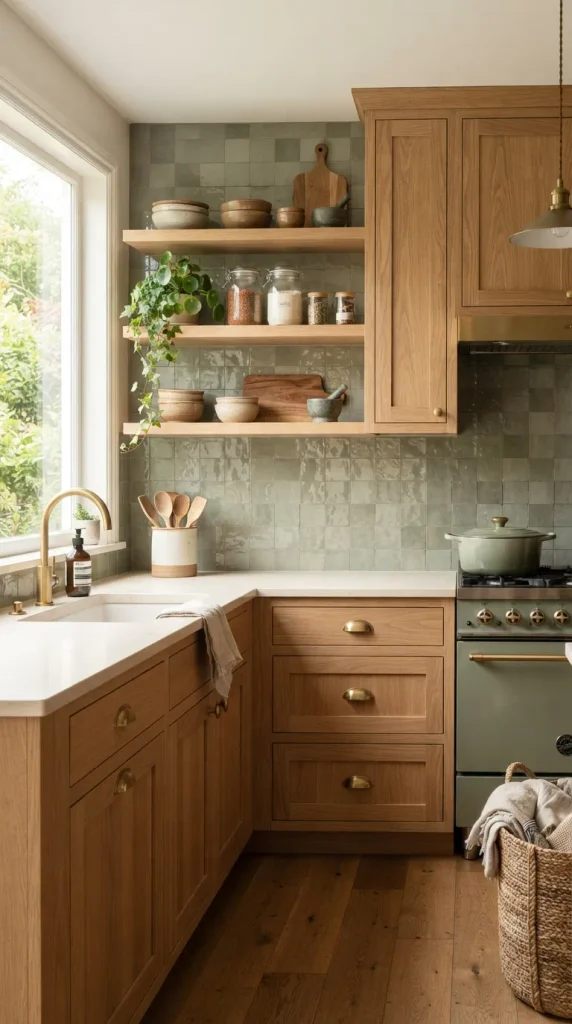
Green backsplash tile brings a natural, calming quality into the kitchen and works particularly well with wood, cream, brass, and stone finishes. Depending on the shade, green can create very different moods. Soft sage feels relaxed and understated, deep forest green looks sophisticated, while muted olive adds an earthy character. Glossy green tiles can reflect daylight and create subtle color variation, whereas matte tiles produce a quieter appearance. Consider extending green tile from the countertop to the underside of the upper cabinets for a cohesive installation. Pairing the backsplash with natural wood shelving or warm oak cabinets can strengthen the connection between the kitchen and the outdoors.
6. White and Gray Marble Herringbone Backsplash

A herringbone installation gives a familiar material a more decorative appearance. White marble tiles arranged in a precise herringbone pattern create movement while retaining the sophisticated character associated with natural stone. This approach works particularly well behind a range where the backsplash can serve as a visual centerpiece. Keep the countertop relatively quiet if the marble has noticeable veining, allowing the installation pattern and stone character to work together without competing with too many other details. Light gray grout can soften the pattern, while a slightly darker grout creates more definition. This backsplash style suits transitional kitchens especially well, bridging traditional craftsmanship and contemporary simplicity.
7. Black Tile Backsplash for Dramatic Contrast

A black backsplash can add depth and sophistication to a kitchen, particularly when the surrounding palette includes lighter cabinets or natural wood. Matte black tiles create a soft, architectural appearance, while glossy black surfaces reflect light and produce a more polished contemporary effect. Black subway tiles are an easy way to introduce the color without using an elaborate pattern, whereas small-format black tiles can create a richer textured surface. Pair the backsplash with brushed brass, stainless steel, or natural wood hardware depending on the desired mood. In kitchens with limited daylight, balance the darker wall with adequate under-cabinet lighting and lighter countertops to prevent the space from feeling visually heavy.
8. Peel-and-Stick Backsplash for an Easy Kitchen Update

A peel-and-stick backsplash can be useful for renters, budget-conscious homeowners, or anyone wanting to experiment with a new look before committing to permanent tile. Modern adhesive backsplash panels are available in patterns inspired by marble, terrazzo, subway tile, geometric designs, and natural stone. For the most convincing appearance, choose a product with realistic texture, carefully measure the installation area, and prepare the wall surface according to the manufacturer’s instructions. These materials are particularly suitable for low-splash areas and decorative updates, but product specifications should always be checked before placing them behind a high-heat cooking surface. A carefully selected temporary backsplash can refresh an outdated kitchen without a full renovation.
9. Terracotta Tile Kitchen Backsplash
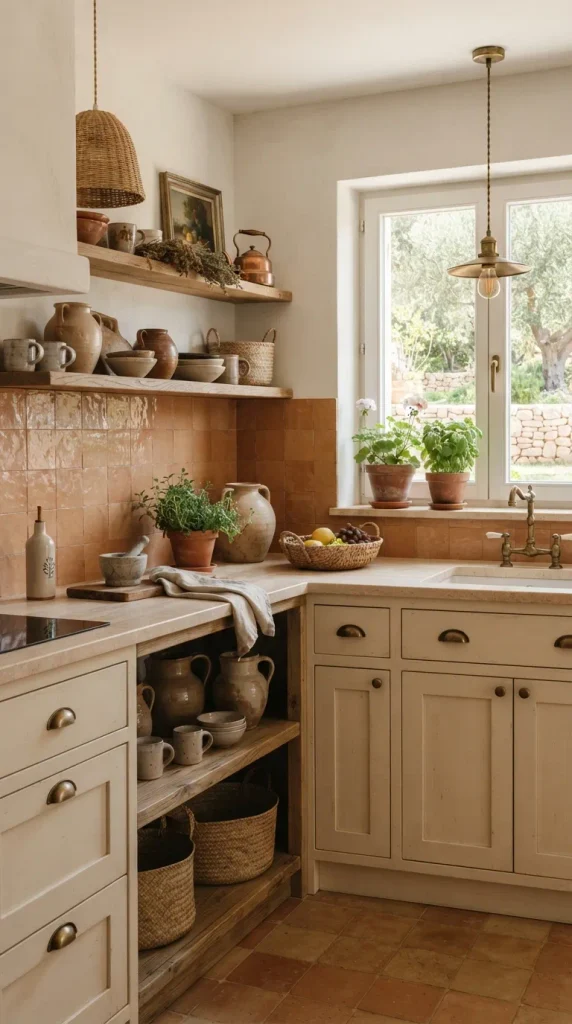
Terracotta backsplash tile introduces warmth and an earthy Mediterranean influence that works beautifully with natural materials. Its reddish-brown, clay-inspired tones can soften a kitchen filled with white cabinetry while complementing oak, walnut, cream stone, and aged metal finishes. Traditional terracotta has a naturally rustic appearance, but newer interpretations can offer more refined shapes and finishes. Consider square tiles for a classic approach or elongated rectangular pieces for a more updated composition. Because terracotta and similar porous materials may require sealing, maintenance should be considered before installation. The result can be especially inviting when paired with warm wood, woven accessories, natural stone countertops, and soft daylight.
Also Read: 25 Kitchen Pantry Ideas for Smart Storage & Style
10. Vertical Stack Tile Backsplash
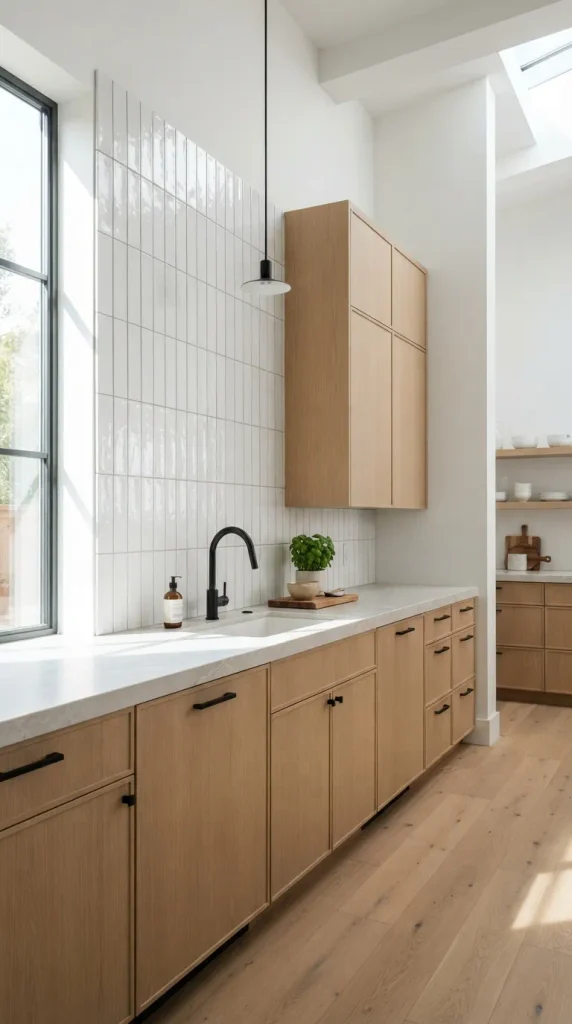
Changing the direction of a simple tile can completely alter its visual character. Vertically stacked backsplash tiles emphasize height and can make the kitchen feel taller, particularly when the installation runs from the countertop toward the upper cabinets. This layout works well with narrow rectangular tiles, elongated ceramic pieces, and simple neutral colors. White or ivory tiles create a bright minimalist effect, while darker green, blue, or charcoal tiles provide stronger architectural definition. A vertical arrangement is especially attractive in kitchens with high ceilings or limited horizontal wall space. Keep the grout lines consistent and precise because the straightforward pattern makes installation accuracy more noticeable.
11. Blue and White Coastal Backsplash

Blue and white remain a dependable combination for creating a relaxed kitchen inspired by coastal interiors without making the room feel overly themed. Soft blue ceramic tile can sit comfortably alongside white cabinets, pale oak flooring, quartz countertops, and brushed nickel hardware. For more visual interest, choose tiles with subtle tonal variation instead of a single flat shade. A patterned encaustic-style tile can add personality, while a simple glossy subway or square tile provides a quieter interpretation. The key is to use blue as part of a broader neutral palette rather than filling every surface with coastal accessories. Natural textures such as rattan, linen, and wood can complete the look.
12. Terrazzo Backsplash for a Contemporary Kitchen

Terrazzo brings playful texture into the kitchen through a combination of chips embedded within a cementitious or composite surface. The scattered fragments can introduce several colors at once, making terrazzo particularly useful when you want the backsplash to connect different elements in the room. A neutral terrazzo featuring white, gray, beige, and muted stone-colored chips works well with minimalist cabinetry, while bolder combinations can create a more expressive contemporary kitchen. Large terrazzo slabs offer a low-grout appearance, whereas terrazzo-look porcelain tiles provide a more modular installation. Repeat one or two of the backsplash colors elsewhere in the room to create a deliberate and cohesive palette.
13. Floor-to-Ceiling Kitchen Backsplash
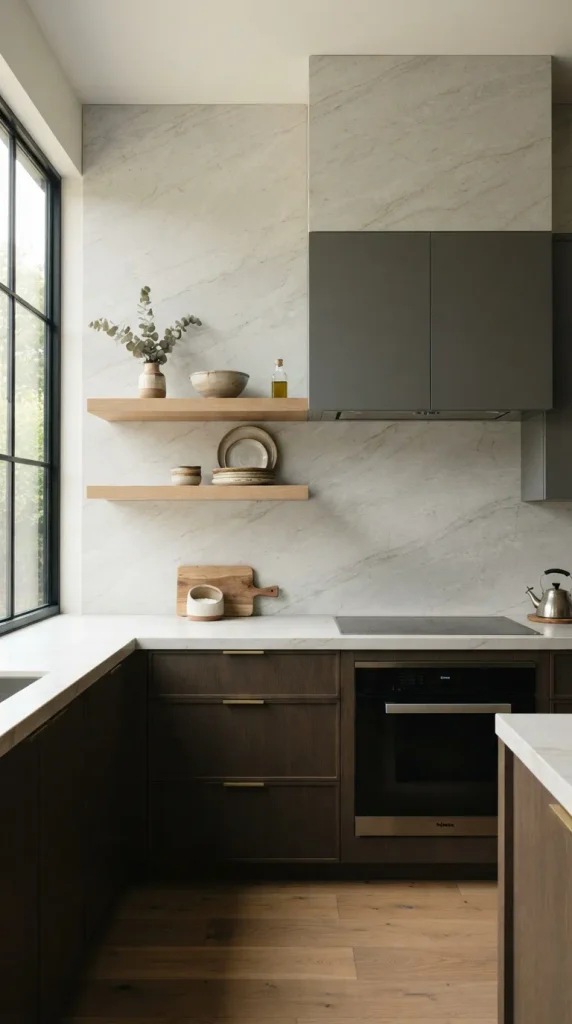
Extending backsplash material beyond the traditional countertop-to-cabinet zone can create a dramatic architectural effect. A floor-to-ceiling installation works especially well on a kitchen wall that contains open shelving, a range, or a prominent sink area. Large-format stone, porcelain slabs, or vertically arranged tile can make the wall feel taller and more substantial. This approach is particularly effective in modern kitchens where the backsplash becomes part of the architecture rather than simply a protective surface. Because a large wall installation attracts considerable attention, choose a material you genuinely enjoy seeing every day. Simple cabinetry and minimal accessories will allow the extended backsplash to remain the central visual feature.
14. Patterned Cement Tile Backsplash
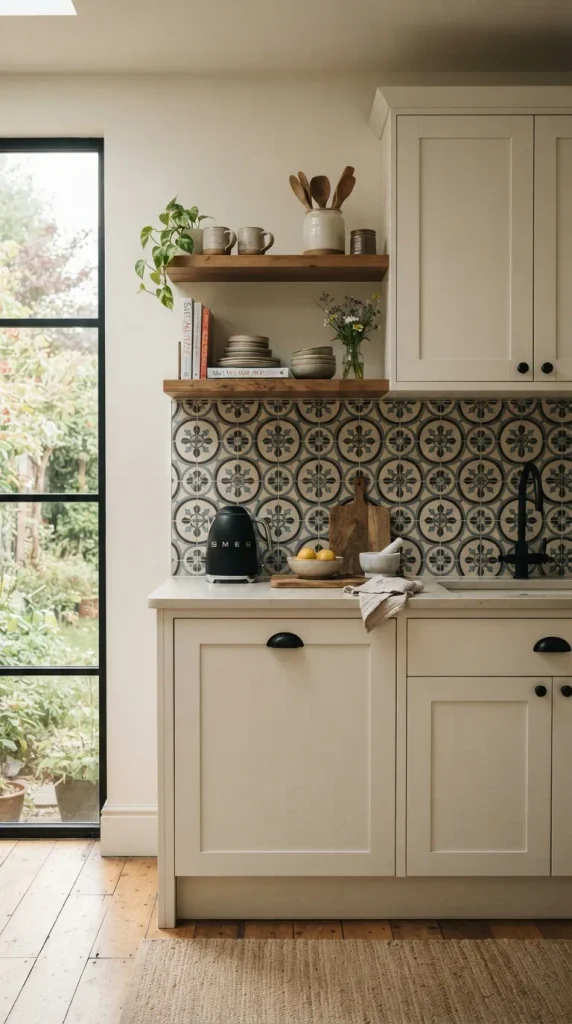
Patterned cement tiles are a strong choice when you want the backsplash to become an artistic element. Their detailed motifs can range from traditional botanical and geometric designs to modern abstract compositions. Because the pattern itself provides considerable visual information, surrounding finishes should usually remain comparatively simple. Cream cabinets, natural wood, matte black fixtures, and understated countertops allow the patterned wall to stand out without overwhelming the kitchen. Cement tiles may have a naturally porous surface and can require sealing and thoughtful maintenance, so homeowners should understand the care requirements before installation. A carefully selected pattern can give a neutral kitchen a distinctive personality that does not depend on trendy accessories.
15. Stainless Steel Backsplash Behind the Range
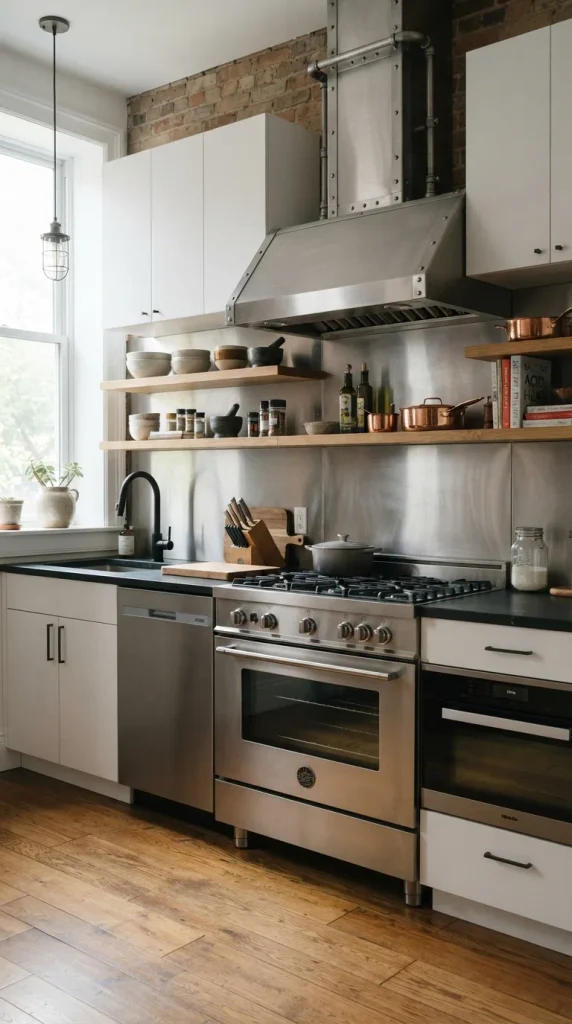
For a sleek, professional-inspired kitchen, stainless steel offers a practical backsplash solution with a distinctly modern character. Its reflective surface works particularly well behind a range or cooktop, where easy cleaning is valuable. Stainless steel pairs naturally with stainless appliances, but it can also create an appealing contrast against painted cabinets and warm wood. Depending on the finish, the surface may be smooth, brushed, textured, or patterned. A brushed finish can help reduce the visibility of minor marks compared with a highly polished surface. This option suits industrial, contemporary, and minimalist kitchens, especially when paired with clean cabinet fronts and limited decorative clutter.
16. Warm Beige Backsplash Tile

Beige backsplash tile is an understated alternative to stark white and can make a kitchen feel warmer and more inviting. Cream, sand, oatmeal, taupe, and mushroom tones work especially well with natural oak, walnut, creamy quartz, and warm metal fixtures. The color is versatile enough for traditional, transitional, farmhouse, and organic modern kitchens. To keep a neutral backsplash from looking flat, introduce variation through tile shape, surface texture, or subtle tonal differences. Handmade-look ceramic tiles are particularly effective because their imperfect edges catch natural light. Beige is also useful when you want the backsplash to connect several warm finishes without introducing a strong accent color.
17. Chevron Tile Backsplash
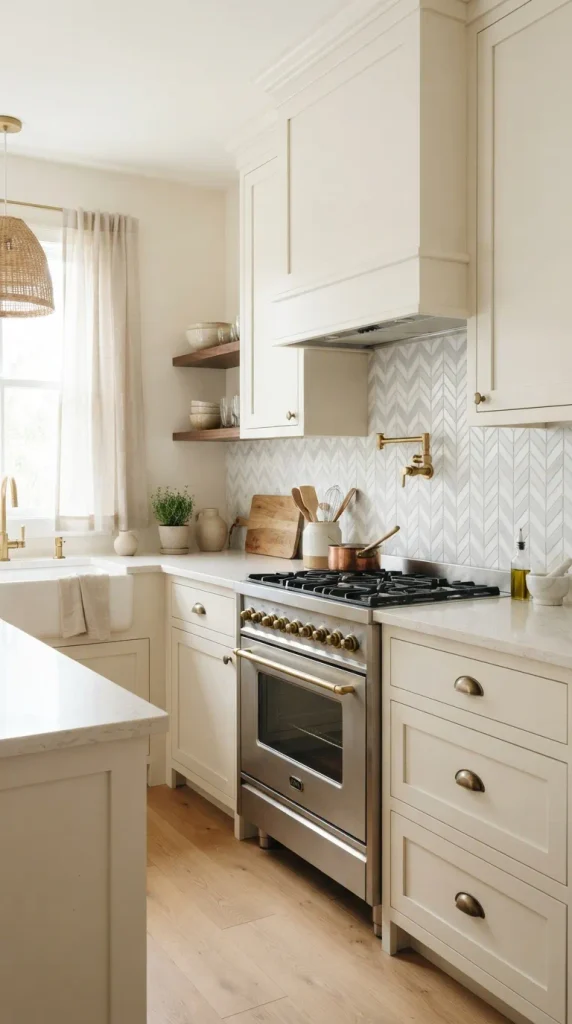
Chevron tile creates a dynamic zigzag pattern that can give the kitchen a more tailored and energetic appearance. Unlike a traditional herringbone arrangement, chevron tiles typically meet at clean points, creating a continuous V-shaped rhythm across the wall. A monochromatic white or soft gray installation keeps the pattern sophisticated, while colored tiles can make it more prominent. This layout works particularly well as a feature behind the range, where the directional pattern naturally draws attention toward the cooking area. Precision matters because uneven alignment can interrupt the continuous effect. Use restrained cabinet hardware and accessories so the backsplash remains visually distinctive without making the entire kitchen feel overly patterned.
18. Natural Stone Backsplash with Organic Texture

Natural stone can bring depth and an earthy sense of permanence to the kitchen. Travertine, limestone, slate, quartzite, and other stone options each have different colors, textures, and maintenance requirements, allowing homeowners to tailor the material to their design goals. A softly textured stone backsplash works beautifully with wood cabinets and organic modern interiors, while polished stone can feel more refined. Before choosing natural stone, consider porosity, sealing requirements, cleaning products, and exposure to heat or acidic foods. The most successful installations allow the stone’s natural character to remain visible rather than competing with excessive ornamentation elsewhere in the room.
Also Read: 23 Kitchen Storage Ideas to Maximize Space & Stay Organized
19. Small Square Tile Backsplash
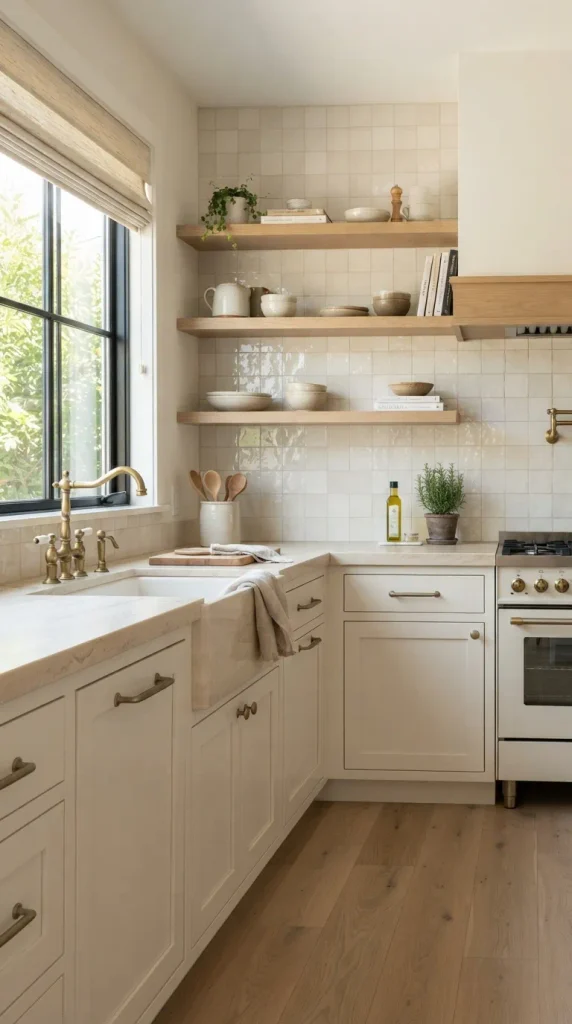
Small square tiles are returning to contemporary kitchens in updated colors and finishes. Rather than feeling dated, modern versions can look fresh when combined with simple cabinetry, refined hardware, and carefully chosen grout. Glossy two-by-two or similarly scaled tiles can create a subtle grid that reflects light across the wall. Cream, dusty pink, pale blue, olive, charcoal, and warm white are particularly versatile choices. Smaller tiles also work well around corners and irregular areas because their scale can accommodate changes in the wall more easily. If you want the backsplash to feel modern, consider a handmade finish or unexpected color rather than relying solely on a traditional white grid.
20. Wood-Look Backsplash for a Warm Kitchen

A wood-look backsplash can add warmth and texture without the maintenance concerns associated with installing actual wood directly in a high-splash kitchen zone. Porcelain and ceramic products can replicate the appearance of oak, walnut, reclaimed timber, or vertical wood slats while offering a surface designed for kitchen environments. This approach works especially well with minimalist cabinetry and neutral stone countertops. Use a wood tone that complements rather than exactly matches the cabinets to create layered warmth. For example, pale oak-inspired backsplash material can work beautifully with painted cabinets, while darker walnut tones can provide depth against light cabinetry. Always verify the product’s suitability for the intended application.
21. Arched Tile Backsplash Feature

An arched backsplash feature can soften the straight lines commonly found in kitchen cabinetry and create a clearly defined focal point around the cooking area. One approach is to install a contrasting tile within an arch-shaped section behind the range while using a simpler material elsewhere. Another is to shape the entire backsplash wall with an architectural arch and fill it with handmade ceramic tile. Soft cream, sage, dusty blue, or natural stone colors can make the feature feel timeless rather than overly decorative. Because an arch naturally draws the eye, keep the surrounding backsplash and cabinetry relatively restrained so the shape remains the main design statement.
22. Mixed-Material Kitchen Backsplash

Combining two backsplash materials can add visual hierarchy when done intentionally. A kitchen might use simple neutral tile across the main countertop run and introduce marble, mosaic, or patterned tile behind the range as a focal area. Another approach is to combine large stone slabs with smaller ceramic tiles in carefully defined zones. The transition should feel architectural rather than accidental, with materials sharing at least one color, undertone, or texture. This idea is particularly effective in large kitchens where a single backsplash material may feel repetitive. Use the more decorative material where you want attention and let the quieter surface handle the larger surrounding areas.
23. Minimalist Large-Format Porcelain Backsplash

Large-format porcelain panels are an excellent option for a streamlined kitchen with minimal grout lines. Modern porcelain can imitate marble, limestone, concrete, terrazzo, and other materials while offering a durable surface suited to many kitchen applications. Large panels create a visually continuous wall that can make cabinetry and countertops appear cleaner and more integrated. This style works especially well in contemporary kitchens with handleless cabinets, simple lighting, and uncluttered countertops. When selecting a marble-look porcelain panel, consider the direction and scale of the veining so the pattern feels intentional across the entire wall. Professional installation is particularly important because large panels require careful handling and precise alignment.
24. Statement Mosaic Backsplash

A mosaic backsplash can serve as the kitchen’s defining decorative feature when you want something more expressive than a conventional tile installation. Mosaic designs may combine glass, stone, ceramic, metal, or mixed materials into floral, geometric, abstract, or custom patterns. For a sophisticated result, choose a mosaic with a restrained color palette and repeat one of its tones elsewhere in the room. A statement mosaic works especially well behind the range, where its smaller scale and intricate composition can be appreciated without covering every kitchen wall. Balance the visual complexity with simple cabinet doors, quiet countertops, and understated accessories. The goal is a backsplash that feels intentional and collected rather than excessively busy.
Conclusion
The right backsplash can influence the entire personality of a kitchen, whether your preference leans toward timeless subway tile, luxurious marble, earthy terracotta, handmade ceramic, bold geometric patterns, or sleek large-format porcelain. When comparing kitchen backsplash ideas, look beyond color alone and consider the material’s texture, scale, grout, maintenance requirements, lighting conditions, cabinet color, countertop pattern, and overall architectural style.
A successful backsplash should feel connected to the rest of the kitchen rather than appearing as an isolated decorative feature. Neutral materials can provide longevity, while distinctive patterns, colors, and textures offer opportunities to express personal style. If you are working with a smaller budget, a simple tile installed in an interesting pattern can still create a significant visual transformation.
For a renovation, always consider practical details such as heat exposure, moisture, cleaning requirements, sealing, installation complexity, and material durability before making a final decision. With thoughtful planning, your backsplash can become both a hardworking protective surface and a beautiful design element that continues to feel relevant for years to come.


