

23 Lemon Kitchen Decor Ideas for a Bright Kitchen
Lemon kitchen decor brings a fresh, cheerful character to one of the most important rooms in the home. With its sunny yellow color, botanical appeal, and connection to Mediterranean-inspired interiors, lemon decorating can make a kitchen feel brighter without requiring a complete renovation. Whether you prefer a subtle citrus accent or an unmistakably lemon-themed kitchen, there are plenty of ways to introduce the look through artwork, textiles, dishes, countertops, shelves, and small decorative details.
The beauty of lemon kitchen decor is its versatility. A few yellow lemons in a ceramic bowl can add warmth to a neutral kitchen, while lemon-patterned curtains, botanical prints, and citrus-inspired accessories can create a more collected and decorative atmosphere. The style works especially well with white kitchens, natural wood cabinetry, woven textures, warm metals, cottage interiors, farmhouse kitchens, Mediterranean spaces, and relaxed summer-inspired homes.
For Pinterest-friendly kitchen styling, the most effective approach is to create visual repetition without making every surface look identical. Repeat yellow through a few carefully selected elements, balance it with white or natural materials, and use green foliage or botanical patterns to reinforce the citrus theme. The result feels intentional rather than overly themed.
Also Read: 30 White Kitchen Ideas 2026 for a Bright & Stylish Home
These lemon kitchen decor ideas cover a range of decorating approaches, from simple countertop updates to more noticeable statement pieces. They can be adapted to small apartments, spacious family kitchens, breakfast nooks, open-plan spaces, and rental homes. You can also combine several ideas to create a cohesive lemon-inspired kitchen while keeping the overall design sophisticated and livable.
1. Style a Bowl of Fresh Lemons on the Kitchen Counter
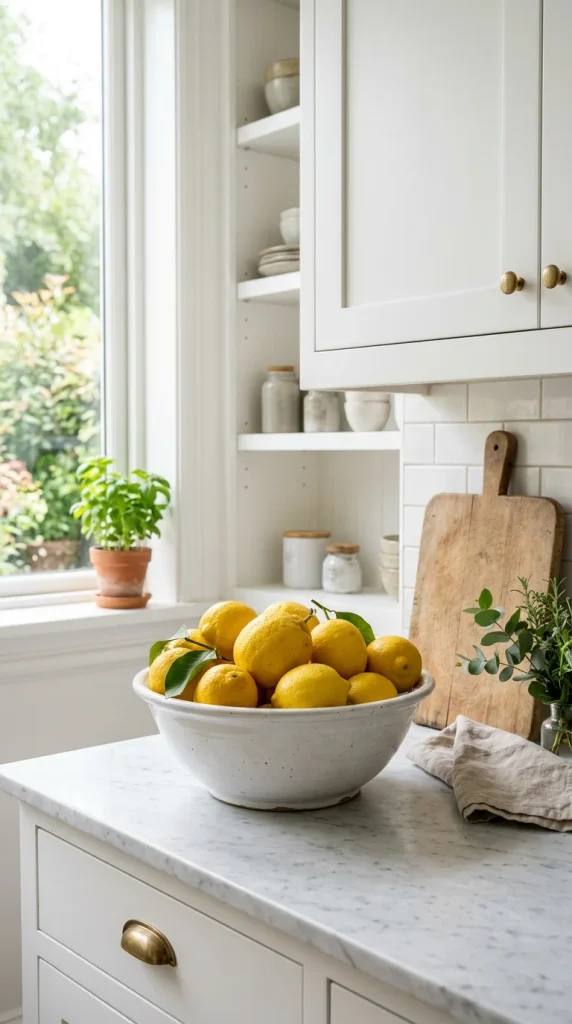
A bowl of fresh lemons is one of the easiest ways to bring natural lemon kitchen decor into the room while keeping the styling practical. Choose a substantial ceramic, stoneware, glass, or woven bowl and place it on a kitchen island, countertop, or open shelf where the yellow fruit becomes an intentional focal point. For a relaxed look, leave the lemons loose rather than arranging them too perfectly. A few green leaves or a small cutting board beside the bowl can introduce additional organic texture. White cabinetry creates a particularly crisp backdrop, while wood counters and woven accessories make the display feel warmer and more rustic. Because the lemons are functional as well as decorative, this idea adds color without creating unnecessary visual clutter.
2. Hang Lemon Botanical Prints for an Elegant Citrus Accent

Lemon botanical artwork offers a more sophisticated interpretation of citrus kitchen decor. Look for vintage-style illustrations featuring lemon branches, leaves, blossoms, or sliced fruit, preferably with restrained colors and natural-looking botanical details. A pair of coordinated prints can be hung above a breakfast nook, coffee station, sideboard, or open section of wall. Frames in light wood, aged brass, black, or simple white can change the character of the display considerably. For a traditional kitchen, antique-inspired botanical illustrations work beautifully; for a contemporary room, choose clean artwork with generous white space. Botanical lemon prints also allow you to incorporate yellow without covering the entire kitchen in a citrus pattern, making them particularly useful for homeowners who want a refined rather than novelty-themed result.
3. Add a Lemon-Patterned Kitchen Runner

A lemon-print runner can transform an otherwise neutral kitchen floor with surprisingly little effort. Select a washable runner featuring lemons, lemon branches, leaves, or a restrained citrus motif, and position it along the main work area or between the island and cabinets. A pattern with white, soft yellow, muted green, and perhaps a touch of blue or beige can integrate more naturally with existing kitchen finishes than an extremely bright print. In busy kitchens, practical construction matters just as much as appearance, so choose a durable, easy-care textile that can withstand everyday foot traffic. The runner can visually connect separate parts of the room while introducing the lemon theme at floor level, creating depth and warmth without taking up counter space.
Also Read: 23 Kitchen Counter Organization Ideas for a Clutter-Free Space
4. Display Lemon-Themed Ceramic Canisters
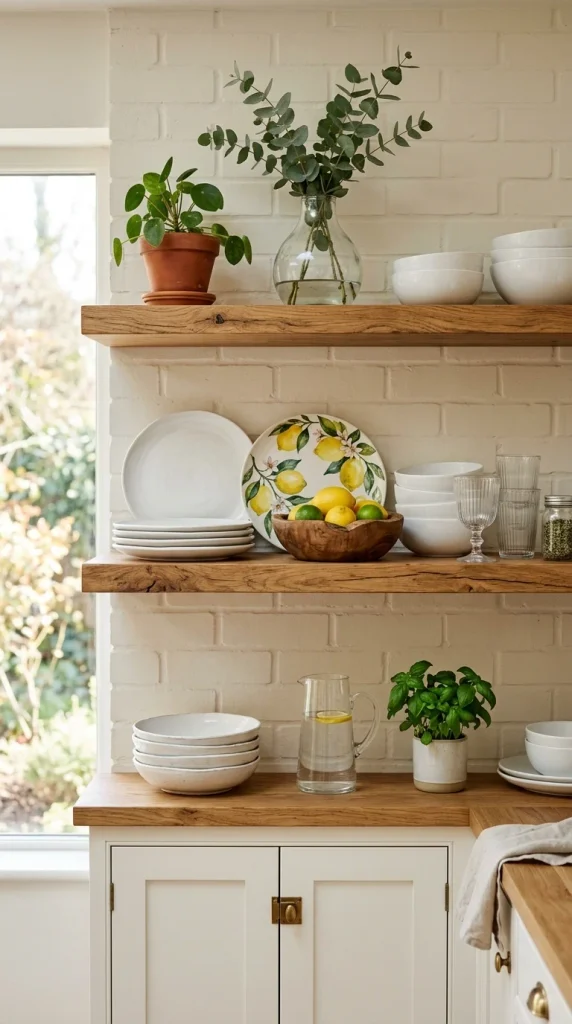
Decorative canisters provide an opportunity to combine storage with lemon kitchen decorating. Choose ceramic or stoneware containers decorated with hand-painted lemons, botanical branches, subtle yellow detailing, or classic Mediterranean motifs. Use them to store coffee, tea, sugar, flour, or other frequently used ingredients while keeping the counters organized. A coordinated set can sit beside a coffee maker, baking area, or prep station, particularly when the surrounding surfaces are relatively quiet. If your kitchen already contains several colors, consider a white canister with small lemon illustrations rather than a highly saturated design. The goal is to make the citrus motif feel like part of the kitchen’s overall material palette rather than a collection of unrelated novelty accessories.
5. Create a Lemon-Inspired Coffee Station
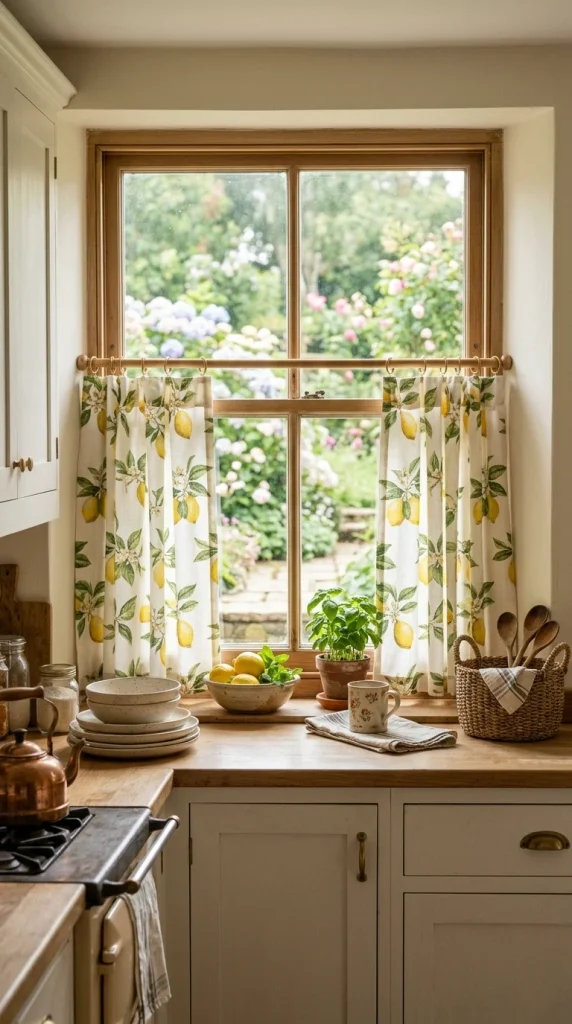
A coffee station is an ideal place to experiment with lemon kitchen decor because a small area can carry a strong visual theme without overwhelming the entire room. Start with a tray in wood, marble, ceramic, or woven material, then add a lemon-patterned mug, yellow espresso cups, a small citrus print, and perhaps a bowl containing fresh lemons. A trailing herb or small potted plant can introduce the green component commonly associated with lemon branches. Keep the arrangement functional by leaving enough room for coffee preparation and choosing accessories you genuinely use. This approach works particularly well in compact kitchens because it creates a dedicated decorative moment rather than requiring large-scale changes to cabinetry or walls.
6. Use Lemon Kitchen Towels for an Easy Seasonal Refresh

Lemon kitchen towels are a simple way to introduce citrus style while keeping the investment modest. Choose towels with a botanical lemon print, embroidered citrus motifs, yellow-and-white stripes, or a classic Mediterranean pattern. Rather than hanging several competing designs together, combine one patterned towel with a solid yellow, cream, or natural linen towel for balance. Draping them over an oven handle, hanging them from a rail, or folding them neatly near the sink gives the kitchen an immediate decorative update. Linen and cotton textures can also soften kitchens dominated by hard surfaces such as stone, tile, stainless steel, and cabinetry. Since towels are easy to replace, they are especially useful for seasonal lemon decorating or for renters who cannot make permanent changes.
7. Decorate Open Shelves With Lemon Accessories

Open shelving provides a natural stage for a carefully edited collection of lemon kitchen accessories. Instead of filling every shelf with citrus-themed objects, introduce a few lemon pieces among everyday white dishes, wooden boards, glassware, and greenery. A lemon-patterned plate leaning against the wall can sit behind a stack of neutral bowls, while a small yellow vase or citrus illustration adds another point of color nearby. Repeating the yellow in two or three places creates cohesion without turning the shelves into a themed display. Varying heights and materials is equally important: combine ceramic, wood, glass, and woven textures to prevent the arrangement from appearing flat. The finished shelf should look collected and useful rather than staged exclusively for decoration.
8. Choose Lemon-Print Curtains for a Charming Kitchen

Lemon curtains can give a kitchen a distinctly cheerful personality, especially when the room has simple cabinetry and understated finishes. A small-scale lemon-and-leaf pattern works well in cottage, farmhouse, traditional, and Mediterranean-inspired interiors, while larger botanical prints can create a more dramatic statement. Keep the rest of the window area relatively simple so the fabric remains the focal point. White, cream, pale green, and natural linen backgrounds tend to make yellow lemons look fresh rather than visually heavy. For smaller kitchens, consider café curtains or a short window treatment instead of full-length panels. This allows natural light to remain prominent while adding pattern and softness to a space that might otherwise be dominated by hard cabinetry and countertops.
9. Introduce Lemon-Themed Dinnerware

Lemon-patterned plates, bowls, serving dishes, and appetizer trays can make everyday meals feel more intentional while reinforcing a citrus-inspired kitchen palette. For a subtle approach, choose white dishes decorated with delicate lemon branches around the rim. If you enjoy stronger patterns, a hand-painted platter featuring whole lemons and leaves can become a statement piece displayed on an open shelf when it is not being used. Mixing citrus dishes with plain white or cream dinnerware helps prevent the table from becoming visually overwhelming. Yellow ceramic pieces can also coordinate with brass hardware, pale wood, or warm stone surfaces. This decorating method is particularly effective because the accessories can move between the kitchen, dining table, breakfast nook, and outdoor entertaining area.
10. Build a Lemon and Greenery Centerpiece

Pairing lemons with greenery creates a naturally balanced kitchen centerpiece because the yellow fruit and green leaves reflect the colors of a real citrus tree. Arrange several lemons in a shallow bowl, wooden crate, pedestal dish, or low ceramic container, then add fresh or realistic foliage around the edges. A few lemon branches in a simple glass vase can achieve a more vertical arrangement for a kitchen island or dining table. Keep the centerpiece low enough to preserve sightlines if the island doubles as a social space. Natural wood, woven baskets, white ceramics, and linen napkins complement this combination particularly well. The resulting display feels botanical and organic, making the lemon theme more sophisticated than a collection of isolated yellow accessories.
11. Add a Lemon-Inspired Accent Wall

For homeowners who want lemon kitchen decor to make a stronger visual statement, a citrus-inspired accent wall can establish the entire design direction. Wallpaper featuring delicate lemon branches is particularly effective behind a breakfast nook, pantry area, butler’s pantry, or small section of cabinetry. To maintain a timeless appearance, look for patterns with botanical detail, restrained contrast, and a balanced background rather than an oversized novelty print. If wallpaper feels too permanent, removable peel-and-stick designs provide a flexible alternative. Keep surrounding accessories relatively quiet so the wall has room to breathe. White cabinetry, natural wood, rattan, brass, and muted green accents can all reinforce the citrus-inspired palette while keeping the kitchen from looking overly busy.
12. Style a Lemon-Themed Kitchen Island

The kitchen island often has the largest uninterrupted surface in the room, making it a natural location for a lemon decor arrangement. Begin with a large tray or shallow centerpiece and combine a bowl of lemons with a small vase, wooden cutting board, and one or two functional serving pieces. The arrangement should occupy only part of the island so that the remaining workspace stays usable. If the kitchen already contains yellow accents, repeat the same shade rather than introducing a dramatically different tone. A restrained island vignette can become the visual anchor of a neutral kitchen, especially when viewed from an adjoining living or dining area. The key is to make the display feel useful, layered, and proportional to the island rather than simply filling the surface.
13. Use Yellow and White Lemon Kitchen Decor

Yellow and white create one of the most recognizable palettes for lemon-inspired kitchen decorating. The combination feels clean and luminous, especially in kitchens with white cabinets, light countertops, or abundant daylight. Introduce yellow through small ceramic bowls, dish towels, artwork, stools, flowers, or fruit rather than making every accessory the same color. Different shades of yellow can also add sophistication: pale buttery yellow feels softer, while golden yellow creates more visual energy. White should remain the dominant background when you want the room to feel spacious. Natural wood, greenery, and small touches of brass can bridge the two colors and prevent the design from appearing overly stark. This palette is especially adaptable because it works across cottage, farmhouse, coastal, traditional, and contemporary interiors.
14. Create a Mediterranean Lemon Kitchen Look

Lemons naturally complement Mediterranean-inspired interiors, where warm sunlight, botanical motifs, natural materials, and relaxed entertaining are central to the aesthetic. To create this look, combine lemon accents with terracotta, aged wood, woven baskets, ceramic pottery, olive branches, and warm neutral textiles. A hand-painted citrus platter can sit beside rustic pottery, while a bowl of lemons provides a simple burst of yellow. Consider adding blue-and-white ceramics if you want a coastal Mediterranean influence, or terracotta and olive green for a warmer southern European feeling. The important detail is material authenticity: natural and slightly imperfect finishes usually feel more convincing than an assortment of brightly colored novelty objects. The finished kitchen should suggest a relaxed outdoor market or sunlit countryside rather than a literal themed room.
15. Add Lemon Accents to a Farmhouse Kitchen

Lemon decor can soften the rustic character of a farmhouse kitchen while introducing a fresh seasonal note. Pair citrus accessories with shiplap, natural wood, apron-front sinks, vintage-style ceramics, woven baskets, and linen textiles. A simple lemon botanical print can hang beside a reclaimed wood shelf, while yellow-striped towels and a bowl of fruit add smaller touches throughout the space. Avoid placing citrus patterns on every available surface; farmhouse interiors generally benefit from breathing room and a mix of practical materials. Vintage-inspired lemon signs can work if used sparingly, but botanical artwork often provides a more timeless result. The combination of weathered textures and fresh yellow accents creates a welcoming kitchen that feels cheerful without losing its rustic foundation.
16. Decorate a Breakfast Nook With Lemon Details

A breakfast nook is a natural place to extend lemon kitchen decor beyond the main cooking area. Start with a small table and introduce a lemon-patterned table runner, yellow seat cushions, botanical artwork, or a vase containing citrus branches. A white or light wood table provides a calm foundation for the brighter details. If the nook receives strong natural light, the yellow accents will appear especially fresh throughout the day. Keep the arrangement practical by selecting washable textiles and durable surfaces suitable for daily breakfasts. A framed lemon illustration above a built-in bench can provide a permanent focal point, while seasonal fruit and table linens can be changed as desired. This approach creates a distinct dining moment while keeping the overall kitchen visually connected.
17. Display a Lemon Wreath in the Kitchen

A lemon wreath can add a decorative focal point to a pantry door, interior kitchen door, wall hook, or empty section of cabinetry. Choose a design that combines realistic or dried-looking lemons with leaves, branches, eucalyptus, olive foliage, or neutral greenery. For a refined appearance, avoid excessively large arrangements that compete with the rest of the kitchen. A medium-sized wreath can become especially attractive when mounted against white cabinetry or a muted wall color. If fresh materials are not practical, high-quality artificial lemons and foliage can provide a long-lasting alternative. Seasonal wreath styling also gives the kitchen a welcoming quality without requiring a major decorating project. The wreath works best as a single statement rather than one of many competing citrus decorations.
Also Read: 24 Bohemian Kitchen Sinks Inspirations for Your Home
18. Incorporate Lemon Motifs Into Small Kitchen Accessories
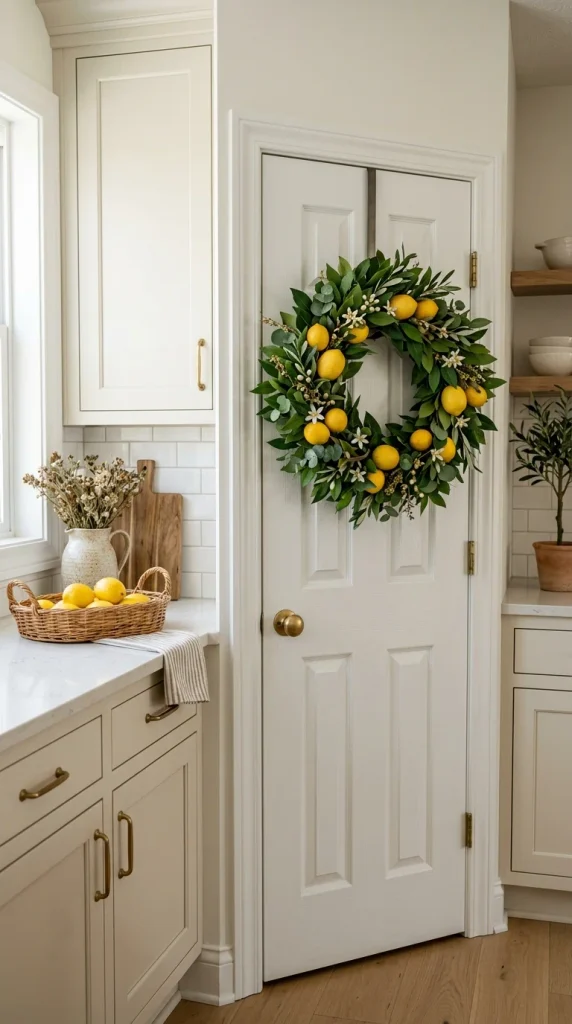
Small accessories are useful when you love lemon kitchen ideas but do not want to commit to large patterned surfaces. Look for citrus motifs on spoon rests, butter dishes, salt cellars, measuring cups, utensil holders, coasters, trivets, or small trays. Because these objects are naturally distributed around a working kitchen, they can introduce the theme in subtle, functional ways. Choose pieces that share at least one visual characteristic, such as white ceramic with yellow artwork or yellow accents with green botanical details. Avoid buying every accessory in the same print. A few carefully selected pieces will make the theme apparent while allowing the kitchen’s architecture, cabinetry, and natural materials to remain visually important.
19. Create a Lemon-Themed Baking Corner
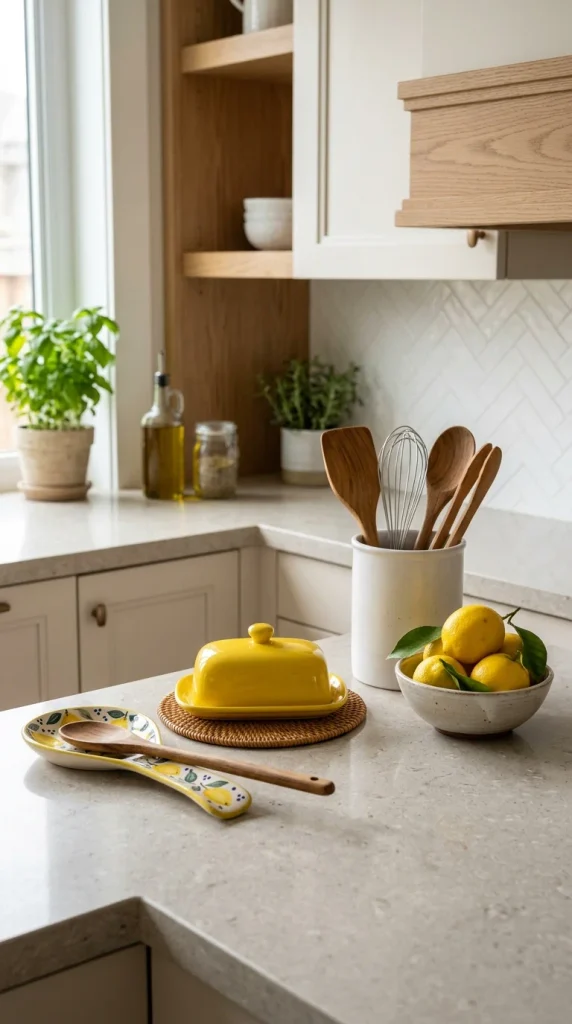
A dedicated baking area can become an especially charming spot for citrus-inspired styling. Arrange flour and sugar containers, a wooden rolling pin, neutral mixing bowls, a lemon-patterned apron, and a ceramic utensil crock around the baking station. A small framed lemon illustration can provide a vertical accent without occupying valuable counter space. If you bake frequently, prioritize accessible storage and keep decorative pieces away from areas where flour and ingredients are regularly scattered. Yellow details can appear through a stand mixer, dishware, textiles, or small containers, while natural wood provides warmth. This idea works particularly well in cottage and farmhouse kitchens, where baking-related objects can contribute to the cozy character of the room rather than being hidden completely.
20. Use Lemon-Inspired Tile or Backsplash Accents

A backsplash offers a more architectural route to lemon kitchen decor. Rather than installing a literal lemon picture across the entire wall, consider tiles in sunny yellow, soft citrus tones, leafy green, or a hand-painted botanical pattern that subtly references the theme. A narrow decorative border can introduce citrus character without overpowering the kitchen. In a small kitchen, yellow backsplash tile can provide a strong focal point against simple white cabinetry. For a more understated approach, keep the backsplash neutral and incorporate a small section of decorative tile behind the range or sink. Because backsplash materials are more permanent than textiles and accessories, select colors that coordinate with your cabinetry, countertops, flooring, and hardware for a cohesive long-term result.
21. Bring Lemon Decor Into a Small Kitchen Without Clutter

Small kitchens can benefit from lemon decor precisely because a few bright accents can create visual personality without requiring more furniture or accessories. Use vertical space for botanical prints, keep a compact bowl of lemons on one counter, and introduce yellow through one textile or a small ceramic object. Magnetic art, removable hooks, slim shelving, and narrow trays can provide additional decorative opportunities without reducing workspace. In a compact room, repetition should be subtle: repeating yellow twice or three times is often enough to establish the theme. Keep countertops relatively clear and choose accessories that serve a purpose. This creates a cheerful citrus-inspired kitchen while preserving the openness and efficiency that small cooking spaces need.
22. Mix Lemon Decor With Natural Wood and Woven Textures
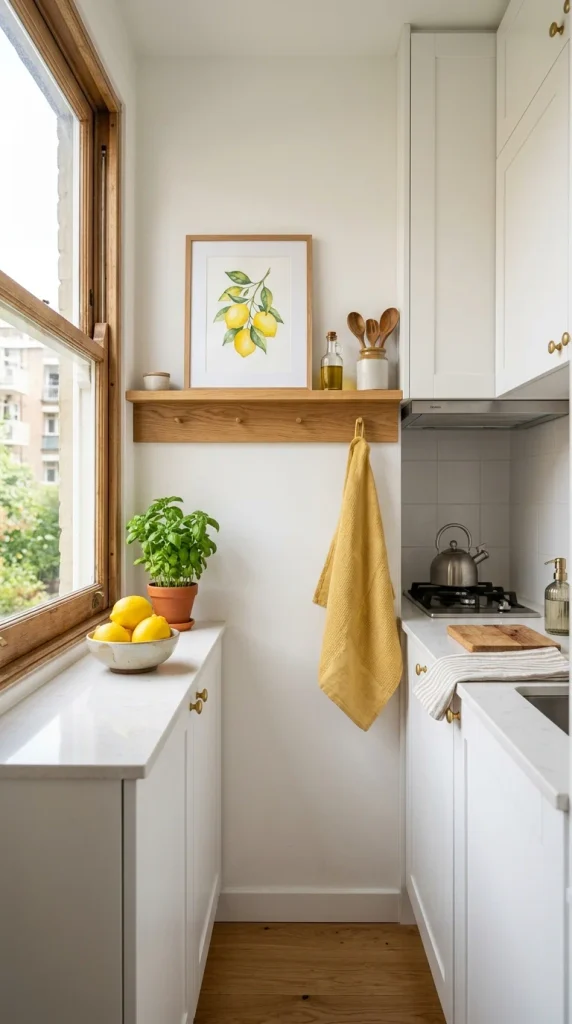
Natural materials provide an excellent counterbalance to the bright color of lemon-inspired accessories. Pair a bowl of lemons with a wooden cutting board, rattan tray, woven basket, bamboo utensil holder, or light oak shelf. These materials introduce visual warmth and prevent the yellow accents from feeling overly decorative. The combination is especially effective in kitchens with white cabinetry because the wood provides a middle tone between the bright walls and vivid citrus color. Woven textures can also make contemporary kitchens feel softer and more relaxed. When selecting lemon accessories, prioritize simple shapes and tactile finishes so the natural materials remain visible. The overall effect is fresh and organic, with the citrus theme appearing as part of a broader natural palette.
23. Create a Refined Lemon Kitchen With Subtle Citrus Details

For a sophisticated interpretation of lemon kitchen decor, restraint is the defining feature. Rather than filling the room with obvious lemon prints, select a few meaningful accents: a botanical citrus painting, a bowl of fresh fruit, a pair of yellow linen towels, and perhaps one hand-painted serving dish. Repeat related colors through greenery, warm wood, cream, or muted brass so the design feels connected without becoming repetitive. This approach is particularly suitable for modern kitchens where strong patterns may compete with clean cabinetry and streamlined surfaces. The citrus theme becomes something discovered gradually rather than immediately announced. By focusing on quality, proportion, and material balance, you can create a lemon-inspired kitchen that remains attractive well beyond a single season.
Conclusion
Lemon kitchen decor works because it combines color, nature, pattern, and everyday functionality in a remarkably flexible way. You can introduce the look with nothing more than a bowl of fresh lemons and a botanical print, or develop a fuller citrus-inspired interior with patterned textiles, Mediterranean materials, decorative tile, and coordinated tableware. The strongest results usually come from repetition with restraint: choose a small palette, echo yellow in several locations, and balance brighter accents with white, wood, greenery, and natural textures.
For a quick refresh, start with removable elements such as kitchen towels, runners, artwork, ceramics, and fresh fruit. If you are designing a kitchen from the ground up, lemon-inspired tile, wallpaper, cabinetry accents, or a Mediterranean material palette can establish a more permanent foundation. Whether your taste leans farmhouse, cottage, modern, rustic, or European-inspired, there is room for citrus details that feel intentional rather than overly themed.
The most inviting lemon kitchens are not necessarily the ones with the most lemon decorations. They are the spaces where the sunny yellow of citrus has been thoughtfully woven into the room’s existing colors, materials, light, and daily routines. That balance allows the kitchen to feel bright and distinctive while remaining practical enough for everyday life.


