25 Halloween Haunted House Decorations

Creating a memorable haunted house for Halloween is about more than covering a room with fake cobwebs and plastic skeletons. The most effective Halloween haunted house decorations transform an ordinary home, yard, porch, basement, or party space into an environment that feels mysterious, abandoned, and genuinely atmospheric. With thoughtful lighting, realistic textures, eerie props, sound effects, and carefully arranged focal points, even a modest space can become an immersive Halloween experience.
The best haunted house decorating ideas also work because they build a story. A dark hallway can become an abandoned hospital corridor, an ordinary staircase can resemble an old manor, and a front porch can look like the entrance to a forgotten Victorian house. Combining inexpensive DIY Halloween decorations with a few dramatic statement pieces allows you to create depth without making the space feel cluttered.
Whether you are preparing a family-friendly Halloween party, decorating your home for trick-or-treaters, or creating a more dramatic haunted attraction, these Halloween haunted house decorations offer practical ways to create an eerie setting. The ideas below cover indoor and outdoor spaces, including entrances, windows, walls, ceilings, hallways, staircases, rooms, yards, and atmospheric details that make the entire haunted house feel connected.
Also Read: 21 Primitive Halloween Decor Ideas for a Rustic Home
1. Abandoned Haunted House Entrance
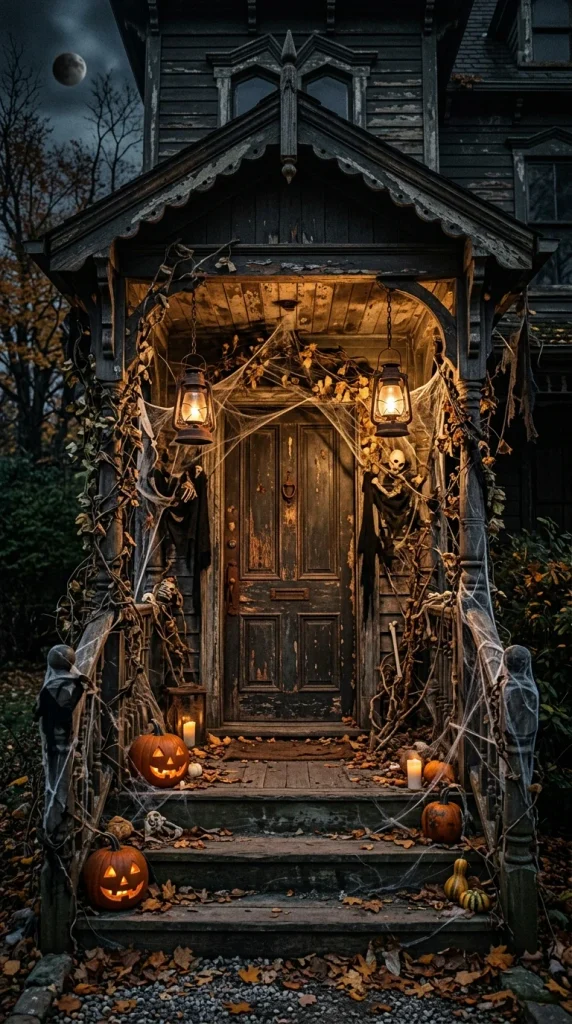
The entrance establishes the mood before guests experience anything inside, so make it look like the doorway to a long-forgotten property. Frame the front door with weathered wooden boards, artificial vines, torn fabric, dusty cobwebs, and crooked signs that suggest the house has been abandoned for years. A slightly tilted lantern can provide a weak warm glow while artificial moss and aged-looking props add texture around the doorway. For a more convincing effect, avoid covering every surface with decorations. Leaving portions of the door and walls visible creates the impression that the house itself is deteriorating beneath the decorations. A few strategically placed bones or an old-looking chair can complete the unsettling entrance.
2. Creepy Haunted House Front Porch
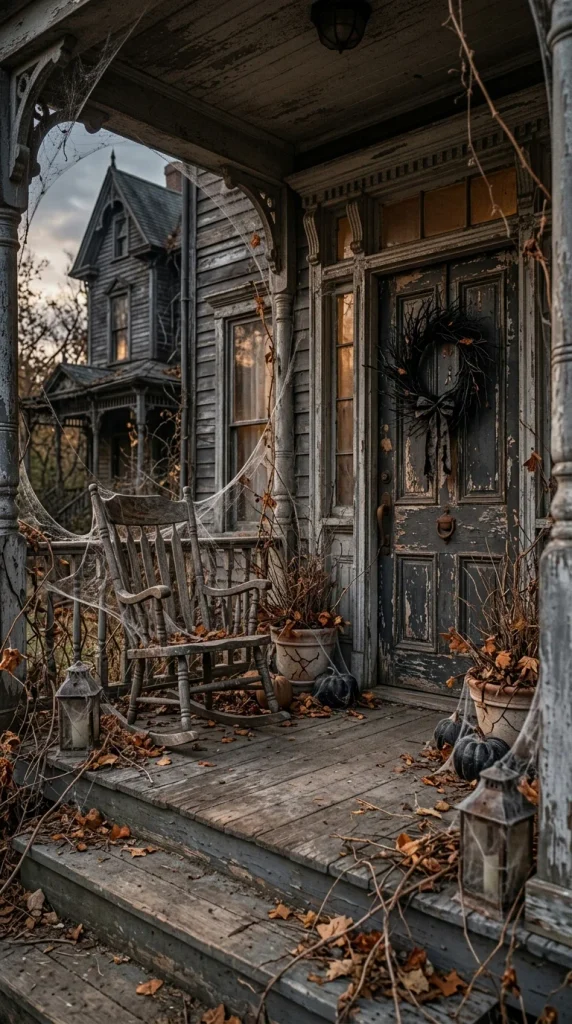
Turn the front porch into an eerie staging area by combining old-fashioned furniture with Halloween props that appear naturally abandoned. A wooden rocking chair, cracked-looking flowerpots, empty picture frames, dusty lanterns, and artificial dead branches can create the atmosphere of an old home frozen in time. Add stretched spider webs across the railings and corners rather than placing them randomly across the entire porch. A black wreath made from twisted branches can become a strong focal point on the door. For nighttime decorating, use dim bulbs or flickering LED candles to create shadows without relying on excessive colored lighting. The goal is to make visitors feel that something unsettling happened here long before they arrived.
3. Haunted House Cemetery Yard
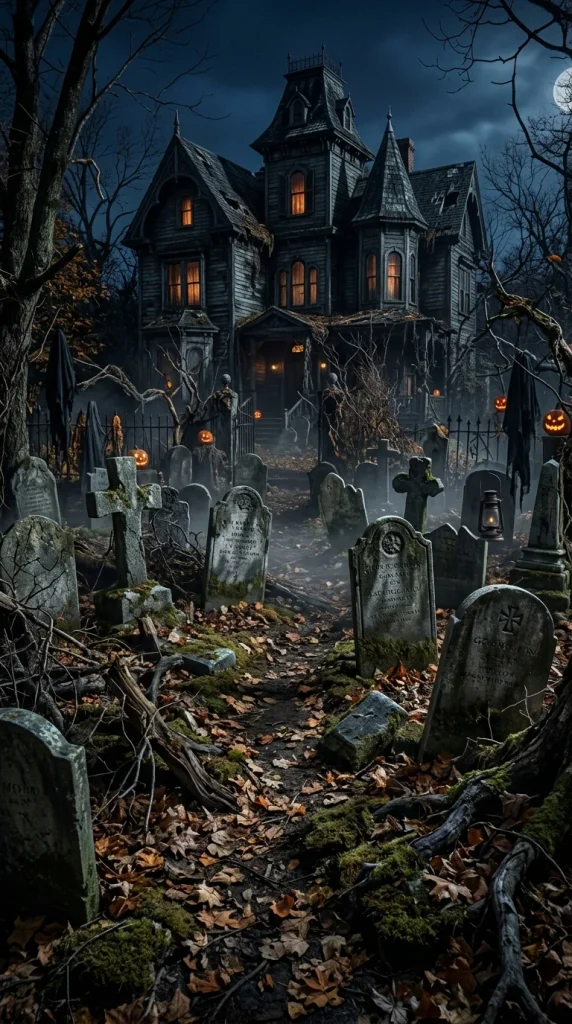
A miniature graveyard is one of the most recognizable outdoor haunted house decorations and can completely change the appearance of a lawn. Use foam, plastic, or weather-resistant materials to create gravestones with different shapes, sizes, and levels of wear. Arrange them irregularly instead of forming perfect rows so the cemetery feels old and neglected. Add artificial fog close to the ground, crooked wooden crosses, dry branches, and patches of faux moss around the bases. A few stones can be partially tilted or surrounded by fallen leaves to suggest years of neglect. Keep the pathway through the cemetery slightly narrow, giving visitors the sensation that they are walking through a forgotten burial ground rather than simply viewing lawn decorations.
4. Haunted Mansion Windows
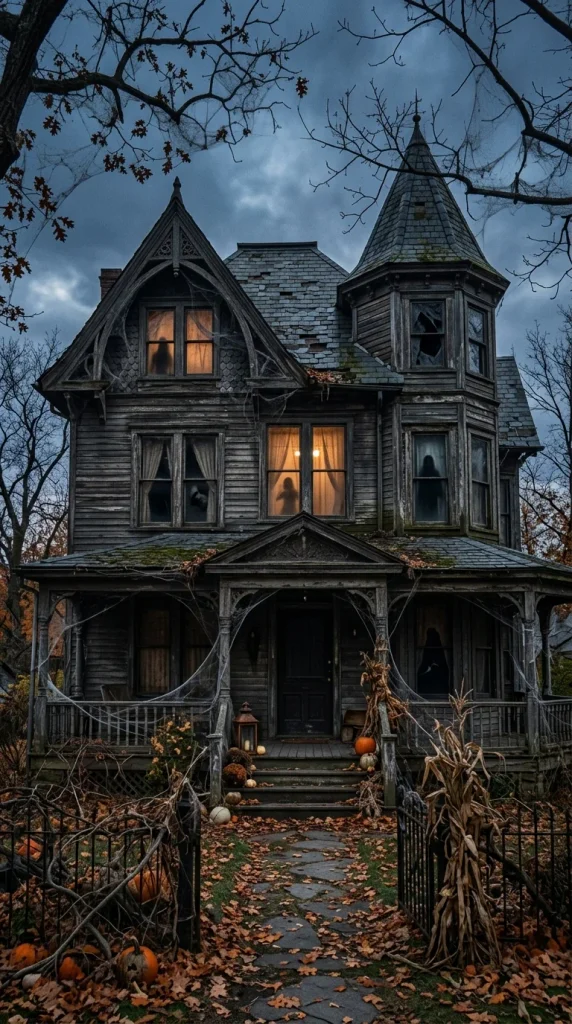
Dark windows can become powerful visual elements when decorated with silhouettes that suggest movement inside the house. Cut black cardboard or use removable window film to create shapes such as tall figures, clawed hands, crows, crooked trees, or shadowy faces. Place the silhouettes behind curtains so they remain partially obscured rather than completely visible. A low-intensity light positioned inside the room can create a subtle backlit effect after sunset. For additional atmosphere, leave one or two windows completely dark while giving others a faint glow. This uneven lighting makes the house appear occupied in an unsettling way and works especially well for Victorian, abandoned mansion, and old farmhouse haunted house themes.
Also Read: 20 Pool Noodle Halloween Decor Ideas for Halloween
5. Ghostly Hanging Figures
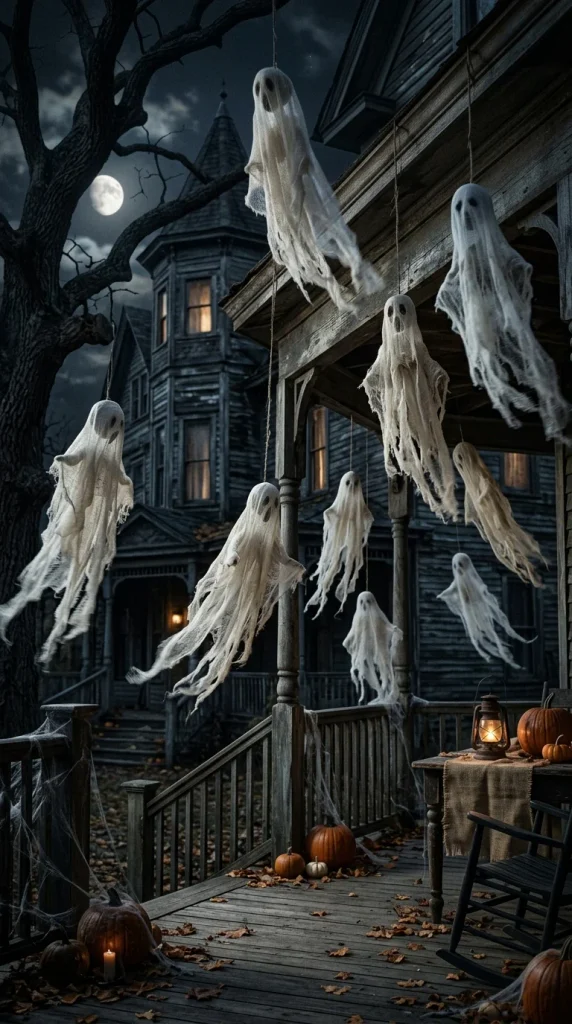
Suspended ghost figures can bring movement to an otherwise static haunted house scene. Use lightweight fabric, cheesecloth, gauze, or purpose-made outdoor materials to create ghostly forms hanging from porches, tree branches, ceilings, or covered walkways. Instead of making every ghost face the same direction, vary their height and orientation so they appear naturally scattered through the space. A small fan can gently move lightweight fabric, creating slow motion that catches attention without requiring complicated electronics. Keep facial details subtle because indistinct shapes can be more atmospheric than cartoon-style faces. Hanging figures work particularly well around entrances and pathways where visitors naturally look upward as they move through the decorated area.
6. Fog-Filled Haunted Hallway
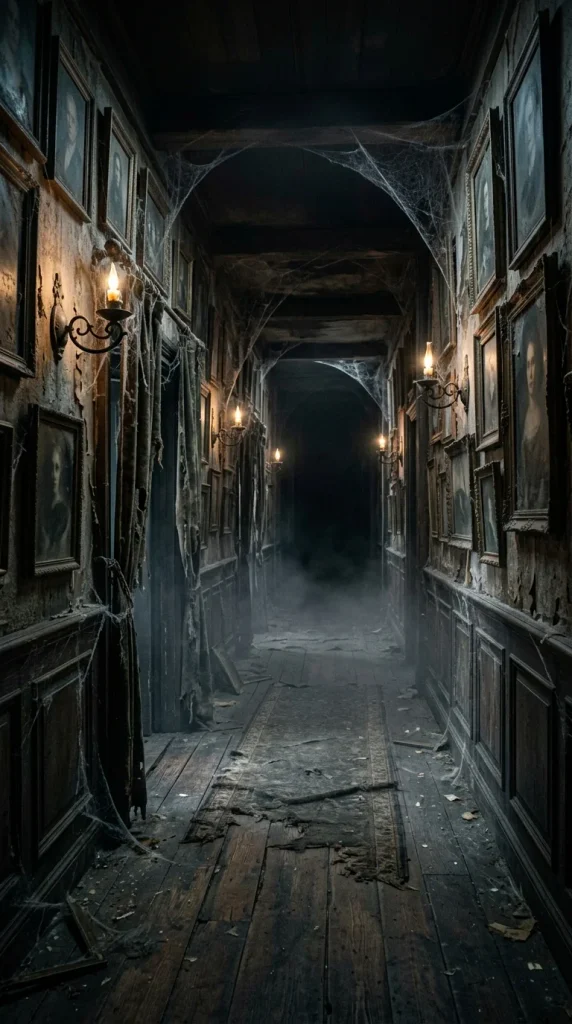
A hallway can become one of the most immersive parts of a haunted house when visibility is intentionally reduced. A suitable water-based fog machine can create a low layer of mist while dim lighting helps obscure the far end of the corridor. Decorate the walls with crooked frames, torn curtains, aged photographs, old-fashioned signs, and artificial cobwebs. Keep some sections relatively empty so the fog has room to create visual depth. A flickering wall light or concealed LED source can make the haze appear thicker as visitors move through it. Avoid excessive fog in areas where people may trip or where ventilation is limited, and always follow the manufacturer’s safety instructions for the equipment being used.
7. Haunted Portrait Wall
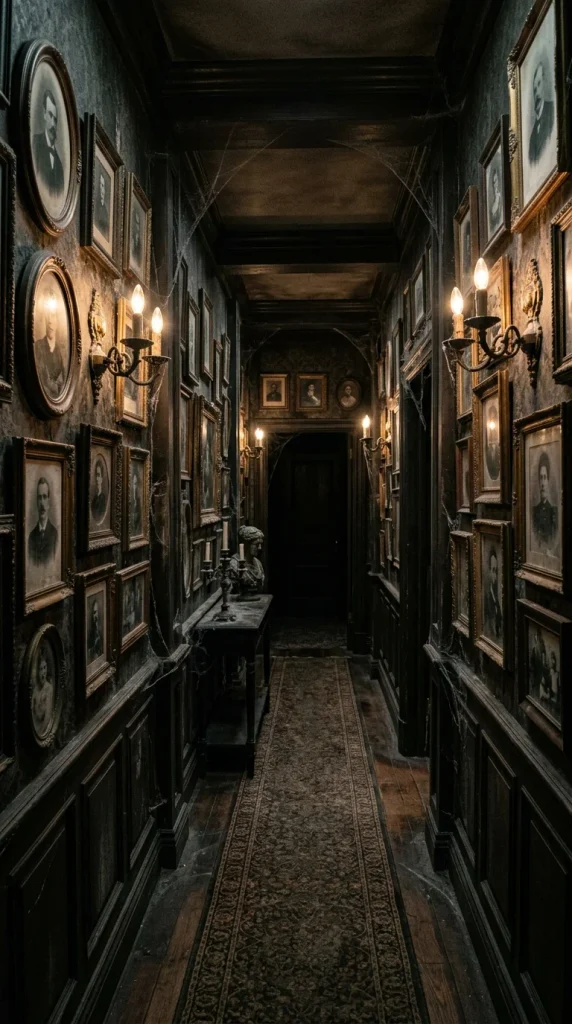
Create the feeling of a mysterious family mansion with a wall of old-fashioned portraits. Use inexpensive thrift-store frames, printable vintage-style artwork, or intentionally distressed reproductions to build a collection that looks as though it belongs to generations of the same household. Arrange the frames at slightly different heights rather than creating a perfectly symmetrical gallery. Dark wood tones, muted artwork, and aged-looking finishes reinforce the haunted mansion aesthetic. If you want a more dramatic effect, place small lights above selected frames or use subtle animated portrait effects where appropriate. The wall works especially well in hallways and stairwells because guests naturally slow down to inspect the artwork, making it a strong storytelling element.
8. Creepy Doll Room
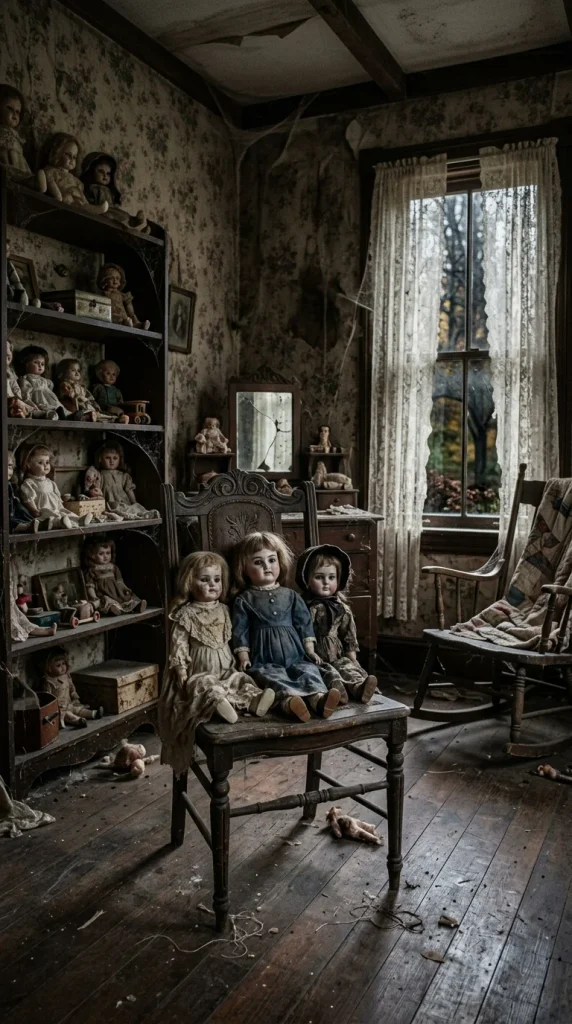
A room filled with old dolls can create an unsettling haunted house scene without requiring expensive props. Collect vintage-looking dolls from thrift stores or use inexpensive decorative figures with old-fashioned clothing. Place them on shelves, chairs, small tables, and the floor at different heights. Some can face the wall while others look toward the doorway, creating a sense of deliberate arrangement. Add faded lace curtains, an old-style lamp, dusty books, and a small wooden rocking chair to reinforce the theme. Keep the color palette subdued with neutral fabrics and dark furniture. A single dim lamp can provide enough illumination to make the dolls visible while leaving portions of the room in shadow.
9. Witch’s Haunted Kitchen
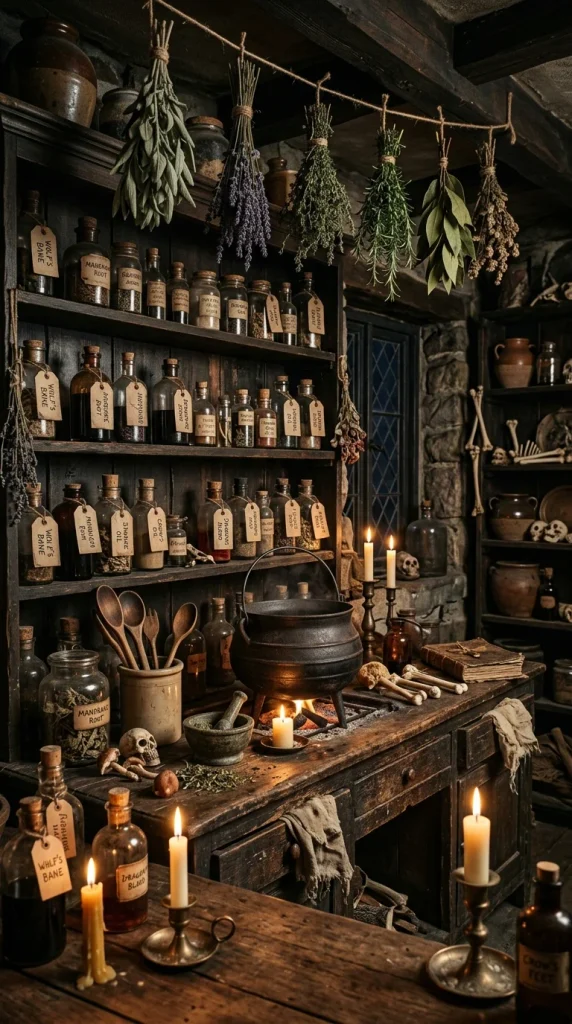
Transform a kitchen or temporary party area into a mysterious witch’s workspace using jars, dark bottles, wooden utensils, dried herbs, artificial bones, and old-looking labels. Arrange ingredients in groups so the space feels functional rather than simply decorated. A large cauldron can serve as the central focal point, while faux potion bottles and bundles of artificial herbs fill shelves and counters. Use labels such as “Moon Dust” or “Midnight Brew” for playful atmosphere rather than anything dangerous or misleading. Battery-powered candles can add warm illumination around the display. For food-safe areas, keep decorative materials separate from anything being served and avoid placing non-food-safe props where they could contaminate snacks or drinks.
Also Read: 20 Harry Potter Halloween Decor Ideas for Your Home
10. Haunted Staircase Transformation
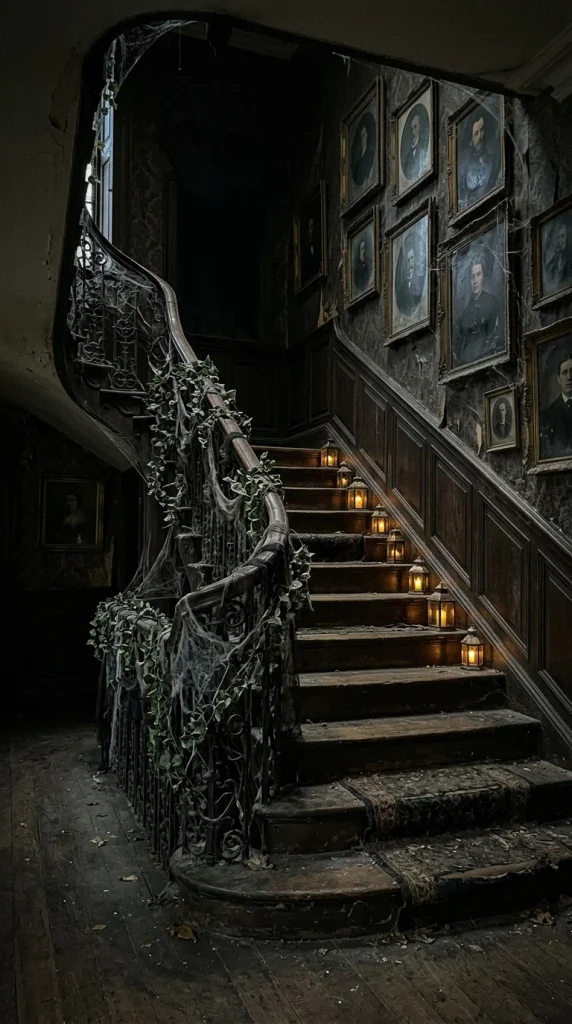
A staircase offers excellent vertical space for dramatic Halloween decorating. Wrap railings with artificial vines, gauze, fabric, or removable decorative materials, then add small lanterns or battery-operated candles along the steps where they can be positioned safely. Hang portraits, antique-style signs, or ghostly figures along the wall beside the stairs. The upper landing can remain darker than the lower portion, creating the impression that the staircase leads somewhere mysterious. Avoid placing loose objects directly on walking surfaces, especially near step edges. Instead, concentrate decorations on the handrail, walls, and landing. The resulting design uses the architecture of the house itself, making the haunted transformation feel more convincing.
11. Spider Web Ceiling
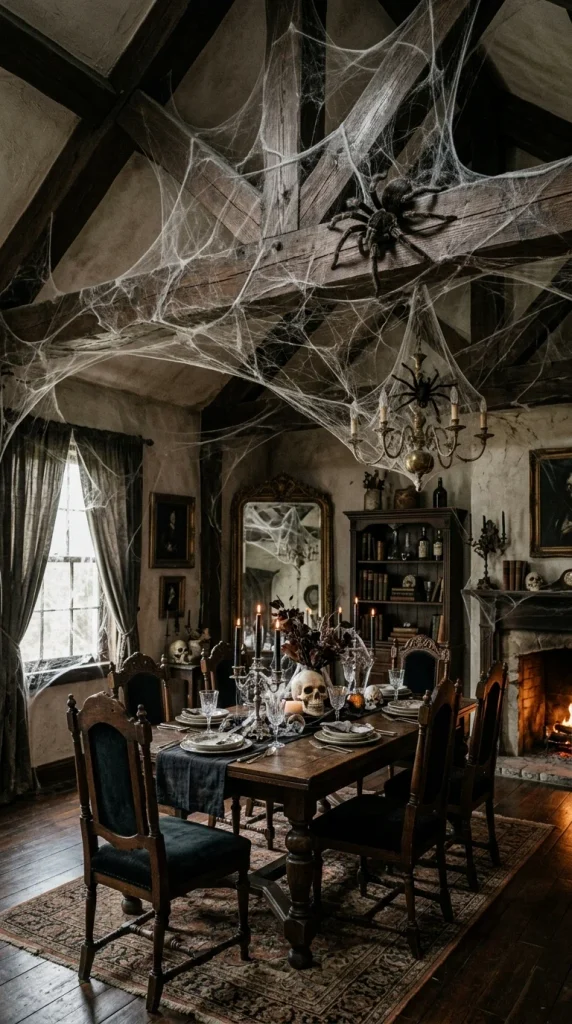
The ceiling is frequently overlooked in Halloween decorating, yet it can make a room feel dramatically more enclosed. Stretch artificial spider webs across ceiling corners, light fixtures, beams, and upper wall edges while keeping the material loose enough to create natural-looking layers. Add a few oversized spiders at different heights rather than covering every section with identical pieces. In a larger room, allow the webbing to extend from one corner toward a central area to create visual continuity. Use lightweight decorations and keep all materials safely away from hot bulbs, exposed heating elements, fans, and electrical equipment. This approach works particularly well in dining rooms, entryways, basements, and covered porches.
12. Haunted Basement Scene
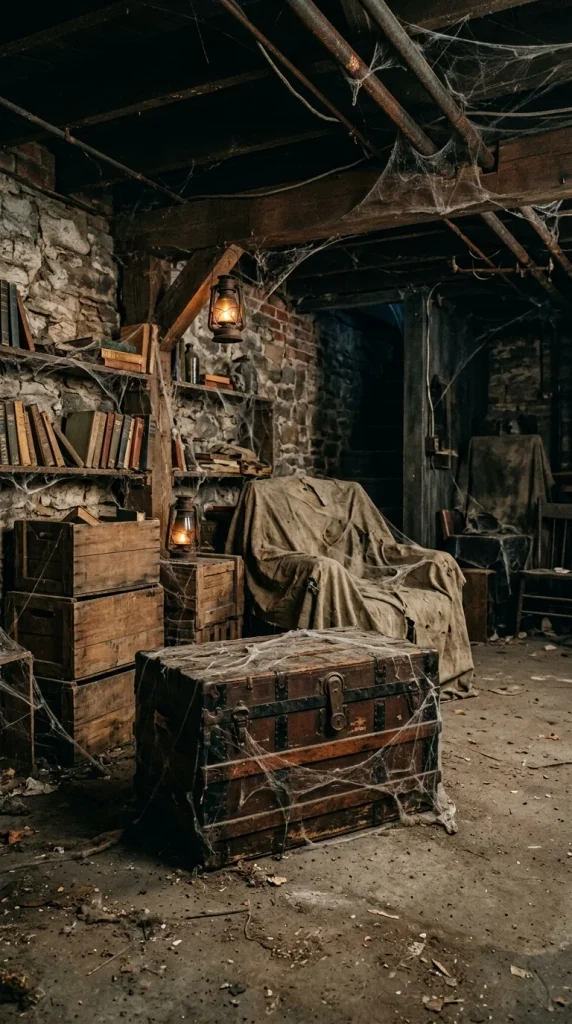
A basement already provides many of the visual characteristics associated with haunted houses: low ceilings, exposed pipes, storage boxes, dark corners, and limited natural light. Build on those features with old crates, dusty books, broken-looking frames, artificial cobwebs, lanterns, and weathered furniture. Create one central mystery, such as a locked-looking trunk, an abandoned workbench, or a covered mirror. Instead of filling the basement completely, preserve dark empty spaces around the focal objects. Those gaps create anticipation because guests cannot immediately see everything in the room. If the basement has genuine moisture, electrical, or trip hazards, address those issues before decorating rather than attempting to hide them with Halloween props.
13. Haunted Mirror Display
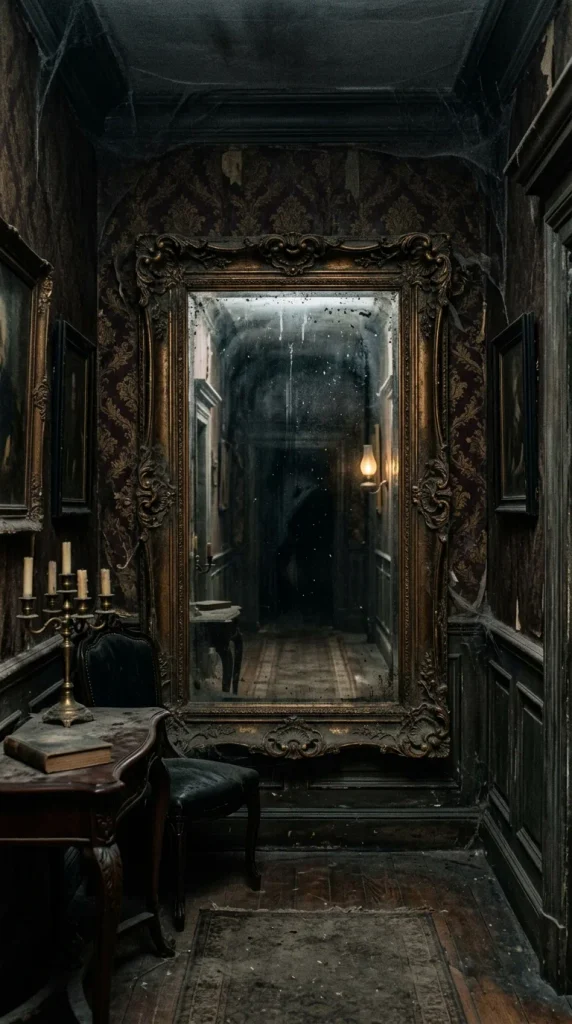
An old mirror can become an eerie centerpiece when incorporated into a haunted mansion theme. Choose a large decorative frame with an antique appearance and position it where visitors naturally pass by. Lightly distress the surrounding frame using safe decorative techniques, then add artificial dust effects or removable decorative marks to suggest age. For a supernatural atmosphere, place dim lighting beside or behind the mirror rather than directly in front of it. A partially covered mirror can be even more intriguing because guests see only fragments of the reflective surface. Keep all electrical equipment away from condensation and ensure mirrors are securely mounted, especially in busy areas where visitors may accidentally bump into them.
14. Abandoned Hospital Hallway
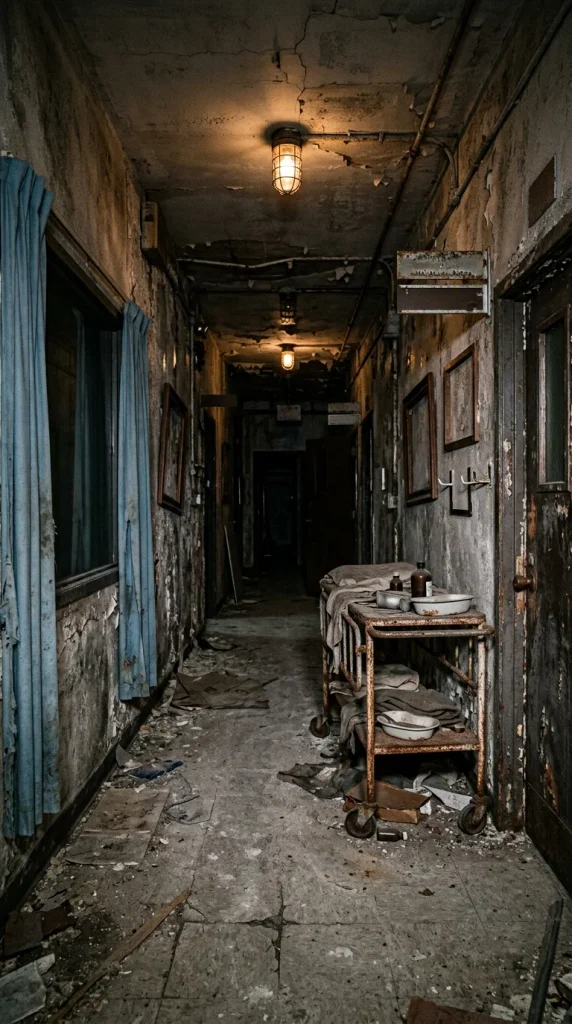
For a more cinematic haunted house, turn a corridor into an abandoned medical ward using old-style signs, white curtains, empty frames, rolling carts, and weathered furniture. Keep the color palette mostly neutral and use stains or aging effects only on removable decorations that are safe for the environment. A row of dim lights can guide visitors while creating long shadows down the hallway. Numbered doors or room signs can make the corridor feel like part of a larger abandoned facility. Avoid creating realistic emergency scenes that could confuse visitors or neighbors about an actual crisis. The strongest design comes from suggestion: empty rooms, outdated equipment, faded signage, and an atmosphere of unexplained abandonment.
15. Haunted Dining Room
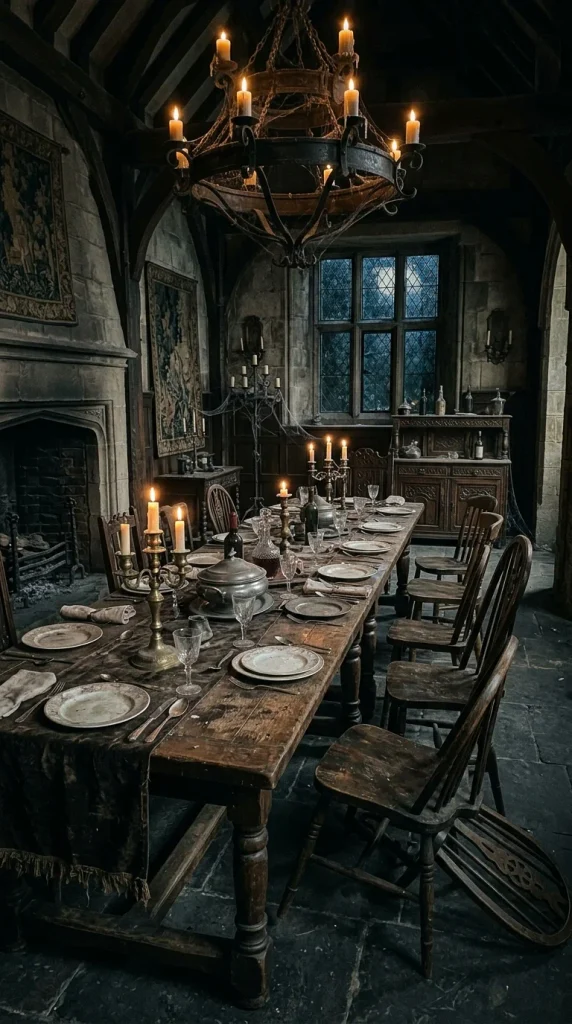
A formal dining room can be converted into an abandoned feast scene with an old table, mismatched chairs, dark table linens, candlesticks, empty plates, vintage serving dishes, and artificial branches. Leave some chairs pulled away from the table as if someone suddenly left the room. Place a few decorative objects at unusual angles to create subtle visual tension. A long table runner can add depth while helping the room feel more theatrical. Battery-operated candles are useful for creating a low warm glow without open flames. For family-friendly decorating, use harmless fake food, plastic dishes, and decorative props rather than anything sharp or fragile. This theme works especially well for gothic mansion and Victorian haunted house designs.
16. Haunted Forest Walkway
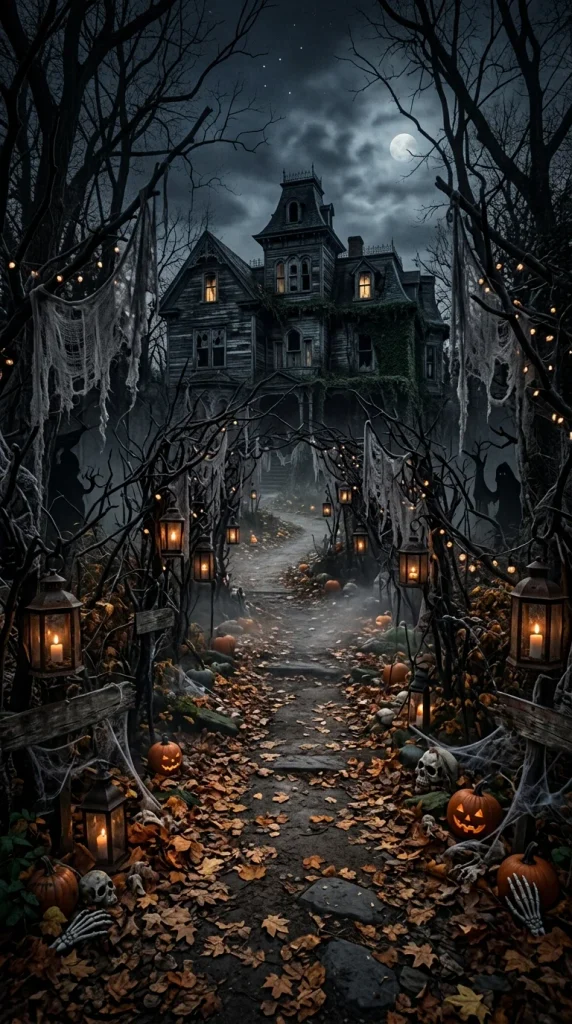
If your property has a garden path, driveway edge, or wooded section, transform it into a haunted forest entrance. Use artificial branches, dead-looking plants, dark fabric, weather-resistant cobwebs, and hanging shapes to narrow the visual space around the walkway. The path does not need to be physically blocked; simply decorating the edges can make it feel enclosed. Place a few dim lights low to the ground to guide guests while leaving the upper branches darker. Small details such as abandoned signs, faux ravens, and weathered lanterns can give the walkway a narrative. Make sure the walking surface remains clear, stable, and adequately visible so atmosphere never comes at the expense of safety.
17. Raven and Crow Display
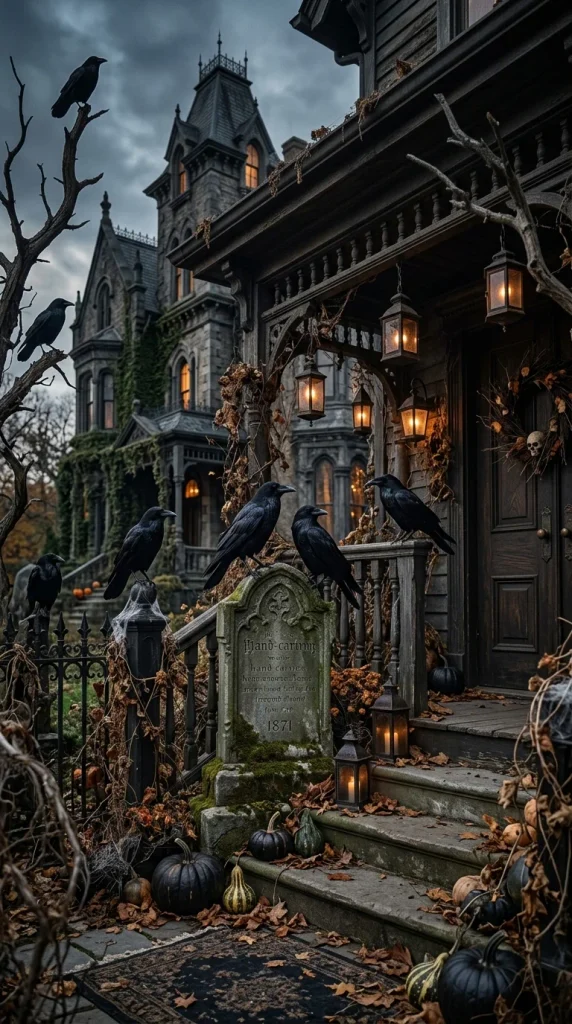
Black bird silhouettes can add a gothic quality to a haunted house without overwhelming the overall design. Position realistic-looking artificial ravens or flat silhouettes on fences, porch railings, gravestones, window ledges, tree branches, and old furniture. Vary their sizes and spacing so the display resembles a natural gathering rather than a repeated decoration. A single large raven beside the front door can become a memorable focal point, while smaller birds can lead visitors visually toward the entrance. Pair the birds with dead branches, lanterns, and weathered textures to create a cohesive scene. This decorating approach is particularly effective for Victorian houses, cemetery themes, gothic porches, and abandoned manor aesthetics.
18. Haunted Library
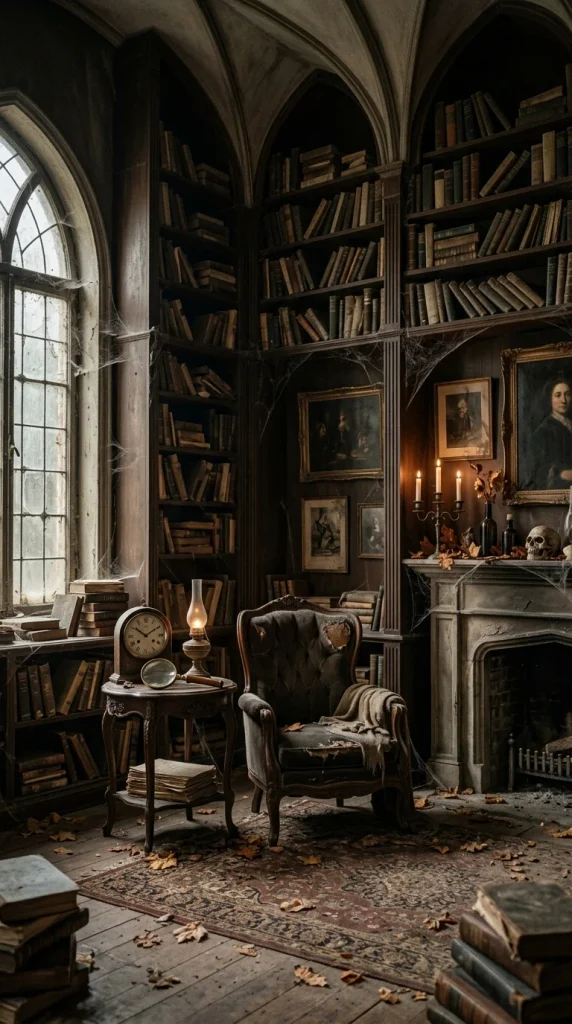
Create a mysterious old library using tall bookshelves, vintage-style books, dark wood accents, candles, clocks, framed artwork, and dusty decorative objects. Arrange books unevenly and add a few objects such as magnifying glasses, old maps, brass-style ornaments, or empty picture frames to suggest that the room was once actively used. A large antique-style chair can provide a strong focal point. Keep lighting concentrated around the shelves while allowing corners to remain shadowed. If you want to strengthen the haunted atmosphere, add a covered section of the bookshelf or a locked-looking cabinet that suggests something hidden. This theme is ideal for homes with studies, reading rooms, offices, or dining areas that can temporarily become a haunted mansion library.
Also Read: 21 Witch Themed Halloween Decor Ideas for Your Home
19. Haunted Nursery
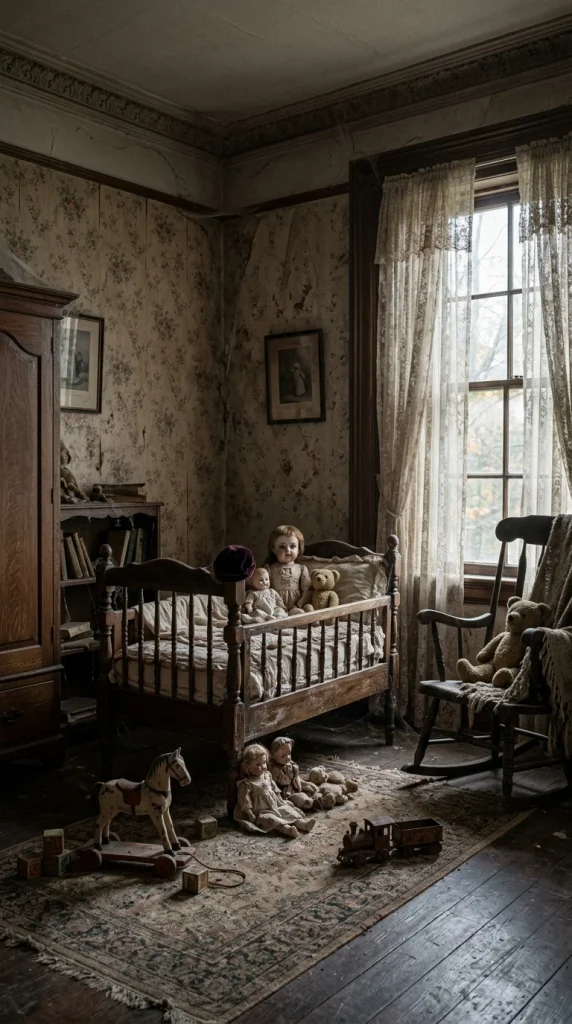
A haunted nursery can be designed around old-fashioned furniture, faded fabrics, stuffed toys, a small crib, vintage-style wallpaper, and an antique-looking lamp. The room should feel quiet and neglected rather than aggressively frightening. Place toys at different positions around the space, with a few facing toward the doorway or sitting alone on a chair. Soft neutral fabrics, faded patterns, and aged wood can create a convincing old-house atmosphere. A small rocking chair positioned near a dim lamp can serve as the central visual element. If children will be present, keep the display clearly theatrical and avoid realistic hazards, sharp objects, unstable furniture, or frightening effects that could cause unnecessary distress.
20. Skeleton Butler at the Door
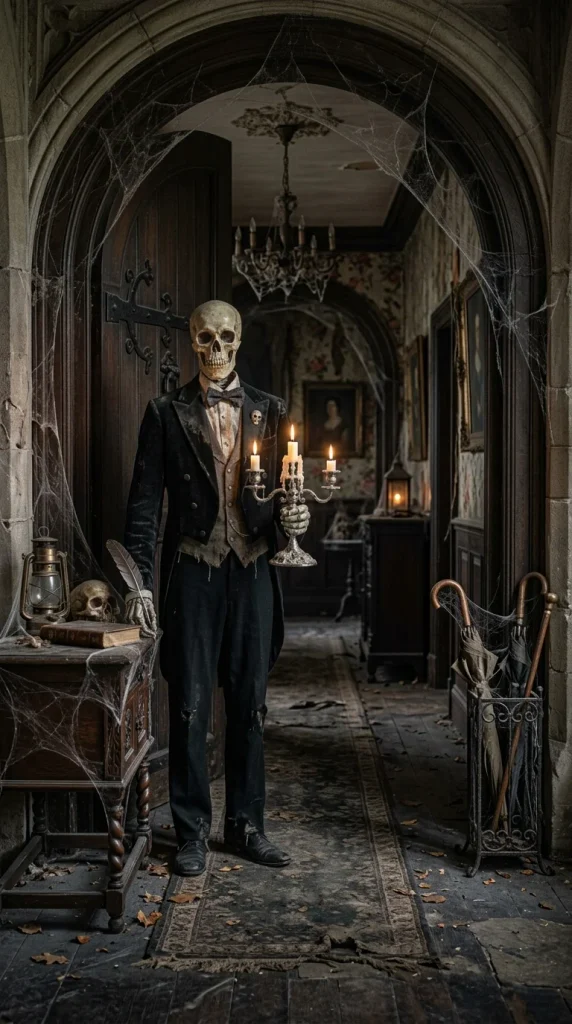
A skeleton dressed as an old-fashioned butler can provide a memorable focal point near the entrance or inside a formal hallway. Position the figure beside a small table, coat rack, umbrella stand, or vintage suitcase to make it appear as though it belongs to the house. A bow tie, vest, jacket, or formal shirt can create the impression of a long-serving household attendant. Add a small sign or decorative tray if you want a playful touch. The surrounding environment should support the character with dark wood, old frames, lanterns, and cobwebs. Rather than placing multiple skeletons everywhere, using one detailed character can make the scene more distinctive and visually interesting.
21. Haunted Fireplace Mantel
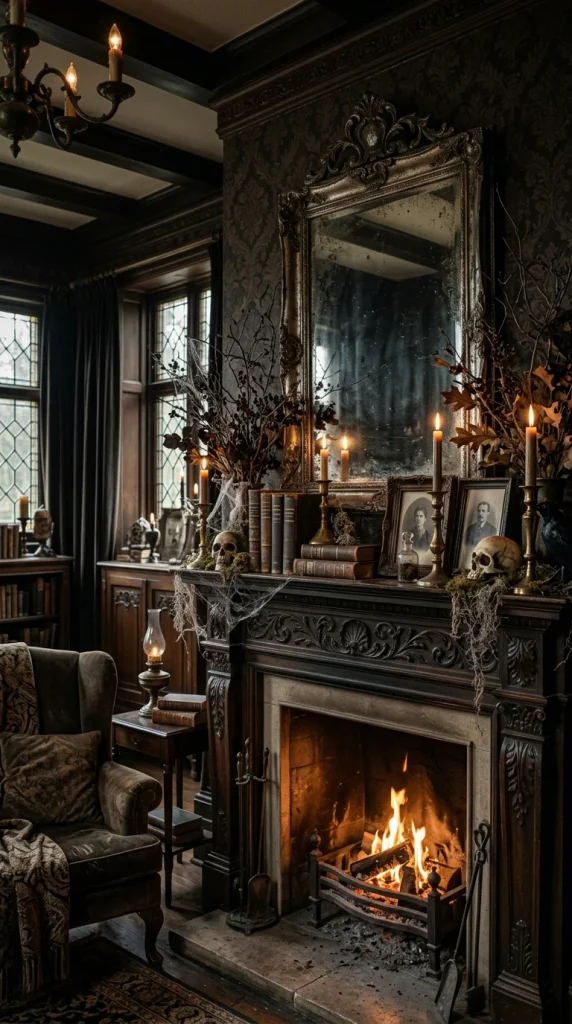
A fireplace mantel naturally functions as a focal point, making it ideal for a concentrated Halloween display. Layer an old-looking mirror or artwork above the mantel, then add candlesticks, artificial dried branches, black fabric, small skull props, vintage books, and weathered frames across the surface. Vary the height of objects so the arrangement feels collected over time rather than placed as a matching set. A few empty spaces help prevent the display from looking crowded. Use battery-operated candles instead of open flames when possible, particularly around fabric and artificial foliage. The mantel can become the visual anchor for a gothic living room, haunted Victorian parlor, or abandoned mansion theme.
22. Creepy Doorway Curtain
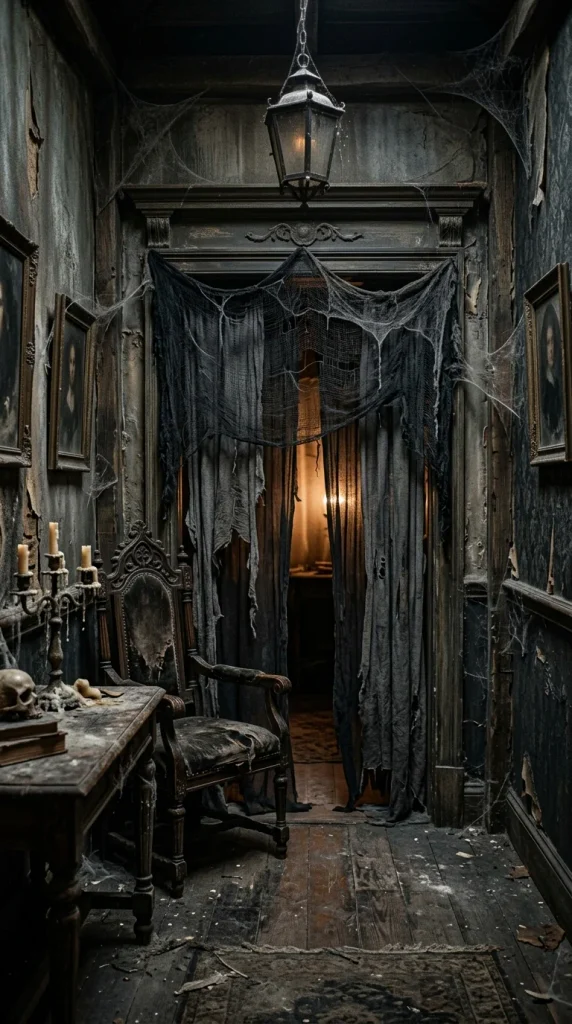
Replace an ordinary interior doorway with layers of dark gauze, distressed fabric, or lightweight decorative strips to create a mysterious transition between rooms. The material should be loose enough to move when people pass through but arranged so that it does not create a tripping or entanglement hazard. Combining black fabric with gray or dusty-white gauze creates more visual depth than using one material alone. Place a dim light beyond the doorway so guests can see an indistinct glow through the fabric. This simple treatment works particularly well when moving between themed areas because the curtain hides the next room for a moment and creates anticipation about what visitors will discover.
23. Abandoned Attic Decoration
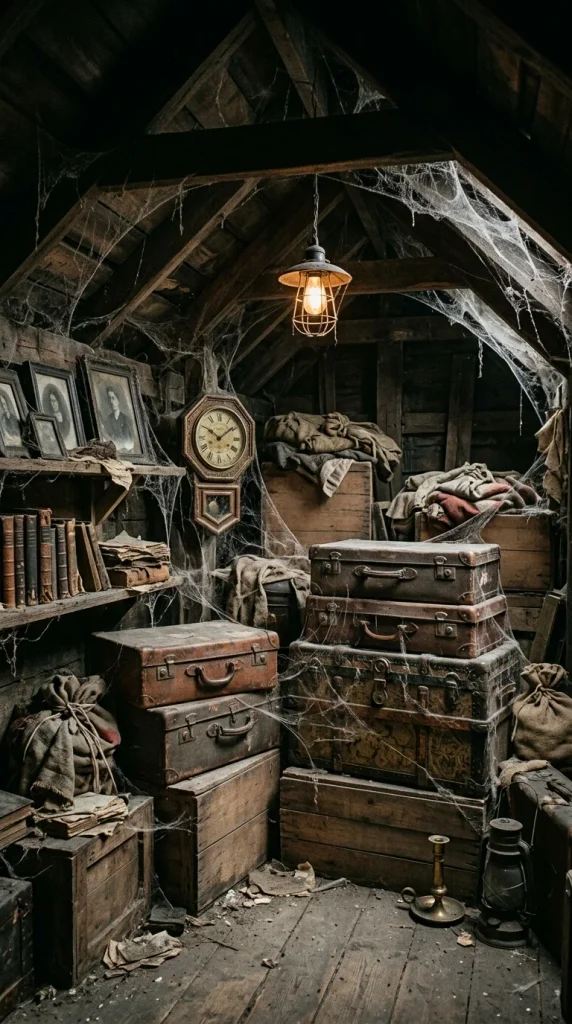
An attic can become one of the most atmospheric areas in a haunted house because its natural storage features already suggest forgotten possessions. Stack old suitcases, wooden boxes, picture frames, books, fabric bundles, and empty trunks to create an authentic storage scene. Add artificial dust effects, cobwebs, old clocks, faded portraits, and a few mysterious objects that invite closer inspection. A single exposed lamp or lantern can illuminate the central area while leaving the roof corners darker. Keep pathways wide enough for comfortable movement and make sure stored items are stable. The strongest attic displays feel like genuine collections of forgotten belongings rather than rooms decorated entirely with Halloween merchandise.
24. Eerie Haunted House Sound and Lighting
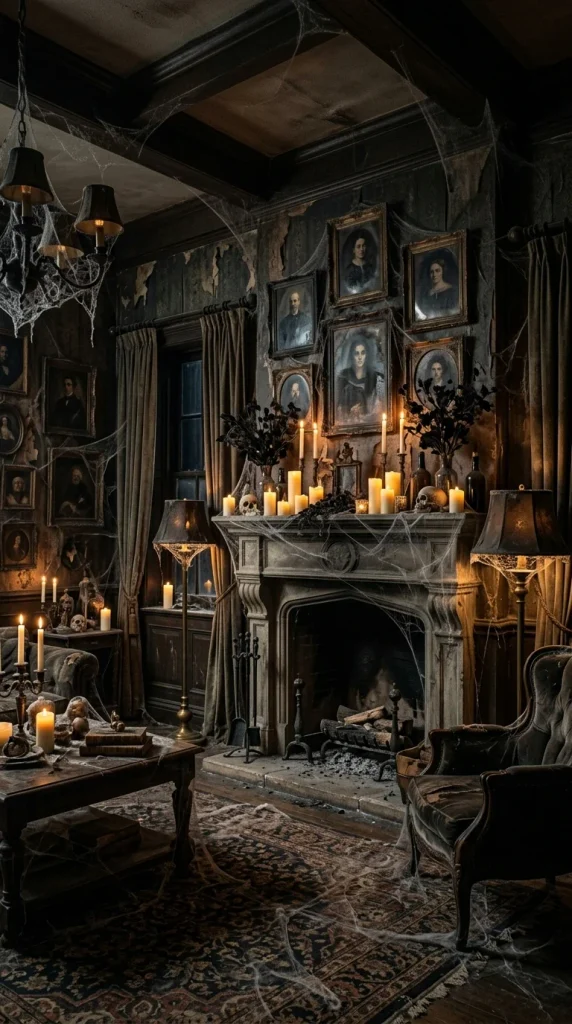
Lighting and sound can dramatically increase the effectiveness of physical Halloween decorations because they influence how visitors perceive the space. Use warm, dim lamps in one room and cooler low-level illumination in another to create changes in atmosphere. Flickering LED candles can add movement without open flames, while hidden speakers can provide subtle sounds such as wind, distant creaking, soft footsteps, or an old clock. Avoid playing every effect at maximum volume; quiet background sounds often make guests pay closer attention. Synchronizing a few lighting changes with environmental sounds can make a static hallway or room feel alive. The best effects remain subtle enough to support the decorations instead of competing with them.
25. DIY Haunted House Prop Corner
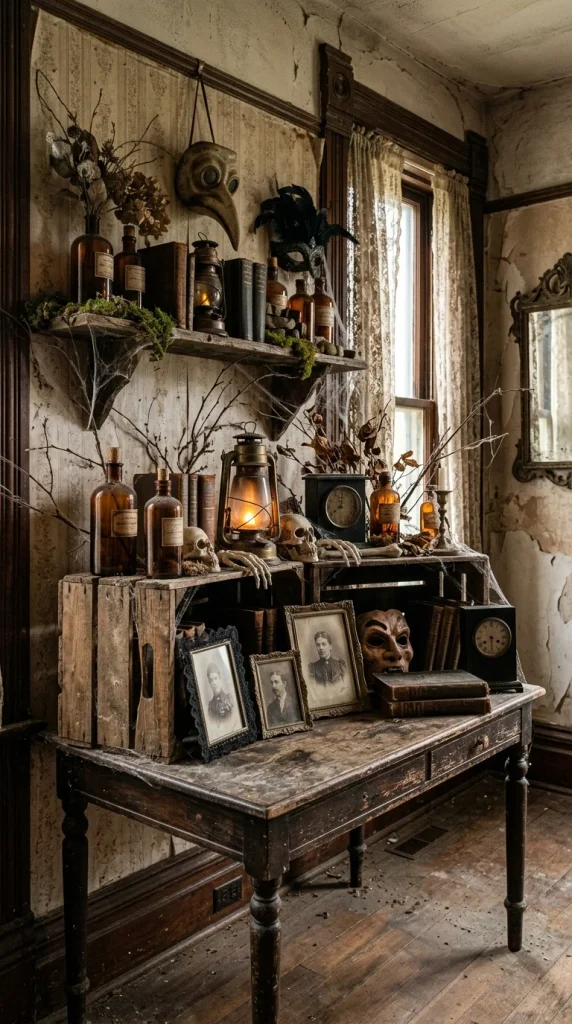
A dedicated prop corner gives the entire haunted house a place where smaller details can be grouped into one visually rich scene. Use wooden crates, old bottles, artificial bones, lanterns, books, clocks, masks, branches, and framed photographs to create a collection of mysterious objects. Instead of arranging everything in straight lines, layer the props by height and depth, placing larger pieces toward the back and smaller objects near the front. A small table or distressed shelf can provide structure. This approach is especially useful when decorating on a budget because inexpensive thrifted objects can look convincing when combined thoughtfully. The corner can also serve as a photo backdrop for guests who want Halloween pictures.
Conclusion
Halloween haunted house decorations become much more convincing when they work together as part of one visual story. Rather than placing unrelated props throughout the home, choose a central theme such as an abandoned Victorian mansion, haunted cemetery, forgotten hospital, mysterious attic, gothic library, or overgrown old house. Then repeat a few carefully selected elements—weathered wood, dim lighting, old frames, cobwebs, dried branches, vintage furniture, and atmospheric props—throughout the space.
The most effective haunted house does not necessarily require the biggest budget or the largest collection of Halloween decorations. Thoughtful placement, controlled lighting, realistic textures, and attention to overlooked areas such as ceilings, staircases, windows, hallways, and outdoor pathways can create far more atmosphere than simply adding more props. Whether you are decorating a front porch for trick-or-treaters or transforming an entire home into a haunted attraction, these ideas provide a flexible foundation for creating an eerie Halloween setting that feels cohesive, memorable, and visually appealing.


