

21 Primitive Halloween Decor Ideas for a Rustic Home
Primitive Halloween decor brings together the warmth of rustic decorating with the nostalgic, slightly spooky character of traditional Halloween. Instead of relying on glossy plastic decorations or overly modern seasonal accessories, primitive decorating focuses on aged materials, handmade details, muted colors, natural textures, vintage-inspired pieces, and simple designs that feel collected over time. This decorating style works especially well in farmhouse, country, cottage, rustic, and vintage-inspired homes.
The beauty of primitive Halloween decorating is its flexibility. Burlap, distressed wood, rusty metal, dried corn husks, old fabric, wooden pumpkins, black crows, antique-style lanterns, and faded signs can create an atmospheric display without making a room feel cluttered. You can use primitive Halloween decorations on a mantel, front porch, dining table, entryway, staircase, kitchen shelf, or even a small console table.
Whether you prefer a subtle autumn display or a darker haunted farmhouse atmosphere, these primitive Halloween decor ideas offer practical ways to create a cohesive seasonal look. The key is to combine imperfect textures and traditional Halloween symbols with earthy colors and vintage character.
1. Create a Primitive Halloween Pumpkin Display

A primitive pumpkin display is an easy way to establish the overall character of your Halloween decorating. Choose pumpkins in muted orange, black, cream, tan, or weathered gray rather than perfectly bright artificial colors. Mix different shapes and sizes to make the arrangement appear naturally collected instead of carefully matched. Wooden pumpkins, fabric pumpkins, distressed ceramic pieces, and real pumpkins can all work together when their finishes share an aged appearance. Place the pumpkins in a wooden crate, on a weathered bench, or beside an antique-style lantern. Adding dried leaves, cotton stems, or small bundles of twigs around the base gives the arrangement a natural farmhouse character while keeping Halloween clearly visible.
2. Decorate the Front Porch With Primitive Halloween Accents

A primitive Halloween front porch can create a welcoming seasonal entrance without requiring elaborate decorations. Start with a weathered wooden chair, old bench, or rustic crate as the foundation, then layer pumpkins, lanterns, dried corn stalks, and vintage-style Halloween accessories around it. A faded black-and-orange pillow or simple burlap runner can introduce color without overpowering the natural materials. Consider placing a distressed wooden sign near the doorway and adding a few black crows or an aged witch hat for subtle Halloween character. Keep the arrangement slightly asymmetrical so it feels handcrafted and collected. Natural wood grain, rusty metal, burlap, and weathered finishes are especially effective for achieving an authentic primitive porch aesthetic.
3. Make a Rustic Primitive Halloween Wreath
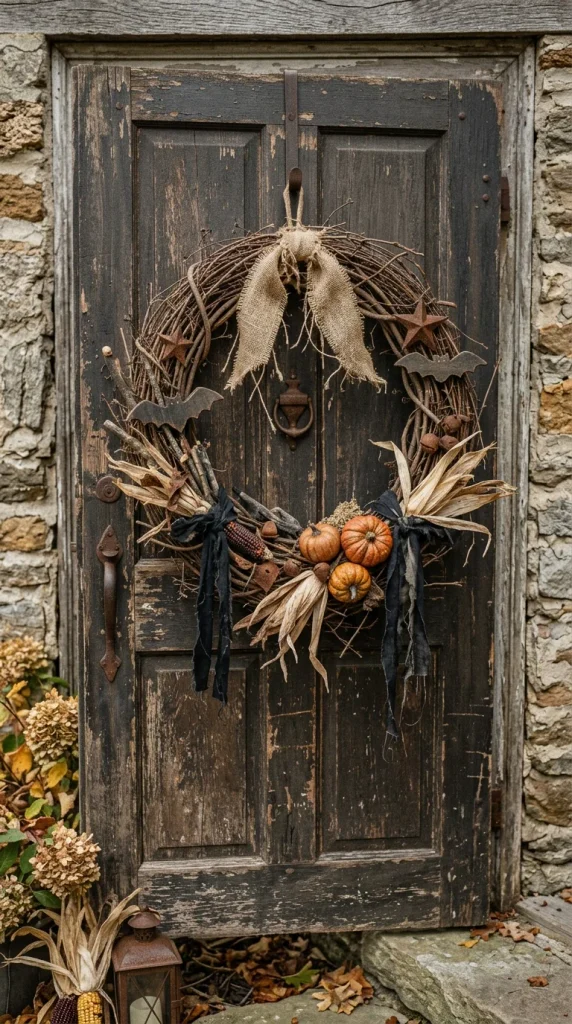
A primitive Halloween wreath can give your front door a handmade appearance while introducing seasonal decoration in a relatively small space. Build the base with grapevine, dried branches, corn husks, or rough natural twigs, then add faded black fabric strips, miniature pumpkins, rusty stars, wooden bats, or distressed cotton accents. Instead of using a perfectly symmetrical arrangement, allow some pieces to extend naturally beyond the circular shape. A simple black crow tucked into the wreath can create a traditional Halloween focal point without making the decoration overly cartoonish. Finish the design with a loosely tied burlap bow or aged fabric ribbon. The combination of rough natural materials and restrained Halloween details makes this wreath particularly suitable for rustic and farmhouse homes.
4. Style a Primitive Halloween Mantel
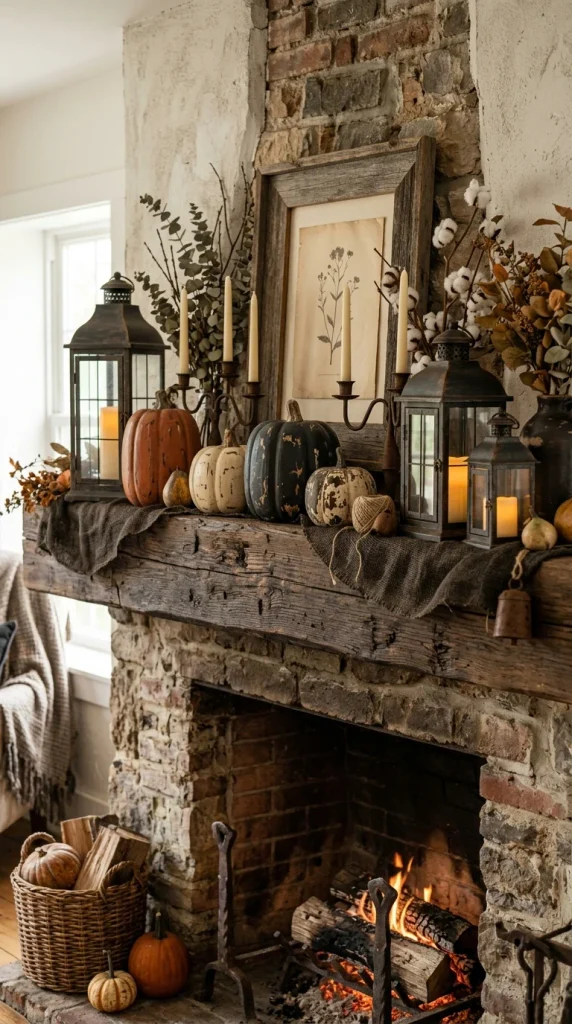
The fireplace mantel is an ideal location for creating a layered primitive Halloween arrangement because it provides enough horizontal space for combining several textures. Begin with a simple strand of dried greenery, cotton stems, or dark fabric, then place distressed wooden pumpkins, antique-style candlesticks, black lanterns, and vintage-inspired Halloween objects across the mantel. A weathered wooden mirror or old frame can provide height behind the arrangement. Use varying heights rather than placing every decoration at the same level, allowing the display to feel collected and naturally assembled. Muted orange, charcoal black, cream, brown, and aged wood tones create a cohesive palette. Small imperfections are desirable because primitive decorating is built around character rather than polished perfection.
Also Read: 21 Witch Themed Halloween Decor Ideas for Your Home
5. Use Burlap for a Primitive Halloween Table Setting
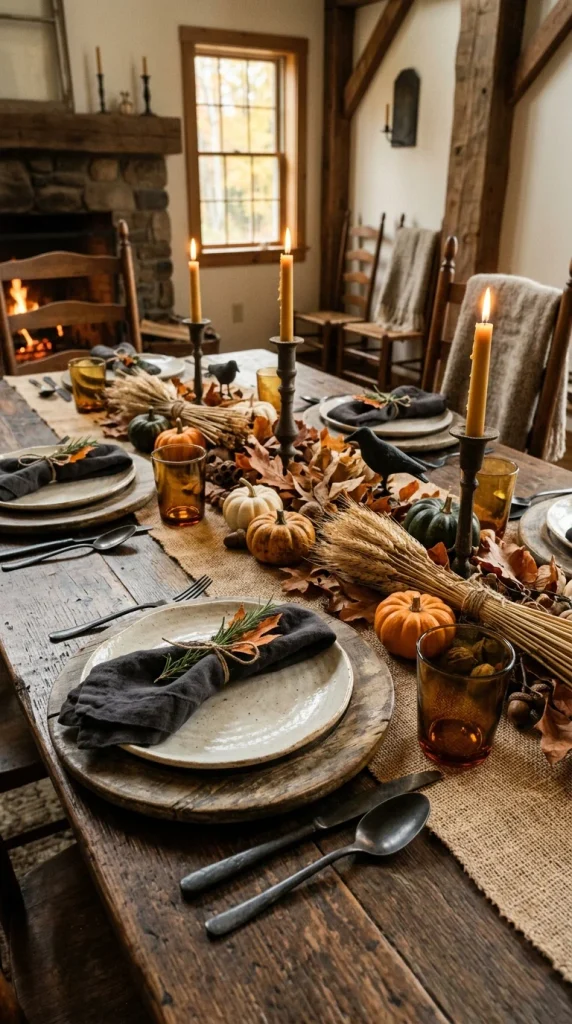
Burlap is one of the easiest materials for bringing primitive character to a Halloween dining table. Use a rough burlap runner as the foundation, then layer simple ceramic plates, aged wooden chargers, dark napkins, and vintage-style metal candleholders over it. Small pumpkins can be positioned between place settings, while dried leaves or bundles of wheat add natural seasonal texture. For a stronger Halloween atmosphere, incorporate black crows, miniature wooden skulls, or small distressed signs without covering the entire table. Candlelight can make the rough textures look especially inviting in the evening. The finished arrangement should feel warm and handmade rather than formal, making this approach suitable for everyday autumn decorating as well as Halloween gatherings.
6. Create a Primitive Halloween Candle Arrangement
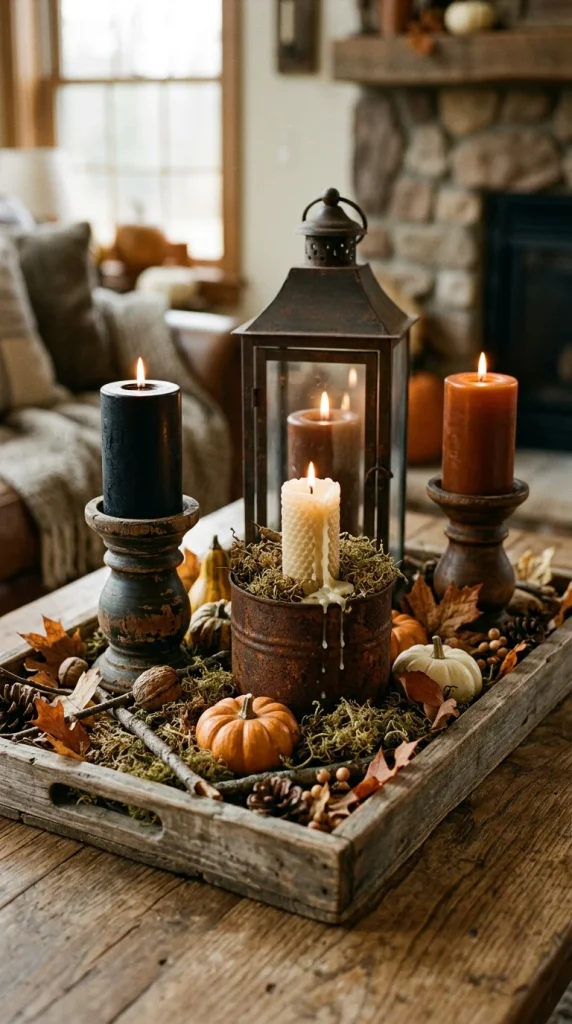
Candles naturally complement primitive Halloween decor because their warm glow enhances aged and rustic materials. Choose simple black, ivory, brown, or dark orange candles and place them in distressed wooden holders, rusty metal containers, or antique-inspired lanterns. Combine different candle heights to create visual depth, but avoid making the arrangement excessively symmetrical. A wooden tray can help contain the display while dried moss, miniature pumpkins, pinecones, or rough twigs fill the spaces between the holders. Battery-operated candles are a practical option when decorating areas where open flames are unsuitable. For a particularly authentic primitive appearance, look for candleholders with worn finishes, chipped paint, visible wood grain, or darkened metal rather than highly polished surfaces.
7. Add Vintage-Style Black Crows to Your Decor

Black crows are a classic motif for primitive Halloween decorating because they can make a display feel mysterious without requiring elaborate props. Position a realistic-looking decorative crow on a weathered wooden shelf, beside a lantern, on a mantel, or near a group of pumpkins. Larger displays can use several crows at different heights to create the impression of a small flock gathering around the seasonal decorations. Pair them with faded fabric, old books, dried branches, and distressed wood for a vintage farmhouse effect. Keeping the birds mostly black allows them to contrast naturally against muted orange pumpkins and cream-colored accents. Their understated appearance works particularly well when you want Halloween decor that feels atmospheric rather than theatrical.
8. Build a Primitive Halloween Farmhouse Shelf
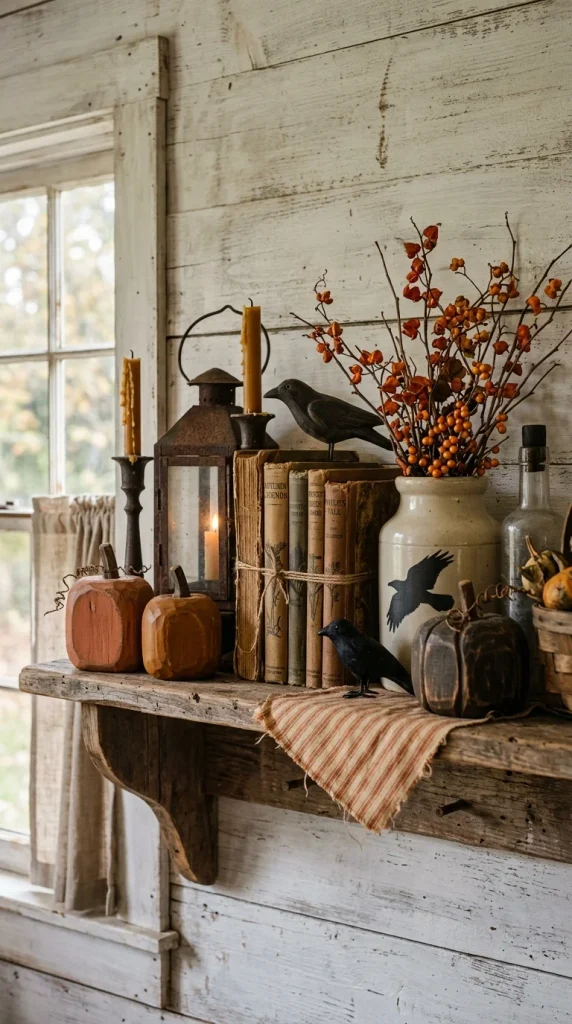
A farmhouse shelf can become a charming seasonal vignette when decorated with carefully selected primitive Halloween pieces. Start with a few wooden pumpkins and vintage-style containers, then add small black crows, distressed candleholders, old-looking books, and miniature lanterns. A piece of faded fabric tucked behind the arrangement can soften the hard surfaces while introducing another layer of texture. Avoid filling every available inch of shelf space; leaving small gaps makes each object easier to appreciate and keeps the display from looking crowded. Mixing authentic-looking imperfections is more important than matching every item. Weathered wood, aged metal, muted fabric, and traditional Halloween colors can transform an ordinary kitchen or living-room shelf into a warm seasonal focal point.
Also Read: 21 Zombie Halloween Decorations for a Spooky Home
9. Hang a Primitive Halloween Fabric Banner
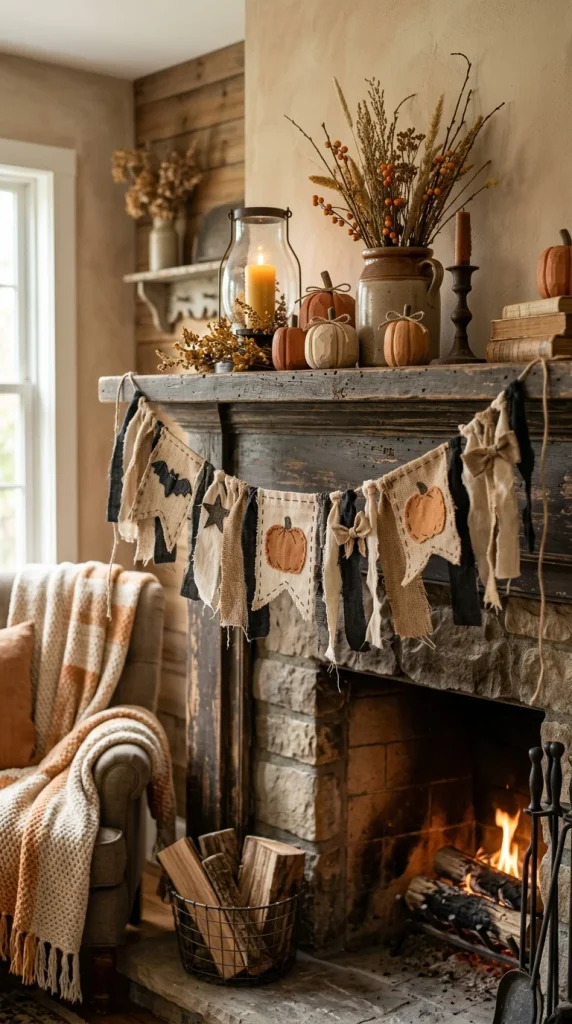
A handmade fabric banner can introduce Halloween spirit while preserving the soft, rustic quality associated with primitive decorating. Use strips of burlap, faded cotton, muslin, or black fabric to create a loosely assembled garland above a mantel, doorway, cabinet, or dining area. The pieces can vary slightly in size and texture so the banner looks handmade rather than factory-produced. Small wooden pumpkins, rusty metal shapes, or simple black fabric bats can be incorporated between sections. Keep the color palette restrained with combinations such as charcoal, faded orange, cream, brown, and natural burlap. The banner can remain in place throughout the autumn season because its materials and earthy tones work naturally with Thanksgiving and general fall decorating.
10. Decorate With Distressed Wooden Halloween Signs
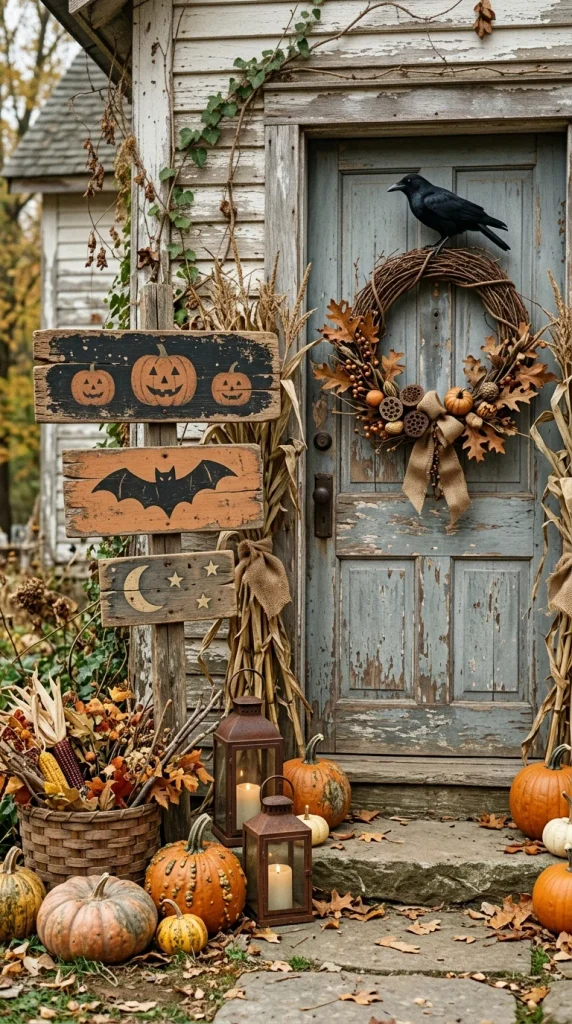
Distressed wooden signs are particularly useful when you want primitive Halloween decor to feel authentic and personalized. Look for rough boards with chipped paint, visible knots, uneven edges, or faded finishes. A small sign can be placed on a mantel, shelf, porch bench, or entryway table, while a larger piece can become a focal point beside the front door. Choose simple Halloween-inspired wording or traditional imagery rather than highly polished modern graphics. Pairing the sign with pumpkins, lanterns, dried branches, or a black crow helps integrate it into the larger display. The most convincing primitive arrangements usually treat the sign as one element within a layered vignette instead of allowing it to dominate the entire decorating scheme.
11. Create a Primitive Halloween Staircase Display
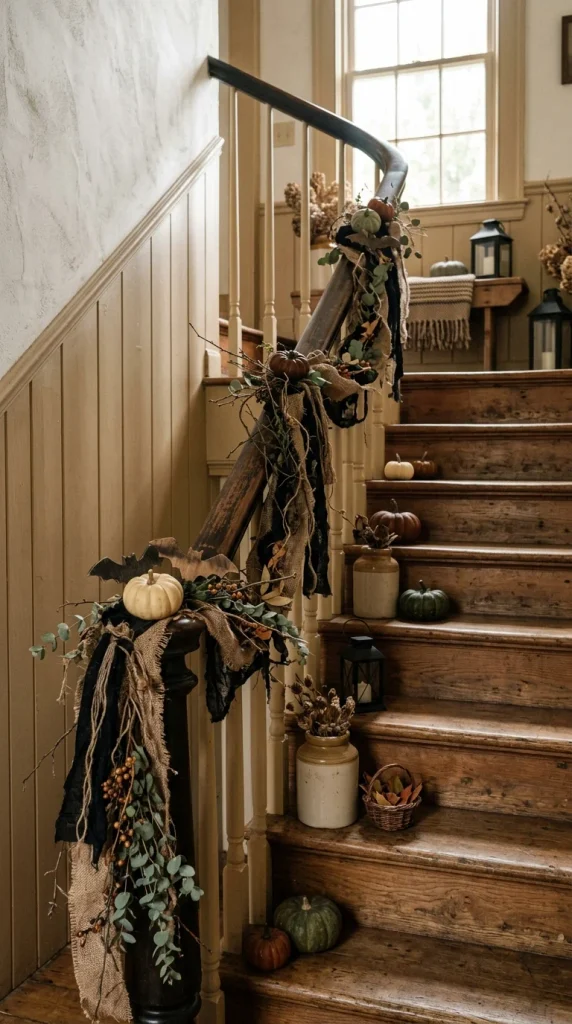
The staircase provides an excellent opportunity to extend primitive Halloween decorating beyond the main living areas. Drape a loose garland of burlap, dried branches, dark fabric, or faux greenery along the railing, securing it carefully so it remains safe and practical. Add small pumpkins, wooden bats, miniature lanterns, or black fabric accents at selected points rather than decorating every section equally. A few distressed wooden signs or crows can create additional visual interest near the landing. For a more subtle look, rely mainly on natural textures and use black Halloween elements sparingly. The finished staircase should feel connected to the rest of the home, repeating materials and colors already used in the mantel, entryway, or dining room.
12. Make Primitive Halloween Ornaments From Natural Materials
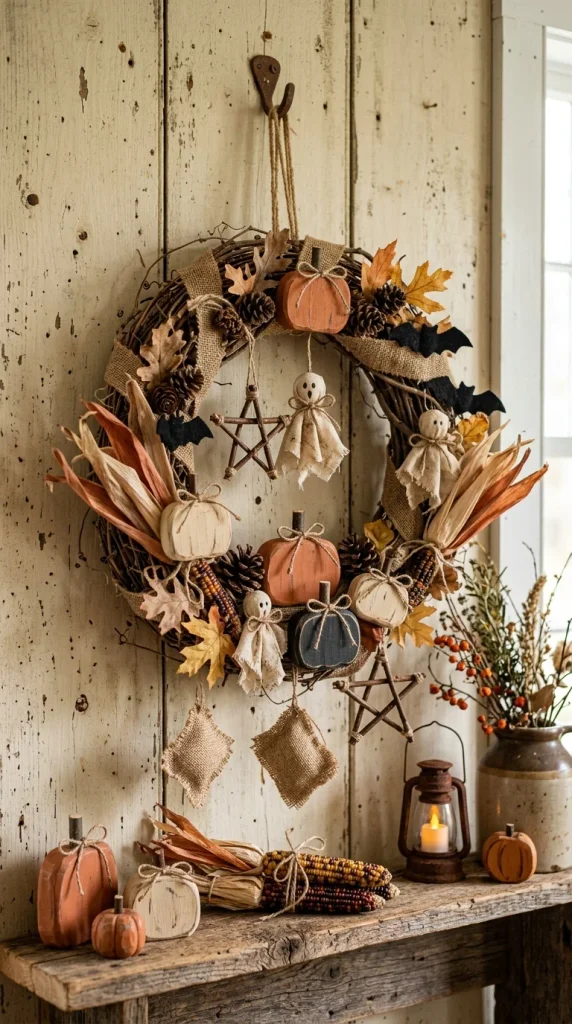
Natural materials can produce some of the most convincing primitive Halloween decorations because they already possess irregular textures and earthy colors. Gather dried branches, corn husks, pinecones, twine, burlap, small wood pieces, and dried leaves, then turn them into simple hanging ornaments or tabletop accents. A bundle of twigs tied with black fabric can become a rustic wall accent, while miniature pumpkins wrapped with rough twine can decorate a shelf or centerpiece. Natural imperfections should remain visible rather than being covered with excessive paint or glitter. This approach also allows you to create decorations that coordinate with your existing fall decor. The result is understated Halloween styling that feels handmade, sustainable, and appropriate for a country-inspired home.
13. Style a Primitive Halloween Entryway
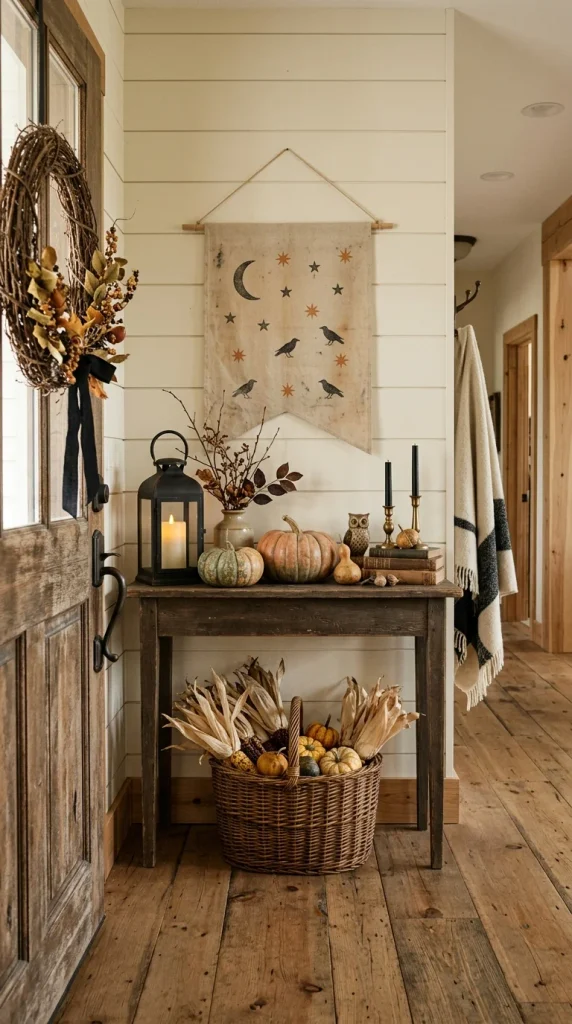
A primitive Halloween entryway can set the seasonal tone as soon as guests walk through the door. Place a narrow weathered console, wooden bench, or small antique-style table near the entrance and build a simple vignette using pumpkins, a black lantern, dried branches, and a distressed wooden accessory. A woven basket filled with dried corn husks or blankets can add practical storage while reinforcing the rustic theme. Hang a rough fabric banner or primitive wreath above the arrangement to create vertical interest. Keep the pathway clear and avoid placing small decorations where they can become tripping hazards. The goal is a welcoming display that feels naturally integrated into the home rather than a temporary collection of Halloween merchandise.
14. Create a Primitive Haunted Farmhouse Corner

For a darker interpretation of primitive Halloween decor, dedicate one small area of the room to a haunted farmhouse-inspired vignette. Use an old wooden stool or narrow table as the foundation and layer black lanterns, distressed pumpkins, antique-style bottles, dried branches, and a few weathered books on top. A black crow or aged-looking doll can introduce an eerie detail without requiring an elaborate haunted-house setup. Keep the surrounding colors muted and allow the textures to provide most of the visual interest. Rough wood, faded fabric, rusty metal, and dusty-looking finishes create the impression of objects gathered from an old country home. This style works especially well in a quiet corner, hallway, library, or farmhouse-style living room.
15. Use Rustic Lanterns for Primitive Halloween Lighting
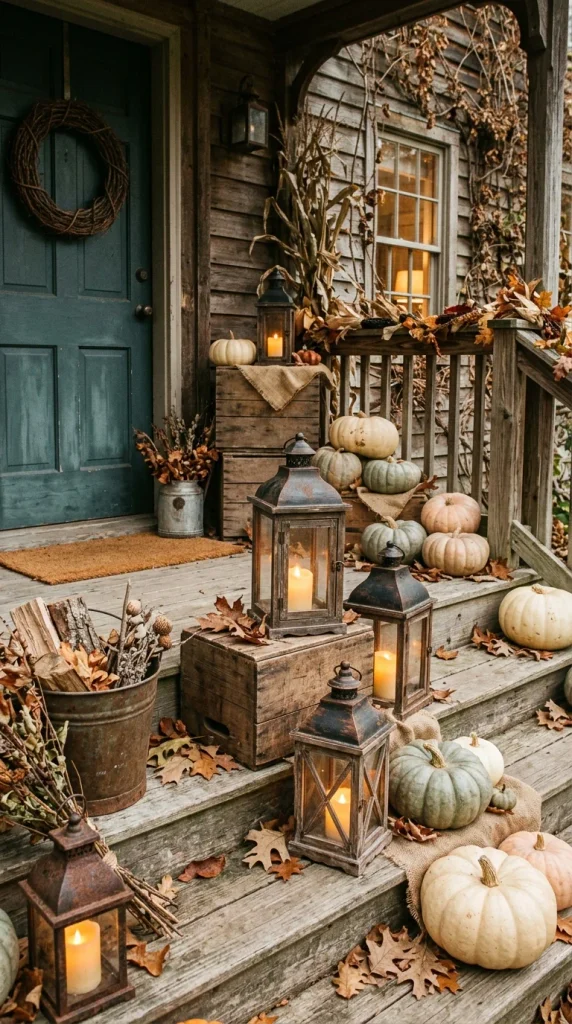
Rustic lanterns can add both decoration and practical seasonal lighting to a primitive Halloween display. Choose lanterns made from dark metal, distressed wood, or aged finishes and position them beside pumpkins, on porch steps, or across a mantel. For indoor arrangements, battery-operated candles provide a convenient glow without requiring an open flame. Varying lantern sizes can help establish depth, while placing one slightly higher on a wooden box or crate creates additional dimension. The warm illumination contrasts beautifully with black Halloween accents and muted orange pumpkins. Rather than covering the entire space with bright seasonal lights, use a few lanterns as intentional focal points so the atmosphere remains calm, rustic, and nostalgic.
Also Read: 25 Halloween Haunted House Decorations
16. Decorate With Primitive Halloween Baskets and Crates
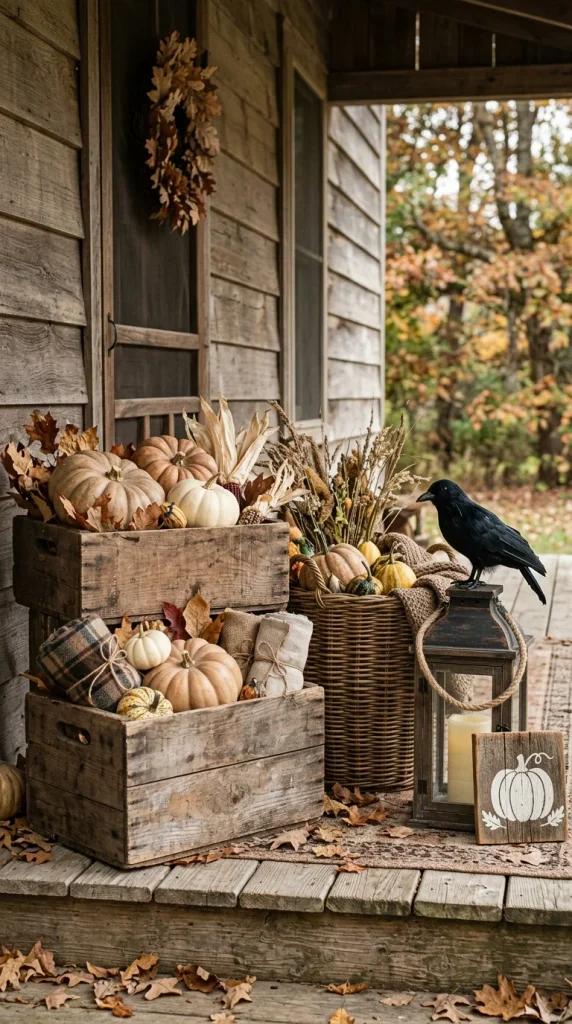
Old baskets and wooden crates provide useful foundations for seasonal displays while adding the rough textures associated with primitive decorating. Fill a wooden crate with pumpkins, dried leaves, corn husks, or fabric bundles and place it beside a front door, fireplace, or staircase. A woven basket can hold rolled blankets or seasonal textiles while smaller pumpkins rest around its base. For a more Halloween-specific arrangement, add a black crow, rustic lantern, or small distressed sign. Choose containers with visible wear, uneven coloring, and natural material variation. These pieces are especially useful because they can transition into general fall decorating after Halloween by removing the darker accents and leaving the pumpkins, leaves, and natural materials in place.
17. Create a Primitive Halloween Kitchen Display

The kitchen can easily become part of a home’s Halloween decorating scheme without sacrificing its practical function. Decorate open shelving with muted pumpkins, vintage-style jars, dark wooden accessories, and small black crows. A distressed wooden tray can hold a few seasonal pieces on the countertop while a simple burlap runner adds texture to an island or breakfast table. Consider using cream, brown, faded orange, and black rather than bright Halloween colors to maintain a farmhouse atmosphere. Old-fashioned kitchen tools, enamel-style containers, woven baskets, and wooden utensils can naturally complement the display. Keep decorations away from cooking surfaces and areas where they could interfere with food preparation. A restrained approach makes the kitchen feel seasonal without becoming visually crowded.
18. Make a Primitive Halloween Table Centerpiece
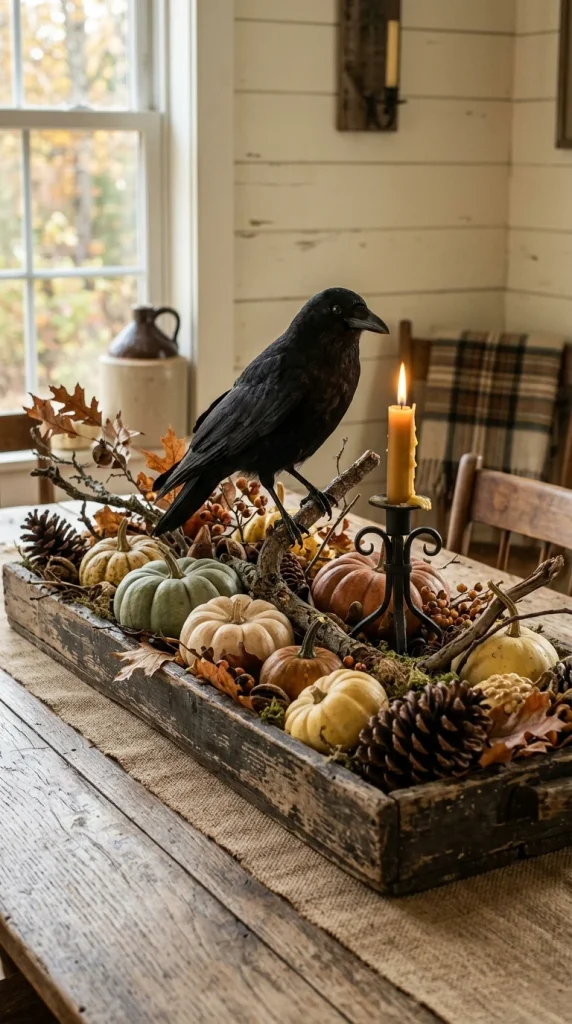
A primitive Halloween centerpiece can anchor a dining table or kitchen island with relatively few carefully chosen objects. Begin with a weathered wooden tray, shallow crate, or rustic bowl and fill it with small pumpkins, dried foliage, pinecones, and natural branches. Add one or two black accents, such as a crow, candleholder, or miniature wooden bat, to establish the Halloween theme. A strip of burlap beneath the arrangement can visually connect the centerpiece with surrounding rustic textures. Use objects of different heights to prevent the display from appearing flat, while keeping the center low enough for comfortable conversation across the table. This type of centerpiece can remain throughout October and easily transition into broader autumn decorating afterward.
19. Add Primitive Halloween Decor to a Bedroom
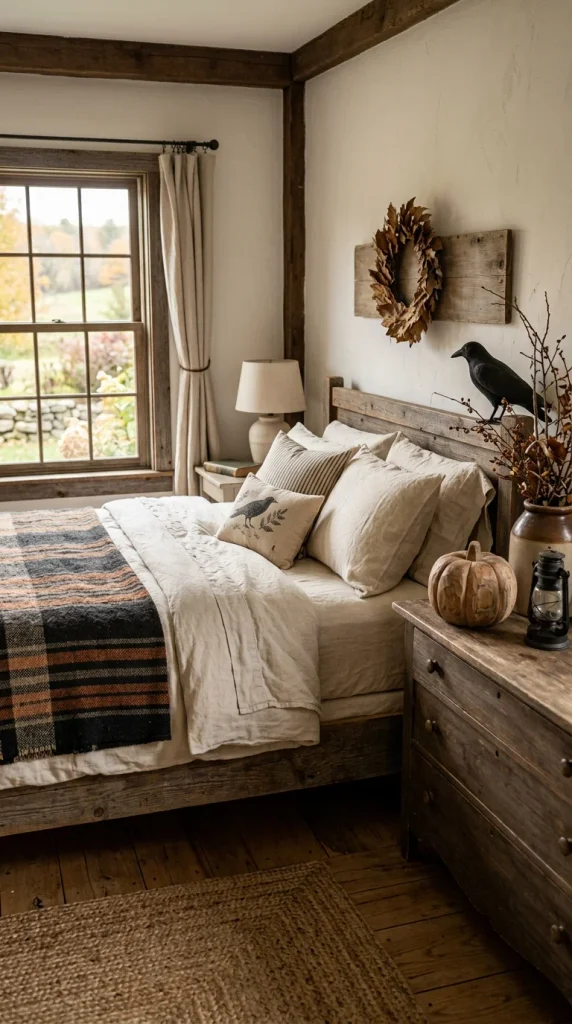
Halloween decorating does not have to stop in shared living spaces. A bedroom can incorporate primitive seasonal details through textiles and small rustic accessories. Place a muted black or pumpkin-colored throw at the foot of the bed and add a couple of vintage-inspired decorative pillows. A wooden pumpkin, small lantern, dried branch arrangement, or black crow can sit on a dresser or bedside table. Keep the colors subdued so the room remains relaxing rather than visually overwhelming. Natural linen, cotton, burlap-inspired textures, weathered wood, and aged metal work particularly well with primitive farmhouse interiors. A small seasonal vignette is often enough to create the Halloween atmosphere without changing the entire bedroom.
20. Create a Rustic Primitive Halloween Outdoor Display

A larger outdoor display can combine several primitive Halloween elements into one cohesive scene. Use hay bales, wooden crates, pumpkins, dried corn stalks, weathered benches, lanterns, and rustic signs to establish a country setting. A few black crows, old-looking fabric pieces, or simple wooden Halloween figures can provide the spooky details. Keep the materials in a muted palette so the display resembles an old-fashioned autumn harvest scene with Halloween influences. Position larger objects toward the back and smaller decorations toward the front to create depth. Outdoor materials should be suitable for the local weather, and lightweight decorations should be secured carefully. The finished arrangement can decorate a porch, garden entrance, driveway edge, or covered patio.
21. Combine Primitive Halloween Decor Into a Complete Home Theme

A cohesive primitive Halloween home does not require every room to contain identical decorations. Instead, repeat a small collection of materials, colors, and motifs throughout the house. For example, use weathered wood in the entryway, burlap on the dining table, black crows near the mantel, rustic lanterns on the porch, and muted pumpkins in several rooms. This repetition creates visual continuity while allowing each space to have its own character. Focus on charcoal black, faded orange, cream, brown, natural wood, and aged metal rather than introducing too many unrelated colors. Handmade details and imperfect finishes should remain consistent across the displays. When the same primitive textures appear naturally throughout the home, the entire Halloween scheme feels intentional, warm, nostalgic, and authentically rustic.
22. Conclusion
Primitive Halloween decor is all about creating atmosphere through texture, simplicity, and nostalgic character. Weathered wood, burlap, muted pumpkins, dried branches, rustic lanterns, black crows, distressed signs, and handmade fabric accents can transform ordinary spaces without relying on excessive decorations. The most successful displays usually combine several imperfect, natural-looking materials rather than purchasing an entire matching collection.
Whether you are decorating a farmhouse porch, fireplace mantel, kitchen shelf, dining table, bedroom, or outdoor space, choose pieces that complement the existing character of your home. Keep the Halloween colors slightly muted, layer different heights and textures, and allow natural materials to remain visible. With thoughtful placement, even a small collection of primitive Halloween decorations can create a cozy, vintage-inspired seasonal atmosphere that feels distinctive throughout October.


