

24 Small Dorm Kitchen Ideas for Stylish Small Spaces
Living in a dorm often means learning how to make a surprisingly small space work for everyday life. The kitchen area may consist of little more than a compact counter, a microwave, a mini fridge, a sink, or a shared kitchenette, yet it still needs to support everything from quick breakfasts and late-night snacks to coffee-making and simple meals. The good news is that limited square footage does not mean your dorm kitchen has to feel cluttered or uninspiring. With the right combination of organization, vertical storage, compact accessories, and thoughtful decorating, even the smallest kitchenette can become practical and inviting.
These small dorm kitchen ideas focus on solutions that work particularly well in tight student spaces. Instead of relying on large furniture or permanent renovations, the ideas emphasize removable organization, multifunctional accessories, countertop efficiency, clever storage, and simple decorative details. Whether your dorm kitchen is tucked into a bedroom, positioned in a shared common area, or designed as a tiny standalone kitchenette, these approaches can help you use every available inch without making the room feel crowded.
1. Use a Slim Rolling Kitchen Cart

A slim rolling kitchen cart can transform unused floor space into valuable storage without requiring a permanent installation. Choose a narrow model that can fit beside a mini fridge, counter, or wall, then use its shelves for mugs, plates, snacks, cooking utensils, or small appliances. A cart with wheels is particularly useful in a dorm because it can be moved whenever you need additional floor space. Look for a design with two or three levels rather than a bulky cabinet-style model. Open shelves also make frequently used items easy to reach while keeping the kitchen visually lighter. For a polished look, group similar items together and use small baskets to prevent loose packages from making the cart appear messy.
Also Read: 26 Kitchen With Black Backsplash Ideas That Elevate Style
2. Install a Removable Magnetic Storage System

Magnetic storage is especially useful when dorm rules prevent drilling or permanent modifications. A magnetic rack can attach to the side of a refrigerator or another compatible metal surface, creating instant room for spices, measuring spoons, kitchen scissors, bottle openers, or frequently used utensils. Choose containers with matching labels or a coordinated finish to keep the arrangement visually organized. The refrigerator side is often overlooked, so turning this vertical surface into functional storage can significantly reduce countertop clutter. For students who prepare simple meals, a magnetic spice rack can also keep seasonings accessible without taking up valuable cabinet or drawer space. The key is to store only lightweight, frequently used essentials so the system remains practical and easy to maintain.
3. Maximize the Space Above the Mini Fridge
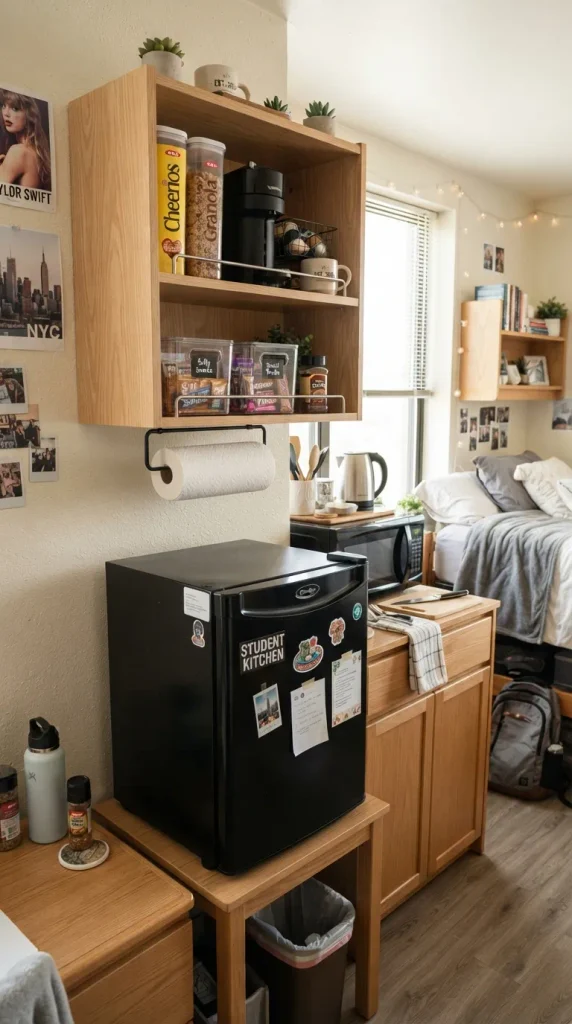
The area above a mini fridge is one of the easiest places to create additional storage in a dorm kitchen. Rather than allowing this valuable vertical surface to become a dumping ground, add a small shelf, stackable organizer, or lightweight storage unit that fits securely above the appliance. This area can hold cereal, coffee supplies, snacks, paper towels, or compact kitchen equipment. Attractive storage containers can make everyday food items look intentional instead of cluttered. If your mini fridge is positioned beneath a cabinet, use stackable bins or risers to take advantage of the available height. Keep heavier items lower and lighter items toward the top, and avoid blocking ventilation areas recommended by the appliance manufacturer.
4. Create a Compact Coffee and Breakfast Station

A dedicated coffee and breakfast station can make a tiny dorm kitchen feel much more organized because it gathers several related items into one controlled area. Place a compact coffee maker, electric kettle, or single-serve brewer on a small tray or designated section of the counter. Store mugs underneath or nearby, while coffee pods, tea bags, sugar, and breakfast snacks can go into small containers or a narrow organizer. A vertical mug holder can free up additional shelf space. Keeping breakfast essentials together reduces the need to search through cabinets every morning and prevents different categories of supplies from spreading across the kitchenette. Choose a simple tray in wood, white, metal, or another finish that complements the rest of your dorm decor.
5. Add Over-the-Door Kitchen Storage

Doors offer valuable vertical storage that is frequently overlooked in small dorm kitchens. An over-the-door organizer can provide pockets or shelves for snacks, spices, cleaning supplies, napkins, utensils, or packaged foods without consuming countertop space. For a compact kitchen, choose a shallow design so it does not interfere with opening nearby cabinets or appliances. Clear pockets are especially useful because they make contents visible at a glance, while fabric organizers can soften the appearance of a utilitarian space. Before installing one, check your dorm’s rules and make sure the door can support the organizer without damaging its hinges or surface. This approach is particularly effective when cabinet and drawer storage is extremely limited.
6. Choose Stackable Containers for Pantry Items
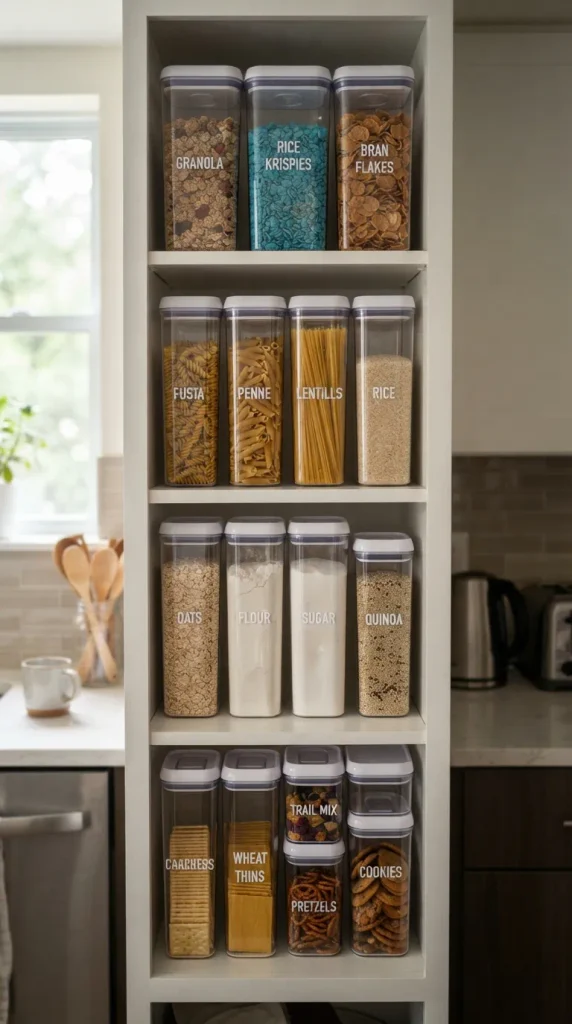
Stackable food containers make it possible to organize a small dorm pantry vertically rather than spreading supplies across a shelf or counter. Use containers with secure lids for cereal, pasta, rice, oats, crackers, snacks, or baking ingredients, depending on what you regularly keep on hand. Matching containers create a cleaner visual appearance and make it easier to identify how much food remains. Square and rectangular designs generally use shelf space more efficiently than irregularly shaped packaging. Clear containers can also help prevent forgotten ingredients from accumulating in the back of a cabinet. Keep frequently used foods at eye level and reserve higher or less accessible areas for occasional-use items to make the organization system convenient rather than purely decorative.
7. Use a Narrow Countertop Organizer
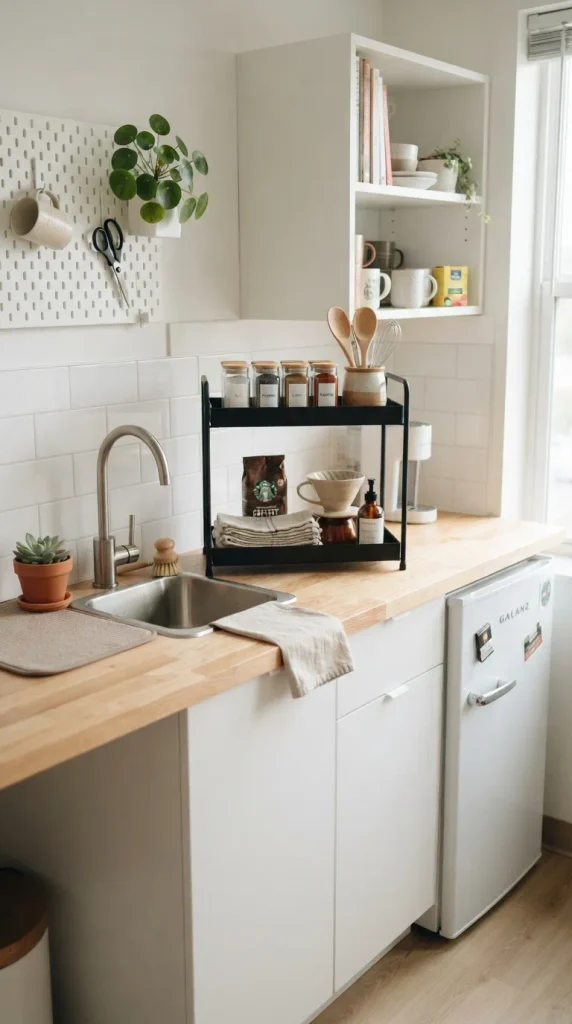
When countertop space is limited, a narrow organizer can make a dramatic difference without taking over the entire work surface. Select a vertical unit designed to hold small kitchen supplies such as utensils, spices, coffee accessories, napkins, or condiments. Instead of allowing several small objects to occupy separate areas of the counter, consolidate them into one carefully arranged station. A two-tier organizer is particularly effective because it uses height while preserving most of the usable work surface below. Choose a model with a footprint that matches the depth of your counter. Keeping the organizer limited to everyday essentials will also prevent it from becoming another place where miscellaneous items accumulate.
8. Hang Lightweight Utensils on Adhesive Hooks

Adhesive hooks can provide useful storage in a dorm without requiring screws or permanent hardware. Place several hooks along an appropriate wall, cabinet interior, or other approved surface to hang lightweight cooking utensils such as measuring cups, spatulas, whisks, or small strainers. Arrange them in a straight line for a neat appearance or group them near the area where you prepare food. Because adhesive products have weight limitations, choose lightweight items and follow the manufacturer’s installation instructions carefully. This strategy keeps frequently used tools within easy reach while freeing drawers and containers for other supplies. It can also turn an otherwise blank wall into a functional organizational feature without making the kitchen feel visually heavy.
9. Make the Backsplash Work Harder

Even when a dorm kitchen has only a small backsplash area, it can become an important storage zone. A removable rail, adhesive organizer, or compact wall-mounted system can hold utensils, paper towels, cooking tools, or small containers. If you want to add personality, choose a temporary backsplash covering that complements your dorm’s existing colors, provided your housing rules allow it. Keep the visual design simple because a busy backsplash can make a tiny kitchenette feel even smaller. The goal is to combine decoration with practical storage rather than filling the wall simply for appearance. A clean backsplash with one or two carefully selected organizational features can make the entire kitchen feel more intentional.
Also Read: 27 Minimalist Kitchen Ideas for a Clean Modern Look
10. Use a Foldable Prep Board

A foldable or slim cutting board is an excellent choice for dorm kitchens where counter space disappears quickly. Choose a board that can be stored vertically beside appliances or inside a cabinet when it is not being used. Some compact designs can also function as serving boards, making them useful beyond food preparation. When preparing simple meals, place the board over a stable section of the counter or another appropriate surface to create a dedicated prep zone. Afterward, clean it promptly and store it away so the countertop returns to its original usable space. This small change prevents a bulky cutting board from permanently occupying one of the most valuable surfaces in a compact kitchenette.
11. Add Under-Shelf Baskets

Under-shelf baskets create storage in the vertical space that often remains unused beneath a cabinet shelf. They can hold tea towels, packaged snacks, coffee supplies, small plates, or other lightweight kitchen items. This is especially useful when the existing cabinet has tall shelves but only a few items are stored inside. Instead of stacking everything into one unstable pile, the basket creates a separate lower compartment and effectively adds another level of organization. Wire baskets can maintain an airy appearance, while solid bins provide a cleaner visual effect. Measure the shelf thickness and available clearance before buying one, and avoid overloading it. Properly used, this simple accessory can increase cabinet capacity without requiring permanent modifications.
12. Create a Mini Snack Drawer
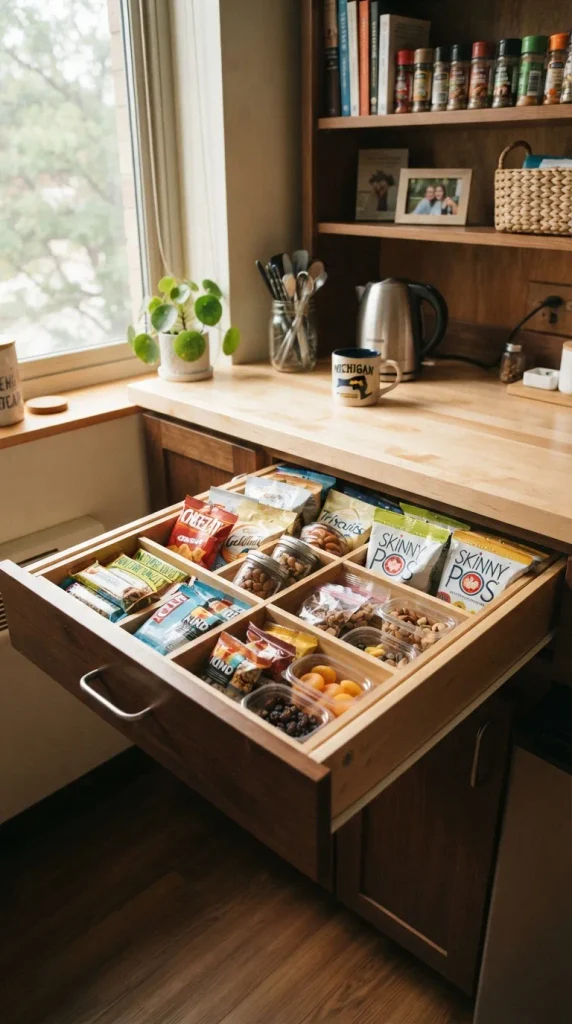
A designated snack drawer can make dorm life easier while keeping food packaging from spreading across the kitchen. Reserve one drawer, bin, or small basket for individually packaged snacks such as granola bars, crackers, nuts, popcorn, or dried fruit. Arrange foods so frequently chosen items are toward the front and less frequently used options sit behind them. If drawer space is unavailable, use a small labeled container that fits beneath a counter or on a pantry shelf. The advantage of a dedicated snack zone is that it establishes a clear home for items that otherwise tend to create visual clutter. It also makes quick food choices easier when studying, working, or returning late from classes.
13. Use a Two-Tier Dish Rack
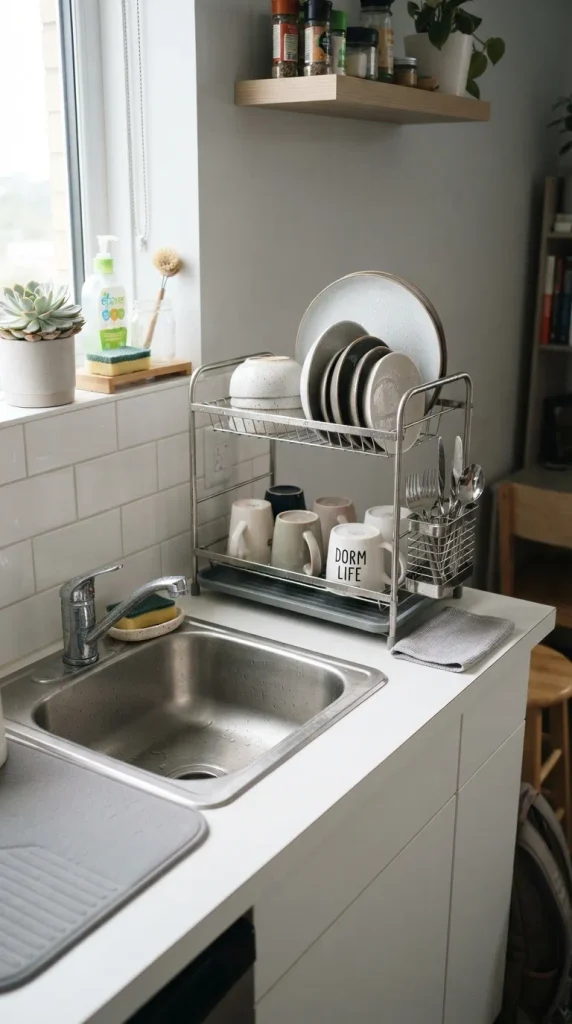
A two-tier dish rack can significantly improve the efficiency of a small sink area by using vertical space rather than spreading dishes across the counter. The upper level can hold plates or bowls while the lower area accommodates cups and smaller items, depending on the rack design. Look for a compact model with an integrated drainage system so water does not collect on the countertop. If your dorm uses a shared kitchenette, a removable rack can also be convenient because you can relocate it when necessary. Keep the rack limited to dishes that are actually in rotation rather than storing excess tableware there. A tidy dish rack can make the entire kitchen appear cleaner because it gives wet and recently washed items a defined location.
14. Store Appliances Vertically
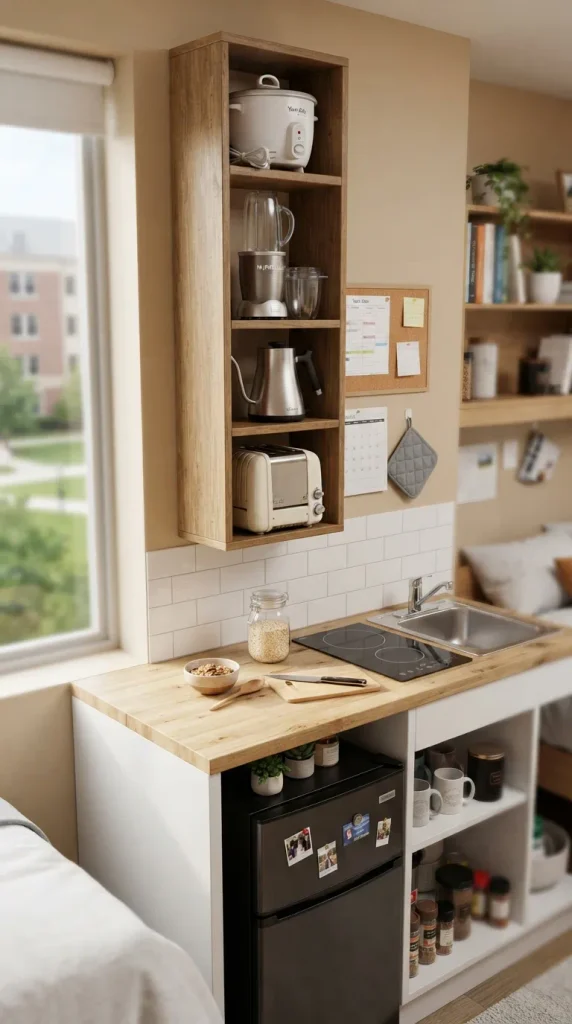
Small appliances can quickly overwhelm a dorm kitchen, especially when every item occupies a separate section of the counter. Create a designated vertical storage zone for appliances such as a blender, toaster, electric kettle, or compact rice cooker. A sturdy shelf, appliance stand, or appropriately sized cabinet can help keep equipment organized while preserving the main food-preparation area. If two appliances are safe to store close together, group them according to how often they are used rather than simply placing them wherever there is space. Daily appliances should remain accessible, while occasional-use equipment can move to a higher shelf. This approach makes the kitchen easier to use while preventing valuable counter space from becoming permanently occupied.
Also Read: 25 Kitchen Countertop Ideas for Modern Homes
15. Decorate With a Small Herb Garden

A miniature herb garden can introduce natural texture and color without requiring much space. Choose compact pots containing herbs such as basil, mint, parsley, or chives if your dorm environment provides suitable light and your housing rules permit plants. Place them on a narrow windowsill, small tray, or designated corner away from heat-producing appliances. If live plants are impractical, realistic artificial herbs can provide a similar decorative effect. Keep the arrangement simple, using two or three coordinated pots rather than filling the entire counter. Besides adding personality, herbs can make the kitchen feel more connected to a fresh, home-like environment, which is especially valuable in a dorm where the kitchen area may otherwise feel purely functional.
16. Use Clear Bins for Refrigerator Organization

A mini fridge becomes much easier to manage when its limited interior space is divided into clear categories. Small transparent bins can group yogurt, beverages, condiments, snacks, or produce so that items do not disappear behind one another. Because the contents remain visible, you can quickly identify what you have before buying more food. Choose bins that fit the refrigerator shelves without blocking airflow or interfering with the door. Avoid overfilling them, since compact refrigerators need enough space for proper circulation. A simple category-based system can make a surprisingly small fridge feel more spacious and functional. It also makes cleaning easier because individual bins can be removed rather than requiring the entire refrigerator compartment to be reorganized.
17. Add a Compact Wall-Mounted Shelf

A small wall-mounted shelf can provide useful display and storage space when floor and countertop areas are already occupied. If permanent installation is permitted, use a sturdy shelf for mugs, lightweight jars, coffee accessories, or decorative objects. In rental or dorm environments where drilling is prohibited, consider an approved removable shelving solution instead. Keep the shelf visually balanced by combining practical items with one or two decorative details rather than filling every inch. A light wood shelf can introduce warmth, while white or metal shelving can maintain a cleaner minimalist aesthetic. Because wall shelves draw the eye upward, they can make a compact kitchen feel more vertically organized instead of simply crowded with objects at counter level.
18. Turn a Cabinet Door Into Hidden Storage

The inside of a cabinet door can become a surprisingly useful storage surface in a small dorm kitchen. Depending on the cabinet construction, an appropriate adhesive organizer can hold measuring spoons, kitchen wraps, small packets, or cleaning accessories. This keeps small objects from occupying shelves where larger containers need to be stored. Before adding anything, confirm that the door still closes comfortably and that the organizer will not interfere with hinges or neighboring cabinets. Choose shallow storage solutions because bulky items can prevent proper closure. Keeping the contents limited to small essentials makes this system particularly effective. When the cabinet door closes, the extra organization disappears from view, helping the kitchenette maintain a clean appearance.
19. Choose a Neutral Color Palette

A restrained color palette can make a tiny dorm kitchen appear more cohesive and visually spacious. Soft white, warm beige, light gray, pale wood, or muted natural tones can create an uncluttered foundation, while a small amount of color can be introduced through towels, containers, artwork, or kitchen accessories. The objective is not to make every item identical but to reduce visual noise. When appliances, storage containers, and decorative pieces compete in many unrelated colors, a compact area can feel busy very quickly. Coordinating two or three dominant tones helps individual objects visually connect. This approach also makes it easier to refresh the decor later because small accessories can be changed without redesigning the entire kitchenette.
20. Create a Multipurpose Kitchen Counter

Every inch of counter space matters in a dorm, so design the surface to support more than one activity. A small tray can define a coffee station when you need it and be moved aside when you are preparing food. A compact cutting board can function as a prep surface and then be stored vertically. Likewise, a lidded container can provide storage while doubling as a neat countertop accessory. Avoid filling the counter with objects that serve only decorative purposes. Instead, prioritize items that contribute to daily routines while still looking attractive. When each object has a practical role, the kitchen remains flexible enough for cooking, eating, studying, and entertaining without requiring a larger footprint.
21. Organize With Matching Storage Baskets
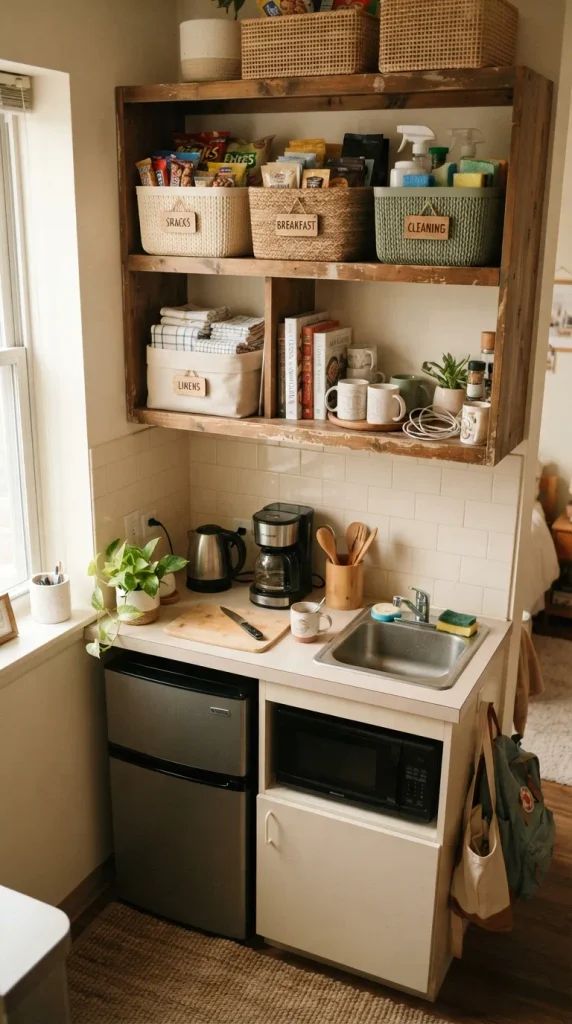
Matching baskets can bring visual order to shelves, open cabinets, or the area beneath a counter. Use separate baskets for snacks, breakfast foods, kitchen linens, cleaning supplies, or rarely used equipment. Consistent materials and colors make a collection of different items look more unified, which is particularly helpful in a dorm where open storage may be unavoidable. Choose baskets with handles if you expect to move them frequently, and select sizes that fit the shelves without leaving large amounts of wasted space. Labeling them can make the system even easier to maintain, but labels should remain simple and readable. A few well-chosen baskets can turn scattered supplies into a cohesive storage arrangement without making the kitchen feel overly decorated.
22. Use a Small Rolling Beverage Station

A compact rolling beverage station can give coffee, tea, water bottles, and drink accessories their own dedicated home. Choose a narrow cart with enough vertical clearance for mugs and beverage containers, then arrange supplies by frequency of use. The top level can hold a kettle or coffee maker if the cart is designed to safely support the appliance, while lower shelves can store cups, tea boxes, reusable bottles, and napkins. Because the cart is mobile, it can be moved when you need more workspace. For a dorm with limited kitchen facilities, this setup creates a distinct beverage zone without requiring an entire cabinet. Keep cords safely managed and follow appliance safety recommendations whenever powered equipment is used.
23. Add Removable Decorative Accents

Decorating a dorm kitchen does not require permanent changes. Removable artwork, peel-and-stick accents approved for your space, decorative labels, coordinated tea towels, or small framed prints can add personality while remaining easy to change or remove. Choose one visual theme rather than combining too many unrelated patterns. For example, botanical illustrations, minimalist typography, natural textures, or soft neutral accessories can each create a different atmosphere without taking over the room. The most effective small-kitchen decor tends to combine aesthetics with practicality, so select pieces that can coexist comfortably with everyday cooking and cleaning. Keeping decorative accents concentrated in a few locations allows the kitchen to feel personal while preserving the clean, functional character necessary for a small student space.
24. Keep a Dedicated Everyday Essentials Zone

One of the simplest ways to maintain a small dorm kitchen is to create a clearly defined zone for the items you use every day. Your essentials might include one plate, bowl, mug, reusable bottle, utensils, coffee supplies, and a few basic cooking tools. Keep these items together in the easiest-to-reach drawer, shelf, or organizer while moving occasional-use equipment elsewhere. This reduces unnecessary searching and prevents frequently used objects from being scattered throughout the kitchenette. The system is particularly useful when multiple people share the space because everyone can understand where essential items belong. Rather than trying to maximize the number of objects the kitchen can hold, focus on making the most important items accessible, organized, and easy to put away.
Conclusion
A small dorm kitchen can be both attractive and highly functional when every storage decision is made with the available space in mind. The best small dorm kitchen ideas do not depend on expensive renovations or oversized furniture; they rely on vertical organization, multipurpose accessories, compact storage, and intentional styling. Rolling carts, magnetic organizers, stackable containers, over-the-door storage, compact shelves, and dedicated stations can help turn awkward corners and unused surfaces into practical zones.
The most important principle is to design around the way you actually use the kitchen. Keep everyday essentials within easy reach, store occasional-use items out of the way, and avoid allowing decorative objects to consume valuable work surfaces. With a thoughtful combination of organization and personality, even a very small dorm kitchenette can feel comfortable, efficient, and genuinely like your own space.


