

21 Green Kitchen Colour Ideas for a Stylish Home
Green has become one of the most versatile colours in kitchen design, offering a balance between the freshness of nature and the warmth that a welcoming kitchen needs. From soft sage green cabinets to deep forest green walls, there is a shade to suit almost every interior style, room size, and decorating preference. Unlike some stronger colour trends that can quickly feel dated, carefully chosen green kitchen colours can create a timeless backdrop while still giving the room plenty of personality.
The beauty of decorating with green lies in its remarkable range. Pale green can make a compact kitchen feel airy and relaxed, while olive and moss tones introduce an earthy, sophisticated character. Dark emerald and forest shades can bring depth to cabinetry, particularly when paired with warm wood, brass hardware, natural stone, or creamy white surfaces. Even brighter green tones can work beautifully when they are used thoughtfully as an accent rather than covering every surface.
When choosing a green kitchen colour, it is important to consider more than the paint swatch itself. Natural light, cabinet material, countertop colour, flooring, backsplash tile, hardware, and surrounding rooms can all change how a shade appears throughout the day. A colour that looks soft and muted in a showroom may appear considerably richer under warm kitchen lighting. For that reason, successful green kitchen design usually comes from considering the entire palette rather than selecting a colour in isolation.
Also Read: 26 Green and Yellow Kitchen Ideas for a Fresh Look
The following 21 green kitchen colour ideas explore different ways to use this nature-inspired family of colours. Whether you are planning a complete kitchen renovation, repainting existing cabinets, updating an island, or simply looking for a subtle colour change, these ideas provide practical inspiration for creating a kitchen that feels considered, comfortable, and visually cohesive.
1. Soft Sage Green Kitchen Cabinets
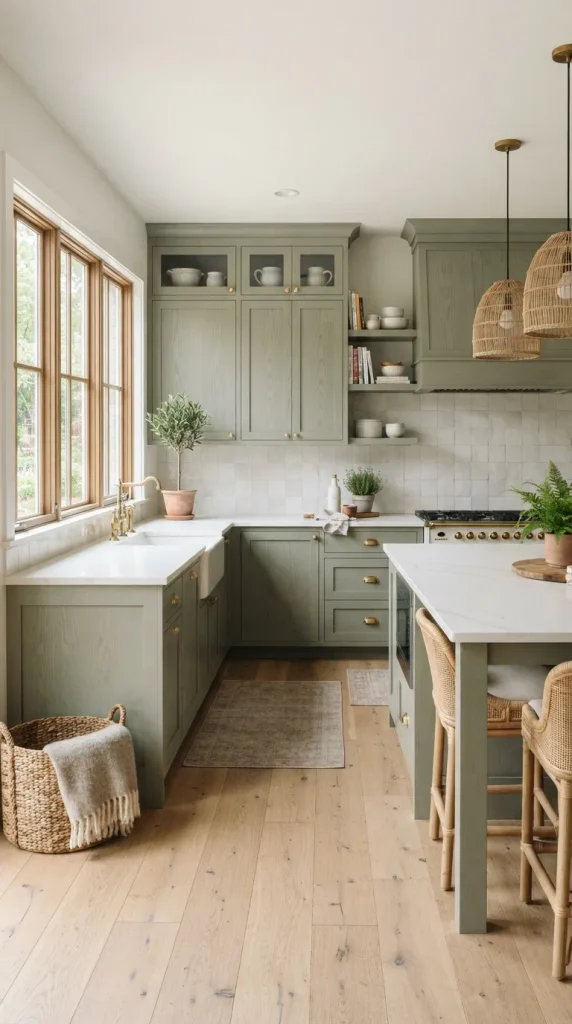
Soft sage green is one of the easiest green shades to introduce into a kitchen because it has a muted, slightly gray quality that keeps the colour sophisticated rather than overpowering. Sage cabinets work particularly well with white quartz countertops, light oak flooring, creamy backsplashes, and brushed brass handles. In a naturally bright kitchen, this gentle shade can create a calm and airy atmosphere while still providing considerably more character than an all-white scheme. Consider using sage across the main cabinetry and keeping the walls warm white to prevent the room from becoming visually busy. Linen textiles, woven baskets, pale timber, and simple ceramic accessories can reinforce the relaxed, organic quality of this colour palette.
2. Deep Forest Green Kitchen Cabinets

For a kitchen with a dramatic and sophisticated personality, deep forest green cabinetry can create an impressive focal point without relying on trendy decorative details. This rich shade looks especially elegant when combined with warm brass hardware, veined marble, cream walls, and natural wood accents. Rather than making every surface dark, use forest green strategically on the cabinetry while allowing countertops and walls to provide contrast. In kitchens with good natural light, the colour can feel luxurious and enveloping; in darker rooms, combining it with under-cabinet lighting and lighter flooring helps maintain visual balance. Forest green is particularly effective in traditional, transitional, farmhouse, and contemporary kitchens.
3. Olive Green Kitchen Colour Scheme

Olive green introduces an earthy quality that feels both established and contemporary. Its slightly yellow undertone makes it warmer than many blue-based greens, allowing it to pair beautifully with natural materials such as walnut, oak, terracotta, limestone, and aged brass. Olive cabinetry can become the foundation of a welcoming kitchen where the colour feels connected to the outdoors rather than artificially bold. Try pairing olive green lower cabinets with warm white upper cabinets if you want a two-tone arrangement that feels lighter. For an even richer look, continue the olive shade across an island and incorporate handmade-look ceramic tiles, wooden shelving, and vintage-inspired lighting.
4. Emerald Green Kitchen Island

Emerald green can transform an otherwise neutral kitchen by turning the island into a strong architectural focal point. Instead of committing the entire cabinetry system to an intense shade, painting only the island emerald creates a controlled dose of colour that attracts attention without overwhelming the room. White or pale gray perimeter cabinets provide a clean contrast, while marble or quartz countertops help maintain a polished appearance. Gold or brass pendant lights can emphasize the jewel-like quality of emerald, whereas black fixtures create a sharper modern effect. This approach works especially well in open-plan kitchens because the island becomes a visual bridge between the cooking area and adjacent dining or living spaces.
5. Muted Green and White Kitchen

A green-and-white kitchen remains one of the most adaptable colour combinations for homeowners who want personality without sacrificing brightness. Choose a muted green for the cabinets and a warm white for walls, ceilings, or upper cabinetry to create a balanced palette. The key is selecting a white with an undertone that complements the green rather than competing with it. Soft natural wood can add warmth, while simple subway or handmade-style backsplash tiles provide texture without introducing excessive colour. This combination suits modern farmhouse kitchens, cottage interiors, Scandinavian-inspired spaces, and transitional designs. The resulting room feels fresh and welcoming while retaining enough neutrality to accommodate changing accessories over time.
6. Dark Green Lower Cabinets with Light Upper Cabinets

Using dark green on the lower cabinets and a lighter neutral shade above creates a practical visual hierarchy. Deep moss, pine, or forest green can ground the bottom half of the kitchen, while white, ivory, or pale beige upper cabinetry keeps the ceiling line visually open. This arrangement is especially useful in smaller kitchens where using a dark colour throughout might make the room feel enclosed. A continuous countertop can visually connect the two cabinet colours, while warm wood flooring softens the contrast. Choose simple hardware in brass, bronze, or matte black depending on the desired character. The result is a layered kitchen colour scheme with clear definition and a comfortable sense of proportion.
7. Sage Green and Natural Wood Kitchen
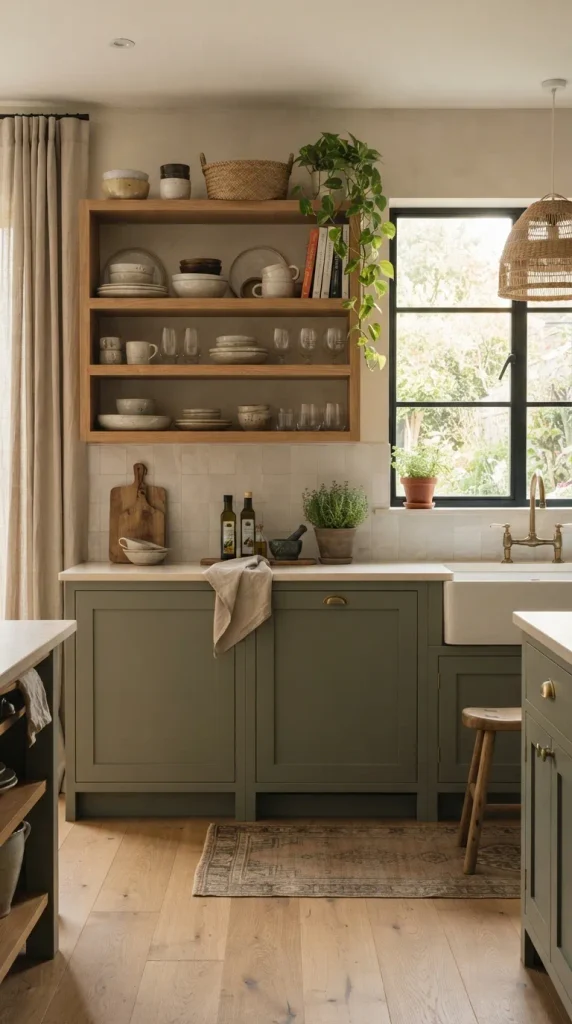
Combining sage green with natural wood creates a particularly harmonious kitchen because both materials draw inspiration from the natural world. Sage-painted cabinets can be paired with oak shelves, a butcher-block island, timber stools, or exposed wooden details to introduce warmth and texture. This palette works beautifully in kitchens where the goal is a relaxed, organic atmosphere rather than a highly polished appearance. Keep the remaining surfaces relatively quiet with cream quartz, soft beige tile, or light stone so the green and wood remain the visual focus. Plants, woven accessories, ceramic vessels, and linen curtains can complete the look without making the room feel overly themed.
8. Emerald Green and Brass Kitchen

Emerald green becomes particularly luxurious when paired with brass accents. The contrast between the saturated green cabinetry and warm metallic hardware creates a refined palette that can work in both classic and contemporary interiors. Use emerald on full-height cabinets, an island, or a selected run of cabinetry, then introduce brass through handles, faucets, pendant lights, or cabinet trim. A pale marble-look countertop can prevent the combination from becoming too heavy while adding subtle veining and movement. Keep decorative accessories restrained so the colour remains the star. This green kitchen idea is ideal for homeowners who want a statement-making space that feels sophisticated rather than excessively ornate.
9. Pale Mint Green Kitchen

Pale mint green offers a lighter interpretation of green kitchen design and can be especially effective in compact or poorly lit spaces. Its cool, fresh appearance can make cabinetry feel visually lighter while introducing a subtle hint of colour. To keep mint green from appearing too sugary, balance it with natural wood, warm white surfaces, brushed metal, or soft gray accents. Shaker-style cabinets can give the colour a classic appearance, while flat-front cabinetry makes it feel more contemporary. A simple ceramic backsplash in white or very pale green can reinforce the palette without creating visual clutter. Mint is also a useful choice for kitchens where a cheerful atmosphere is preferred over a dramatic one.
10. Moss Green Kitchen with Warm Beige

Moss green has a naturally grounded appearance that pairs exceptionally well with warm beige and cream. This combination creates a soft, earthy kitchen palette that avoids the stark contrast often associated with white-and-green interiors. Moss-coloured cabinetry can be complemented by beige stone countertops, creamy walls, natural oak flooring, and antique-inspired hardware. Because both colours have a warm visual character, they work especially well under soft natural and artificial lighting. Introduce texture through woven baskets, handmade pottery, textured curtains, or a natural-fiber runner. This approach is particularly suitable for country kitchens, rustic interiors, modern organic homes, and spaces where comfort is more important than a highly polished aesthetic.
11. Two-Tone Sage and Forest Green Kitchen

Combining two different green shades can create depth without introducing unrelated colours into the design. Use a lighter sage green across upper cabinets or perimeter cabinetry and reserve a deeper forest green for the island or lower cabinets. The tonal relationship keeps the palette cohesive while giving the kitchen a stronger architectural presence. A neutral countertop helps separate the shades and provides visual breathing room. Natural timber can further soften the transition, while simple hardware keeps the cabinetry from becoming overly decorative. This layered green palette works particularly well in large kitchens because the different shades help define functional areas while maintaining a consistent overall colour story.
12. Green Kitchen with Terracotta Accents
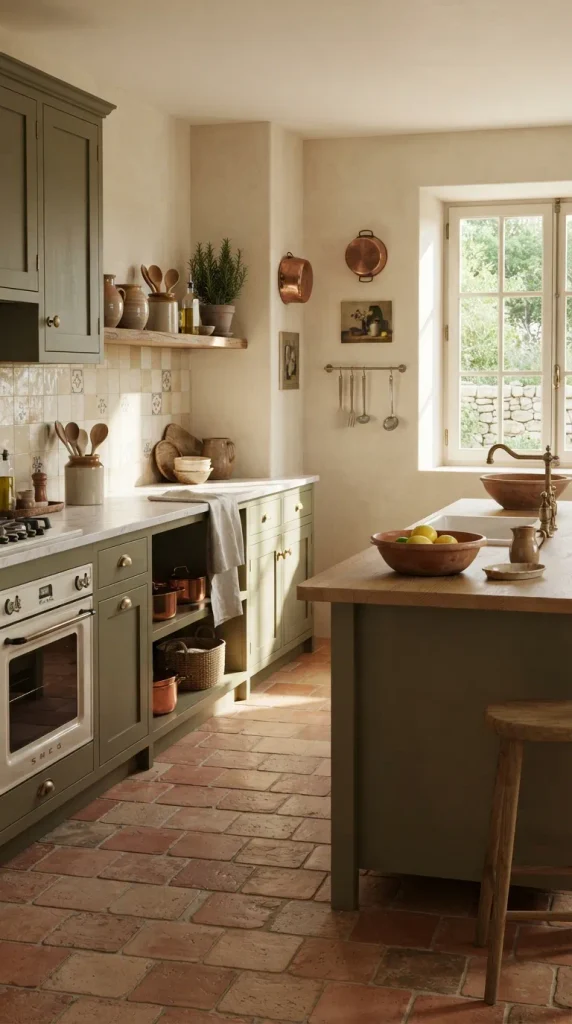
Green and terracotta create a warm, earthy pairing inspired by gardens, clay pottery, and Mediterranean interiors. Olive, sage, or muted moss cabinets can provide the green foundation while terracotta appears through floor tiles, backsplash details, pottery, pendant shades, or textiles. The contrast is strongest when the green remains relatively subdued rather than extremely bright. Natural wood and creamy walls can bridge the two colours and prevent the palette from becoming visually intense. This combination is particularly effective for kitchens that receive abundant sunlight because warm terracotta surfaces can glow beautifully throughout the day. It also offers a distinctive alternative to the more common green-and-white kitchen scheme.
Also Read: 29 Black Kitchen Cabinets Ideas for a Modern Look
13. Forest Green and Natural Stone Kitchen

Pairing forest green cabinetry with natural stone creates a kitchen that feels substantial, timeless, and connected to organic materials. Choose a stone countertop or backsplash with soft cream, taupe, or gray veining rather than an extremely high-contrast pattern. The irregular character of natural stone provides visual movement against the solid green cabinetry, while timber flooring or shelving can add additional warmth. Brass hardware works beautifully for a traditional feel, whereas black fixtures can shift the design toward contemporary minimalism. Forest green is particularly effective on shaker cabinets because the recessed detailing catches natural light and gives the deep colour subtle variation throughout the day.
14. Modern Green Kitchen with Matte Cabinets
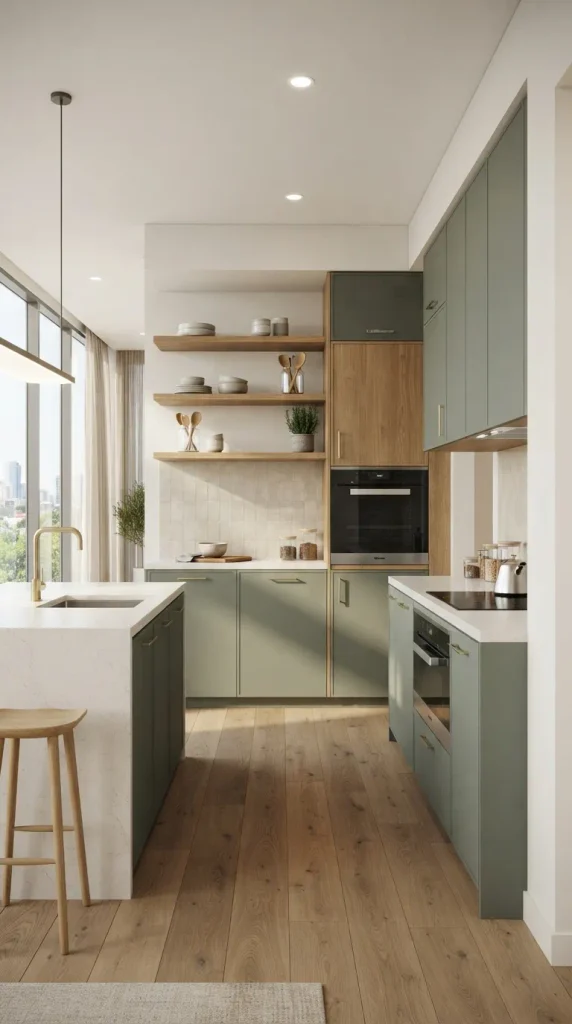
Matte green cabinetry offers a sleek interpretation of coloured kitchen design, particularly when used with flat-front doors and minimal hardware. Choose a sophisticated shade such as muted eucalyptus, deep olive, or dark sage rather than a highly saturated green. Pair the cabinets with a simple quartz countertop, streamlined appliances, and a backsplash with minimal visual interruption. Integrated handles or slim hardware can preserve the contemporary character, while timber accents prevent the room from appearing too clinical. The matte finish also absorbs rather than strongly reflects light, giving the colour a soft appearance. This style works particularly well in modern apartments, minimalist homes, and open-plan kitchens.
15. Green and Cream Cottage Kitchen
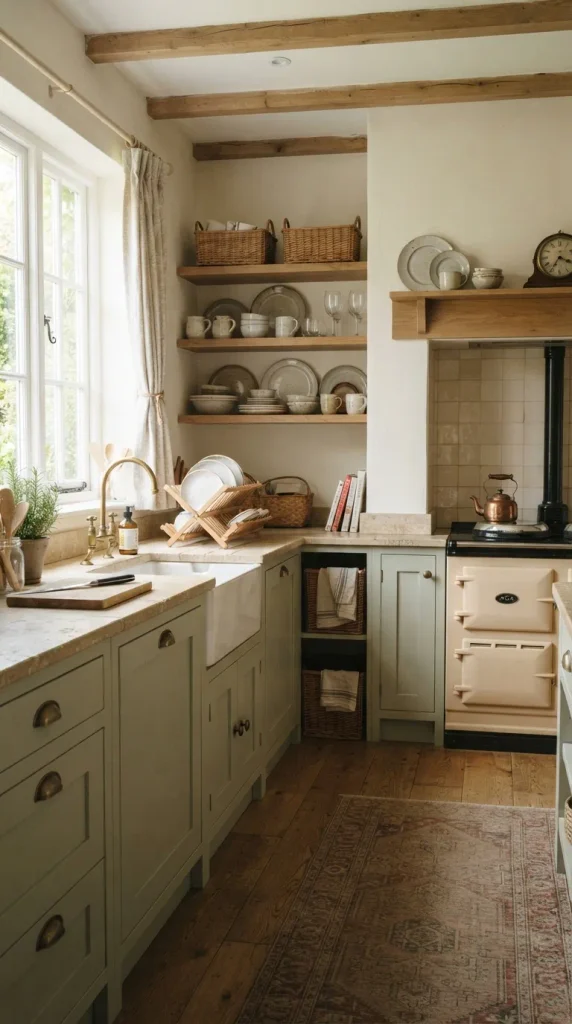
A soft green and cream palette can give a kitchen the relaxed charm of a traditional cottage without making it feel old-fashioned. Choose a gentle sage, muted olive, or dusty green for the cabinets and pair it with creamy walls, natural stone, or warm-toned ceramic tiles. Shaker doors, cup handles, open shelving, and freestanding furniture can reinforce the cottage character while keeping the colour scheme visually consistent. Avoid using too many competing patterns; instead, allow subtle texture from wood, woven materials, pottery, and linen to provide interest. This approach creates a welcoming kitchen where green feels like a natural extension of the home’s architectural character.
16. Deep Green Kitchen with Black Accents

For a stronger contemporary look, combine deep green cabinetry with carefully selected black accents. Black pendant lights, window frames, stools, faucets, or cabinet hardware can provide crisp definition against the softer organic character of green. Because both colours are relatively deep, introduce a lighter countertop, backsplash, or flooring material to maintain balance. Warm timber is particularly effective here because it prevents the palette from feeling cold or overly monochromatic. Deep green and black work well in modern, industrial, and transitional kitchens, especially when the room has generous natural light. The result is a sophisticated colour scheme with strong architectural contrast and a grounded visual presence.
17. Eucalyptus Green Kitchen Cabinets

Eucalyptus green sits between muted blue-green and soft gray-green, making it an excellent option for homeowners who want colour without excessive saturation. Its restrained appearance works beautifully with pale oak, white marble-look countertops, brushed nickel, and warm white walls. Because eucalyptus can change noticeably depending on lighting, test samples against the kitchen’s actual surfaces before committing to the full cabinetry. In daylight, the shade can feel fresh and botanical, while evening lighting may emphasize its softer gray undertones. Use simple accessories and uncluttered surfaces to let the cabinetry remain the central design feature. This versatile colour can suit both modern and transitional kitchens.
18. Green Kitchen with White Marble

Green cabinetry and white marble create a classic combination that balances colour with a bright, luxurious surface. Deep emerald, forest, olive, or muted sage cabinets can all work with marble, although the exact pairing should consider the stone’s veining. A marble with subtle gray veins creates a calmer appearance, while stronger veining can become a dramatic focal point. Keep hardware relatively simple so the cabinetry and countertop remain visually dominant. White marble can also be used selectively on an island or backsplash rather than covering every surface. This combination is particularly effective when natural light highlights the contrast between the rich green cabinetry and luminous stone.
19. Two-Tone Green and Wood Kitchen
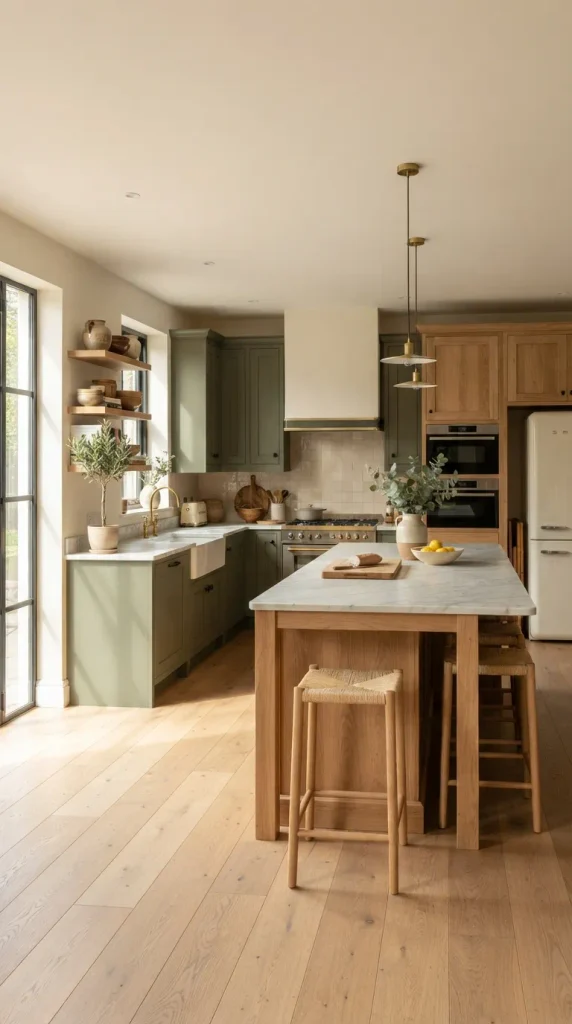
A combination of painted green cabinetry and natural wood offers a warm, contemporary alternative to an entirely painted kitchen. Green can cover the lower cabinets while oak or walnut appears on an island, tall storage units, or open shelving. Alternatively, use green for the island and retain natural wood across the perimeter cabinetry. The contrast creates visual variety while keeping the palette grounded in natural materials. Choose a green with an earthy undertone if the wood has strong warmth, ensuring the colours feel connected rather than competing. Simple stone countertops, neutral walls, and understated hardware help maintain the sophisticated balance of this material-focused design.
20. Dark Olive Green Kitchen with Warm Lighting

Dark olive green can create an intimate and sophisticated kitchen, particularly when supported by warm lighting. The colour has enough depth to make cabinetry feel substantial while retaining the organic character associated with green. Install warm under-cabinet lighting to illuminate countertops and introduce pendant lights above an island to create layers of illumination. Cream stone, warm timber, antique brass, and textured ceramics can soften the darker cabinetry. This colour scheme is especially appealing in evening-focused kitchens where atmosphere matters as much as daytime brightness. Rather than treating dark green as a limitation, use lighting deliberately to highlight cabinet details, work surfaces, and architectural features.
21. Botanical Green Kitchen with Natural Textures

A botanical-inspired green kitchen can bring the feeling of an outdoor garden into the heart of the home by combining a medium green shade with natural textures and understated accessories. Choose leafy green, muted fern, or soft botanical green cabinetry and pair it with timber, rattan, linen, stone, and handmade ceramics. Instead of filling the room with literal botanical patterns, let the materials create the connection to nature. A few carefully positioned plants can reinforce the theme without making the kitchen feel decorative or overly coordinated. This approach works across several interior styles because the foundation is based on timeless materials rather than a highly specific trend.
Conclusion: Creating a Beautiful Green Kitchen
Green kitchen colour ideas offer far more flexibility than a single trend might suggest. The colour family ranges from barely-there mint and soft sage to earthy olive, botanical eucalyptus, dramatic forest, and jewel-toned emerald. The most successful kitchen schemes usually consider the relationship between cabinetry, countertops, backsplash materials, flooring, lighting, and hardware rather than treating green as an isolated colour choice.
For a bright and relaxed space, pale sage, mint, or eucalyptus can provide a gentle update. Olive and moss greens bring warmth and an earthy quality, while forest and emerald shades create stronger architectural impact. Combining green with natural wood, creamy neutrals, stone, brass, or terracotta can further change the character of the room without requiring additional strong colours.
When selecting a shade, always examine paint or cabinet samples in the actual kitchen and observe them during both daylight and evening hours. Natural light direction, artificial bulbs, surrounding materials, and countertop undertones can all influence how green appears. With thoughtful colour selection and balanced materials, a green kitchen can remain stylish, practical, and welcoming for years to come.


