

23 Earthy Kitchen Ideas for a Warm, Natural & Cozy Home
Earthy kitchen design brings the beauty of nature indoors through warm colors, organic materials, natural textures, and relaxed styling. If you love kitchens that feel welcoming rather than overly polished, these earthy kitchen ideas can help you create a space with genuine warmth and timeless character. Think terracotta, walnut, oak, stone, clay, linen, handmade ceramics, muted greens, creamy neutrals, and softly weathered finishes working together to create a grounded atmosphere.
The beauty of an earthy kitchen is its flexibility. You do not need a rustic farmhouse or a country-style home to embrace this aesthetic. Earth-inspired elements can complement modern, minimalist, Mediterranean, contemporary, or traditional interiors. A simple wooden island can introduce warmth into a modern kitchen, while terracotta flooring can give a neutral space an unmistakably organic personality.
Whether you are planning a complete kitchen renovation or simply looking for affordable ways to make your existing space feel more natural, these 23 earthy kitchen ideas offer practical inspiration. From natural wood cabinetry and stone countertops to earthy kitchen color palettes and botanical accents, each concept focuses on creating a comfortable, visually balanced kitchen that feels connected to nature.
Also Read: 25 Mediterranean Kitchen Ideas For Warm Stylish Homes
1. Warm Walnut Cabinets for a Rich Earthy Kitchen

Walnut cabinetry instantly gives a kitchen a sophisticated connection to nature because of its deep brown coloring and distinctive organic grain. Choose flat-panel or lightly detailed walnut doors for a contemporary interpretation, then balance the richness with creamy walls, warm limestone, or softly veined quartz countertops. Matte black or aged brass hardware can add definition without taking attention away from the wood. Keep decorative accessories restrained so the natural grain remains the star of the room. A woven runner, wooden cutting boards, handmade pottery, and a few leafy plants can complete the look while reinforcing the relaxed character that makes walnut particularly effective in an earthy kitchen.
2. Terracotta Accents That Bring Mediterranean Warmth
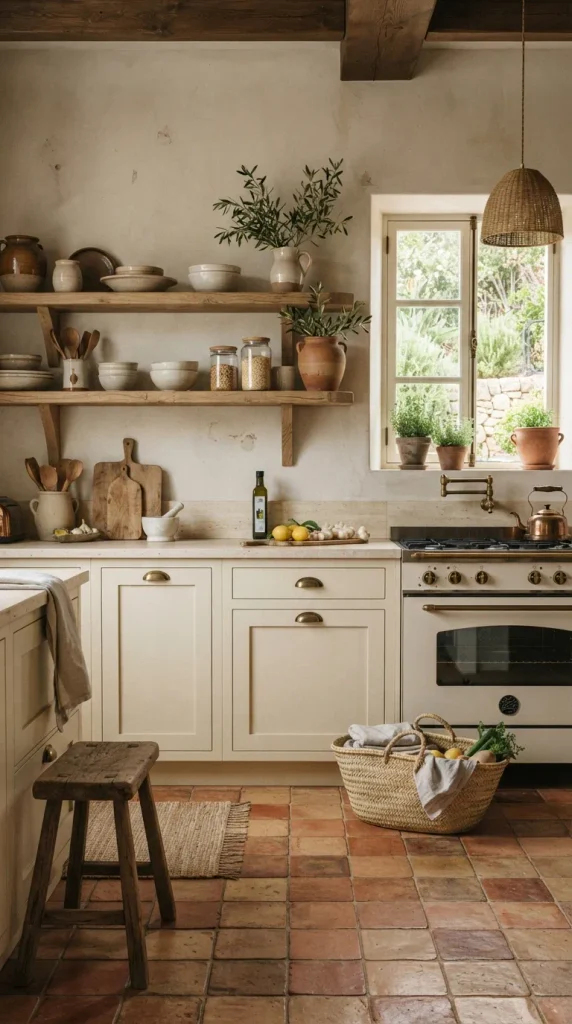
Terracotta is one of the easiest materials for introducing earthy warmth without completely redesigning a kitchen. Use terracotta floor tiles, backsplash pieces, pendant shades, or carefully selected accessories to create a sunbaked Mediterranean atmosphere. The reddish-brown tone pairs beautifully with warm white cabinetry, natural oak, cream stone, and muted olive green. For a more collected appearance, consider handmade terracotta tiles with subtle variations in color and texture rather than perfectly uniform pieces. Terracotta pottery displayed on open shelving can echo the flooring or backsplash while creating visual continuity. This approach works particularly well when you want an earthy kitchen to feel warm, relaxed, and slightly rustic.
3. Olive Green Cabinets with Natural Wood Details

Muted olive green cabinetry offers a sophisticated way to bring the colors of the outdoors into the kitchen. Unlike brighter greens, olive has a subdued quality that works beautifully with natural materials and neutral finishes. Pair olive cabinets with oak shelves, butcher-block accents, creamy countertops, or a warm beige backsplash to prevent the room from feeling too cool. Brass hardware can provide a subtle glow, while woven baskets and ceramic vessels introduce additional texture. For a cohesive earthy kitchen color palette, repeat small touches of olive throughout the space rather than introducing many competing shades. The result is a kitchen that feels botanical, calm, and comfortably connected to nature.
4. Earthy Kitchen with a Statement Stone Backsplash
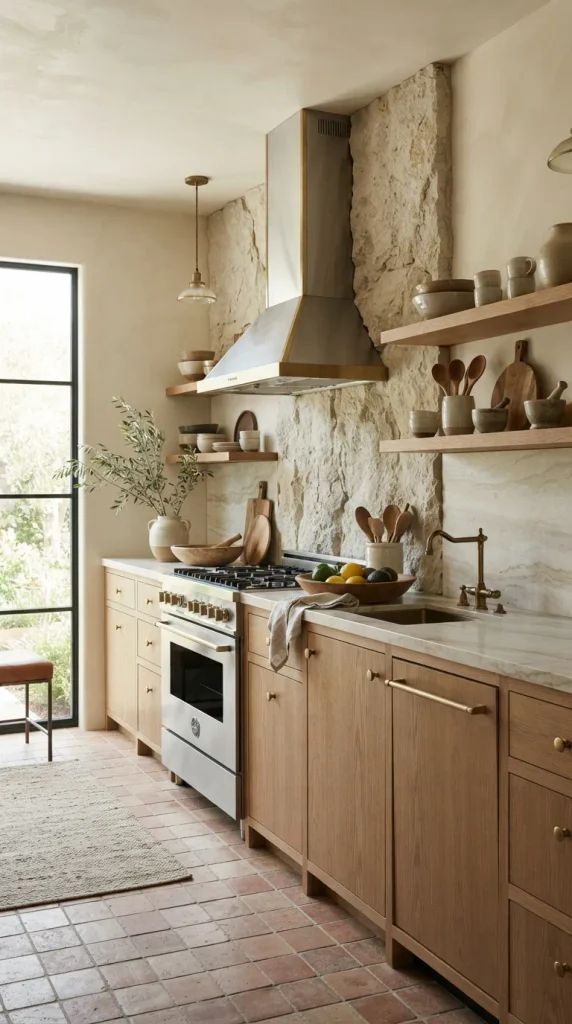
A natural stone backsplash can become the architectural centerpiece of an earthy kitchen while adding depth that painted walls cannot provide. Limestone, travertine, soapstone, and naturally textured marble are especially effective because their irregular veining and mineral variations create an authentic organic appearance. Extend the same stone from the countertop up the wall for a seamless look, or select a more heavily textured slab to create contrast behind the range. Keep surrounding cabinetry relatively quiet so the stone remains visually important. Warm wood, handmade ceramics, and understated metal fixtures will enhance its natural qualities and prevent the kitchen from appearing overly formal or showroom-like.
5. Light Oak Cabinets for a Soft Scandinavian Earthy Look

Light oak cabinetry creates a brighter interpretation of earthy kitchen design while maintaining the warmth associated with natural wood. Its pale honey and beige undertones work especially well in kitchens that receive plenty of daylight. Combine oak cabinets with off-white walls, creamy quartz, natural stone, and simple hardware for a relaxed Scandinavian-inspired appearance. To add character, incorporate open shelves displaying wooden boards, neutral ceramics, glass jars, and small plants. Avoid excessive glossy surfaces because matte and tactile finishes better support the organic concept. This earthy kitchen idea is particularly useful for small spaces because light wood reflects natural light while still introducing enough warmth to keep an all-neutral kitchen from feeling sterile.
6. Combine Cream Cabinets with Deep Brown Wood

A combination of creamy cabinetry and dark natural wood creates a beautifully balanced earthy kitchen palette. Use warm ivory or mushroom-colored cabinets around the perimeter and introduce walnut or dark oak through the island, ceiling beams, shelving, or furniture. This two-tone strategy creates contrast without relying on harsh black-and-white combinations. Natural stone countertops with beige, taupe, or brown movement can bridge the two materials and make the palette feel intentional. Finish the space with linen window treatments, woven baskets, and ceramic accessories in sand and clay tones. The mixture of light and dark materials gives the kitchen visual depth while maintaining a welcoming, nature-inspired atmosphere.
7. Add a Rustic Wood Kitchen Island
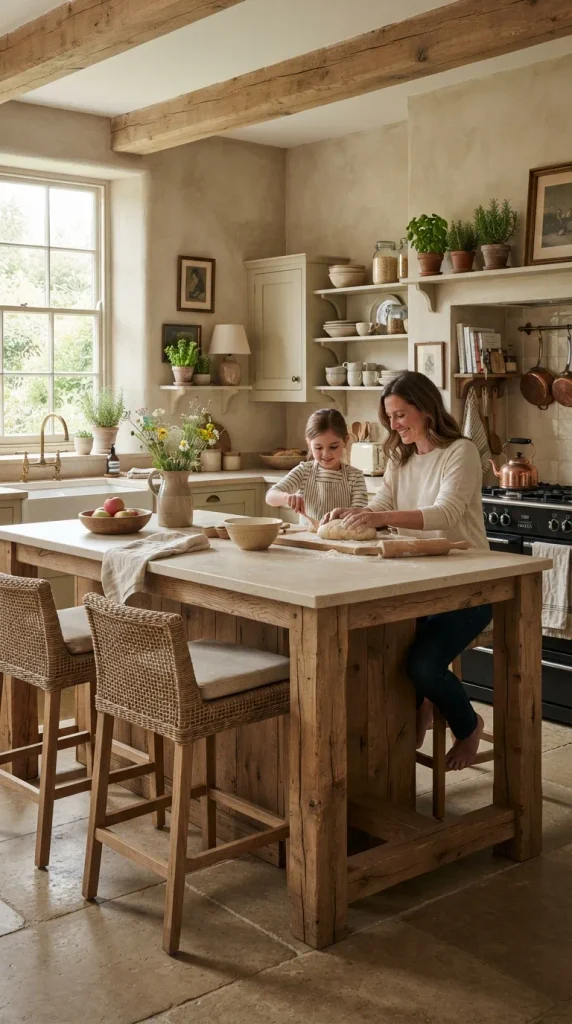
A substantial wooden island can transform an ordinary kitchen into a warm gathering space with strong earthy character. Reclaimed timber, oak, walnut, or naturally finished ash can all work depending on the overall design. Rather than choosing an island that looks perfectly manufactured, consider a piece with visible grain, subtle knots, or a gently aged finish. Pair the wood with a stone countertop for a practical surface that introduces another natural texture. Counter stools made from woven rattan or leather can reinforce the relaxed atmosphere. Keep the surrounding cabinetry simple so the island has room to make an impression and function as the visual heart of the kitchen.
8. Use Travertine for a Naturally Textured Kitchen

Travertine has become a popular choice for interiors because its porous surface, creamy coloration, and organic variation create a sense of understated luxury. In an earthy kitchen, it can be used for countertops, backsplashes, flooring, or even a waterfall island. Its beige, ivory, and sandy tones pair naturally with walnut, oak, plaster walls, and muted green cabinetry. Choose a honed or softly finished surface when you want a more relaxed appearance. Since travertine already provides considerable texture, balance it with clean-lined cabinets and uncomplicated décor. The combination creates a kitchen that feels grounded and refined without losing the raw beauty associated with natural materials.
Also Read: 29 Cozy Kitchen Design Ideas for a Warm & Stylish 2026
9. Create a Clay-Inspired Earthy Kitchen Color Palette

A clay-inspired color scheme can make an earthy kitchen feel especially warm and expressive. Build the palette around shades such as burnt sienna, muted terracotta, dusty peach, warm taupe, cinnamon, and soft beige. You do not need to paint every cabinet a strong color; even a clay-toned island or backsplash can introduce the desired effect. Natural wood provides an excellent supporting material, while creamy surfaces keep the darker earthy tones from becoming overwhelming. Handmade ceramics, linen textiles, and woven accessories can reinforce the palette through subtle variations. This approach works particularly well for homeowners who want their kitchen to have personality while remaining sophisticated and connected to natural landscapes.
10. Install Open Shelving with Handmade Ceramics

Open shelving provides an opportunity to make everyday kitchen items part of the décor while emphasizing the organic character of an earthy interior. Choose shelves made from thick oak, walnut, or reclaimed wood and style them with handmade ceramic plates, stoneware mugs, clay pitchers, wooden bowls, and woven baskets. Allow some empty space between objects so the arrangement feels collected rather than crowded. Neutral ceramics in cream, sand, brown, and muted green create a cohesive palette without requiring every item to match. This idea also adds practical accessibility, making frequently used dishes easy to reach while giving an otherwise simple wall warmth, texture, and personality.
11. Bring in Natural Stone Flooring

Flooring has a major influence on the overall mood of a kitchen, and natural stone can establish an earthy foundation from the ground up. Slate, limestone, travertine, and other stone surfaces introduce subtle color variation and tactile character that manufactured flooring often struggles to replicate. Choose warm beige, taupe, gray-brown, or softly mottled finishes depending on the rest of your palette. Pair the floor with wood cabinets and woven textiles to create visual continuity between hard and soft materials. A natural stone floor is particularly effective in larger kitchens because its organic variation can fill expansive areas without making the room feel visually repetitive or artificially uniform.
12. Add a Plaster-Style Wall Finish

Plaster-inspired walls can give an earthy kitchen the appearance of an old-world interior while remaining suitable for contemporary homes. Soft limewash, clay plaster, or plaster-effect finishes create gentle tonal variation that adds depth without introducing a busy pattern. Shades such as warm white, mushroom, oatmeal, sand, and muted beige work beautifully alongside natural wood and stone. Instead of perfectly smooth painted walls, the subtle imperfections help the kitchen feel handcrafted and relaxed. Combine the finish with simple cabinetry, aged hardware, and organic accessories to keep the atmosphere cohesive. This treatment is especially appealing when you want an earthy kitchen to feel architectural rather than simply decorated with nature-inspired objects.
Also Read: 25 Boho Kitchen Ideas for a Warm, Cozy Home
13. Layer Rattan and Woven Kitchen Accessories

Rattan, cane, seagrass, and other woven materials can soften the harder surfaces commonly found in kitchens. Introduce them through pendant lights, counter stools, storage baskets, cabinet inserts, or even a woven runner. Their natural tan and honey tones work particularly well with oak, walnut, cream, olive, and terracotta. The key is to distribute woven details rather than concentrating them in one corner, allowing the texture to appear naturally throughout the room. A pair of woven stools beneath an island, a seagrass basket beside the pantry, and a rattan pendant over the dining area can provide enough texture to make the space feel warm without turning it into a themed interior.
14. Choose Soapstone Countertops for Deep Organic Contrast

Soapstone countertops bring a distinctive combination of softness, depth, and natural character to an earthy kitchen. Their dark charcoal or deep gray coloring provides a grounded contrast against light oak, cream cabinetry, and warm plaster walls. Unlike highly polished surfaces, a honed soapstone finish has a quieter appearance that complements organic materials. Use the same stone across the island and perimeter counters for a cohesive visual foundation, or reserve it for the island as a statement feature. Wooden cutting boards, aged metal fixtures, and handmade pottery can soften the darker countertop. The result is an earthy kitchen that feels substantial and timeless rather than overly decorative.
15. Introduce a Warm Beige and Taupe Kitchen Palette

Beige and taupe can create an exceptionally versatile earthy kitchen when their undertones are carefully coordinated. Instead of using one flat neutral everywhere, layer warm ivory, mushroom, camel, oatmeal, greige, and soft brown across cabinetry, walls, stone, textiles, and accessories. Natural wood helps prevent the neutral scheme from becoming monotonous, while aged brass adds a small amount of warmth and reflection. The secret is variation in texture: combine smooth painted cabinets with grainy timber, honed stone, woven fabrics, and handmade ceramics. This layered neutral approach produces a calm kitchen that feels elegant enough for contemporary homes while retaining the relaxed qualities associated with natural interiors.
16. Create a Moody Earthy Kitchen with Dark Green

Deep forest, moss, and muted pine green can give an earthy kitchen a dramatic yet nature-inspired atmosphere. Dark green cabinetry looks particularly beautiful beside warm walnut, brass fixtures, creamy stone, and natural woven materials. To keep the room from appearing too heavy, allow natural light to remain unobstructed and introduce lighter surfaces on the backsplash or countertop. Matte finishes are especially effective because they absorb light and create a soft, sophisticated appearance. Add a few plants, wooden utensils, and handmade ceramics for subtle organic detail. This darker interpretation is ideal for homeowners who want earthy kitchen ideas with more visual drama while still maintaining a connection to the natural world.
Also Read: 24 Kitchen Backsplash Ideas for Every Style & Budget
17. Use Handmade Zellige-Style Tiles for Organic Texture

Irregular handmade-look tiles can introduce movement and craftsmanship into an earthy kitchen backsplash. Choose warm white, cream, sandy beige, muted green, or soft brown rather than highly saturated colors to preserve the natural palette. Slight differences in tile shape, glaze, and surface reflection create character while remaining understated. Pair the backsplash with simple wood cabinetry so the irregular texture has room to stand out. Open shelves can provide a practical transition between upper and lower sections, while ceramic bowls and wooden accessories reinforce the handmade quality. This approach gives an earthy kitchen a handcrafted appearance without requiring major structural changes.
18. Decorate with Botanical Greenery

Plants are one of the most natural ways to make an earthy kitchen feel alive. Choose herbs such as rosemary, basil, thyme, and mint for practical greenery, or use larger foliage plants when you want a stronger visual statement. Place smaller pots on windowsills and shelves while keeping larger plants in corners where they will not interfere with food preparation. Terracotta planters, woven baskets, and stone containers can coordinate with the rest of the kitchen’s materials. Greenery works especially well against warm wood and neutral cabinetry because it introduces a living element rather than simply another decorative color. The result feels fresh, organic, and naturally inviting.
19. Add Aged Brass Fixtures for Warmth

Aged brass can provide the subtle metallic warmth an earthy kitchen needs without creating the sharp contrast associated with polished chrome. Consider aged brass for cabinet pulls, faucets, pendant lights, or shelf brackets, and allow the finish to develop a slightly softened appearance over time. It pairs naturally with walnut, oak, terracotta, cream, olive, and stone. Avoid using too many competing metallic finishes because the goal is a cohesive, grounded atmosphere. Aged brass works particularly well when repeated in small doses across the room, creating visual continuity while adding a gentle glow that becomes especially attractive under natural daylight.
20. Build an Earthy Kitchen Around a Farmhouse Sink

A farmhouse-style apron-front sink can reinforce an earthy kitchen aesthetic when combined with natural materials and understated styling. Choose fireclay, stone, or another matte-looking finish rather than an overly glossy design if you want a more authentic appearance. Surround the sink with warm wood cabinetry, natural stone countertops, and simple hardware. A nearby window can provide an ideal location for herbs or small plants, connecting the practical work area with the outdoors. Linen towels, wooden brushes, ceramic soap dispensers, and handmade pottery can add texture without cluttering the countertop. The result combines practical functionality with the relaxed character of traditional natural interiors.
21. Mix Wood, Stone, and Linen for a Layered Look

An earthy kitchen becomes especially convincing when several natural materials are layered rather than relying on a single obvious feature. Use wood for cabinets or shelving, stone for counters or flooring, and linen for curtains, seat cushions, or tea towels. Each material contributes a different tactile quality, creating depth while keeping the overall palette restrained. Warm beige, cream, brown, and muted green can connect the materials visually. Choose finishes with subtle imperfections and natural variation instead of highly reflective or excessively uniform surfaces. This combination works across many kitchen styles because the materials themselves establish warmth and authenticity without forcing the room into one specific decorative category.
22. Create a Minimalist Earthy Kitchen with Clean Lines
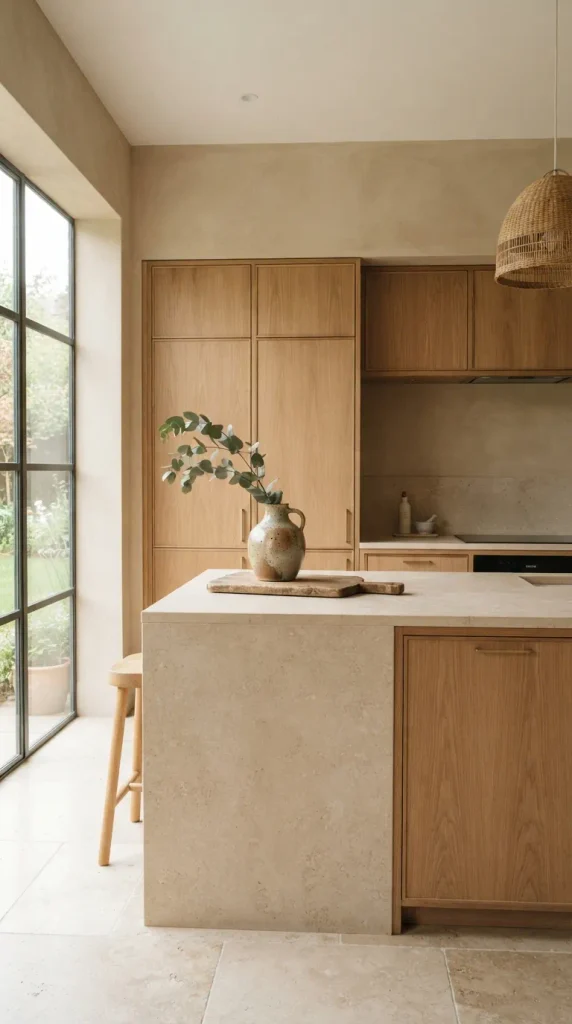
Earthy design does not have to mean rustic, cluttered, or traditional. A minimalist kitchen can feel deeply connected to nature by using clean-lined cabinetry alongside carefully selected organic materials. Think flat-front oak doors, a limestone countertop, warm plaster walls, and a simple stone or wood island. Keep hardware discreet and limit countertop accessories to a few useful objects such as a wooden cutting board, ceramic vessel, or small plant. The restrained composition allows grain, texture, and natural color to become the primary decoration. This is an excellent direction for contemporary homeowners who appreciate minimalist interiors but want their kitchen to feel warmer and more tactile.
23. Design a Cozy Earthy Kitchen with a Natural Dining Nook
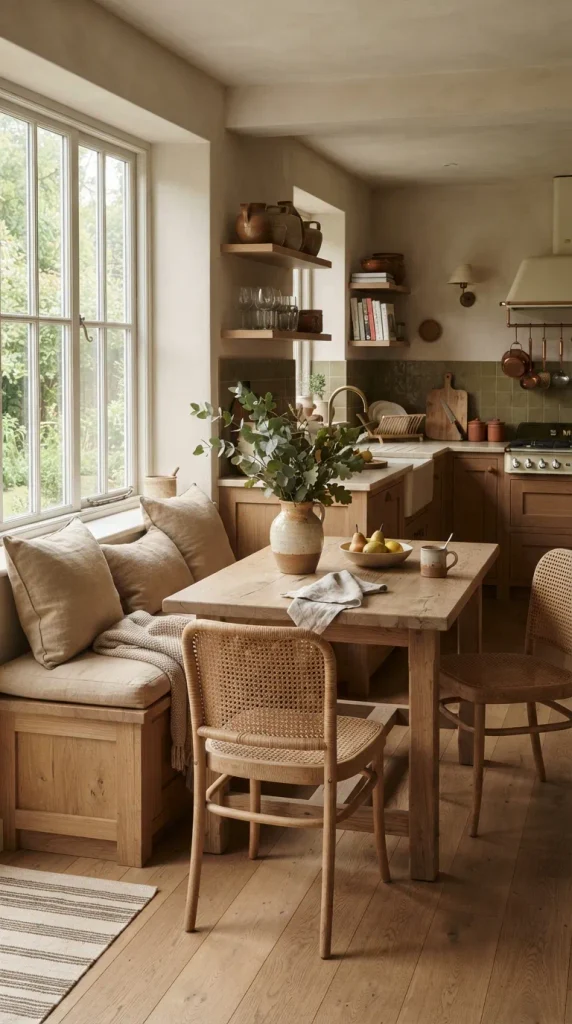
A small dining nook can make an earthy kitchen feel more intimate and connected to everyday living. Position a simple wooden table beside a window, then surround it with a built-in bench or comfortable chairs made from wood, cane, or woven materials. Add linen cushions in warm beige, olive, or clay tones and keep the centerpiece simple with branches, herbs, or a handmade ceramic vase. Natural daylight will emphasize the textures and warm colors throughout the area. Connecting the cooking and dining zones through shared materials creates a cohesive room where the earthy aesthetic feels functional rather than merely decorative, making the kitchen inviting for everyday meals and relaxed gatherings.
Conclusion
Earthy kitchen design is ultimately about creating balance through natural color, tactile materials, organic shapes, and comfortable details. Whether you choose walnut cabinetry, terracotta accents, olive green paint, natural stone, woven accessories, or a simple collection of handmade ceramics, even a few carefully selected elements can change the atmosphere of a kitchen. The most successful earthy kitchen ideas do not depend on trends; they use materials and colors that age gracefully and continue to feel welcoming over time. By combining wood, stone, clay, greenery, warm neutrals, and thoughtfully chosen textures, you can create a kitchen that feels connected to nature while still reflecting your personal style.


