

23 Coziest Winter Cabin Kitchen Ideas for 2026
Winter has a way of making a cabin kitchen feel especially inviting. When snow covers the landscape and temperatures drop outside, the kitchen naturally becomes one of the warmest and most comforting rooms in the home. Rich wood tones, soft lighting, textured fabrics, aged finishes, and practical rustic details can transform an ordinary cooking space into a welcoming winter retreat.
The best winter cabin kitchen ideas are not simply about adding seasonal decorations. They combine warmth, functionality, natural materials, and timeless cabin character so the space feels comfortable throughout the colder months. From reclaimed wood cabinetry and stone backsplashes to vintage cookware, wool textiles, open shelving, and glowing pendant lights, even small changes can create a distinctly cozy atmosphere.
Whether you are decorating a mountain cabin, updating a rustic vacation home, or bringing cozy lodge-inspired style into a modern kitchen, these ideas offer practical inspiration. The focus is on details that make a kitchen feel warmer without making it visually cluttered. Natural textures, earthy colors, handcrafted accents, and thoughtful lighting work together to create that relaxed feeling associated with a secluded winter cabin.
1. Warm Up the Kitchen With Reclaimed Wood Cabinets
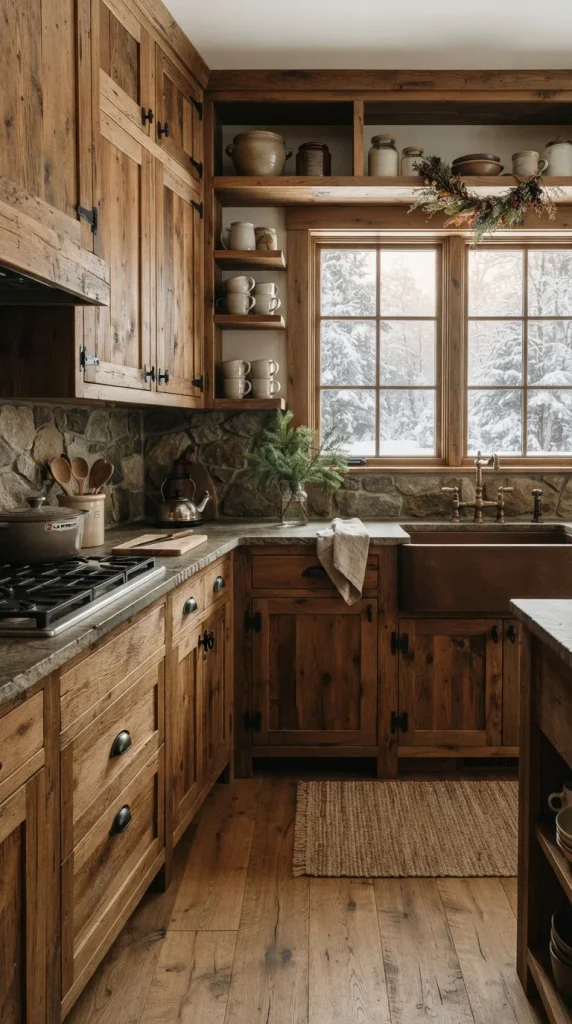
Reclaimed wood cabinetry immediately gives a winter cabin kitchen a sense of history and character. Look for timber with visible knots, subtle color variation, weathered edges, and naturally aged grain rather than perfectly uniform boards. A medium or deep wood stain can make the room feel especially warm during the colder months while preserving the rustic personality of the cabin. Pair wooden cabinets with simple black or aged-brass hardware for a timeless finish. If full reclaimed cabinetry is outside the budget, consider using reclaimed wood for selected doors, an island face, or a pantry wall. The combination creates visual warmth without requiring excessive decoration.
2. Create a Cozy Focal Point With a Stone Backsplash

A natural stone backsplash can make a cabin kitchen feel connected to the landscape outside. Rough-cut stone, stacked stone, slate, or softly textured ledgestone works beautifully with wood cabinetry because the two materials balance one another. Choose earthy shades such as warm gray, taupe, cream, brown, or muted charcoal to maintain a relaxed winter palette. Instead of covering every wall, consider using stone behind the range or sink as a feature area. The irregular texture adds depth and gives the kitchen a handcrafted appearance. For an authentic cabin aesthetic, keep surrounding finishes relatively simple so the natural stone remains the visual centerpiece.
3. Add Warm Pendant Lighting Over a Rustic Island

Lighting can completely change the mood of a cabin kitchen once the winter sun begins to disappear. Install two or three warm-toned pendant lights above a central island to create a soft pool of illumination where people naturally gather. Fixtures made from aged metal, hammered iron, wood, woven fibers, or antique-style glass complement rustic interiors particularly well. Choose bulbs with a warm color temperature rather than cool white light, especially if the kitchen contains natural wood. The layered glow from pendants, under-cabinet lights, and nearby lamps creates a relaxed atmosphere that feels intimate without sacrificing practical task lighting.
4. Bring Winter Warmth With Wool and Plaid Textiles
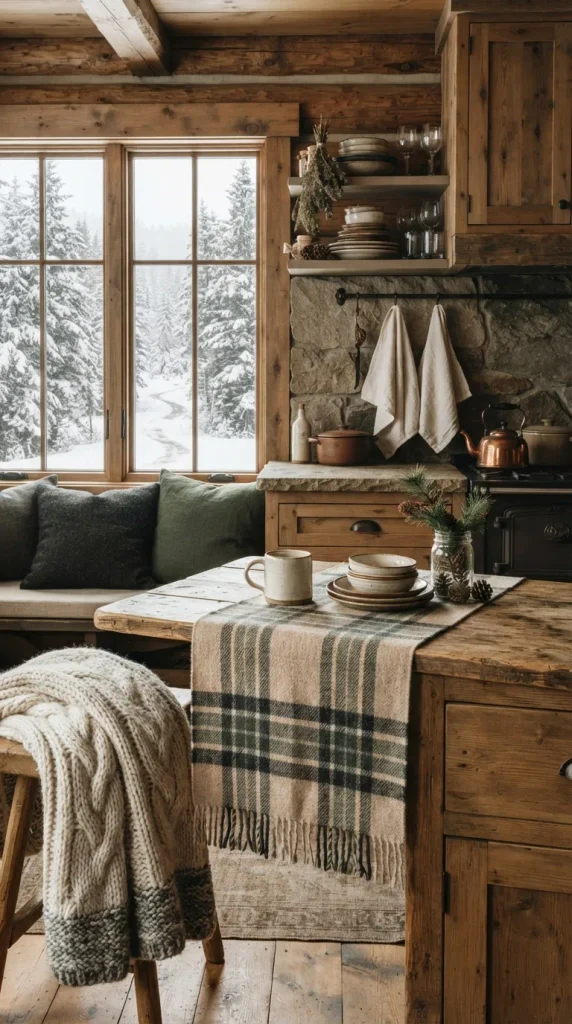
Soft textiles are one of the easiest ways to make a kitchen feel warmer without changing permanent finishes. Drape a wool runner over a nearby bench, place plaid cushions on dining chairs, or add a thick woven mat near the sink. Traditional winter patterns such as buffalo check, tartan, subtle stripes, and muted geometric designs can reinforce the cabin aesthetic while adding softness to hard surfaces. Keep the palette restrained with cream, charcoal, forest green, brown, rust, or burgundy. Natural wool, cotton, and linen generally look more authentic than overly glossy synthetic fabrics and bring tactile comfort into the kitchen.
Also Read: 25 Navy Cabinet Kitchen Ideas for a Timeless Look
5. Style Open Shelves With Rustic Winter Cookware
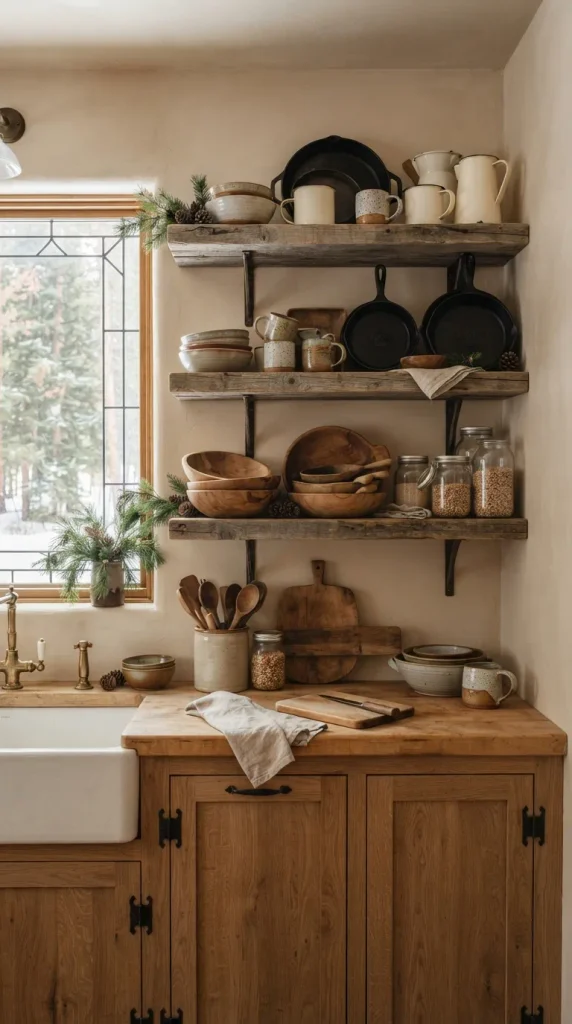
Open shelving provides an opportunity to turn everyday kitchen essentials into part of the decor. Wooden shelves can display stoneware plates, enamel mugs, ceramic pitchers, cast-iron cookware, wooden bowls, and vintage-style serving pieces. For a winter cabin look, mix functional objects with a few natural accents such as pine branches or dried grasses. Avoid filling every inch of shelf space; leaving small areas of exposed wood helps the arrangement breathe. Varying heights and textures creates a more collected appearance than arranging identical objects in rows. The result feels practical and personal while keeping frequently used kitchen items within easy reach.
6. Use a Deep Farmhouse Sink for Rustic Character

A generously sized farmhouse sink can serve as both a practical workstation and a defining architectural detail in a cozy cabin kitchen. White fireclay creates a classic contrast against dark wood, while a stone or copper-style sink offers a more rugged lodge-inspired appearance. Pair the sink with a bridge faucet or simple aged-metal fixture to reinforce the traditional character. A wooden cutting board resting nearby can soften the transition between the sink and countertop. Because cabin kitchens are often designed around cooking and gathering, a deep basin is especially useful for washing large pots, cast-iron pans, and oversized serving dishes after winter meals.
7. Introduce a Butcher Block Countertop
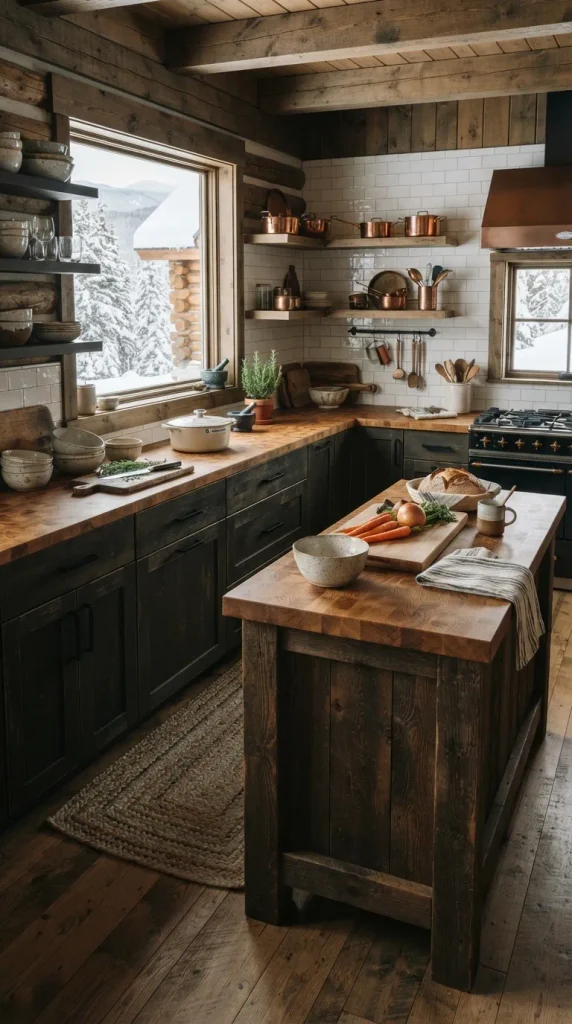
Few countertop materials create as much visual warmth as butcher block. Its natural grain complements timber walls, rustic cabinetry, stone surfaces, and vintage accessories while giving the kitchen a distinctly handcrafted appearance. Consider using butcher block throughout the kitchen or reserving it for an island to create a contrasting work surface. Warm maple, oak, walnut, and reclaimed wood tones can each produce a different mood. Keep the finish practical and easy to maintain, particularly around food preparation areas. Pairing the countertop with matte black fixtures or aged brass hardware creates an appealing balance between traditional cabin charm and contemporary functionality.
8. Make the Kitchen Glow With Under-Cabinet Lighting

Under-cabinet lighting is an understated detail that becomes particularly valuable during long winter evenings. Soft illumination beneath upper cabinets can highlight countertops, illuminate food preparation areas, and create a gentle background glow after the main lights are switched off. Warm LED strips or discreet puck lights work well in rustic kitchens because they provide modern convenience without visually competing with natural materials. Conceal the fixtures as much as possible so the light appears to come naturally from beneath the cabinetry. When combined with pendant lighting and a few decorative lamps, this layered approach gives the kitchen a welcoming atmosphere instead of relying on one harsh overhead fixture.
Also Read: 24 Cozy English Cottage Kitchen Ideas for a Charming Home
9. Decorate With Evergreen Branches and Winter Greenery
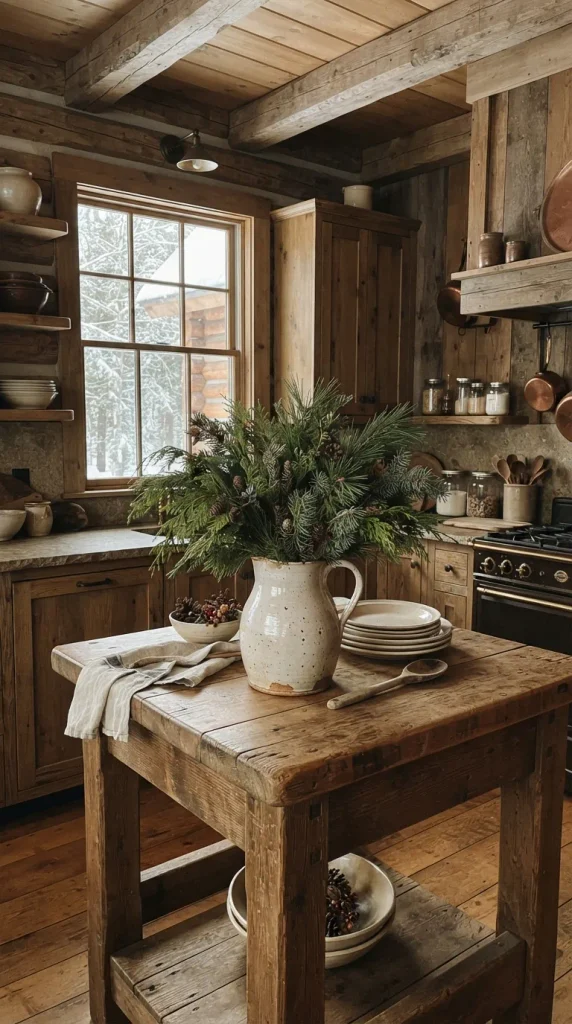
Fresh or preserved evergreen branches can bring the surrounding winter landscape indoors without making the kitchen feel overly seasonal. Place a loose arrangement of pine, cedar, fir, or eucalyptus in a ceramic pitcher on the island or dining table. Smaller clippings can be tucked along open shelves, windowsills, or the top of cabinetry. Keep arrangements intentionally informal so they look as though they were gathered from the woodland surroundings. For an evergreen winter cabin kitchen, natural greenery pairs beautifully with wood, stone, iron, and neutral ceramics. Avoid excessive ornaments if you want the room to remain timeless after the holiday season has passed.
10. Choose a Warm Neutral Color Palette
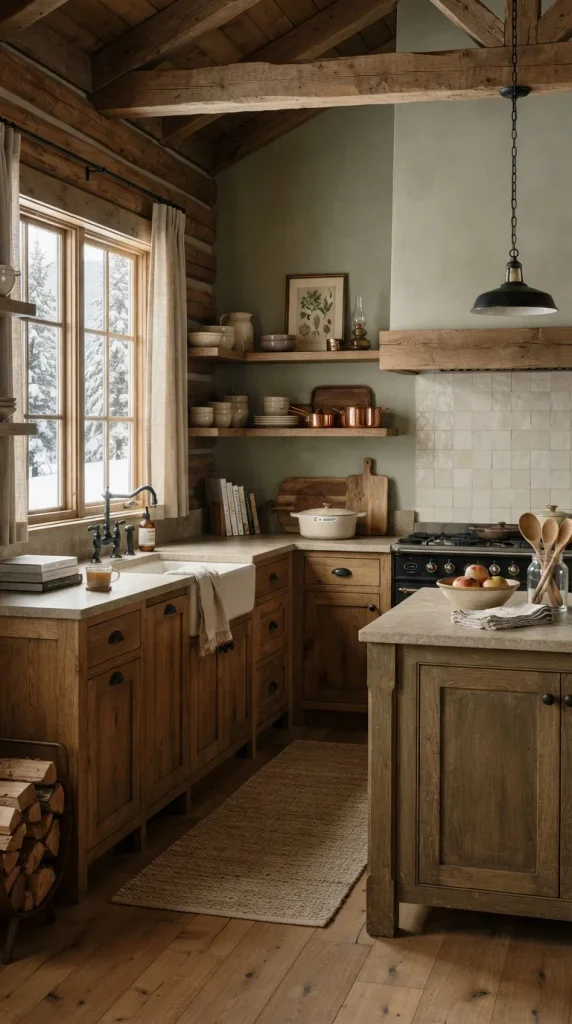
A carefully selected color palette can make even a compact kitchen feel cozy during winter. Creamy whites, warm beige, mushroom, taupe, soft brown, muted gray, and earthy green provide an excellent foundation for cabin interiors. Instead of relying on bright white throughout the room, use warmer neutrals that complement the natural undertones of timber and stone. Darker accents can be introduced through hardware, window frames, cookware, or furniture. This layered palette creates depth without making the kitchen feel visually heavy. It also provides a flexible backdrop for seasonal decorations, allowing winter greenery and textured textiles to stand out naturally.
11. Install a Rustic Range Hood With Wood Trim
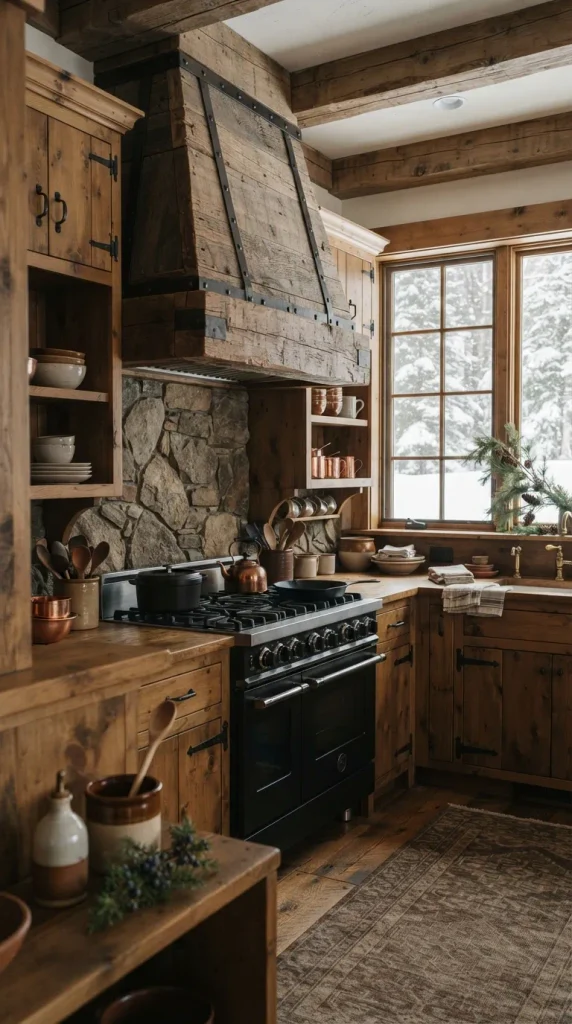
A statement range hood can give a cabin kitchen architectural character while serving a useful purpose. A wood-clad hood with a simple profile works especially well above a traditional range, particularly when its finish coordinates with nearby cabinetry. For contrast, consider a plaster or painted hood framed with natural wood trim. The goal is to make the hood feel integrated into the structure of the kitchen rather than like a separate appliance. Simple lines are generally more timeless than elaborate ornamentation. Pair the feature with a stone backsplash and understated hardware for a balanced rustic composition that feels substantial without becoming overly formal.
12. Create a Small Coffee and Hot Cocoa Station
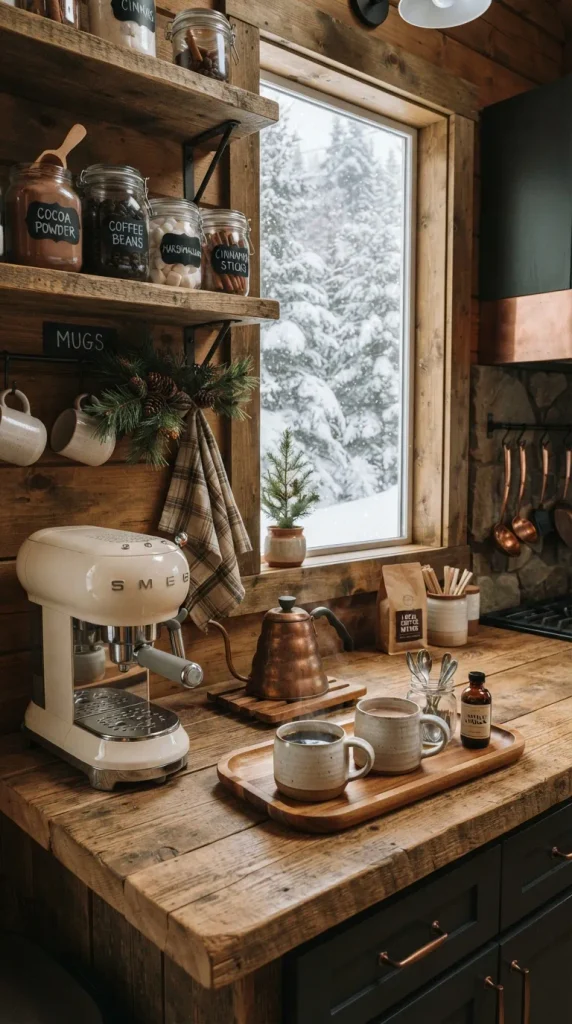
A dedicated beverage station makes a winter cabin kitchen feel instantly more inviting. Reserve a small section of countertop for a coffee maker, kettle, ceramic mugs, a wooden tray, and containers for cocoa, tea, or coffee beans. Open shelves above the station can hold favorite mugs and small jars, while a woven basket underneath can store napkins or extra supplies. Use materials such as wood, ceramic, glass, and metal to keep the arrangement consistent with the cabin aesthetic. This setup is particularly useful in vacation cabins because it creates a natural morning gathering point and adds function without requiring a major renovation.
13. Add Vintage Copper and Brass Kitchenware
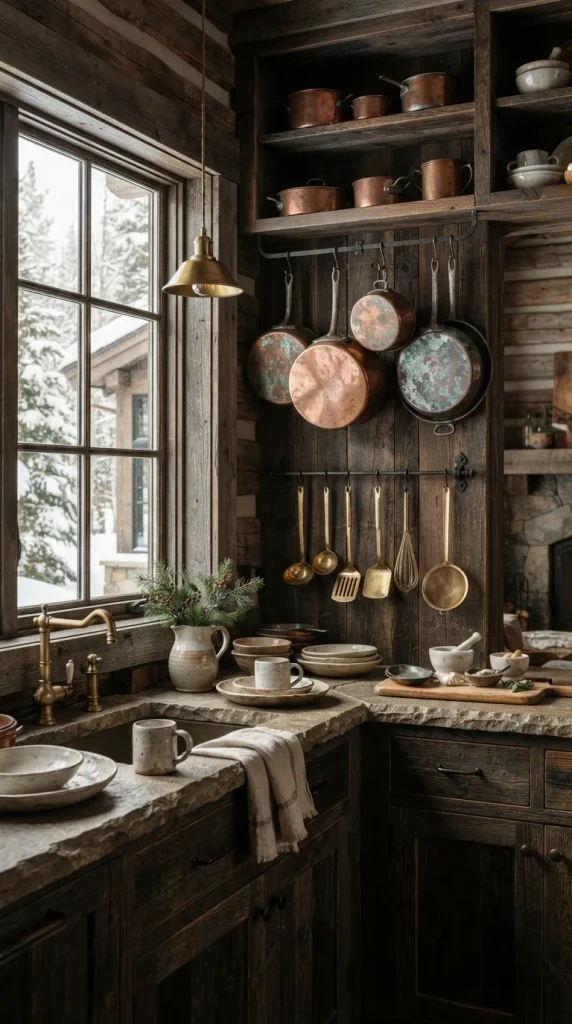
Warm metals can introduce subtle richness into a rustic winter kitchen. Copper pots, brass utensils, antique-style canisters, and aged-metal accessories work especially well against dark wood because their warm surfaces catch the light without appearing too polished. Rather than displaying a large collection, select a few meaningful pieces and allow them to become part of the room’s everyday character. A copper saucepan hanging above a prep area or a brass rail holding cooking utensils can provide both function and decoration. The slightly aged appearance of these materials suits a cabin environment where craftsmanship and patina are more important than perfect uniformity.
14. Use a Large Wooden Island as the Gathering Place
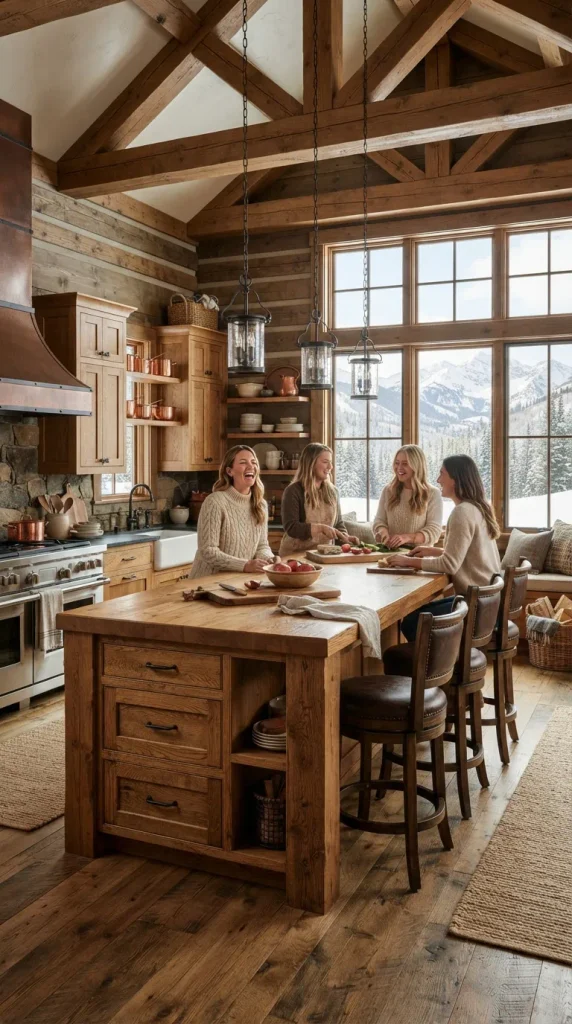
A substantial wooden island can anchor the entire kitchen and encourage the casual social atmosphere associated with cabin living. Choose a design with visible grain, sturdy proportions, and enough overhang for comfortable stools if space permits. A distressed or naturally finished surface can make the island feel like a piece of furniture rather than standard cabinetry. Incorporate drawers for cooking tools and lower shelves for baskets or cookware to maximize storage. During winter, the island can become the center of meal preparation, breakfast, board games, and conversation, making it one of the most useful features in a cozy cabin kitchen.
15. Layer Natural Stone, Wood, and Woven Materials
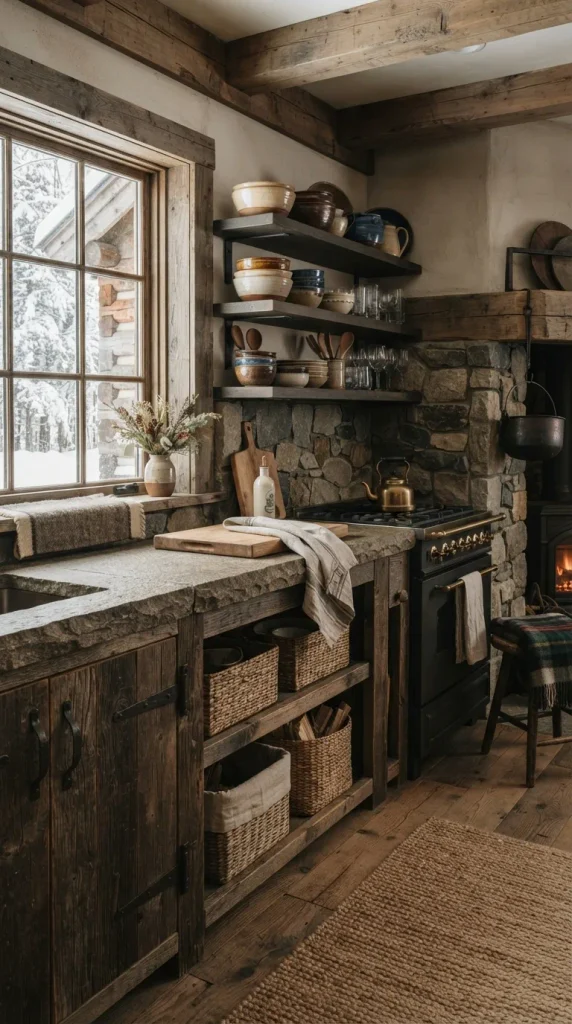
A successful cabin kitchen rarely depends on one rustic material alone. Combining several natural textures creates the visual richness that makes the room feel comfortable and collected. Pair smooth or rough timber with stone countertops, woven baskets, linen towels, ceramic dishes, and iron hardware. The contrast between these surfaces keeps a neutral kitchen from appearing flat. Texture becomes particularly important when the color palette is restrained, because each material contributes visual depth without requiring bright colors. Keep the overall composition balanced by repeating materials in different areas—for example, use wood on cabinetry and stools, stone on counters, and woven fibers in storage baskets.
16. Frame the Kitchen Windows With Simple Linen Curtains
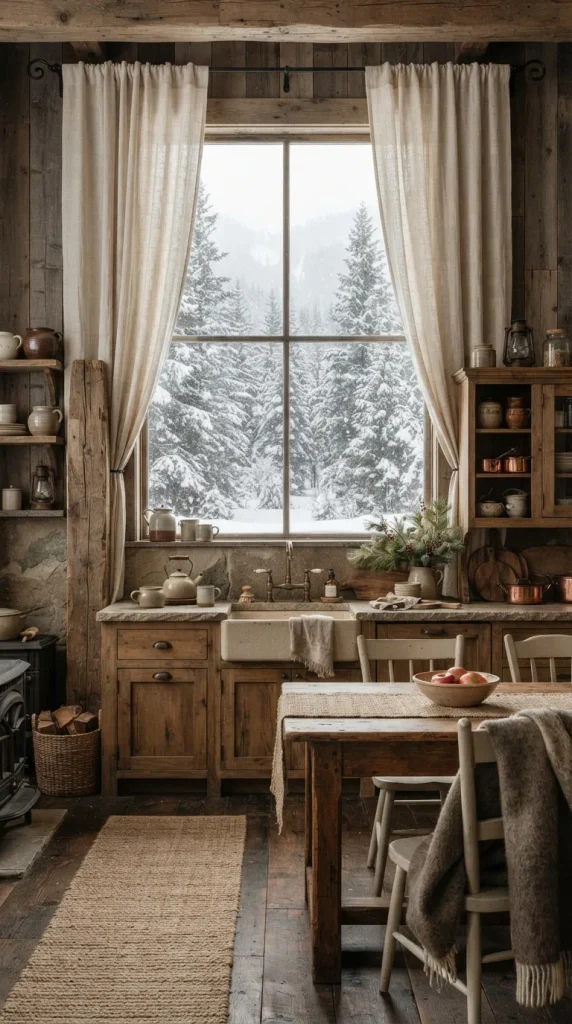
Cabin kitchens often benefit from soft window treatments that filter daylight while preserving the connection with the outdoors. Lightweight linen or cotton curtains in cream, oatmeal, beige, or muted gray can soften a hard-edged window without blocking views of snow-covered trees or mountains. Choose relaxed panels rather than highly structured treatments to maintain the casual character of a cabin. If the kitchen receives strong morning sunlight, a woven shade beneath the curtain can provide additional control. Small natural-fiber curtains can also make a compact kitchen feel more finished, particularly when the surrounding cabinetry and walls feature harder materials such as wood and stone.
17. Display Wooden Cutting Boards as Functional Decor
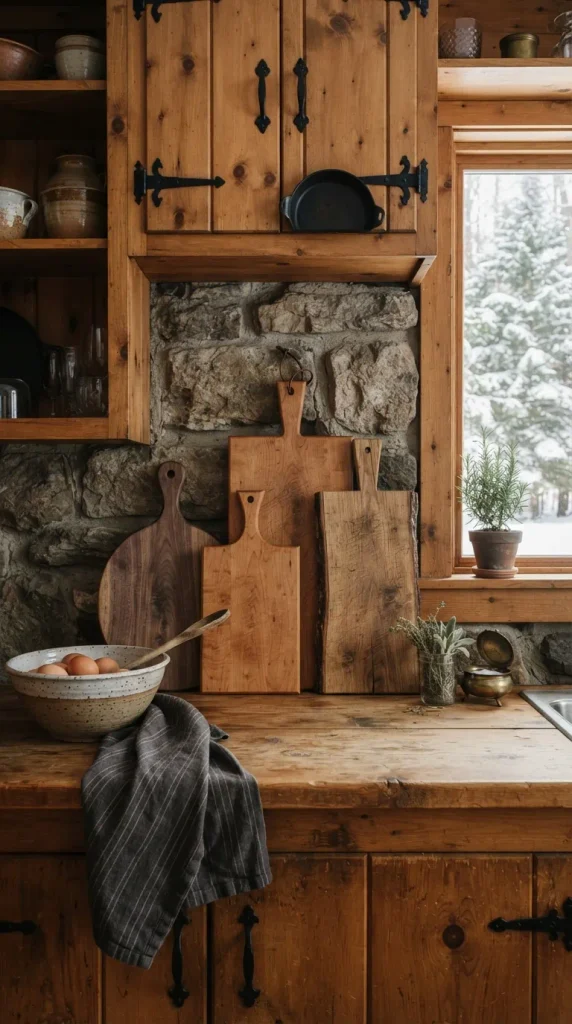
Beautiful cutting boards do not need to remain hidden inside a cabinet. Lean several wooden boards of different shapes and sizes against the backsplash to create an effortless decorative arrangement. Look for boards with visible grain, rounded handles, reclaimed surfaces, or handcrafted edges. Their warm tones complement rustic cabinetry while keeping an essential kitchen tool close at hand. A small ceramic bowl or stoneware crock placed beside the boards can complete the arrangement without overcrowding the counter. This approach works particularly well in cabin kitchens because it celebrates useful objects and gives the room a practical, lived-in quality rather than a staged appearance.
18. Add a Cozy Breakfast Nook Beside the Kitchen
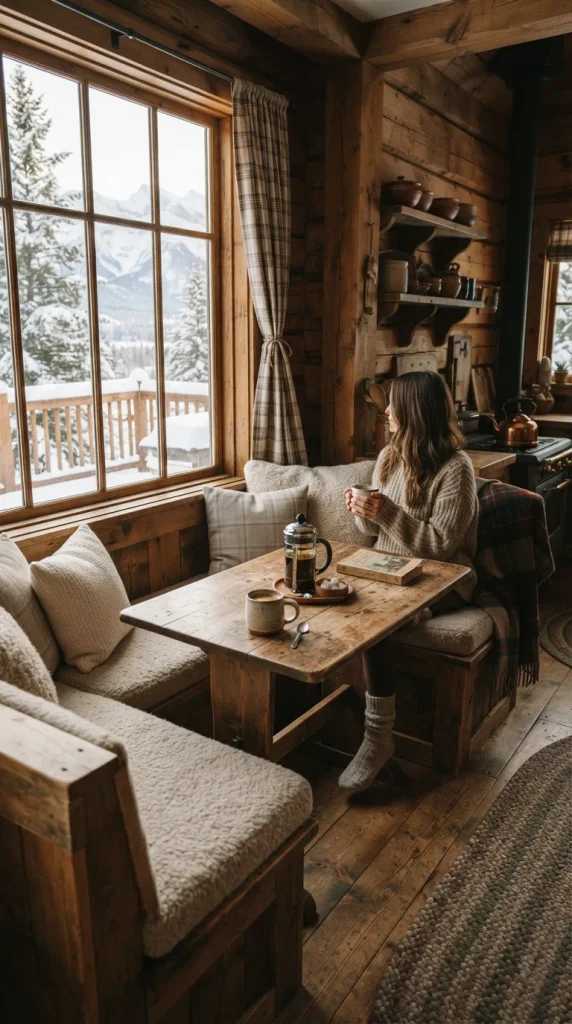
If the floor plan allows, turn an unused corner beside the kitchen into a small winter breakfast nook. A built-in wooden bench, compact table, and comfortable cushions can create a sheltered place for morning coffee or relaxed meals. Upholstery in wool, linen, plaid, or textured cotton reinforces the cabin atmosphere while adding softness. Place the nook near a window whenever possible so the area benefits from natural light and views of the surrounding landscape. Built-in bench storage can also hold blankets, table linens, or seasonal kitchen accessories. The result expands the function of the kitchen without requiring a large dining area.
19. Bring in a Cast-Iron Cookware Collection
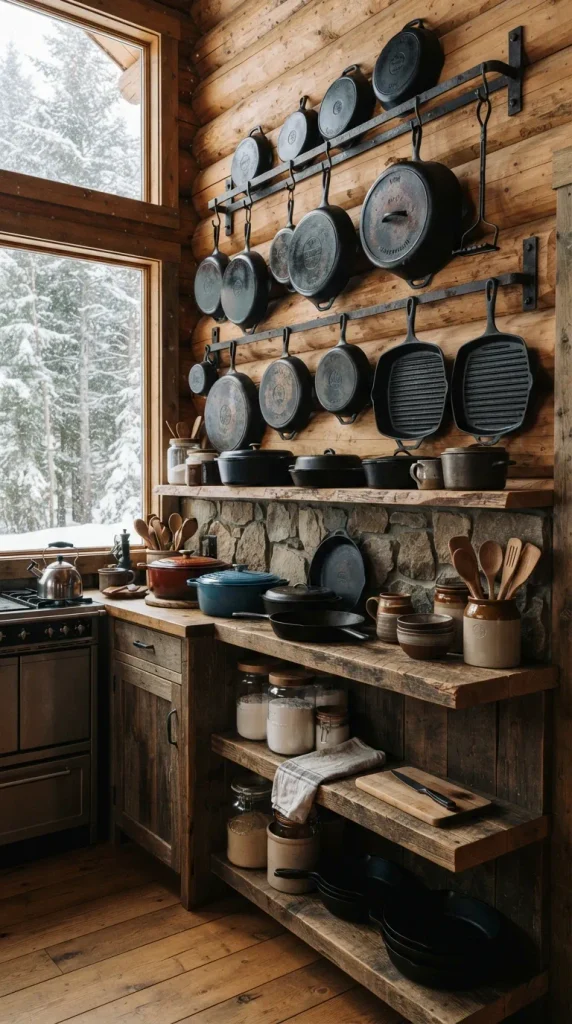
Cast iron naturally suits the atmosphere of a winter cabin because it is durable, practical, and visually substantial. Display a few well-used skillets or Dutch ovens on an open shelf, sturdy rack, or wall-mounted rail rather than hiding every piece away. Their dark finish creates contrast against lighter wood and warm neutral walls. Beyond aesthetics, cast iron is highly practical for hearty winter cooking, from soups and stews to roasted vegetables and skillet breads. Keep the display organized and accessible so it feels like an authentic working kitchen rather than a decorative installation. A small collection is often more effective than covering an entire wall.
20. Incorporate a Wood-Burning Stove or Stove-Inspired Feature
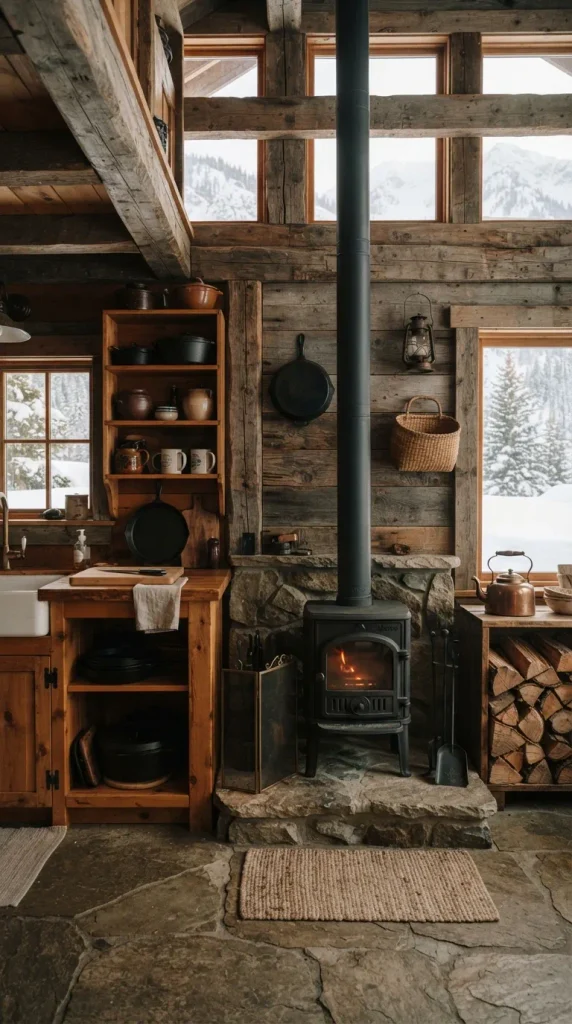
Nothing communicates winter cabin comfort quite like the presence of a traditional wood-burning stove. Where the architecture and safety requirements permit, a compact stove can provide warmth while becoming a dramatic focal point near the kitchen or dining area. A proper noncombustible hearth in stone, brick, or tile helps integrate the feature with the surrounding rustic materials. If a real stove is not practical, a stove-inspired cooking range or carefully styled hearth area can evoke the same visual language. Keep surrounding decor simple, allowing the substantial shape and natural materials to establish the cozy lodge atmosphere without excessive accessories.
21. Use Woven Baskets for Warm, Practical Storage
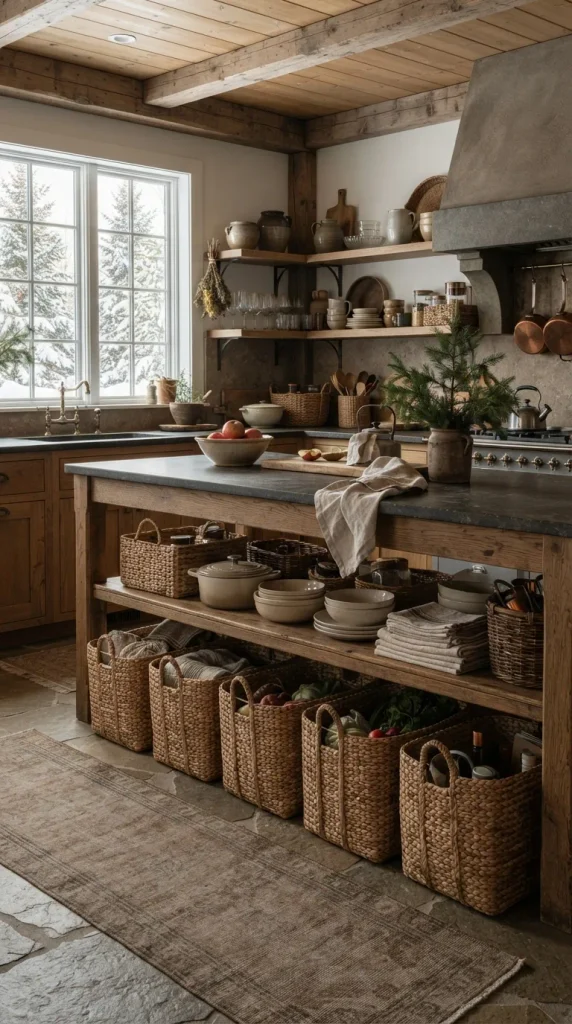
Woven baskets are particularly useful in cabin kitchens because they hide everyday clutter while adding natural texture. Place them on open shelves, beneath an island, inside a pantry, or beside a breakfast nook to store linens, produce, extra mugs, or kitchen supplies. Seagrass, rattan, willow, and other natural fibers work well with timber and stone. Choose baskets with slightly varied shapes instead of purchasing an identical set for every storage area. Their organic texture breaks up large expanses of cabinetry and introduces a softer element into the room. Functional storage becomes part of the decor when the baskets are intentionally selected and thoughtfully positioned.
22. Create a Rustic Winter Table Setting
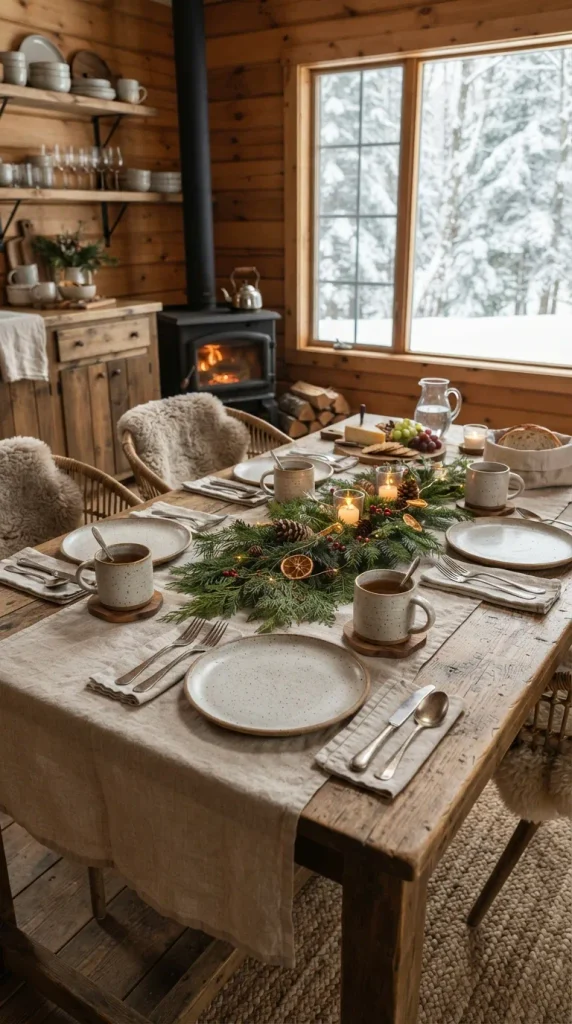
A beautifully arranged table can make the entire cabin kitchen feel ready for a cozy winter meal. Start with natural linen or a simple woven runner, then layer stoneware plates, wooden serving boards, ceramic mugs, and understated metal flatware. Add a low centerpiece made from evergreen clippings, pinecones, or branches so conversation remains easy across the table. Warm neutral dishes work especially well with darker wood furniture, while a few muted seasonal accents can add color without turning the room into a holiday display. The emphasis should remain on natural materials and relaxed presentation, creating a table that feels inviting for everyday breakfasts as well as special winter dinners.
23. Finish the Space With a Layered Cabin-Inspired Material Palette
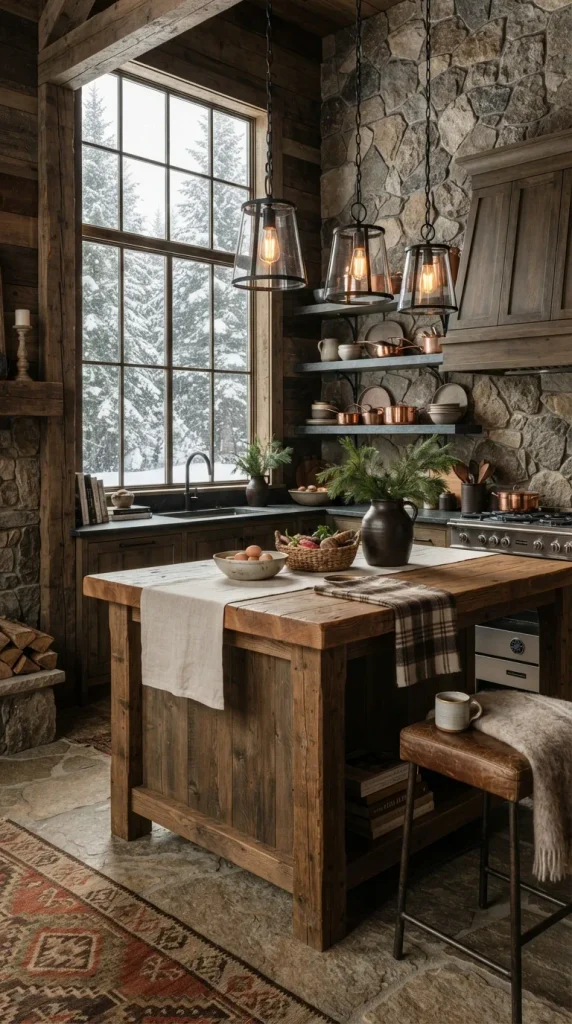
The most convincing cozy winter cabin kitchens feel collected rather than decorated all at once. Build the final look by layering materials that naturally belong together: warm timber, textured stone, aged metal, handmade ceramics, woven fibers, linen, wool, and subtle greenery. Allow each finish to have a slightly different texture or tone so the room gains depth while remaining cohesive. A dark wood cabinet might sit beside a creamy stone counter, while black hardware, woven baskets, and soft textiles connect the elements visually. This layered approach creates the comfortable imperfection that defines a lived-in cabin and keeps the kitchen inviting long after winter has passed.
Conclusion
A cozy winter cabin kitchen is ultimately about more than seasonal decoration. The most inviting spaces combine practical function with tactile materials, warm lighting, natural colors, and details that encourage people to linger. Reclaimed wood, stone, wool, woven baskets, vintage cookware, evergreen branches, and softly illuminated work surfaces can all contribute to that welcoming atmosphere without making the room feel overly themed.
Whether you are planning a complete cabin kitchen renovation or simply looking for a few winter decorating updates, start with the elements that create the greatest sense of warmth: layered lighting, natural textures, comfortable seating, and materials that develop character over time. The result can be a kitchen that feels just as appropriate for a snowy weekend getaway as it does for everyday cooking throughout the colder season.


