23 Kitchen Storage Ideas to Maximize Space & Stay Organized

A well-organized kitchen is easier to use, easier to clean, and far more enjoyable to live in. Whether you have a compact apartment kitchen or a spacious family cooking area, smart storage can make every cabinet, drawer, wall, and countertop work harder. The best kitchen storage ideas do more than hide clutter; they improve accessibility while helping the room maintain a polished and welcoming appearance. From utilizing awkward corners to creating dedicated zones for spices, cookware, pantry goods, and everyday appliances, thoughtful organization can completely change how a kitchen functions. These ideas combine practical storage solutions with attractive home decor principles, making them suitable for modern, traditional, farmhouse, minimalist, and transitional interiors. If you are looking for small kitchen storage ideas, clever cabinet organization, or stylish ways to maximize unused space, these 23 solutions offer practical inspiration for creating a kitchen that feels spacious, efficient, and beautifully arranged.
1. Install Pull-Out Pantry Shelves
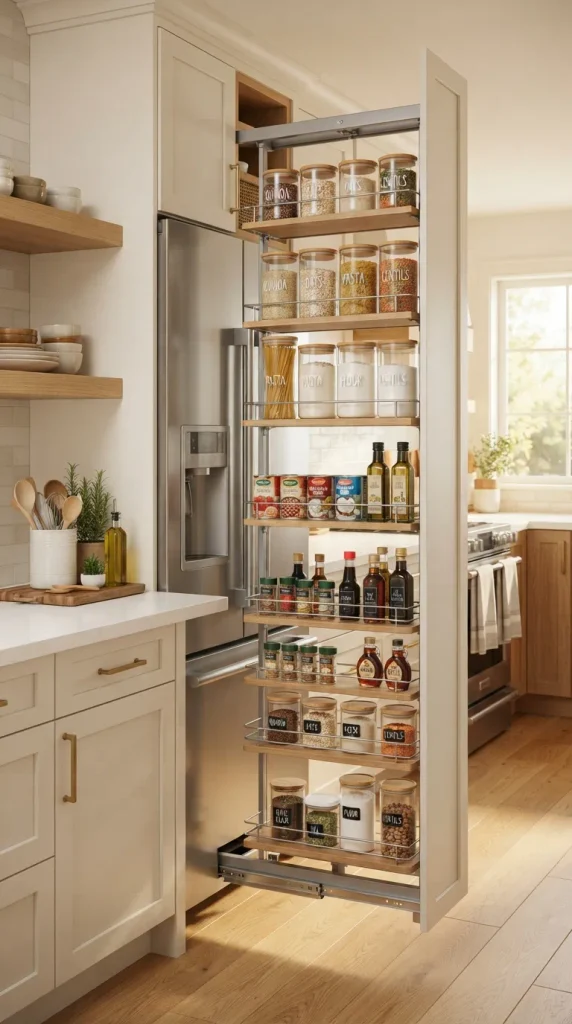
Pull-out pantry shelves make deep cabinets significantly easier to use because they bring stored items directly toward you instead of forcing you to reach into dark corners. Narrow pull-out units are particularly useful beside refrigerators or between cabinets where conventional shelving may not fit. Use separate shelves for canned goods, baking ingredients, sauces, grains, and snacks, and place frequently used products at eye level. Clear containers can make the contents easier to identify while maintaining a visually consistent appearance. For a small kitchen, this solution transforms otherwise awkward vertical space into practical storage without requiring major structural changes.
2. Add a Pegboard Storage Wall
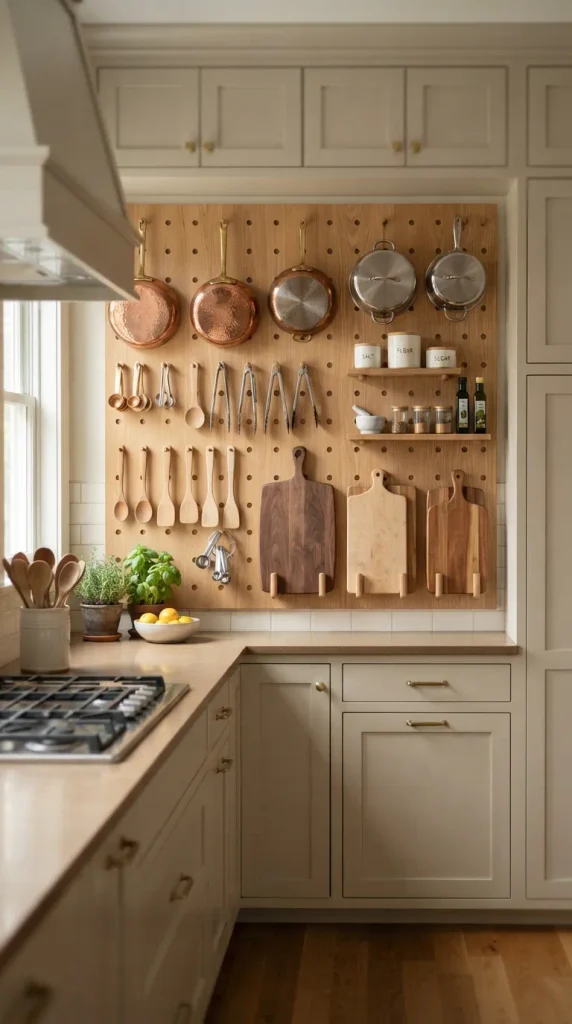
A kitchen pegboard provides flexible storage for cookware, utensils, cutting boards, and even small decorative pieces. Mounting a sturdy pegboard on an empty wall allows hooks and shelves to be rearranged whenever your needs change, making it particularly useful for kitchens where cabinet space is limited. Arrange frequently used pans and tools within easy reach while keeping less-used equipment higher or toward the sides. Wooden pegboards can introduce warmth into minimalist interiors, whereas painted versions can blend seamlessly with the kitchen color scheme. The result is functional wall organization that also creates an attractive visual display.
Also Read: 25 Kitchen Pantry Ideas for Smart Storage & Style
3. Use the Inside of Cabinet Doors
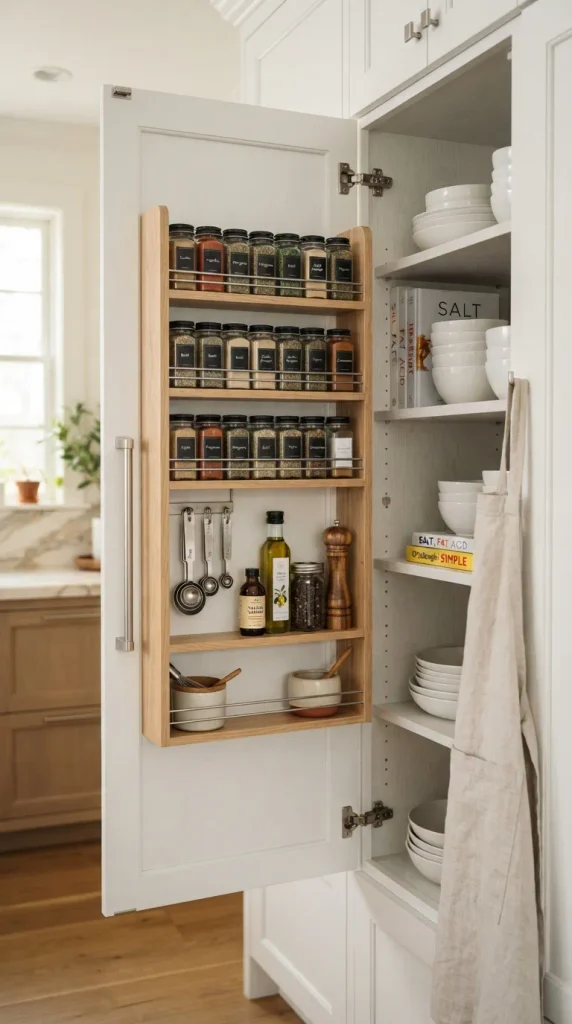
The inside surface of a cabinet door is often overlooked, yet it can become valuable hidden storage with the right accessories. Slim racks can hold spice jars, measuring spoons, cleaning products, pot lids, or cutting boards without taking up shelf space. This approach works especially well in kitchens with limited drawer capacity because it creates additional organization without changing the room’s footprint. Choose door-mounted organizers that leave enough clearance for shelves and cabinet contents to close properly. Keeping frequently used small items here also prevents drawers and countertops from becoming crowded, resulting in a cleaner and more streamlined kitchen.
4. Create a Dedicated Spice Drawer
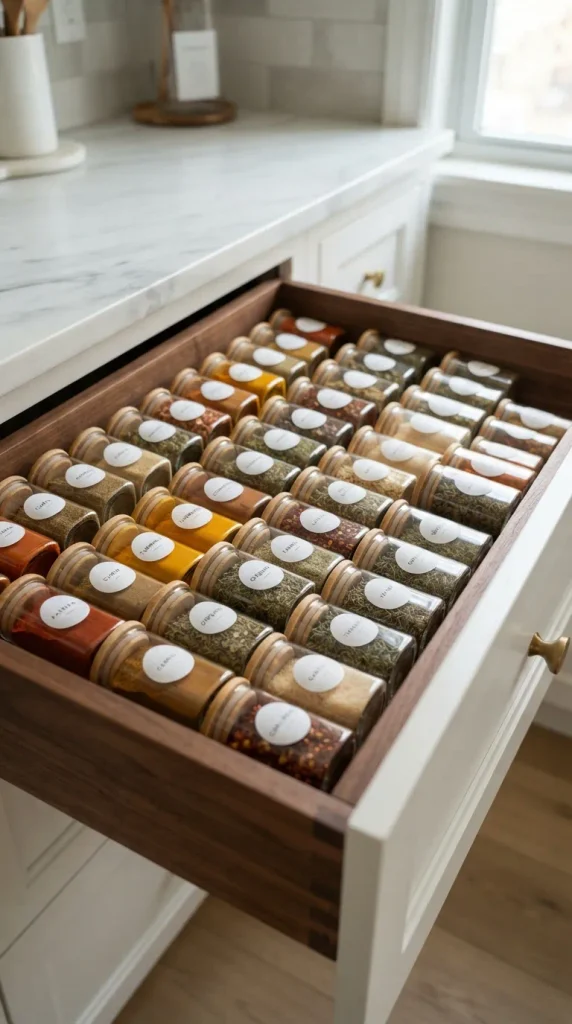
Instead of storing spices in a tall cabinet where jars become difficult to identify, consider converting a shallow drawer into a dedicated spice station. Arrange containers horizontally with labels facing upward so every seasoning can be found at a glance. Group frequently used spices together and place specialty ingredients toward the back. Uniform jars create a more cohesive appearance, while alphabetizing them can make meal preparation faster. A spice drawer is especially helpful for cooks who regularly use multiple seasonings because it keeps everything accessible without filling the countertop. This simple organization upgrade can make even a busy kitchen feel considerably more efficient.
5. Build Storage Into the Kitchen Island
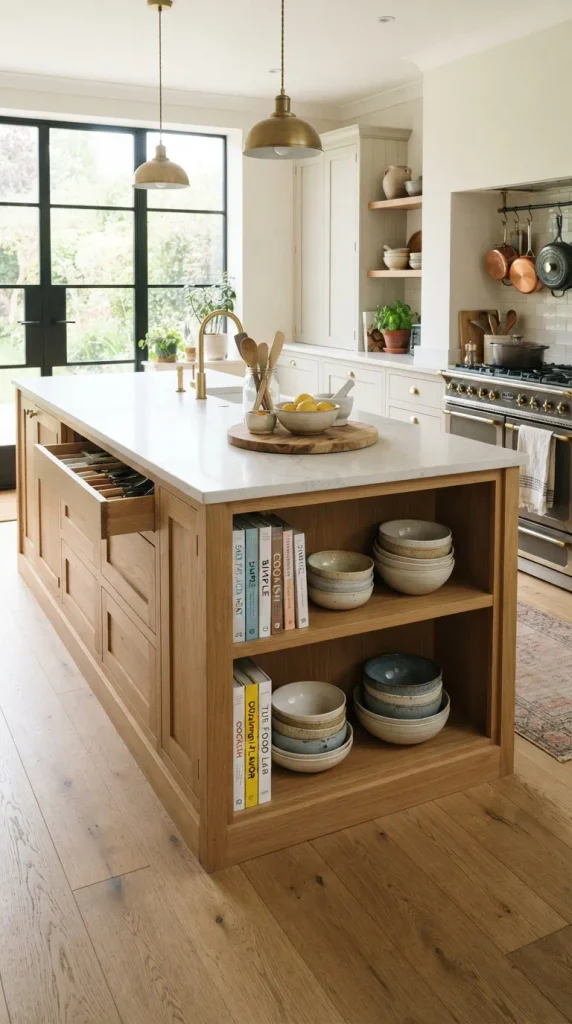
A kitchen island can provide far more than additional workspace when its sides and base are designed for storage. Deep drawers can accommodate pots and pans, while open shelving can display cookbooks, serving bowls, or attractive baskets. A narrow end cabinet is ideal for baking trays, chopping boards, and platters that are awkward to store elsewhere. If you are designing a new island, consider which items should be accessible from the cooking zone and which can remain on the seating side. Combining concealed cabinets with a small amount of open shelving creates an organized appearance without making the island visually heavy.
6. Install a Wall-Mounted Pot Rack
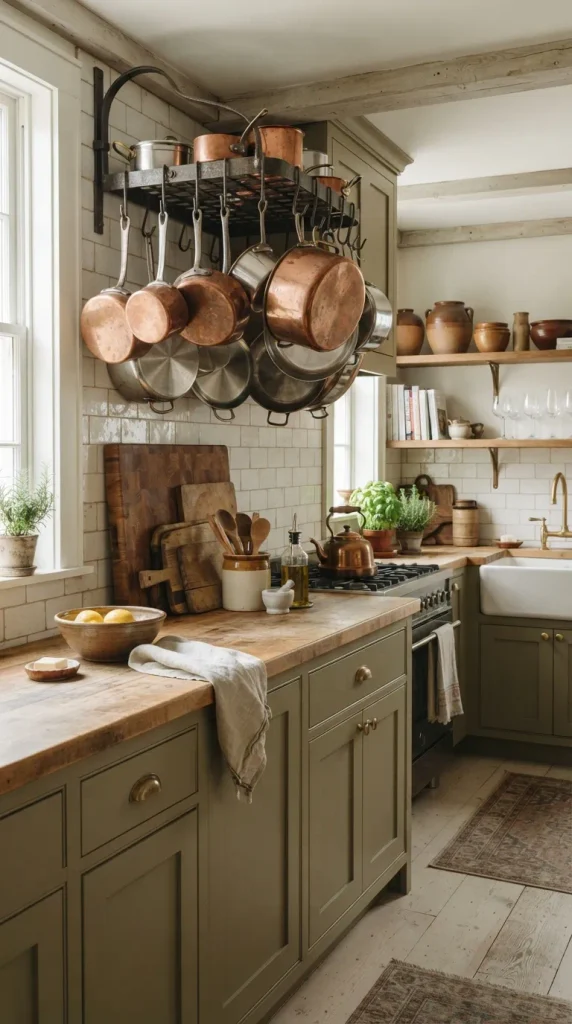
Large pots and pans often consume considerable cabinet space, particularly in smaller kitchens. A wall-mounted pot rack provides an attractive alternative by moving bulky cookware onto an unused vertical surface. Choose a location close to the stove or main preparation area so frequently used pieces remain convenient. Arrange cookware by size, keeping the largest pans lower if necessary and lighter utensils higher. A simple metal rack suits industrial and contemporary kitchens, while wood-and-metal designs work beautifully in farmhouse or rustic spaces. Besides improving storage capacity, displayed cookware can contribute to the kitchen’s character when arranged intentionally.
Also Read: 30 White Kitchen Ideas 2026 for a Bright & Stylish Home
7. Use Clear Containers for Dry Goods
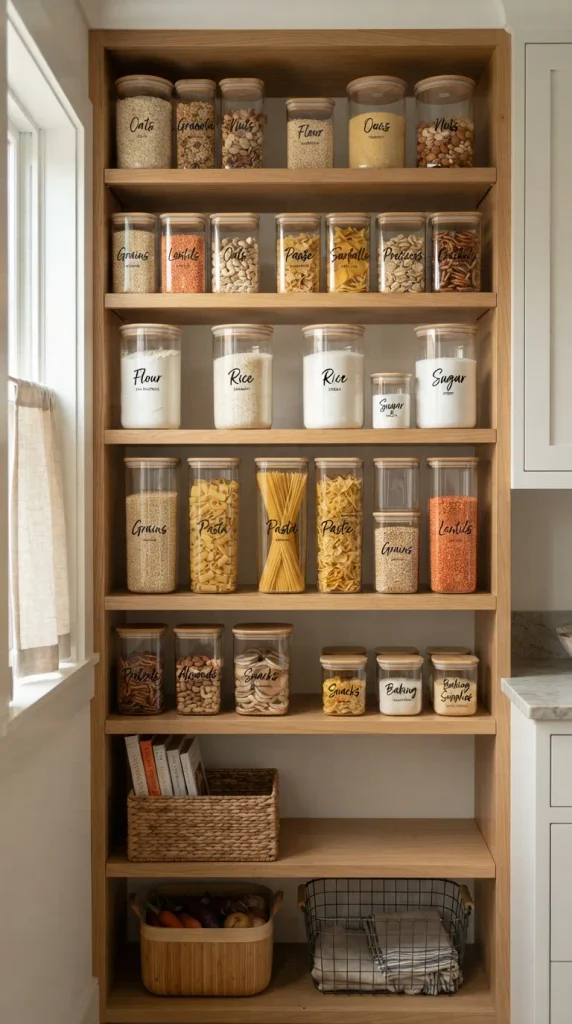
Transferring flour, rice, pasta, cereal, lentils, and other pantry staples into clear airtight containers can dramatically improve both organization and visibility. Uniform containers stack more efficiently than mismatched packaging, while transparent walls make it easy to see when supplies need replenishing. Choose container sizes according to the quantity of food your household regularly uses rather than buying every size available. Labeling each container adds clarity and gives the pantry a cohesive appearance. This method works particularly well for open shelving and glass-front cabinets because the storage system becomes part of the kitchen decor rather than simply a functional necessity.
8. Add a Narrow Rolling Storage Cart
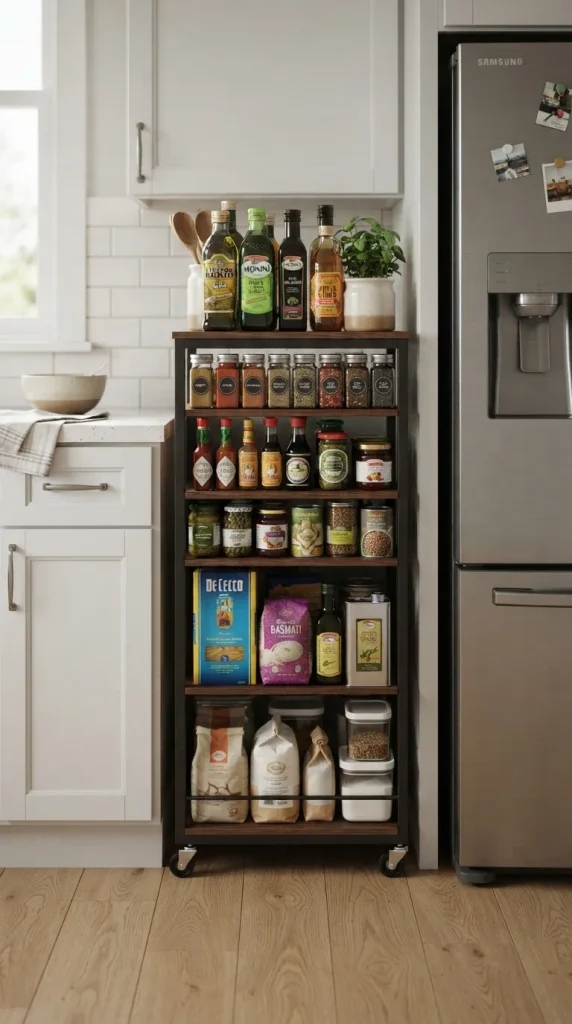
A slim rolling cart can turn an unused gap between appliances or cabinets into valuable kitchen storage. Models only a few inches wide can hold spices, oils, sauces, baking supplies, cleaning products, or pantry staples while remaining easy to pull out when needed. Look for a cart with multiple levels so vertical space is fully utilized. Wheels make it simple to access items from both sides of a narrow space, and a finished wood or metal design can complement existing kitchen finishes. This is one of the most practical small kitchen storage ideas because it adds capacity without permanently altering cabinets or walls.
9. Create a Coffee and Beverage Station
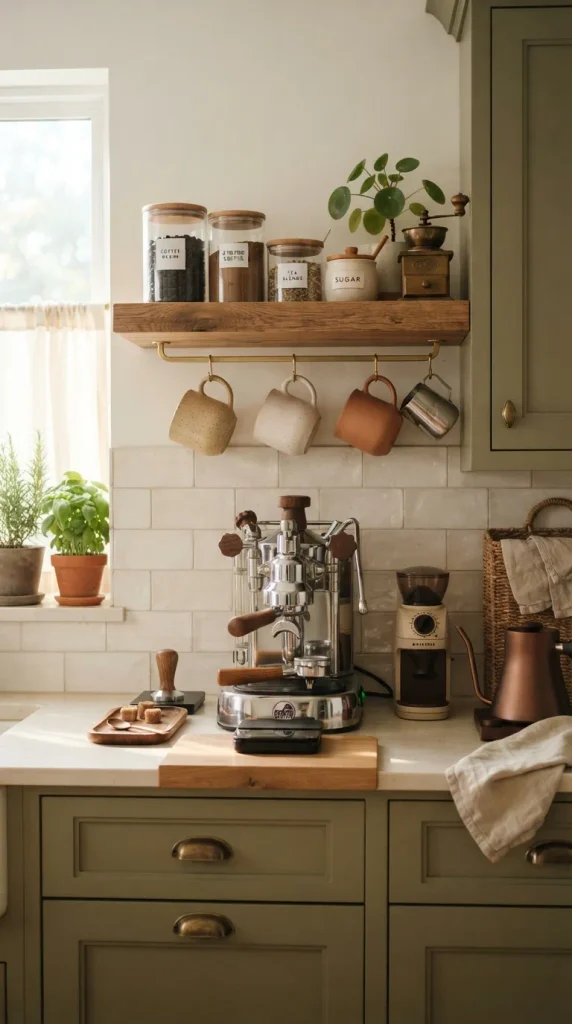
A dedicated beverage station can keep coffee, tea, mugs, sweeteners, and related accessories together rather than scattered throughout the kitchen. Use a small section of countertop beneath an upper cabinet, then add a shelf or rail for mugs and hooks for measuring spoons. A shallow drawer can store tea bags and coffee accessories, while attractive jars can hold sugar or stirrers. Keeping the coffee maker, kettle, and supplies in one area creates a natural daily-use zone and reduces countertop clutter elsewhere. The arrangement can also become a decorative feature when coordinated containers and warm wood accents are introduced.
Also Read: 25 Small Walk In Pantry DIY Ideas for Smart Storage
10. Install Corner Cabinet Solutions
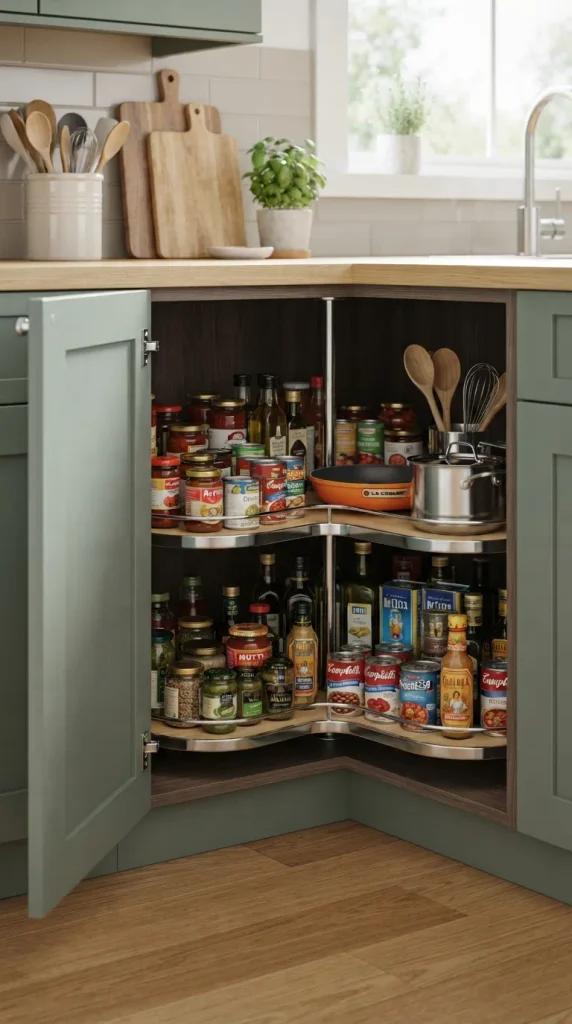
Kitchen corners frequently become storage dead zones because standard cabinet shelves make it difficult to reach items stored at the back. Rotating shelves, pull-out corner mechanisms, or custom drawers can transform these difficult areas into highly usable storage. A rotating organizer works well for sauces, canned products, and smaller kitchen accessories, while larger pull-out systems can accommodate cookware. When choosing a corner solution, consider both the cabinet dimensions and the weight of the items being stored. Improving one awkward corner can provide surprisingly significant additional capacity while making previously frustrating cabinets much easier to maintain.
11. Use Open Shelving for Everyday Essentials
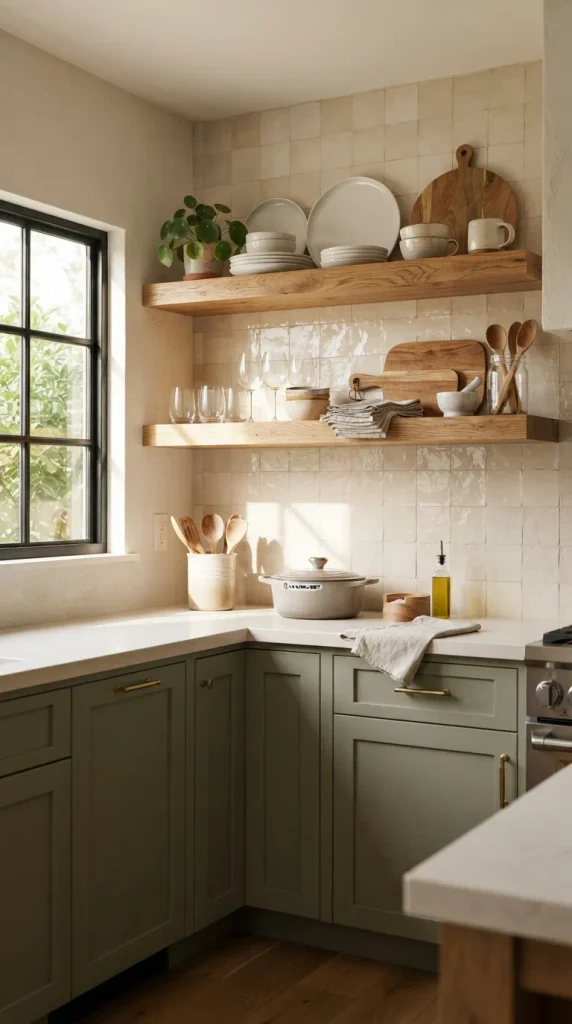
Open shelves can provide convenient access to dishes and simultaneously make a kitchen feel more open. Rather than filling them with every available item, reserve the shelves for attractive pieces that are regularly used, such as plates, bowls, glasses, wooden boards, and a few decorative objects. Group similar items together and leave small areas of negative space so the arrangement does not appear overcrowded. Natural wood shelves add warmth, while painted or metal brackets can complement contemporary interiors. For kitchens with limited upper cabinetry, carefully styled open shelving offers practical storage while creating a visually lighter alternative to solid cupboards.
12. Organize Cutting Boards Vertically
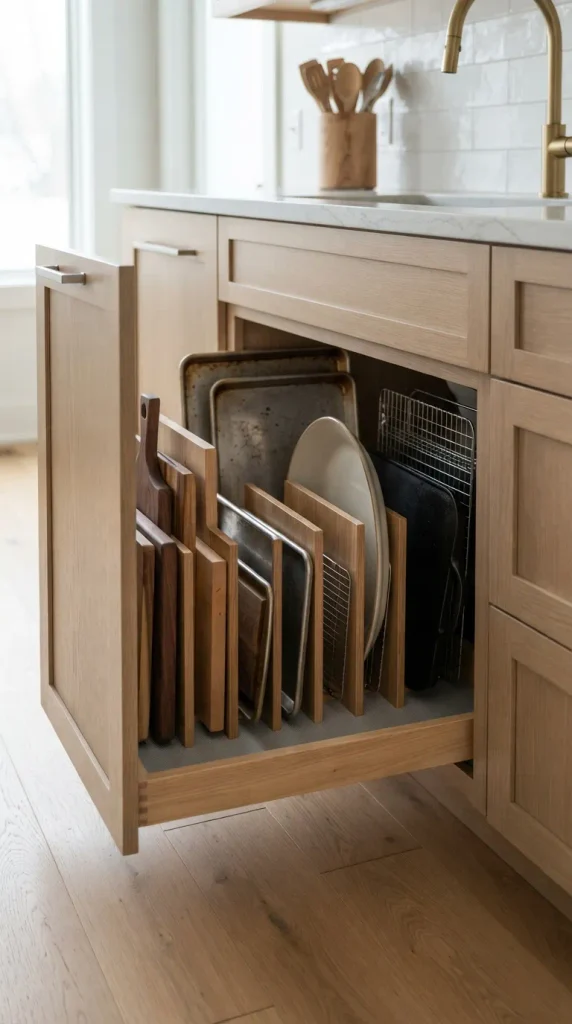
Cutting boards, baking sheets, cooling racks, and serving trays are often difficult to stack because removing one item can disturb everything around it. A vertical divider inside a cabinet solves this problem by creating individual slots for each board or tray. Position the organizer near the food-preparation area for convenient access. Adjustable dividers allow the spacing to be customized according to the thickness of your cookware. This method uses vertical cabinet space efficiently and keeps flat items standing upright rather than leaning against walls or disappearing behind heavier objects. It is a simple change that can make cabinet organization noticeably more functional.
13. Add Drawer Dividers for Utensils
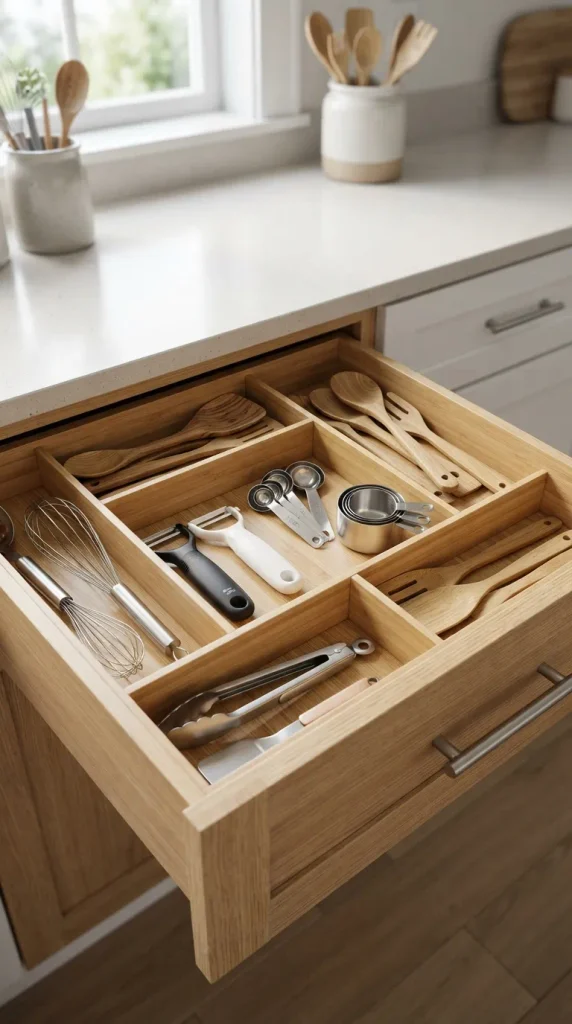
A drawer without compartments quickly becomes a jumble of spatulas, peelers, whisks, measuring spoons, and miscellaneous tools. Adjustable drawer dividers create dedicated sections so each category has a defined place. Keep everyday utensils toward the front and less frequently used tools toward the back or in separate drawers. Bamboo, wood, and neutral-toned organizers can complement the interior of quality cabinetry while providing a refined finish. Avoid creating overly small compartments that restrict flexibility; instead, divide the drawer according to the types of tools you actually own. Well-planned utensil storage makes cooking faster because essential tools can be located immediately.
Also Read: 25 Small Pantry Design Ideas to Maximize Storage in 2026
14. Turn a Cabinet Into an Appliance Garage
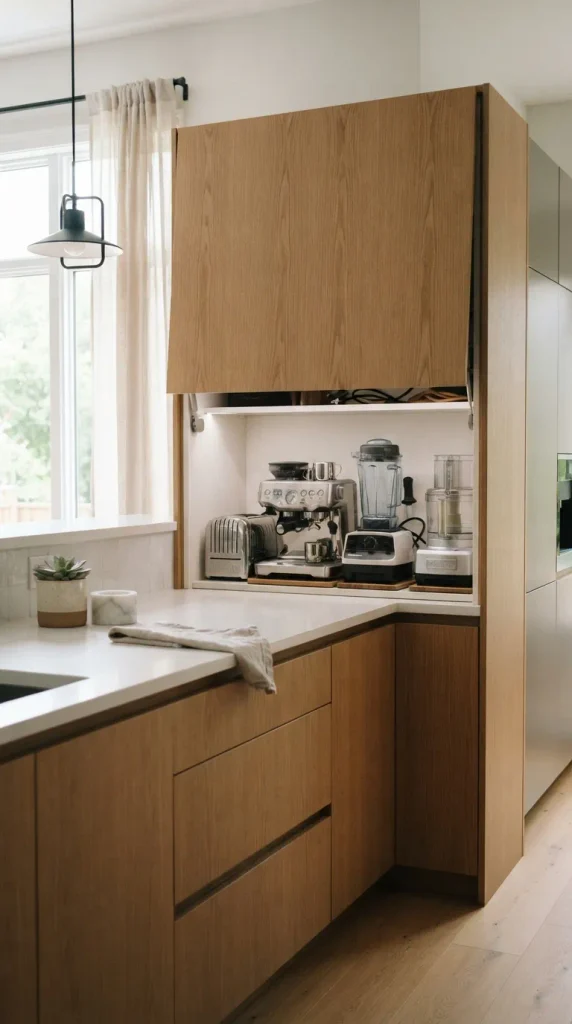
Small appliances such as toasters, blenders, coffee machines, and food processors can make countertops appear crowded even when the rest of the kitchen is organized. An appliance garage offers a dedicated concealed area where frequently used equipment can remain plugged in and ready for use. Choose a cabinet with sufficient depth and ventilation, and make sure electrical connections are installed safely. Pocket doors, lift-up doors, or retractable shutters can keep appliances hidden when they are not being used. This approach is particularly effective for homeowners who want a minimalist kitchen appearance without constantly moving heavy appliances in and out of storage.
15. Use Under-Sink Storage Efficiently
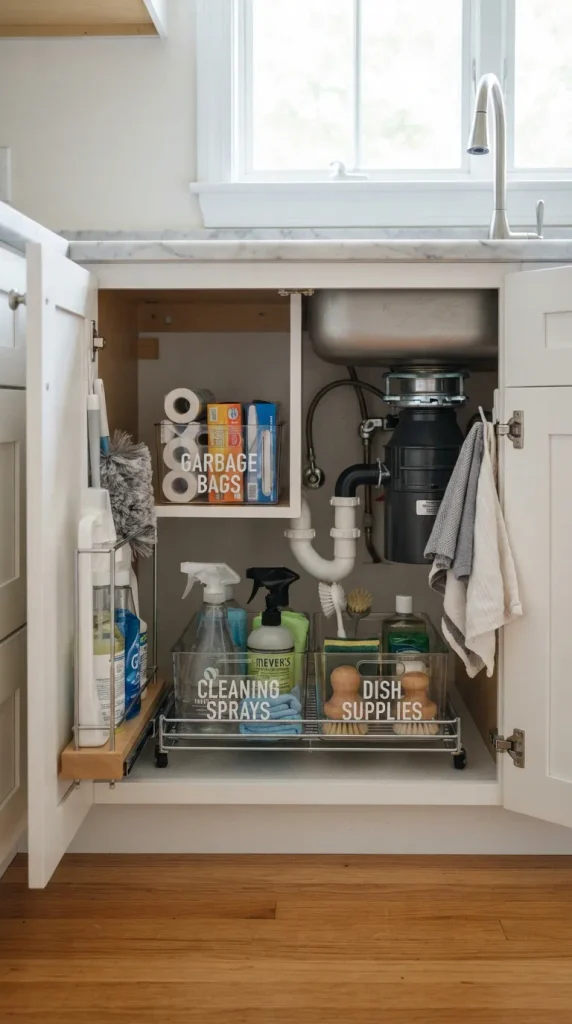
The cabinet beneath the sink is often difficult to organize because plumbing occupies valuable space. Instead of treating it as a dumping ground, use adjustable shelves, stackable bins, and pull-out organizers designed around the pipes. Store dishwashing supplies, garbage bags, brushes, cloths, and other cleaning essentials in clearly labeled containers. A small tension rod can sometimes provide hanging space for spray bottles, provided the installation is secure and does not interfere with plumbing. Keep food products away from cleaning chemicals, and avoid overcrowding the cabinet. Thoughtful under-sink organization turns one of the kitchen’s most awkward storage areas into a functional cleaning station.
16. Install a Magnetic Knife Strip
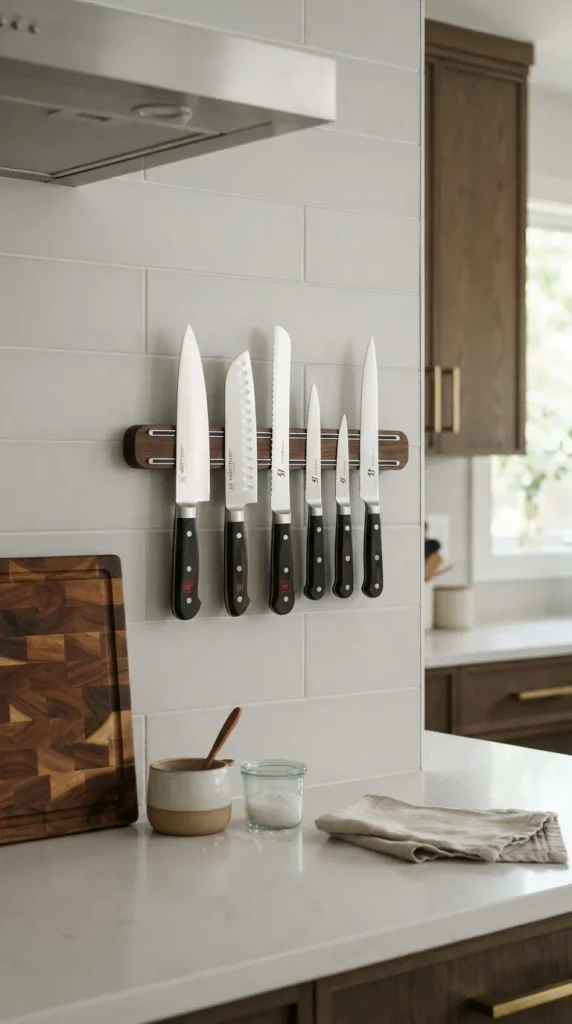
A magnetic knife strip can free up valuable drawer or countertop space while keeping kitchen knives visible and accessible. Mount the strip securely on a wall away from areas where children can easily reach it, and position it near the main food-preparation zone. A high-quality magnetic holder can accommodate knives of different sizes, allowing the collection to be arranged according to frequency of use. Beyond its practical benefit, a neatly arranged knife display can contribute to a professional kitchen aesthetic. This storage idea works especially well in compact kitchens where every drawer matters and traditional knife blocks consume more counter space than desired.
Also Read: 23 Earthy Kitchen Ideas for a Warm, Natural & Cozy Home
17. Create a Baking Ingredient Zone
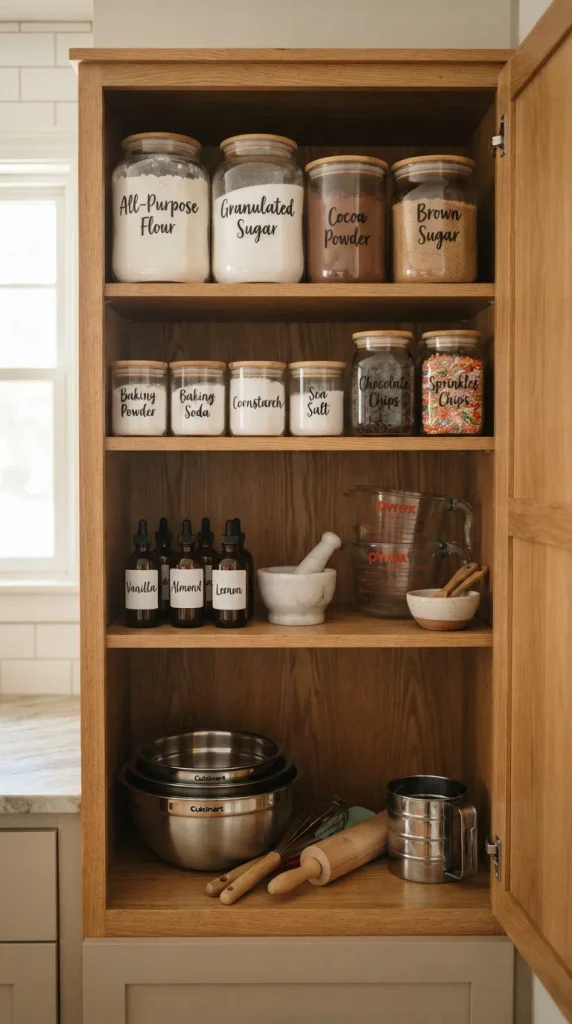
Dedicated baking storage keeps flour, sugar, cocoa, baking powder, sprinkles, extracts, and decorating tools together instead of scattering them across multiple cabinets. Choose one cabinet or pantry section and organize ingredients in labeled airtight containers. Use a lower shelf for heavier bags and larger mixing supplies, while smaller ingredients can occupy shallow bins or pull-out drawers. Vertical dividers can hold baking sheets and cooling racks nearby. If you bake frequently, placing this zone close to the countertop where you prepare dough can reduce unnecessary movement. A thoughtfully planned baking station also makes it easier to check ingredients before starting a recipe.
18. Maximize the Space Above Cabinets
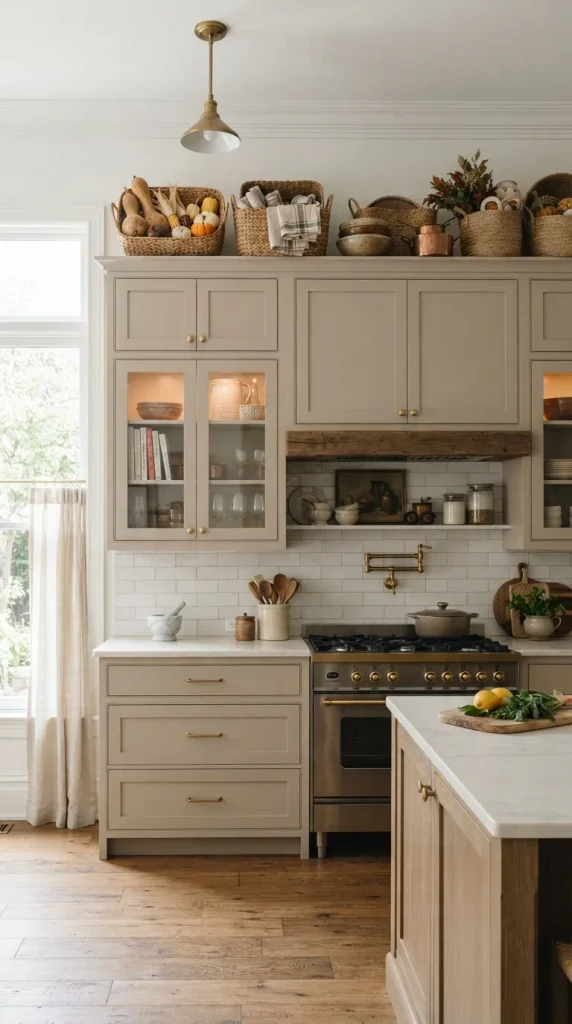
The area above kitchen cabinets can become useful storage when it is tall enough to accommodate attractive baskets or large containers. Rather than placing random objects there, use coordinated woven baskets to conceal items that are needed occasionally, such as seasonal serving pieces, specialty cookware, or extra linens. Keep heavier items secure and avoid storing anything that could fall into cooking areas. If the gap is too small for functional storage, decorative styling may be more appropriate. Combining practical baskets with a few carefully selected decorative elements can prevent the upper area from appearing cluttered while making use of otherwise neglected vertical space.
19. Add a Breakfast Nook Storage Bench
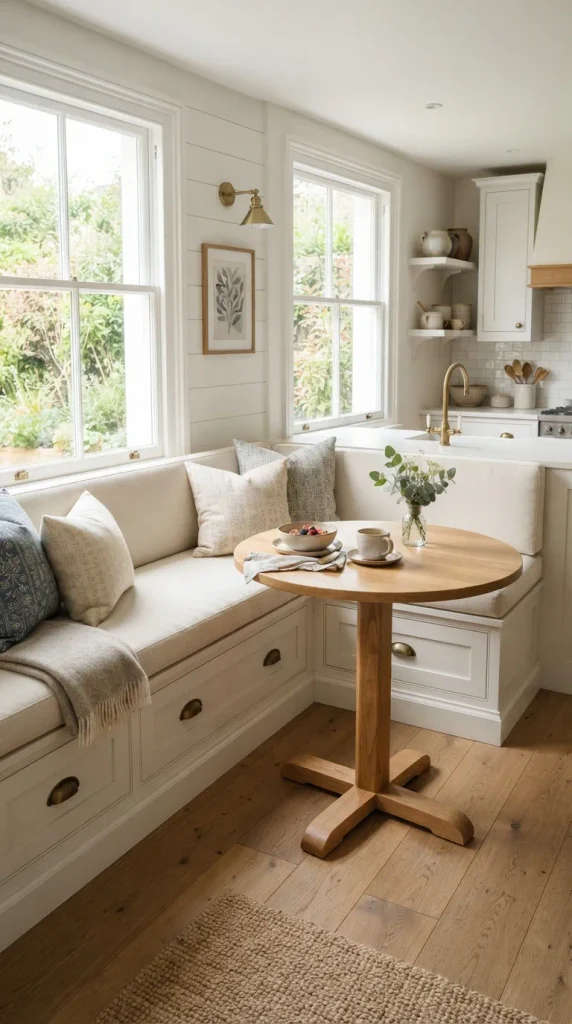
If your kitchen includes a breakfast nook or dining corner, a storage bench can provide seating and hidden capacity at the same time. Lift-up seats or built-in drawers can hold table linens, serving dishes, seasonal kitchen accessories, or rarely used entertaining pieces. Select a durable, easy-to-clean upholstery fabric if the bench is close to the cooking area. Built-in cabinetry beneath the seat creates a more seamless appearance, while freestanding benches offer flexibility for renters or homeowners who may rearrange the room later. This approach expands kitchen storage beyond conventional cabinets while making an unused corner more functional and inviting.
20. Use Toe-Kick Drawers
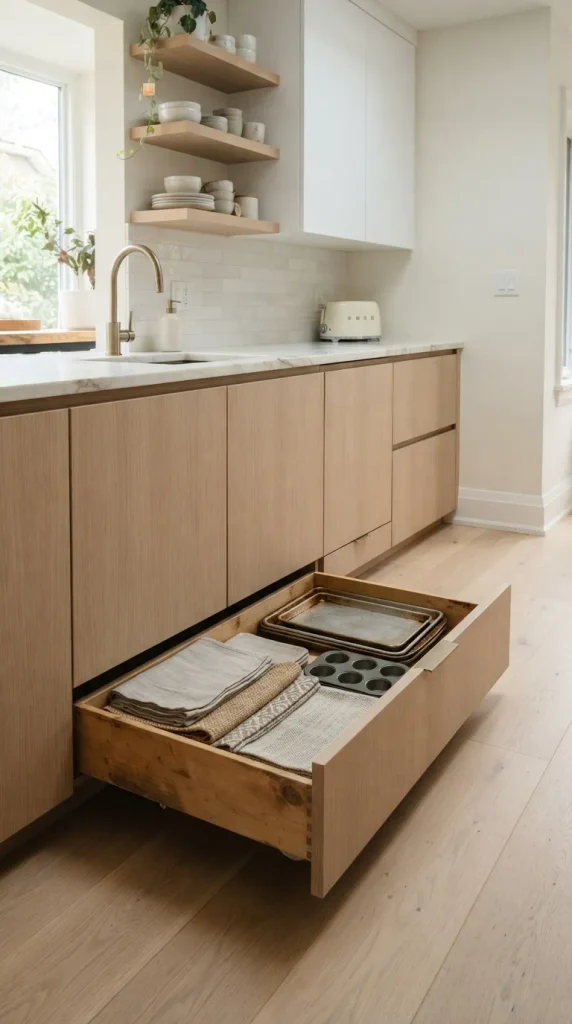
The narrow area beneath lower kitchen cabinets is usually covered by a decorative toe-kick panel, but it can potentially become discreet storage through custom-built drawers. These shallow compartments are ideal for flat or infrequently accessed items such as baking trays, placemats, serving mats, cleaning accessories, or specialty utensils. Because the drawers remain close to floor level, they should be reserved for suitable items that can be safely retrieved without excessive bending. Toe-kick storage is particularly valuable in small kitchens because it adds capacity without consuming visible cabinet or countertop space. When professionally integrated, the drawers can remain almost invisible from normal standing height.
21. Hang Measuring Tools and Utensils on Rails
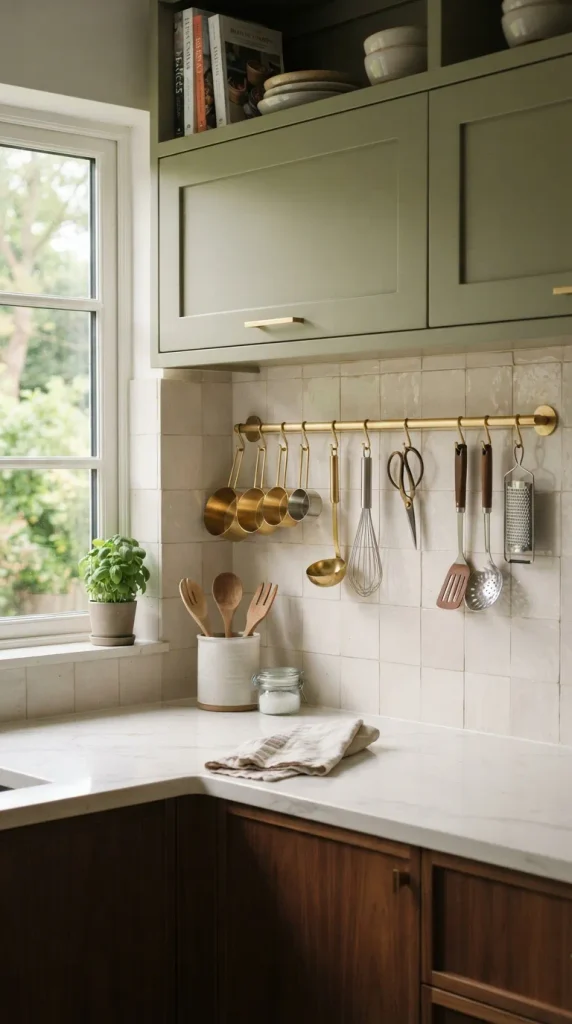
A slim rail mounted beneath a cabinet or along a backsplash can provide convenient hanging storage for measuring cups, ladles, whisks, scissors, and other frequently used tools. Hooks can be moved along the rail as your collection changes, making the arrangement more flexible than fixed storage. Position the rail where it will not interfere with food preparation or cooking surfaces. Matching metal finishes to cabinet hardware can help the storage feature look intentional rather than improvised. This method is especially useful for kitchens with limited drawers because it moves small tools into unused vertical space while keeping everyday equipment easy to reach.
22. Add Tiered Organizers Inside Cabinets
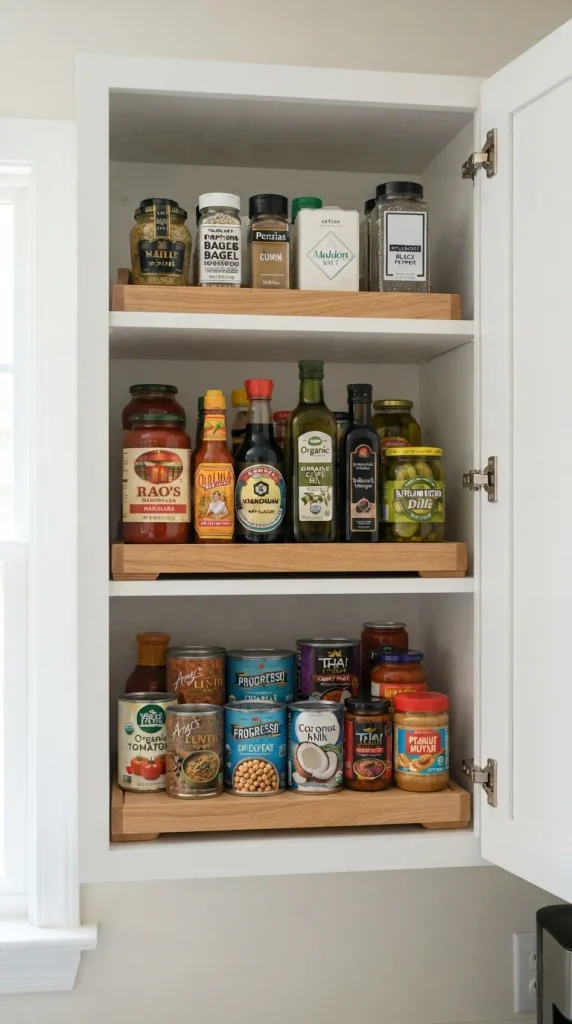
Tiered shelf organizers make it easier to see products stored behind or beneath other items. Instead of creating a single flat layer where cans, jars, and bottles disappear into the back, raised platforms create multiple visual levels. Use them for canned food, sauces, condiments, tea, baking ingredients, or small pantry products. Choose sturdy materials capable of supporting the weight of the items you intend to store. Keeping taller products toward the back and shorter ones toward the front improves visibility. This simple cabinet upgrade can significantly reduce food waste because forgotten products become easier to notice before they reach their expiration dates.
23. Design a Dedicated Pantry Organization System
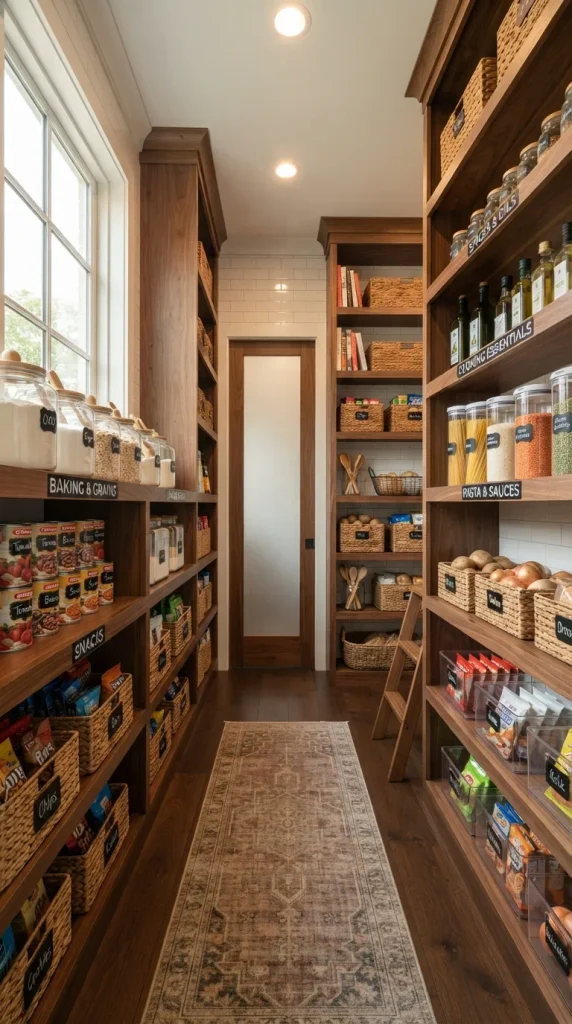
A complete pantry organization system brings several storage techniques together so that every category has a logical home. Begin by grouping foods into zones such as breakfast items, grains, snacks, baking ingredients, canned goods, beverages, and cooking essentials. Adjustable shelving can accommodate different package heights, while clear containers work well for frequently purchased dry goods. Add labeled baskets for loose packets and reserve the easiest-to-reach shelves for everyday products. Keep heavier items lower and less frequently used supplies higher. A well-designed pantry does more than increase capacity; it establishes an efficient system that makes grocery shopping, meal preparation, and kitchen maintenance considerably easier.
Conclusion
Great kitchen storage is less about adding more cabinets and more about making the space you already have work intelligently. From hidden toe-kick drawers and organized corner cabinets to open shelving, pantry zones, rolling carts, and dedicated beverage stations, the right solution depends on how your household actually uses the kitchen. The most successful kitchen storage ideas combine accessibility, efficiency, and visual balance so that organization becomes part of the room’s design rather than an afterthought. Whether you are updating a small kitchen or planning a complete renovation, start with the areas that create the most daily frustration and introduce storage solutions that address those specific needs. With thoughtful planning, even an awkward or crowded kitchen can become a comfortable, organized, and stylish space.


