23 Kitchen Counter Organization Ideas for a Clutter-Free Space

A cluttered kitchen counter can make even a spacious kitchen feel cramped and difficult to use. From coffee machines and cutting boards to cooking oils, appliances, utensils, and everyday essentials, countertops often become the place where everything seems to collect. The right kitchen counter organization ideas can change that without requiring a major renovation or expensive storage system. By assigning specific homes to frequently used items and combining attractive storage with practical design, you can create a countertop that looks polished while remaining convenient for everyday cooking.
Good counter organization is not simply about removing objects from sight. It is about deciding what deserves to stay within reach, what should be grouped together, and what can be moved into cabinets, drawers, or pantry storage. Small additions such as trays, risers, wall rails, containers, baskets, and tiered organizers can dramatically improve how a kitchen functions. These solutions also work across different decorating styles, from modern and minimalist kitchens to farmhouse, traditional, Scandinavian, and contemporary spaces.
Whether you have a small apartment kitchen or a large open-plan cooking area, these kitchen counter organization ideas offer practical ways to reduce visual clutter while keeping essential items accessible. Each approach can be adapted to your available counter space, storage needs, and personal decorating style.
Also Read: 28 Kitchen Pantry Organization Ideas 2026 for a Clutter-Free Kitchen
1. Create a Dedicated Coffee Station on the Counter
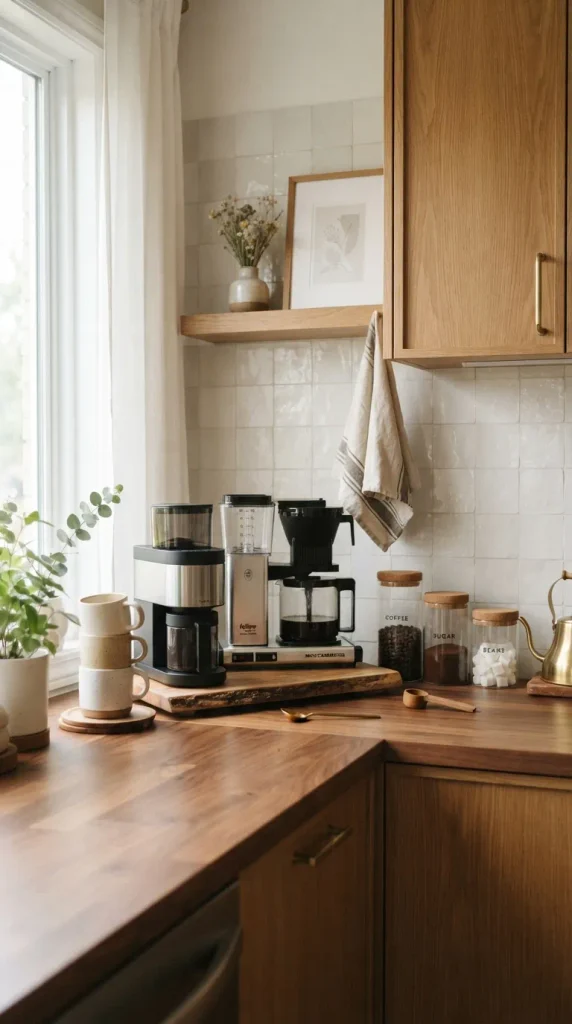
A dedicated coffee station can turn a collection of mugs, coffee pods, sugar, and brewing accessories into one intentional countertop zone. Position the coffee maker or espresso machine on a sturdy tray and place frequently used supplies beside it in matching jars or small containers. A narrow mug tree can keep cups accessible without occupying much counter space, while a small drawer organizer can hold spoons, filters, or stirrers. If your counter is limited, store backup coffee supplies in a nearby cabinet and keep only the daily essentials visible. Choosing containers that coordinate with your kitchen finishes helps the station feel like part of the decor rather than an area of clutter.
2. Use a Decorative Tray to Contain Everyday Essentials
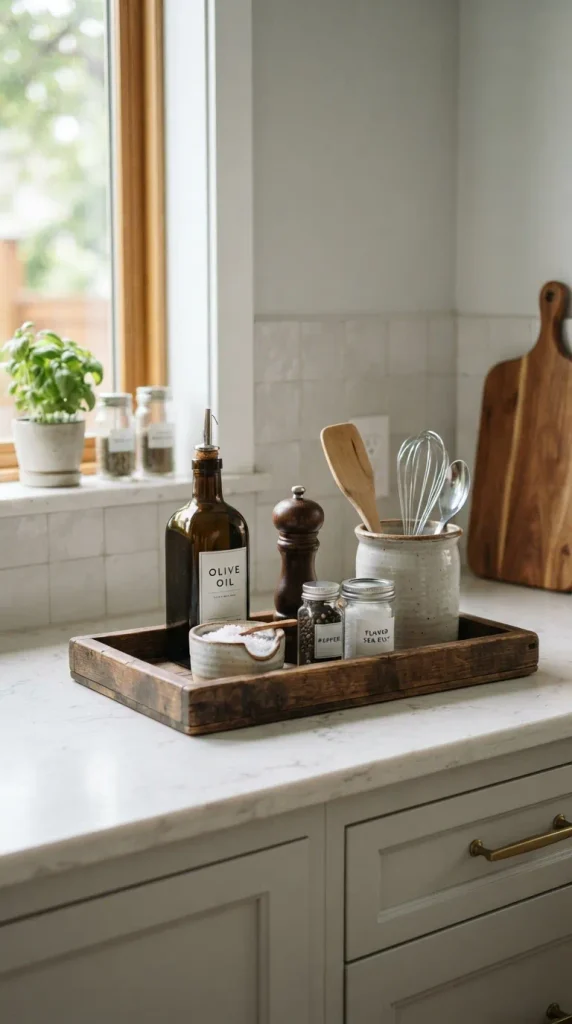
A decorative tray is one of the simplest ways to organize a kitchen countertop because it visually groups several unrelated objects into one defined arrangement. Place items such as olive oil, salt, pepper, a pepper grinder, and a small utensil holder on a wood, marble, ceramic, or metal tray. The contained arrangement makes frequently used products easier to move when cleaning while preventing them from spreading across the work surface. Choose a tray that complements your kitchen style and leave enough breathing room between objects. For a small kitchen, a rectangular tray positioned against the backsplash can provide organization without sacrificing valuable preparation space.
3. Install a Wall-Mounted Rail Above the Counter
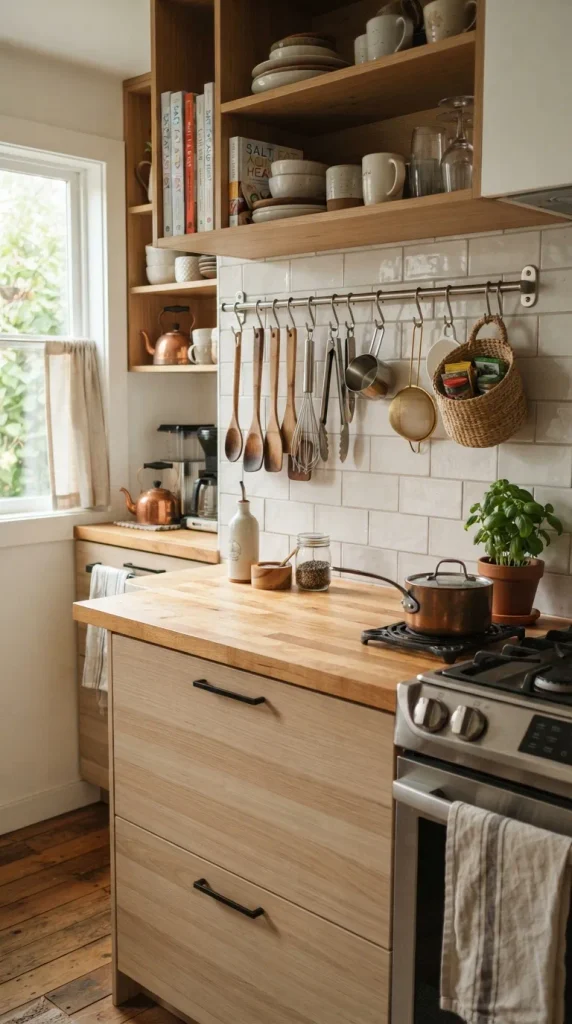
When countertop space is scarce, look upward. A wall-mounted rail installed above the counter can hold cooking utensils, measuring spoons, small baskets, or frequently used kitchen tools while leaving the work surface clear. Choose a simple metal rail for a contemporary kitchen or a darker finish for an industrial-inspired space. Small hooks can be repositioned according to your needs, making the system flexible as your cooking habits change. Keep the most frequently used tools toward the center and less-used accessories toward the ends. This vertical organization technique is particularly useful in compact kitchens where cabinets and drawers provide limited storage.
4. Organize Cooking Oils on a Slim Countertop Stand
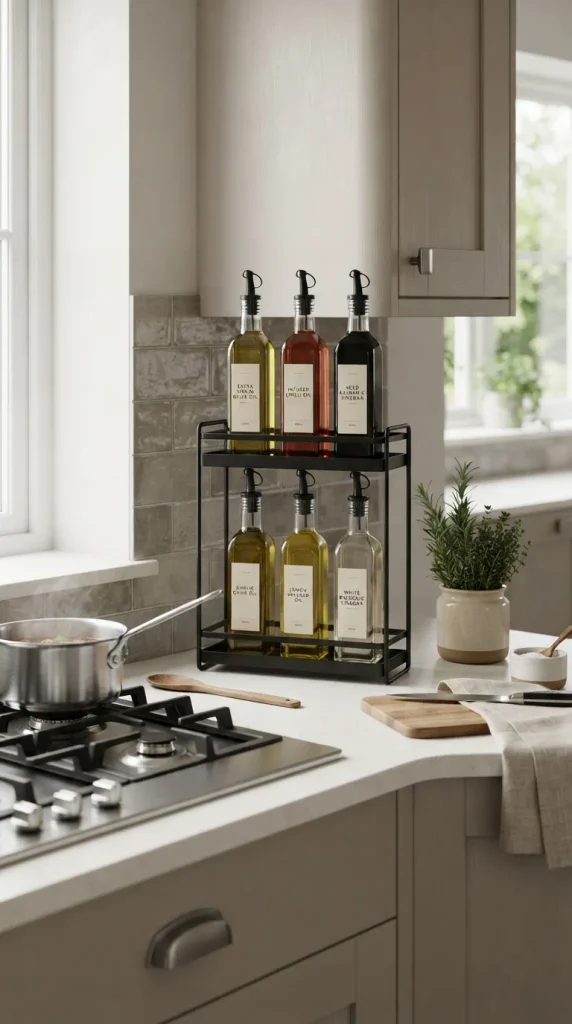
Cooking oils often create countertop clutter because several bottles are used throughout the day. Instead of allowing them to occupy separate spaces, place olive oil, vegetable oil, vinegar, and other frequently used bottles on a slim countertop stand. A two-tier organizer can increase capacity without requiring a wider footprint. For a more cohesive appearance, transfer commonly used oils into matching dispensers with pour spouts and label them clearly. Position the stand close to the cooking area but far enough from direct heat to protect the oils. This arrangement keeps essential ingredients within reach while giving the counter a cleaner and more deliberate appearance.
Also Read: 25 Kitchen Pantry Ideas for Smart Storage & Style
5. Add a Tiered Shelf for Spices and Small Containers
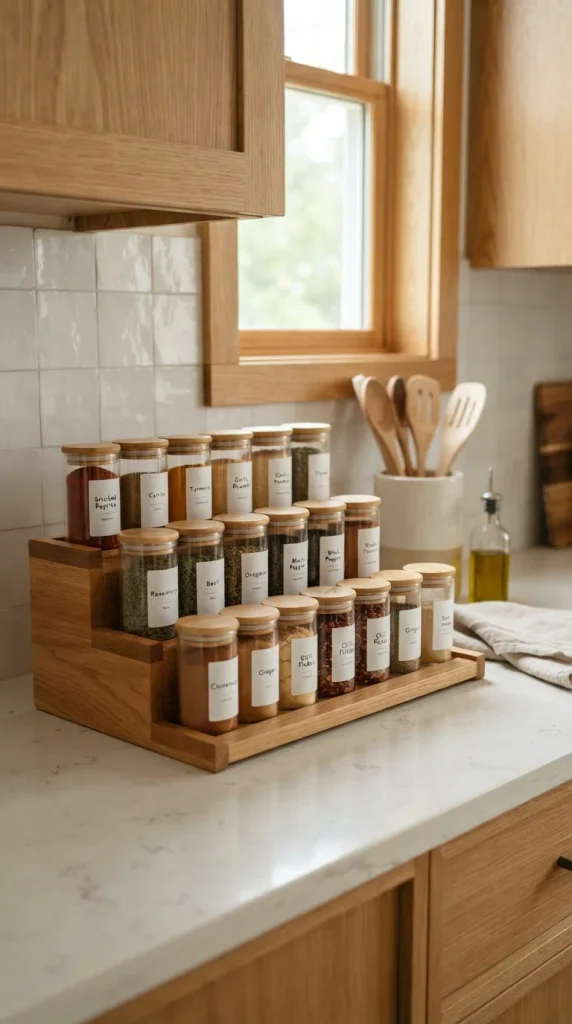
A tiered countertop shelf makes small items much easier to see and access, especially when spices or seasoning jars are stored near the cooking area. Instead of placing containers in a single row where the back ones disappear, use a stepped organizer that creates different levels. Arrange the most frequently used spices at the front and occasional ingredients toward the rear. Matching jars can give the setup a more refined look, while clear containers make contents easy to identify. A compact wooden or metal riser can also hold tea, coffee accessories, sauces, or baking ingredients, making this one of the most adaptable solutions for kitchen counter organization.
6. Keep Cutting Boards Upright in a Countertop Holder
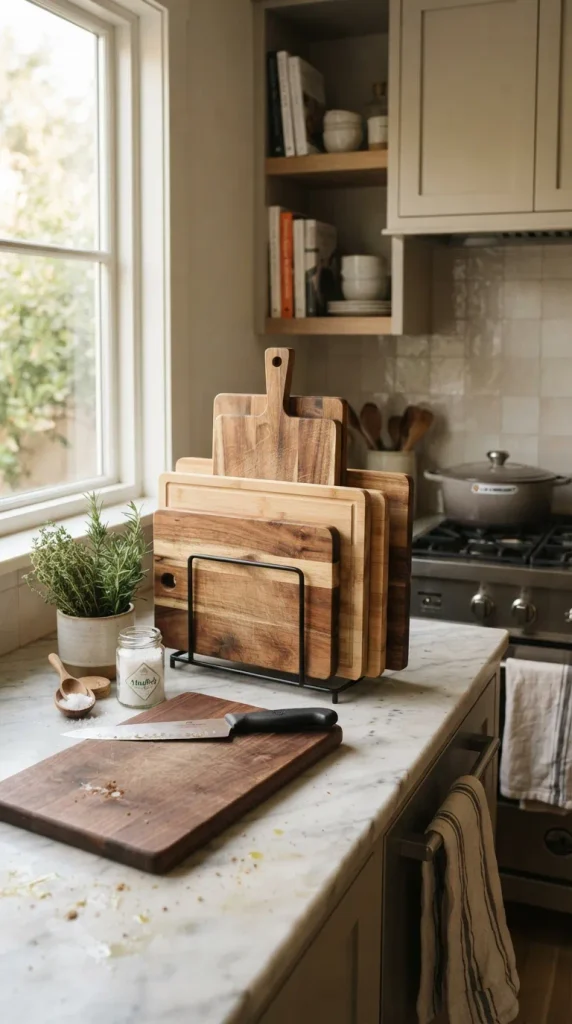
Large cutting boards can quickly make a countertop look crowded when they are stacked flat. An upright holder provides a practical alternative by storing boards vertically and allowing each one to be removed without disturbing the others. Choose a holder with separate slots so wooden, bamboo, plastic, or specialty boards can remain organized. Position it near the food preparation area for convenience, but avoid placing it directly beside the sink where moisture can accumulate. A natural wood holder works particularly well in warm or farmhouse kitchens, while a simple metal version suits modern interiors. Vertical storage also makes better use of otherwise unused countertop space.
7. Set Up a Compact Baking Ingredient Station
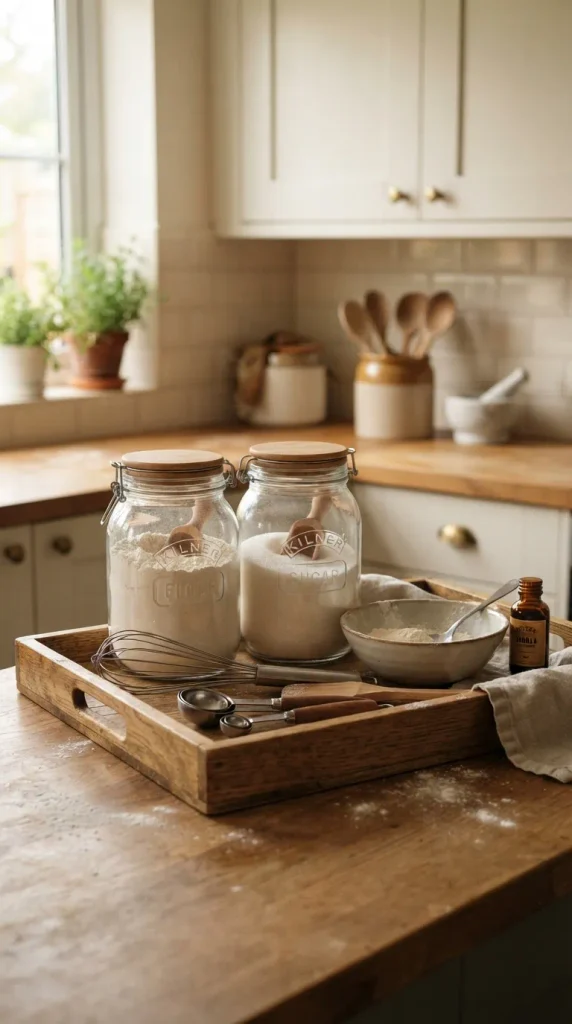
If you bake regularly, creating a small baking station can prevent flour, sugar, extracts, and baking tools from spreading across the kitchen. Use airtight containers for frequently used dry ingredients and place them together on a shallow tray or beside a countertop canister set. A small container can hold measuring spoons, while a narrow utensil crock can keep whisks and spatulas nearby. Rather than displaying every baking ingredient, reserve the counter for items used regularly and keep larger backup supplies in the pantry. This approach creates an organized baking zone that remains functional without making the entire countertop look like a permanent workbench.
8. Use a Vertical Organizer for Plates and Trays
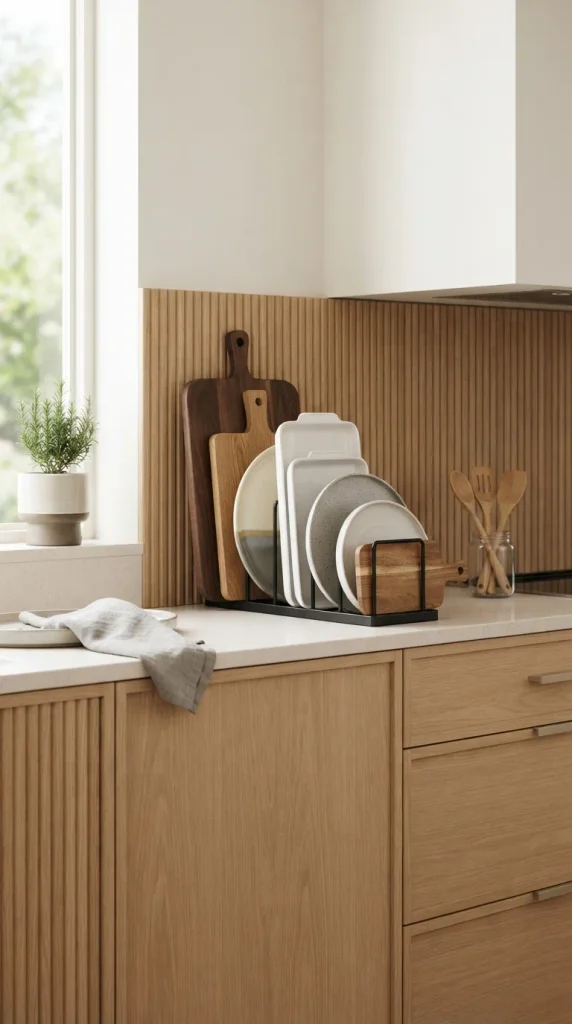
Serving trays, small plates, and cutting boards can be difficult to store when they are stacked horizontally. A vertical countertop organizer separates each piece and makes it possible to pull out the desired item without moving everything else. Choose a narrow rack that fits along the backsplash or beside a cabinet. Wire organizers provide a lightweight contemporary appearance, while wood dividers can bring warmth to a traditional kitchen. This method is especially useful for items that are too frequently used to justify storing them in a hard-to-reach cabinet. Keeping vertical pieces together also creates a visually structured section of the counter.
Also Read: 27 Kitchen Floor Tile Ideas for Stylish Modern Kitchens
9. Create a Small Breakfast Station for Busy Mornings
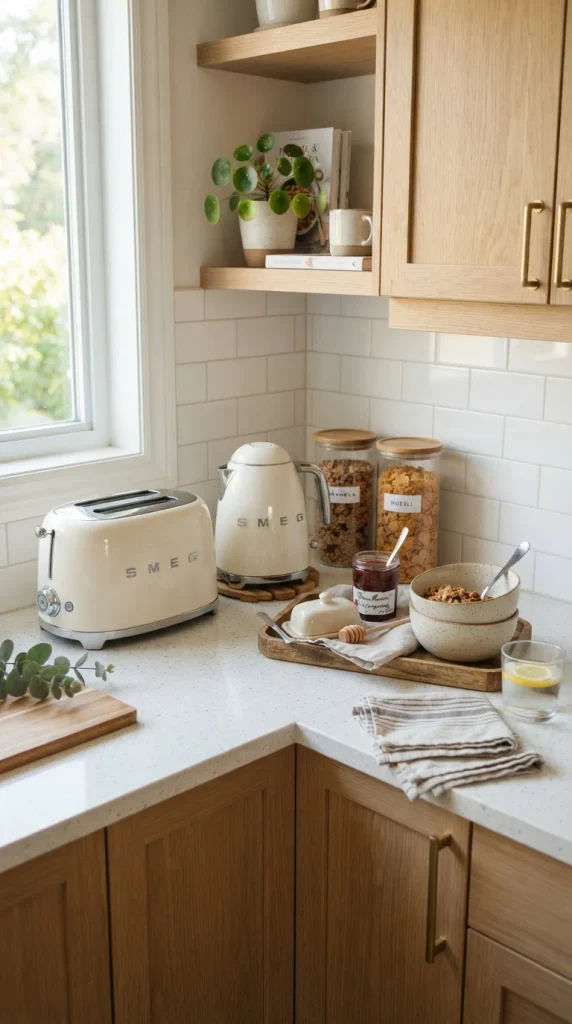
A breakfast station can make morning routines more efficient by grouping the items used most often in one location. Place a toaster, kettle, cereal container, or small appliance together on a designated section of the counter. Add a tray for tea bags, coffee accessories, honey, or breakfast utensils so small items do not scatter around the appliances. Keep larger food packages hidden in a nearby cabinet or pantry and display only attractive containers or daily essentials. In an open-plan kitchen, a coordinated breakfast station can look intentional rather than cluttered. The key is to define the zone clearly and avoid allowing unrelated items to migrate into it.
10. Store Utensils in a Stylish Countertop Crock
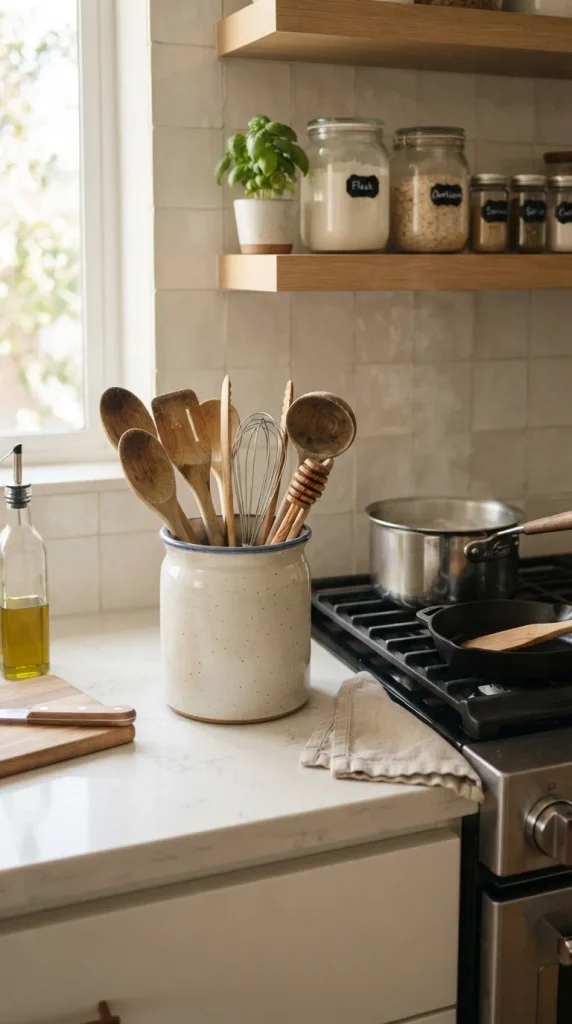
A countertop utensil crock provides convenient access to spatulas, wooden spoons, whisks, and other cooking tools without filling a drawer. The most effective setup is selective rather than excessive: keep only the utensils used regularly and store duplicates elsewhere. A ceramic crock can add texture and personality, while stainless steel or matte-finish containers create a more modern appearance. Arrange longer tools toward the center and shorter utensils around them so everything remains visible. Position the crock near the stove or primary preparation area, but leave enough clearance to work comfortably. This simple solution combines everyday functionality with decorative appeal.
11. Add a Narrow Rolling Cart Beside the Counter
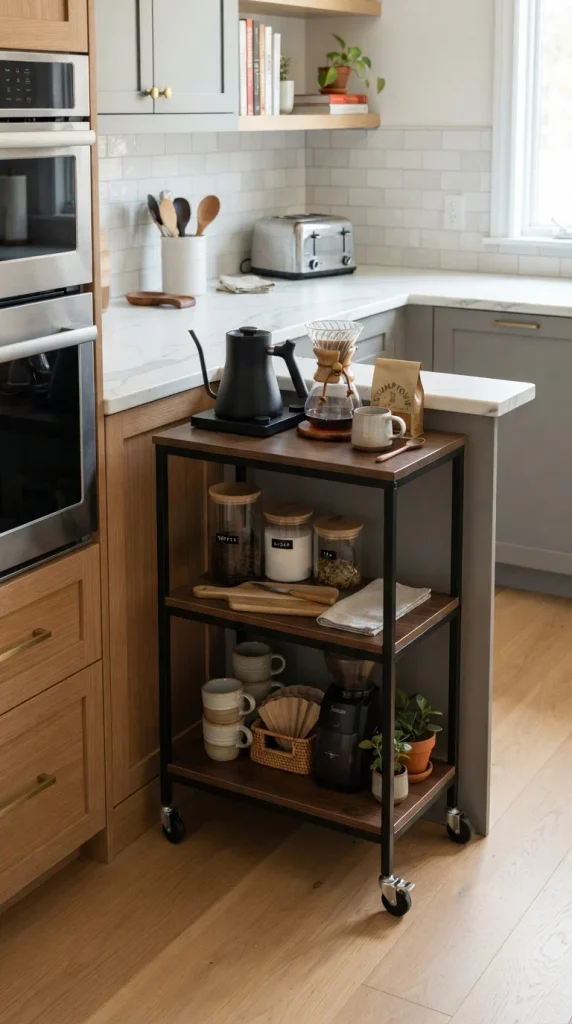
A slim rolling cart can provide additional organization when your existing counter is too small for everything you need. Choose a narrow model that can slide beside an island, refrigerator, or cabinet and use its shelves for coffee supplies, produce, baking ingredients, or small appliances. The top surface can hold a few attractive everyday items while the lower shelves handle less decorative necessities. Because the cart can move, it is particularly useful in rental kitchens or flexible spaces. Select a finish that complements the kitchen cabinetry so the cart feels like an intentional extension of the room rather than temporary storage.
12. Use Matching Canisters for a Cleaner Countertop Look
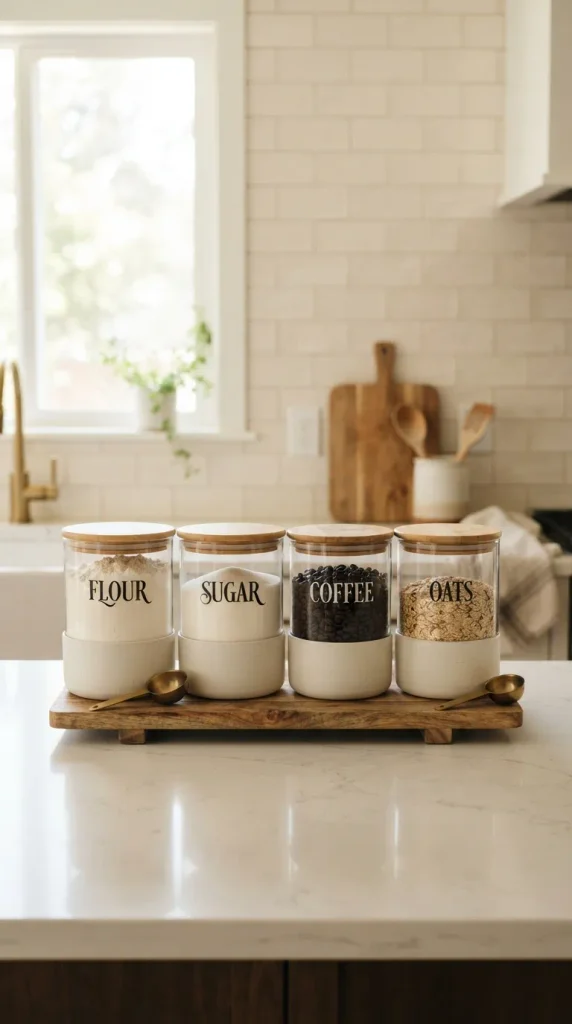
Matching canisters can instantly make a collection of frequently used ingredients look more organized. Flour, sugar, coffee, tea, rice, oats, and other staples can be transferred into airtight containers with consistent shapes and labels. Select canisters based on the amount you actually use rather than filling the counter with oversized storage jars. Clear containers are convenient when you want to monitor quantities, while ceramic or opaque canisters create a more decorative appearance. Arrange them in a compact group against the backsplash and keep enough space around them to wipe the counter easily. Consistency in container style creates visual order even when the counter contains several everyday supplies.
13. Organize the Counter With a Two-Tier Riser
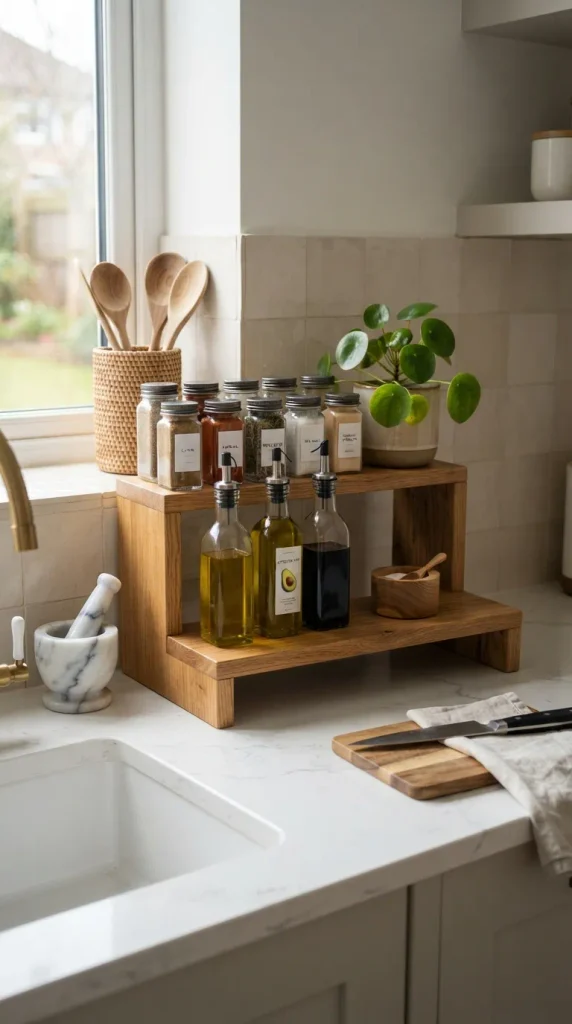
A two-tier countertop riser creates an extra storage level without permanently changing the kitchen. The lower level can hold frequently used containers, while the upper shelf provides space for oils, spices, small plants, or decorative accessories. This is particularly helpful when a kitchen has a narrow work surface but enough vertical clearance. Choose a riser with a footprint that fits your counter and avoid making it so tall that it obstructs your view or lighting. Wood risers bring warmth to neutral kitchens, whereas stone, acrylic, or metal versions can suit contemporary spaces. The result is more usable storage with a relatively small footprint.
14. Give Small Appliances a Dedicated Appliance Zone
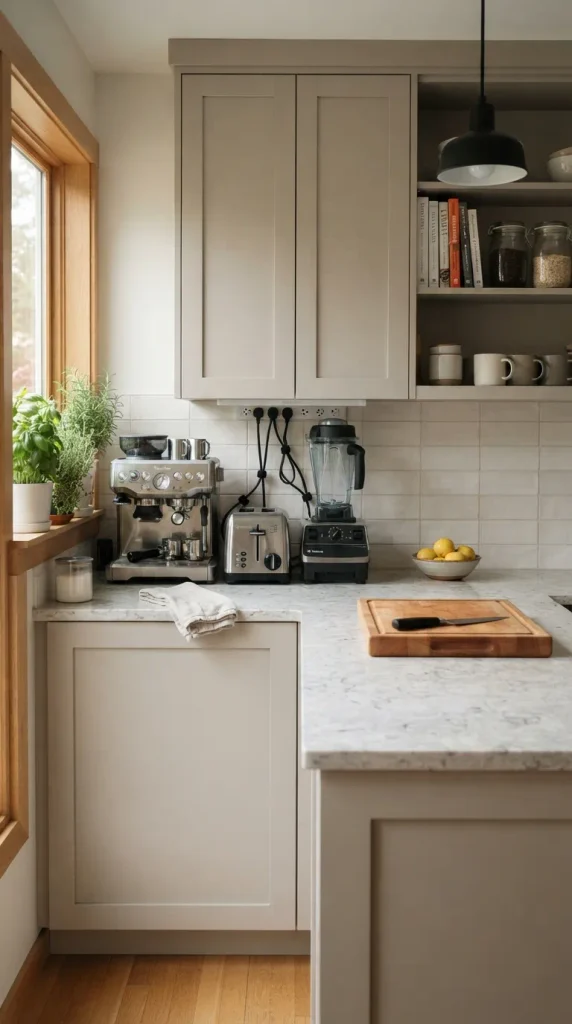
Countertop appliances become visually overwhelming when they are scattered across multiple areas. Instead, group the appliances you use most often in one dedicated zone. A coffee maker, toaster, blender, or stand mixer can be positioned together according to how frequently they are used and how close they need to be to electrical outlets. Keep cords controlled with reusable cable ties or cord organizers, and avoid covering ventilation openings. If an appliance is used only occasionally, consider storing it in a cabinet rather than giving it permanent counter space. Consolidating appliances makes the kitchen easier to clean and gives the remaining counter area a more open appearance.
15. Add a Countertop Produce Bowl With Purpose
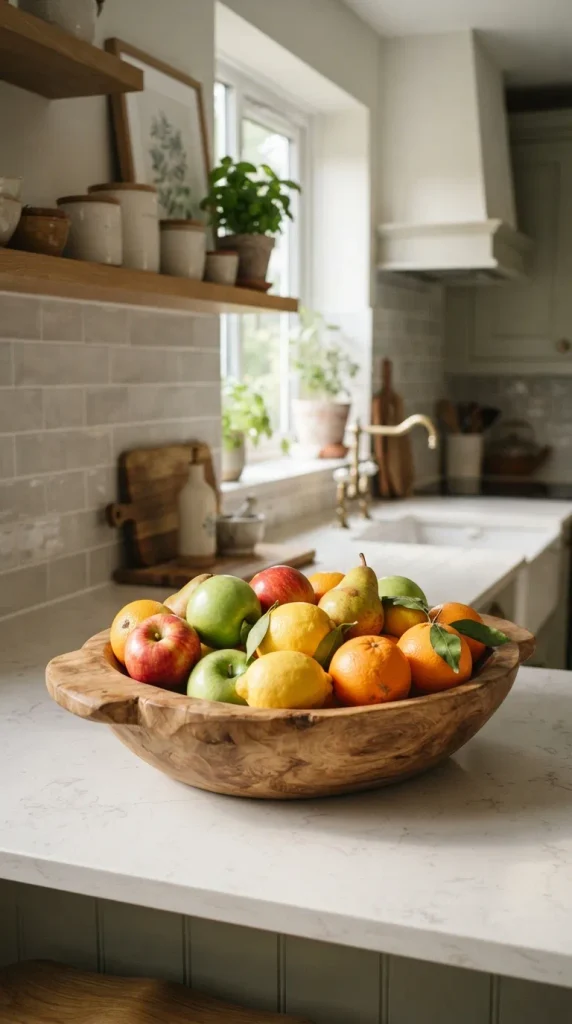
A produce bowl can be both decorative and practical when it is carefully selected and positioned. Choose a bowl large enough for the fruit and vegetables you actually consume within a few days rather than creating an oversized display. Place it where the produce is visible but does not interfere with food preparation. A wooden bowl works beautifully in organic and farmhouse interiors, while ceramic or metal designs can complement modern kitchens. Avoid overcrowding the bowl because an overflowing arrangement can quickly become visual clutter. Keeping fresh produce in one defined location makes the counter look intentional while encouraging healthy ingredients to remain accessible.
16. Create a Tea and Hot Drink Organizer
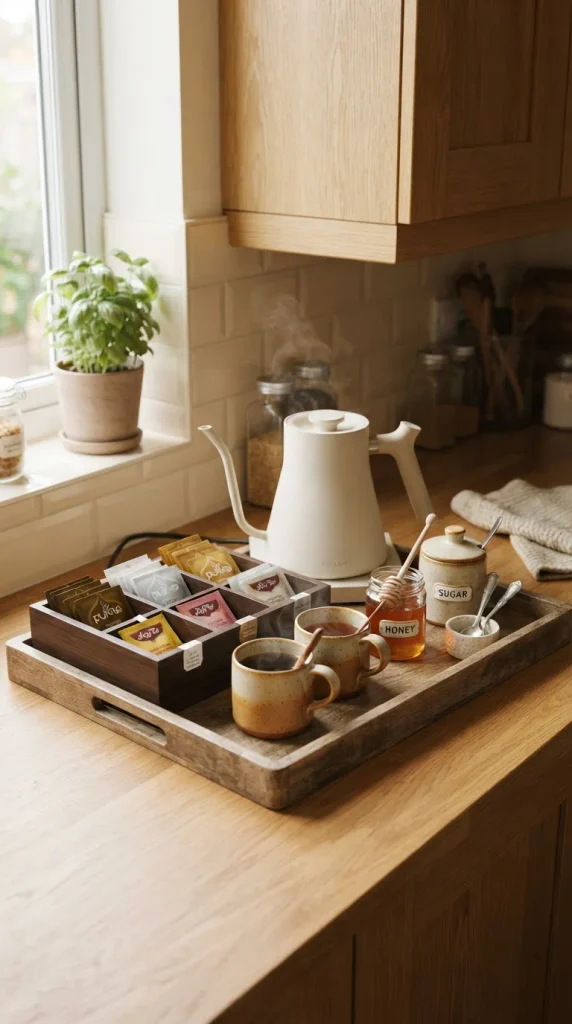
Tea bags, honey, sugar, teaspoons, mugs, and kettles can occupy surprising amounts of counter space. Bring these items together into a compact hot-drink station using a divided tea box, small tray, or tiered organizer. Store different tea varieties in labeled compartments so they are easy to select without opening multiple packages. A small lidded jar can hold sugar or sweetener, while a decorative container can keep teaspoons organized. If the kettle sits on the counter permanently, position the supporting accessories nearby rather than spreading them across the kitchen. A cohesive arrangement makes the station functional while giving it the appearance of a deliberate decor feature.
Also Read: 25 Kitchen Countertop Ideas for Modern Homes
17. Use a Sink-Side Organizer for Cleaning Essentials
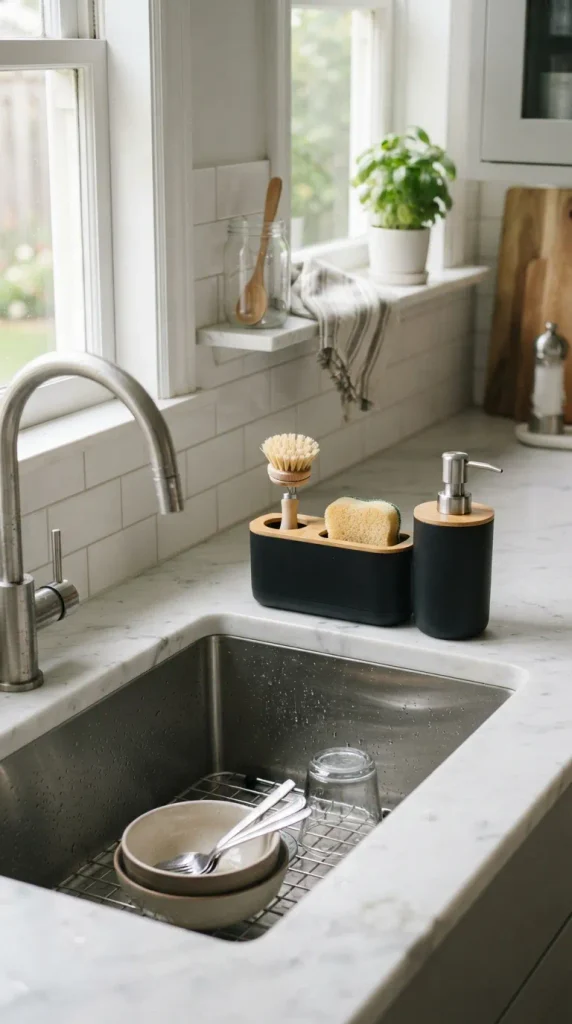
The area around the kitchen sink often becomes cluttered with dish soap, brushes, sponges, and cleaning products. A compact sink-side organizer can give each item a defined position and keep moisture contained. Choose a draining caddy that allows sponges and brushes to dry between uses, and use a matching soap dispenser if you want a more coordinated appearance. Keep the organizer narrow enough that it does not reduce usable sink space. Neutral finishes such as stainless steel, ceramic, or simple black can blend with most kitchens. Moving these small cleaning tools into one contained zone makes the surrounding counter immediately feel less chaotic.
18. Install a Magnetic Knife Storage Solution
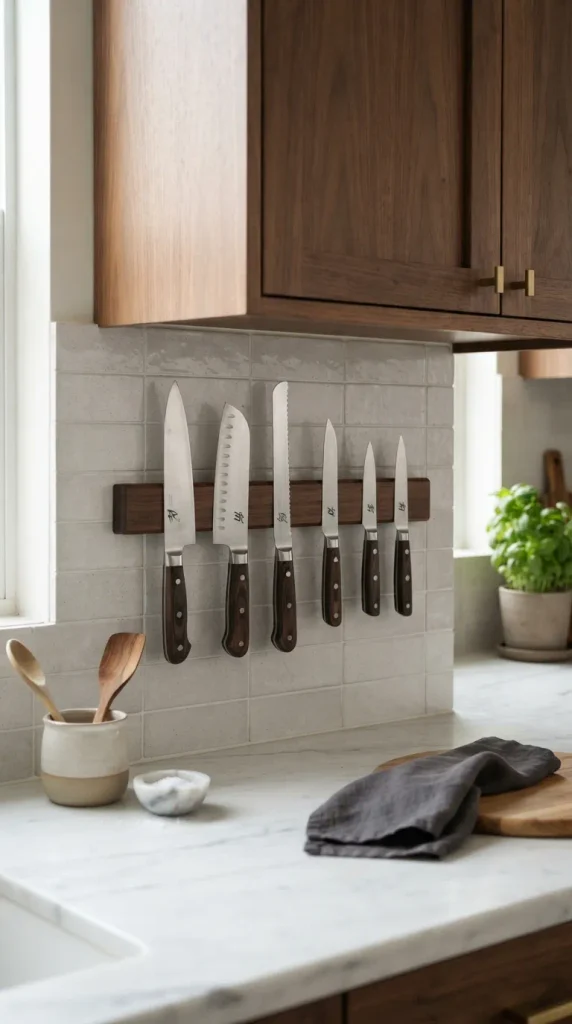
A magnetic knife strip can free valuable drawer or countertop space while keeping frequently used knives accessible. Mount the strip securely on a backsplash or suitable wall surface where it is away from children and does not interfere with normal kitchen movement. Arrange knives with the handles oriented consistently and leave enough separation to remove each one safely. This solution works particularly well in kitchens where a traditional countertop knife block takes up too much room. For a minimalist appearance, choose a simple wood or metal strip that coordinates with existing hardware. Always install and use the magnetic system according to the manufacturer’s safety recommendations.
19. Organize Kitchen Papers and Mail in One Holder
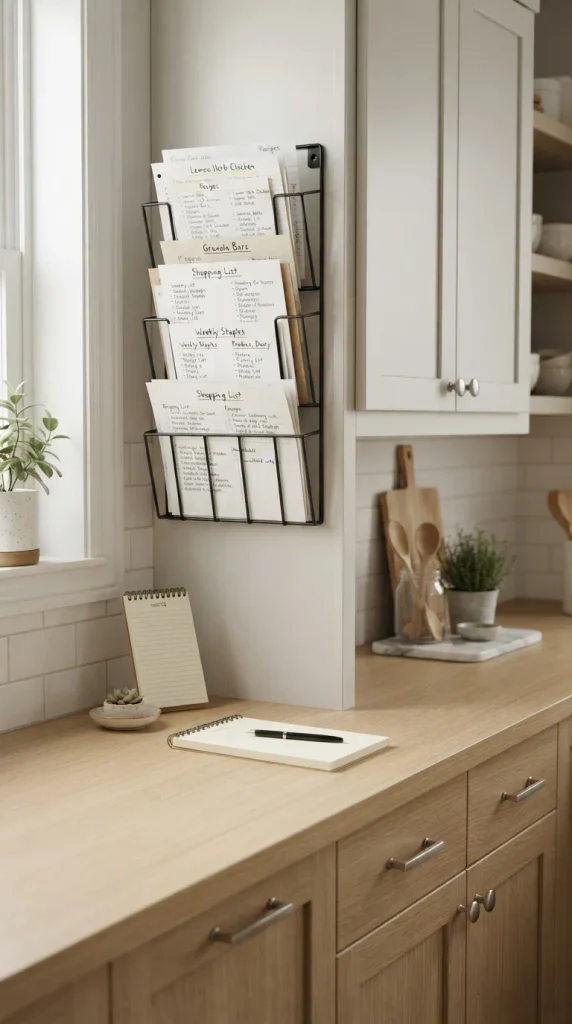
Mail, grocery lists, recipes, receipts, and school papers can easily turn a kitchen counter into an unofficial office. A narrow wall-mounted file holder or countertop paper organizer can contain these items before they spread across the room. Divide the storage into practical categories such as action items, recipes, and outgoing papers if needed. Keep only current documents in the kitchen and recycle or relocate anything that no longer requires attention. Choose a holder that matches the kitchen’s design so organizational equipment does not look out of place. Establishing a dedicated home for paperwork prevents one of the most common forms of non-kitchen countertop clutter.
20. Use a Small Countertop Basket for Everyday Items
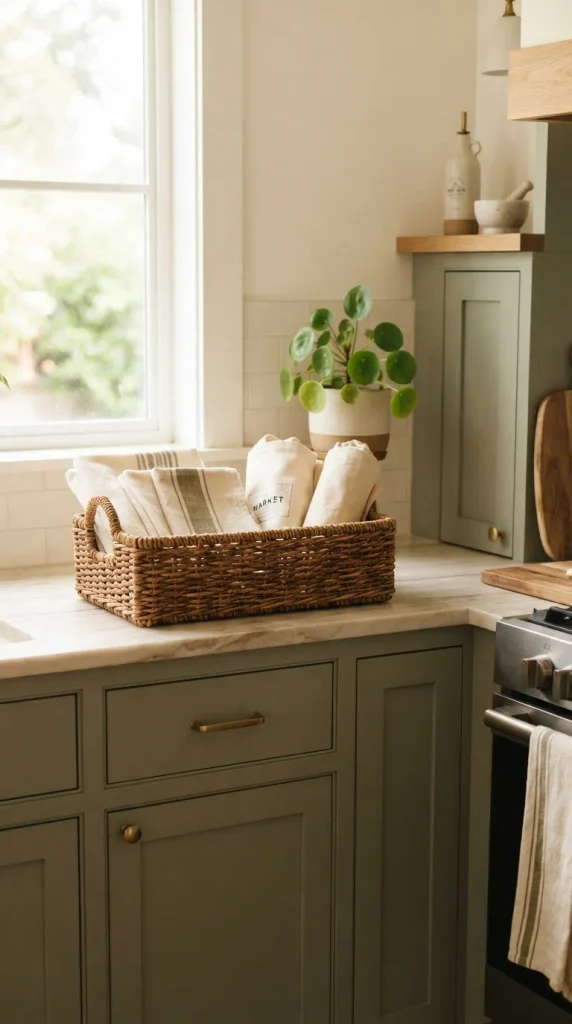
A decorative basket is ideal for grouping miscellaneous items that genuinely need to remain on the counter. Depending on the household, it could hold napkins, kitchen towels, reusable shopping bags, pet-related supplies, or frequently used pantry items. The important part is to give the basket a defined purpose rather than using it as a place to hide random clutter. Select a size that fits the available counter space and avoid filling it beyond its capacity. Woven baskets add texture and warmth, while wire or metal baskets can create a lighter contemporary look. A contained collection is much easier to manage than scattered individual objects.
21. Make a Dedicated Baking and Cooking Tool Container
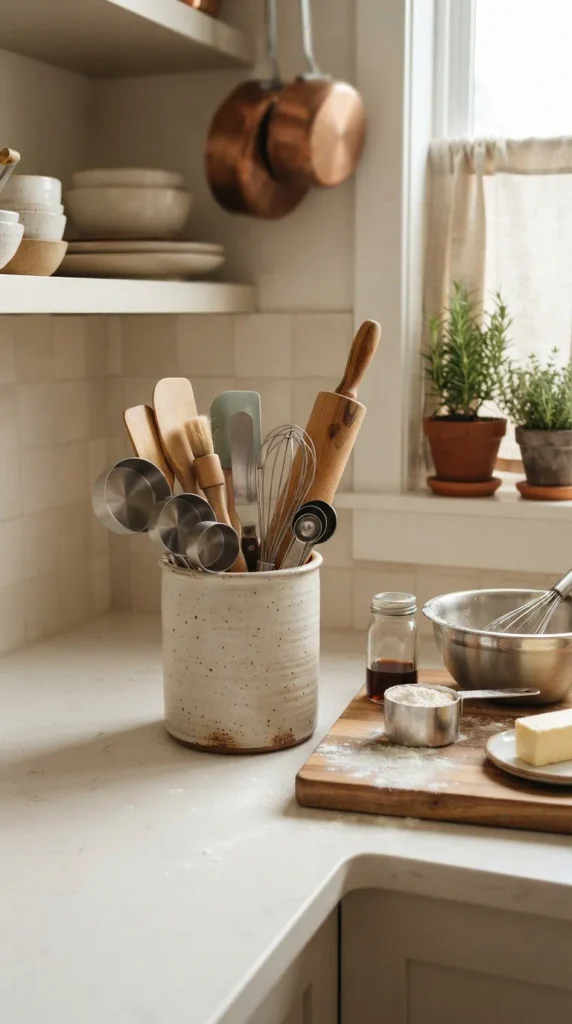
Cooking tools such as measuring cups, rolling pins, pastry brushes, and spatulas can become difficult to manage when stored individually across the kitchen. A tall container or divided countertop holder can keep a specific group of frequently used tools together. This is particularly helpful for home bakers who need quick access to several small accessories during food preparation. Use separate containers if the collection becomes too large rather than allowing one oversized crock to become crowded. Keep the container close to the preparation zone and choose a design that complements the kitchen. Grouping tools by function makes everyday cooking more efficient and reduces unnecessary searching.
22. Add a Small Herb Garden to the Kitchen Counter
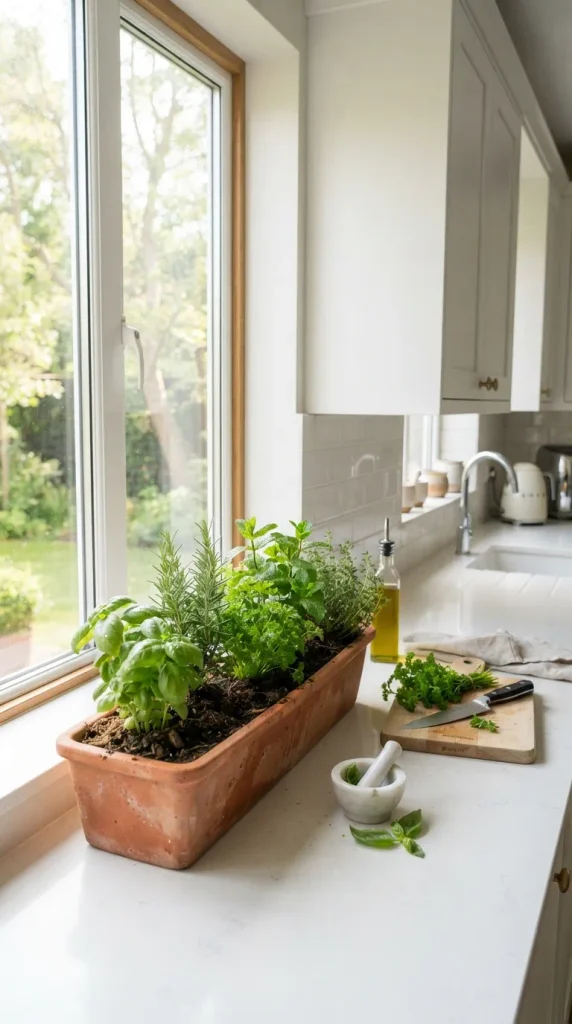
A compact herb garden can bring natural texture and useful ingredients into an organized kitchen without requiring much space. Choose a narrow planter or several small coordinated pots for herbs such as basil, mint, rosemary, parsley, or thyme. Position the plants near suitable natural light while keeping them away from excessive heat and splashing water. A long rectangular planter can use less counter width than several large individual pots. Keep the arrangement simple and trim plants regularly so they remain attractive. Fresh herbs can serve as functional decor, giving the kitchen a lived-in appearance while adding a practical ingredient source close to the cooking area.
23. Use a Minimalist “One-Zone” Countertop System
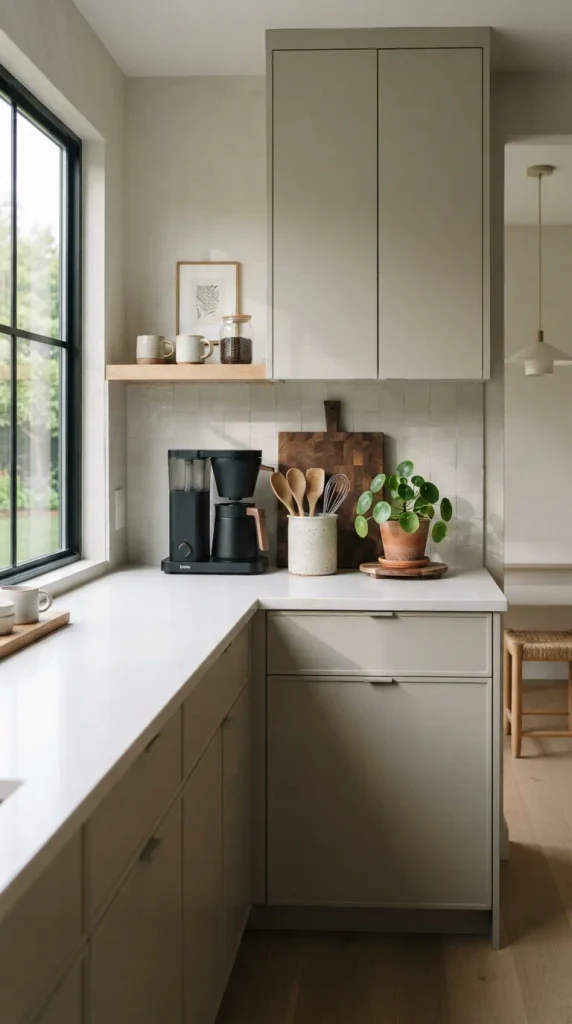
A one-zone countertop system focuses on limiting what remains visible rather than finding storage for every possible item. Select one defined area for the essentials that must stay out, such as a coffee maker, utensil crock, cutting board, or small decorative object. Everything else receives a home in a drawer, cabinet, pantry, or separate storage area. This method works especially well in modern kitchens where clean surfaces are central to the overall aesthetic. Instead of attempting to organize every inch of the countertop, create intentional negative space around the essential items. The result is a calmer kitchen that feels spacious, practical, and easier to maintain.
Conclusion
Effective kitchen counter organization is less about owning more storage products and more about creating clear zones for the things you actually use. Trays can contain everyday essentials, vertical organizers can reclaim wasted space, dedicated stations can simplify routines, and attractive containers can turn necessary storage into part of the kitchen decor. The best solution will depend on your counter size, cooking habits, available cabinets, and design style. Start with the areas that create the most clutter, give those items a defined home, and gradually build an organization system that feels natural to maintain. With a thoughtful combination of function, proportion, and visual simplicity, even a busy countertop can become an attractive and highly usable part of the kitchen.


