24 Cozy English Cottage Kitchen Ideas for a Charming Home

An English cottage kitchen is less about creating a perfectly styled room and more about capturing a sense of warmth, history, comfort, and everyday charm. Think aged wood, painted cabinetry, natural stone, open shelving, floral fabrics, vintage accessories, handmade ceramics, and soft countryside colors that make the kitchen feel as though it has evolved naturally over generations. The most inviting spaces balance practicality with personality rather than relying on a perfectly coordinated design scheme.
Whether you live in a traditional cottage, a modern house, or an apartment without architectural character, you can borrow the defining elements of this timeless style. A few carefully chosen materials, colors, textures, and vintage-inspired details can transform even a contemporary kitchen into a welcoming countryside retreat. These cozy English cottage kitchen ideas explore different ways to introduce that character, from classic farmhouse sinks and butcher-block worktops to botanical prints, antique furniture, and softly painted cabinets.
The beauty of English cottage style is its flexibility. You do not need exposed beams, a huge kitchen, or original period features to achieve the look. Instead, focus on creating a room that feels comfortable, collected, useful, and slightly imperfect. Natural textures should be allowed to show their character, while practical objects such as cookware, cutting boards, jars, and dishes can become part of the decoration. The result is a kitchen with warmth and individuality rather than a space that looks overly designed.
Also Read: 25 Black Japandi Kitchen Design Ideas for a Modern Home
1. Choose Soft Sage Green Kitchen Cabinets
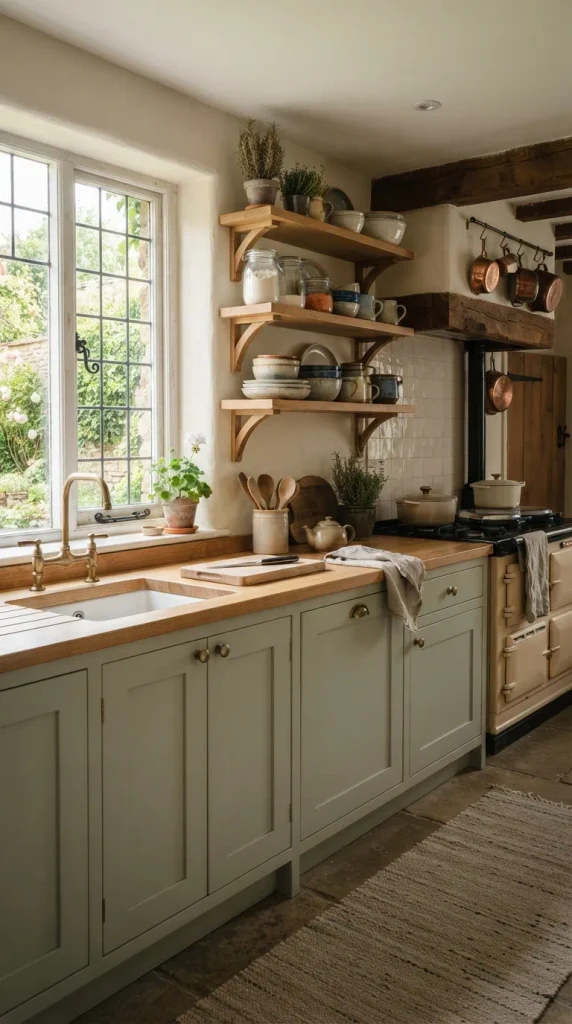
Soft sage green cabinetry immediately introduces the muted countryside character associated with an English cottage kitchen. Rather than choosing a highly saturated green, look for dusty, gray-based shades that feel gentle and naturally weathered. Shaker-style doors work particularly well because their simple recessed panels complement the relaxed character of cottage interiors. Pair sage cabinets with warm wood countertops, aged brass handles, and creamy walls to prevent the green from feeling too cool. A few open shelves displaying handmade pottery can complete the look. If replacing cabinetry is not practical, painting existing cupboard doors can create a similar transformation while preserving the kitchen’s original character.
2. Add a Classic White Farmhouse Sink
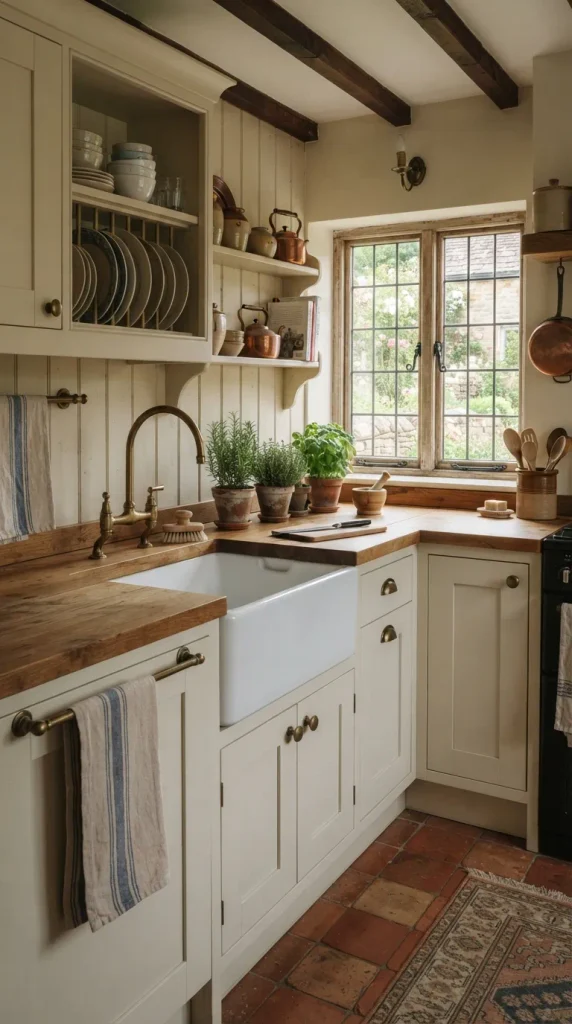
A deep white farmhouse sink can become one of the defining features of a cozy cottage kitchen. Traditional fireclay or ceramic styles have an appealing simplicity that works beautifully with painted cabinetry and natural materials. Choose a generously sized apron-front sink if your kitchen layout allows, then surround it with a warm timber or stone countertop. A traditional bridge faucet in aged brass or brushed metal adds another layer of period-inspired character. Keep the area around the sink practical rather than overly decorated; a simple ceramic soap dispenser, linen tea towel, and small potted herb can provide enough visual interest while preserving the authentic working-kitchen atmosphere.
3. Use Warm Butcher Block Countertops
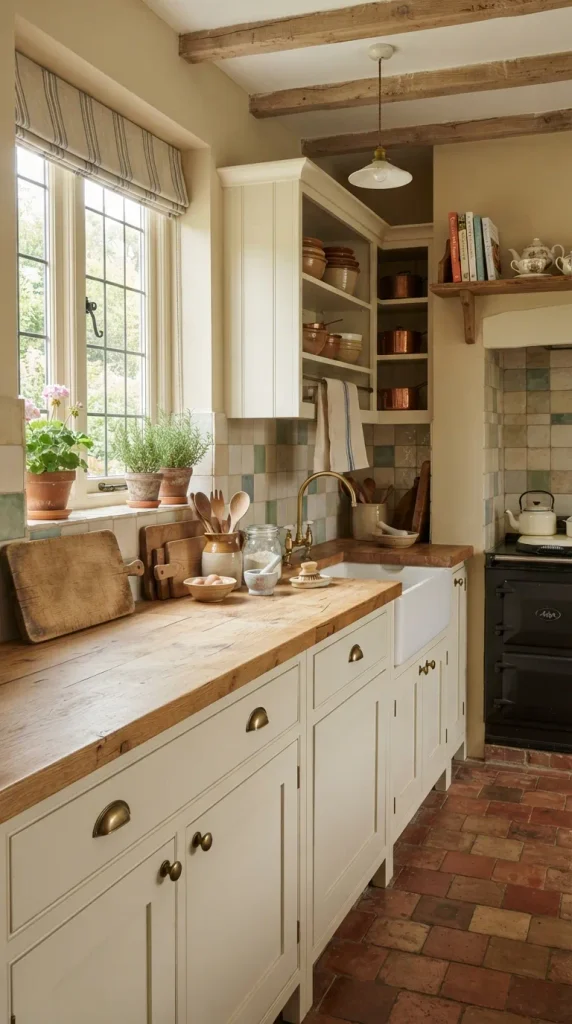
Butcher block countertops bring natural warmth to an English cottage kitchen and help soften painted cabinetry. Oak, walnut, or reclaimed-looking timber can introduce visible grain and subtle imperfections that make the room feel lived-in. Instead of treating wood purely as a decorative surface, allow it to age naturally where appropriate. Pair timber countertops with cream cabinets, handmade tiles, or muted green cupboards for a classic countryside palette. Regular maintenance is important around sinks and other wet areas, so select an appropriate finish for the type of wood you use. The combination of natural timber and traditional cabinetry creates an inviting foundation that feels practical as well as decorative.
4. Install Open Shelving for Everyday Dishes
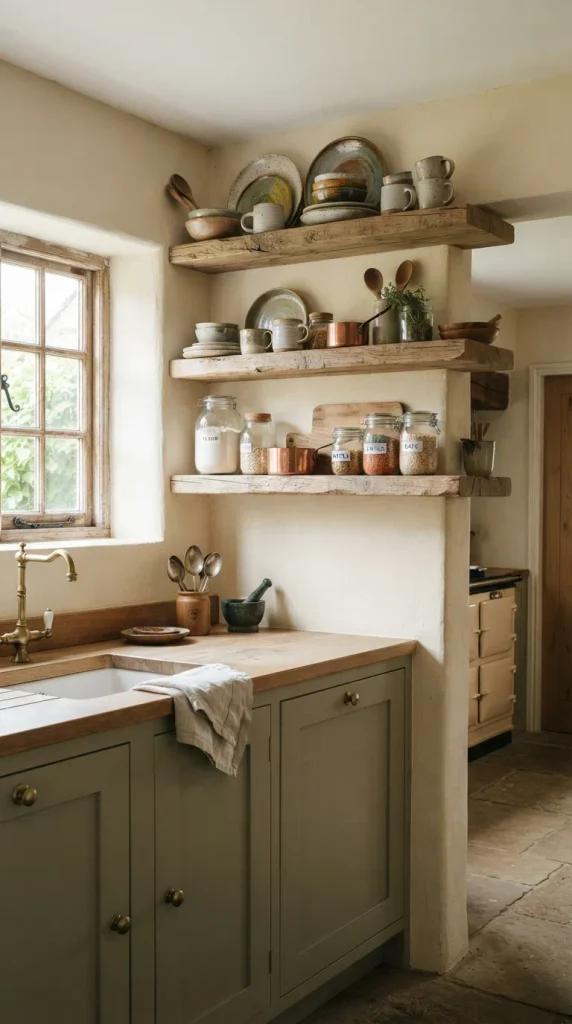
Open shelving is particularly effective when you want an English cottage kitchen to feel collected rather than formal. Replace a small section of upper cabinets with thick wooden shelves and use them to display objects you genuinely use, such as stoneware plates, ceramic mugs, glass jars, wooden bowls, and serving dishes. Vary the heights and shapes of the items rather than arranging everything into perfectly symmetrical rows. Natural oak or reclaimed timber works beautifully against plaster, beadboard, or painted walls. The key is restraint: leave some empty space so the shelves breathe. Everyday crockery becomes part of the room’s visual story without making the kitchen feel like a showroom.
Also Read: 22 Kitchen Window Sill Decor Ideas for a Stylish Home
5. Create a Cottage-Style Butler’s Pantry Corner
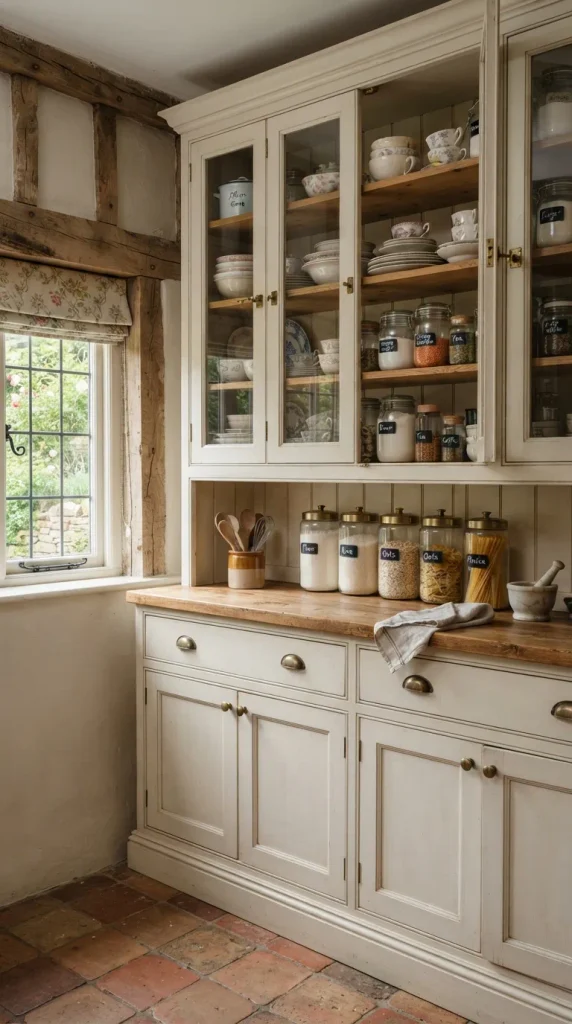
Even a compact kitchen can borrow the appearance of an old English butler’s pantry by creating a dedicated storage zone. Tall cupboards with glass-front doors can hold plates, serving pieces, preserves, glassware, and pantry staples while giving the room a sense of traditional architecture. Choose painted cabinetry in cream, mushroom, dusty blue, or sage green and add small cup pulls or simple brass hardware. Glass jars filled with flour, sugar, grains, and dried goods can make practical storage visually appealing. A narrow timber countertop provides a useful preparation surface and gives the corner the character of an old-fashioned pantry without requiring a separate room.
6. Bring in a Vintage Freestanding Kitchen Dresser
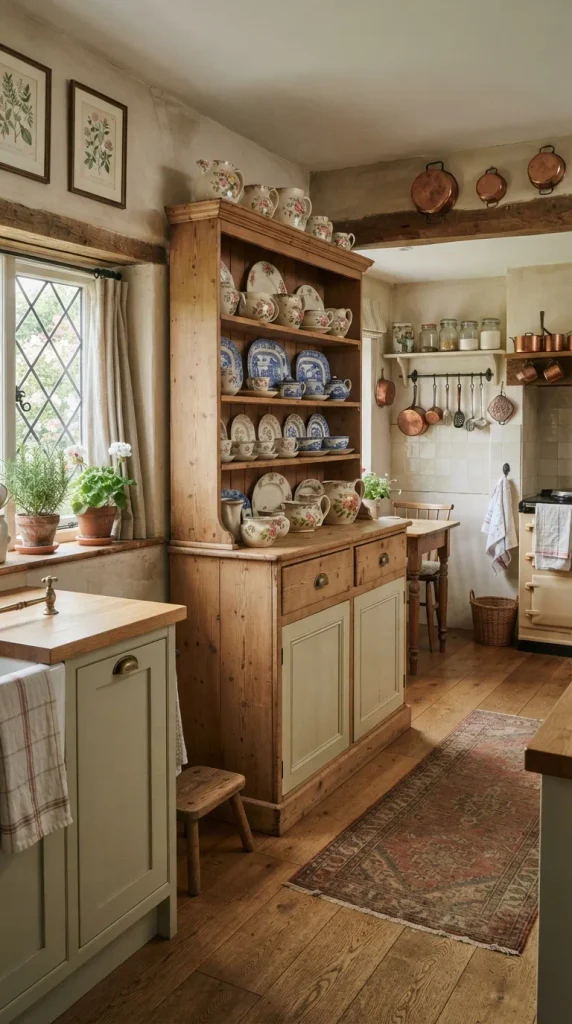
A freestanding dresser can instantly make a kitchen feel more like an English country home. Look for an antique or vintage-inspired piece with drawers below and glazed or open shelving above. Its slightly aged appearance adds depth that uniform fitted cabinetry often lacks. Use the lower drawers for linens, utensils, or baking equipment while displaying favorite crockery on the upper shelves. Painting the dresser in a muted color can help it blend with the rest of the room, while leaving natural wood exposed creates a beautiful contrast against painted cabinets. Because a dresser is furniture rather than built-in storage, it also adds the relaxed, collected quality that defines cottage interiors.
7. Layer Creamy Neutral Tones for a Softer Kitchen
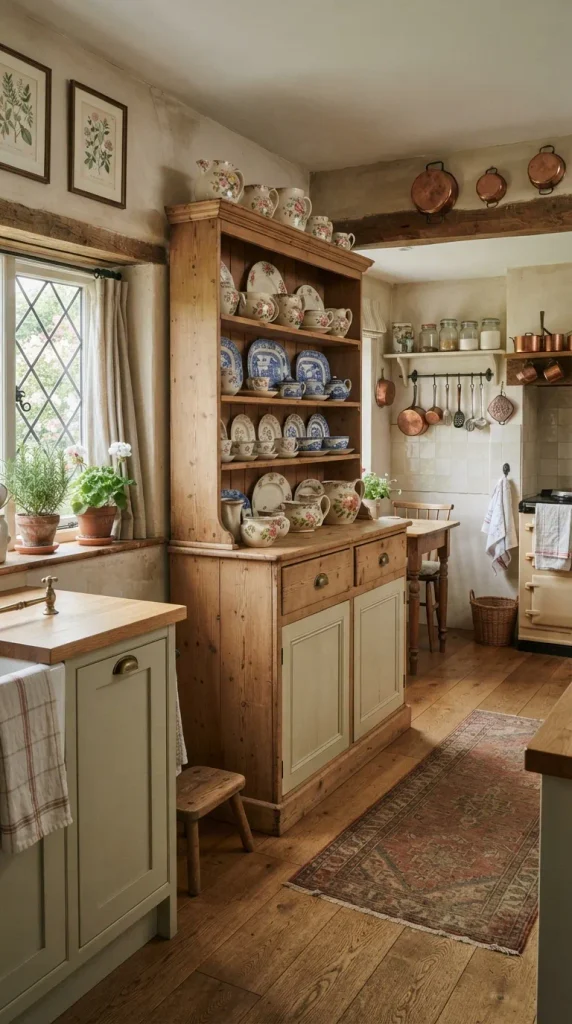
An English cottage kitchen does not need strong color to feel interesting. A layered palette of warm white, ivory, oatmeal, mushroom, beige, and soft taupe can create an exceptionally calm atmosphere. The secret is introducing differences in texture and undertone rather than using exactly the same neutral everywhere. Combine creamy painted cabinets with limestone-look flooring, natural oak, woven baskets, linen curtains, and handmade ceramic accessories. Avoid stark blue-white finishes if your goal is warmth, since cooler whites can make a cottage-inspired room feel contemporary and clinical. Subtle variations in neutral shades give the kitchen a naturally aged appearance while keeping the overall space bright.
8. Decorate With Floral Cottage Fabrics
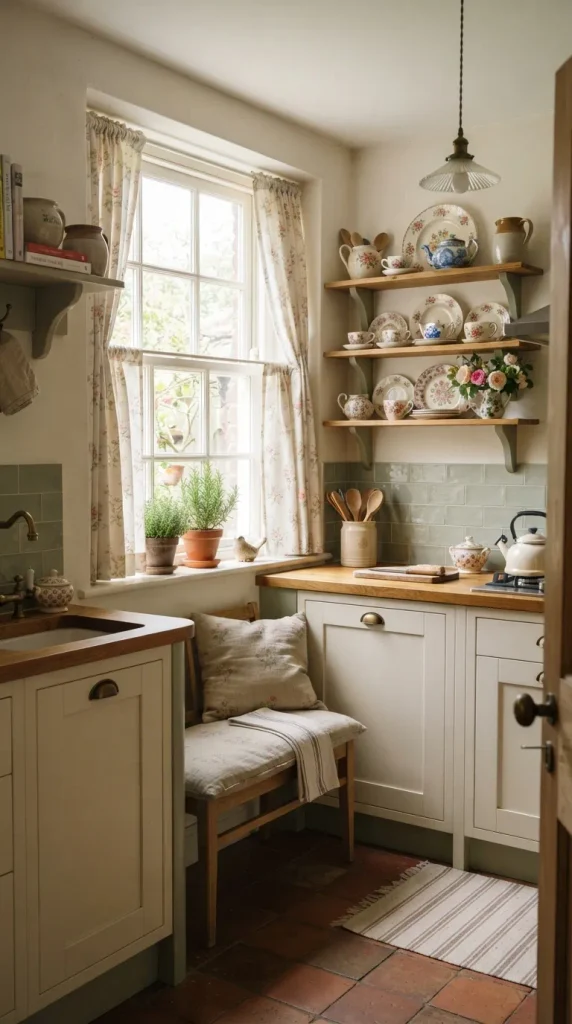
Floral textiles provide an easy way to introduce classic English countryside character without remodeling the entire kitchen. Small-scale botanical prints work particularly well for café curtains, seat cushions, chair pads, or fabric-covered lampshades. Look for patterns featuring faded roses, leaves, tiny blossoms, or traditional garden flowers in muted colors. Cream backgrounds with sage, dusty blue, terracotta, or soft pink accents can complement painted cabinetry beautifully. Keep the pattern concentrated in a few areas so it feels intentional rather than busy. A floral Roman blind paired with plain linen cushions, for example, can provide enough pattern to make a kitchen feel charming while maintaining a sophisticated visual balance.
9. Use Handmade Zellige or Uneven Ceramic Tiles
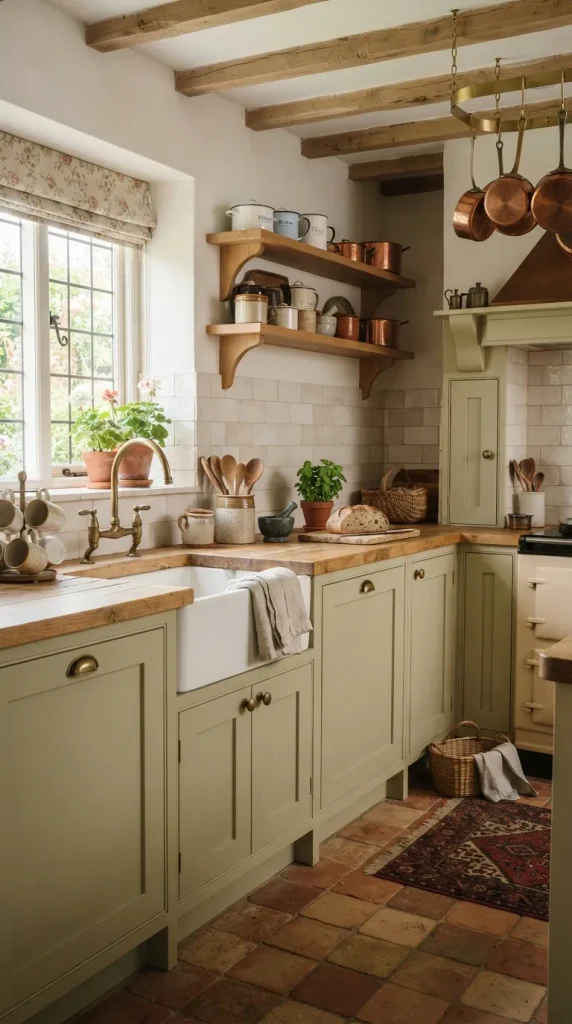
Slightly irregular tiles can give an English cottage kitchen the handmade quality that perfectly suits its relaxed character. Although traditional English kitchens may use a variety of tile styles, small-format ceramic tiles with uneven edges, subtle color variation, or softly textured surfaces can create a convincing artisan appearance. Cream, warm white, pale green, muted blue, and earthy beige are especially versatile. Rather than choosing a perfectly uniform glossy finish, consider tiles that catch natural light differently across the surface. Install them as a backsplash behind the range or sink, or extend them across a full wall for greater impact. Simple handmade-looking tiles add texture without overwhelming the room.
10. Display Copper Pots and Traditional Cookware
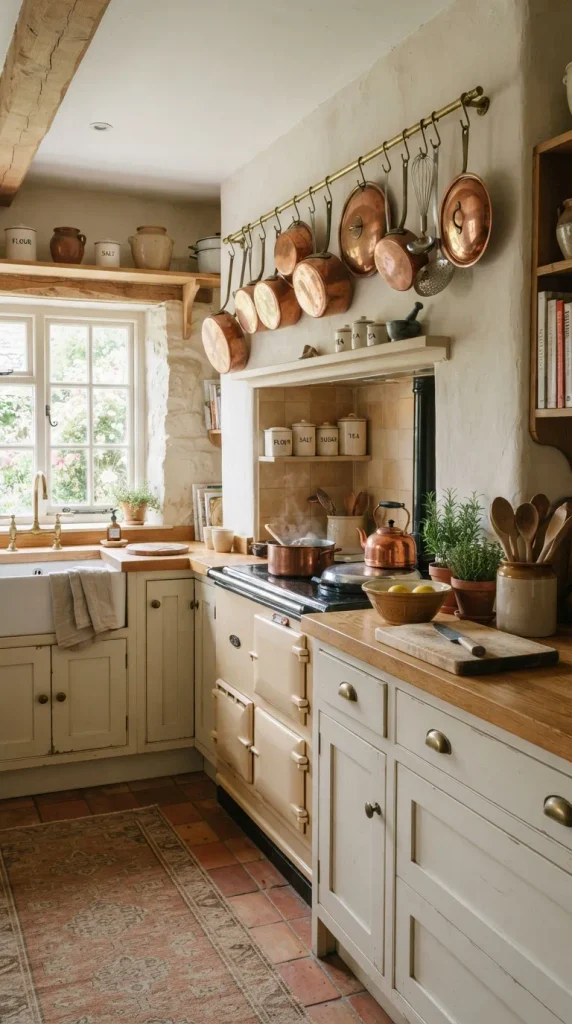
Copper cookware can provide both practical storage and striking visual warmth in a cottage kitchen. Instead of hiding beautiful saucepans and frying pans inside cabinets, hang selected pieces from a simple rail above the range or along an open wall. The warm metallic surface pairs especially well with cream, green, navy, and natural wood. Older copper pieces with gentle variations in tone can contribute to the sense of history that makes English cottage kitchens so appealing. If genuine copper cookware is outside your budget, choose a small number of decorative pieces rather than filling the wall with inexpensive imitations. The goal is to create a functional display that looks naturally accumulated over time.
11. Add a Traditional Range Cooker
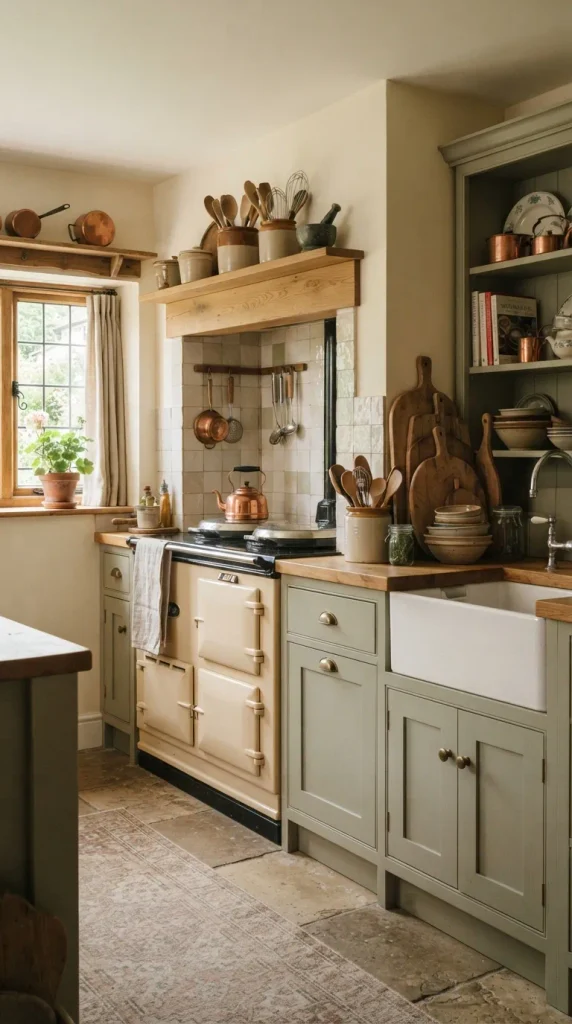
A classic range cooker can serve as the visual anchor of an English cottage kitchen. Traditional-inspired models with substantial proportions, tactile controls, and a slightly vintage appearance work especially well with Shaker cabinetry and natural materials. Choose a finish that complements the room rather than dominating it; cream, soft black, deep green, or muted blue can all create different interpretations of cottage style. Frame the cooker with simple cabinetry or a tiled backsplash and keep surrounding accessories useful. A wooden cutting board, ceramic utensil pot, and hanging cookware can make the cooking zone feel genuinely lived in. Even a compact modern cooker can contribute to this aesthetic when surrounded by traditional materials.
12. Introduce Reclaimed Wood for Rustic Character
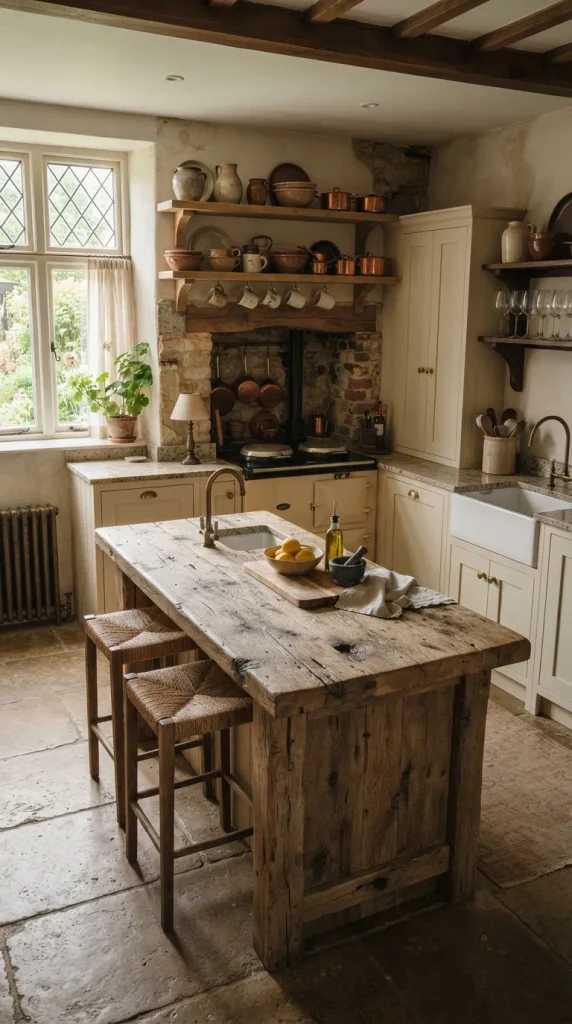
Reclaimed wood adds instant texture and history to a cottage-style kitchen. It can appear through ceiling beams, a freestanding island, floating shelves, a dining table, or even a small accent cabinet. The appeal comes from visible grain, knots, worn edges, and natural variation rather than a perfectly polished finish. Balance heavily weathered timber with cleaner elements such as painted Shaker cabinets or simple ceramic tiles so the room does not become visually heavy. A reclaimed oak island topped with a lightly aged surface can become the heart of the kitchen, providing preparation space while giving the room the unmistakable warmth of an old countryside property.
13. Create a Cozy Breakfast Nook
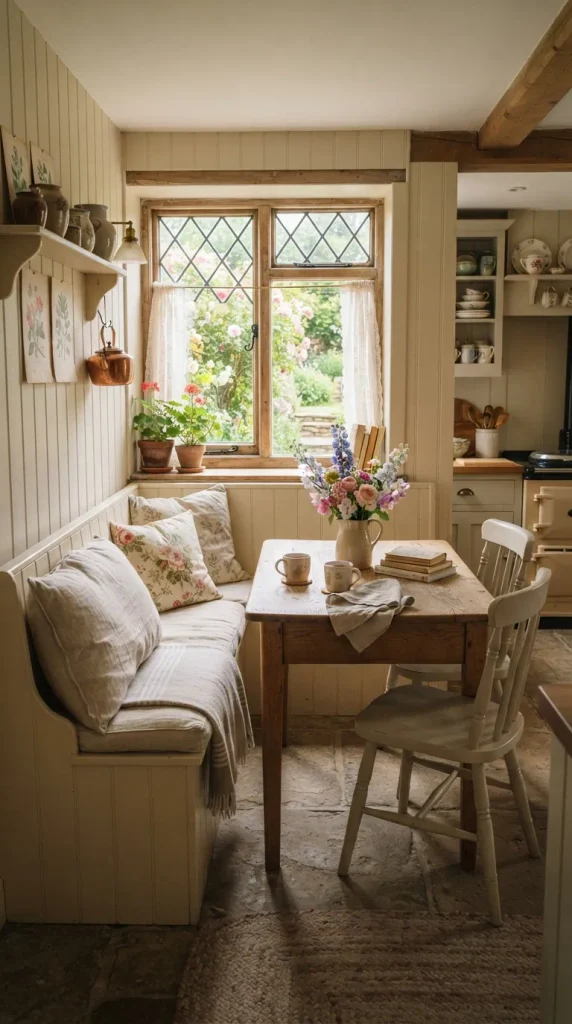
A small breakfast nook can make an English cottage kitchen feel more intimate and useful. If you have an unused corner, consider a built-in bench with linen cushions, a compact wooden table, and two simple chairs. Painted beadboard or tongue-and-groove paneling behind the seating area can reinforce the traditional character. Keep the textiles comfortable but understated, perhaps using oatmeal linen with a small floral or check pattern. A pendant light positioned over the table provides a natural focal point. The space does not need to be large; even a narrow bench beside a window can create a charming spot for morning coffee, reading, or casual family meals.
14. Hang Dried Herbs and Garden-Inspired Botanicals
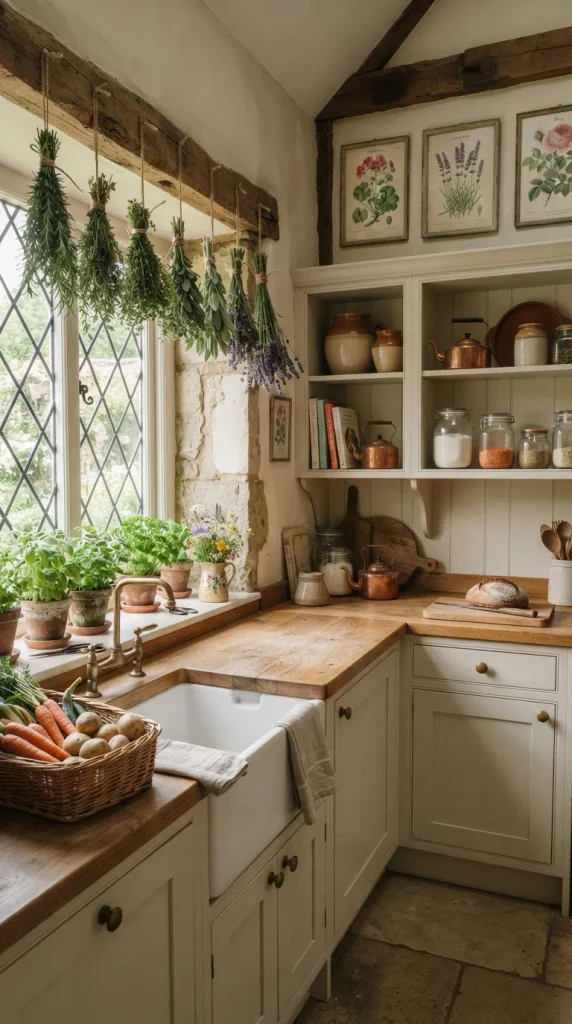
Fresh and dried herbs connect an English cottage kitchen to the garden outside. Hang small bundles of rosemary, thyme, sage, or lavender from a discreet wooden rail, or place them in simple ceramic pots near a sunny window. A few botanical prints can reinforce the theme without turning the kitchen into a themed space. Use natural materials such as twine, wicker, linen, and terracotta to keep the arrangement understated. Herbs should remain accessible if they are being used for cooking, making this one of those decorating ideas where beauty and practicality naturally overlap. The subtle scent and organic textures also contribute to the welcoming atmosphere associated with countryside kitchens.
15. Install Beadboard or Tongue-and-Groove Walls
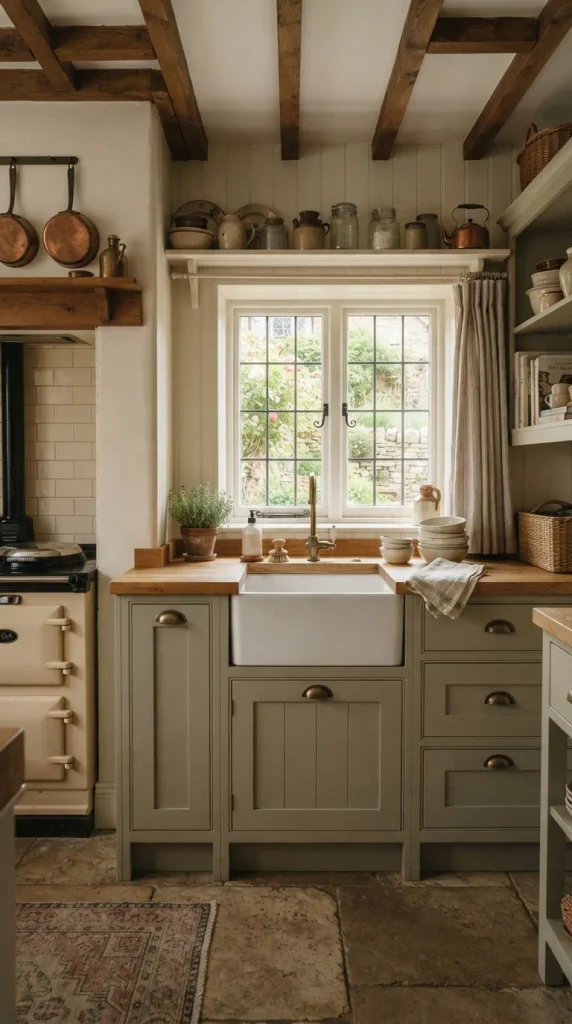
Wall paneling can give a modern kitchen some of the architectural detail often found in traditional cottages. Beadboard and tongue-and-groove boards are particularly effective behind a sink, along a breakfast nook, or across the lower half of a wall. Paint them in warm white, pale sage, muted blue, or another soft heritage-inspired color to complement the cabinetry. The vertical lines add texture without requiring complicated decoration, while the paneling can visually connect different areas of an open-plan kitchen. For a convincing cottage appearance, avoid overly glossy paint and consider a durable low-sheen finish that maintains a soft, understated appearance.
16. Style a Small Cottage Kitchen Island
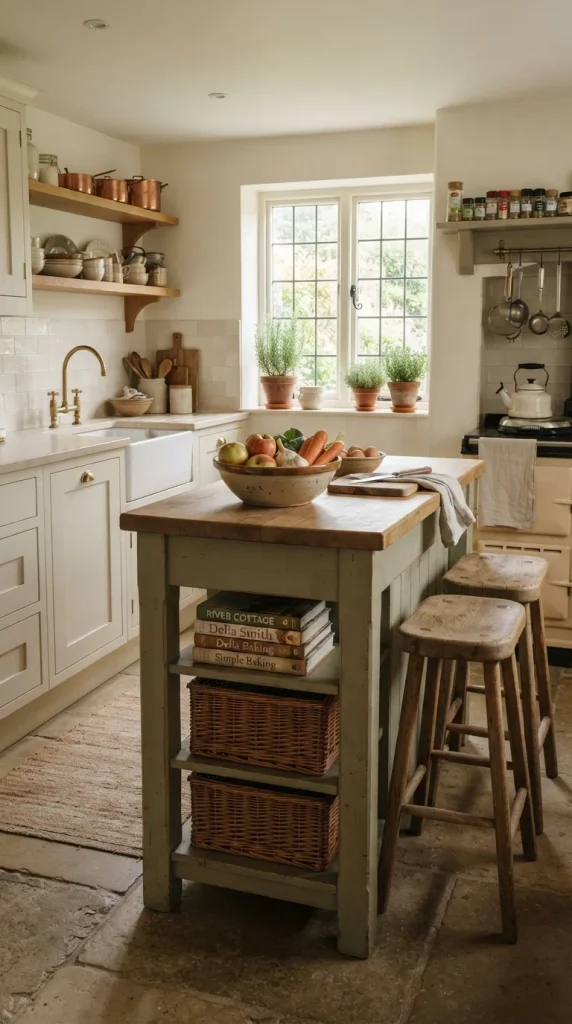
A kitchen island does not need to be enormous to become a charming centerpiece. In a smaller English cottage-inspired space, choose a narrow freestanding island or converted worktable that provides additional preparation space and storage. A painted base paired with a timber top creates an especially welcoming combination. Open shelving underneath can hold baskets, cookbooks, or frequently used cookware. Consider furniture-style legs or paneled sides instead of a completely seamless contemporary design. The island should feel as though it belongs to the architecture rather than having been inserted afterward. A few stools, a wooden chopping board, and a ceramic bowl of seasonal produce can finish the arrangement.
17. Choose Aged Brass Hardware
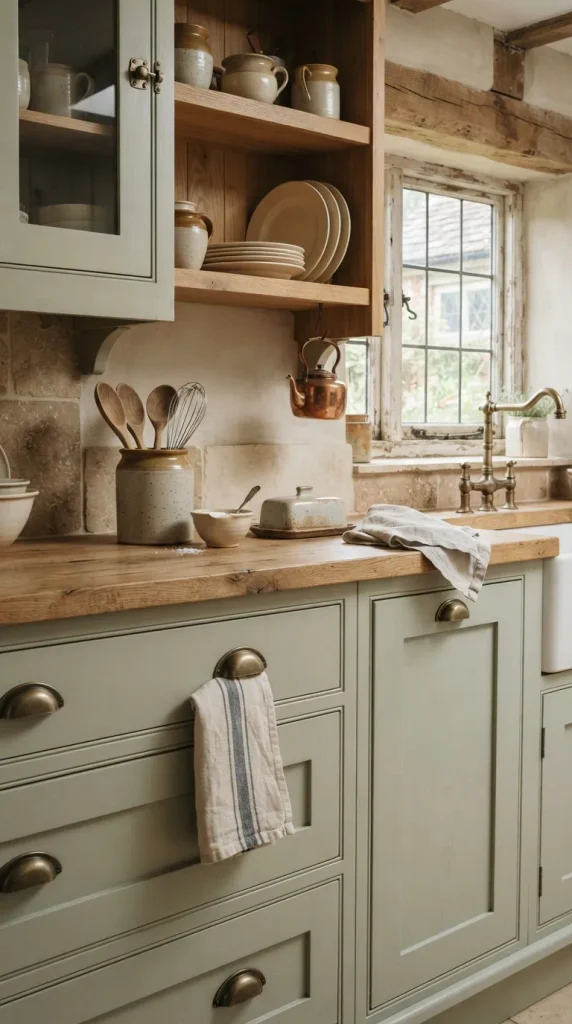
Small hardware changes can dramatically alter the character of kitchen cabinetry. Aged brass knobs, cup pulls, latches, and handles provide the warm, slightly timeworn quality that suits English cottage interiors. Look for finishes with a muted appearance rather than highly polished yellow brass if you want a more authentic effect. Pair the hardware with painted Shaker cabinets in cream, sage, gray-green, or dusty blue. Mixing a few related hardware shapes can also make the kitchen feel collected over time, although maintaining a common finish helps keep the room cohesive. These details are inexpensive compared with a full renovation and can give existing cabinetry a completely different personality.
Also Read: 23 Lemon Kitchen Decor Ideas for a Bright Kitchen
18. Add Wicker and Natural-Fiber Storage Baskets
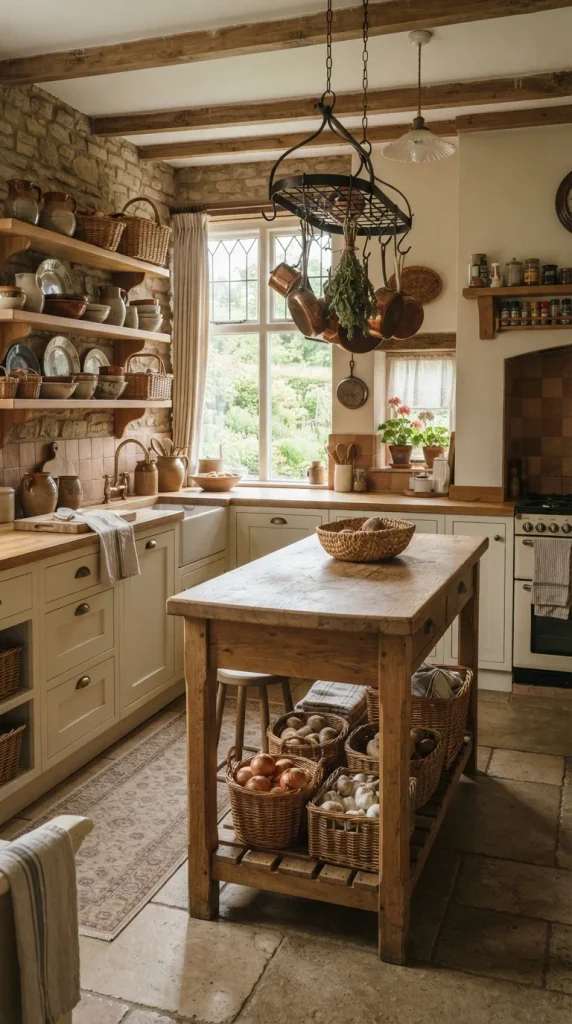
Wicker baskets introduce softness and organic texture while solving practical storage problems. Use them on open shelving, underneath a freestanding island, inside a pantry, or beside a dresser to store tea towels, vegetables, cookbooks, and everyday supplies. Choose baskets in natural rattan, seagrass, willow, or another understated fiber rather than highly polished synthetic materials. Their warm texture complements timber surfaces and painted cabinetry particularly well. A mixture of shallow and deep baskets can also prevent the kitchen from looking too uniform. Because baskets naturally conceal visual clutter, they are especially useful in cottage kitchens where open shelving and freestanding furniture are part of the overall design.
19. Use a Deep Farmhouse-Inspired Color Palette
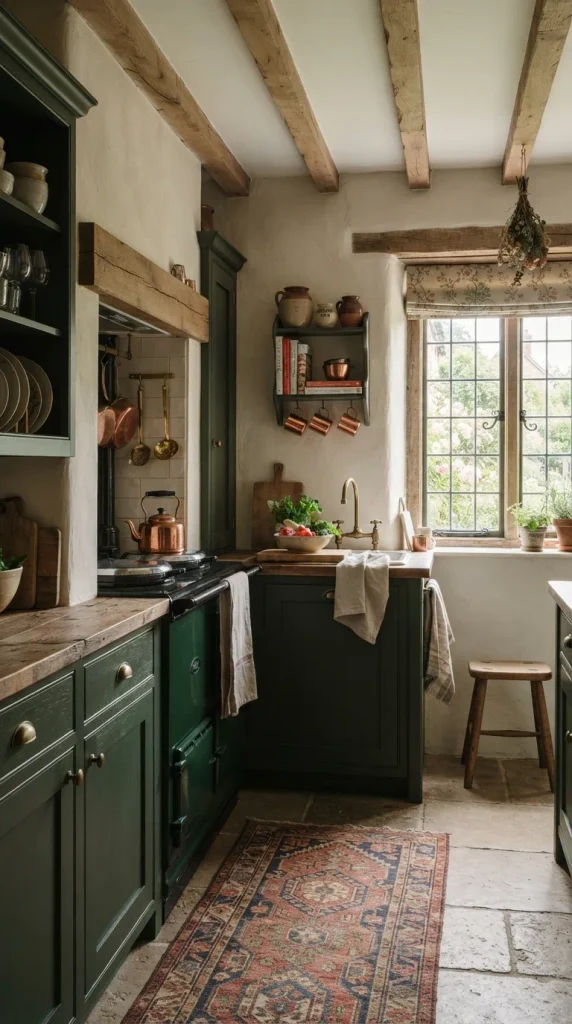
While pale kitchens are classic, deeper colors can create a wonderfully intimate English cottage atmosphere. Consider cabinetry in forest green, muted navy, charcoal blue, or rich olive, then balance the darker surfaces with creamy walls and natural timber. Brass hardware and warm lighting prevent the palette from becoming cold. If the kitchen receives limited daylight, reserve deeper colors for lower cabinets or an island rather than covering every surface. A dark painted dresser or range surround can also provide a dramatic focal point without overwhelming a small room. The result should feel cozy and grounded rather than formal, with natural materials softening the stronger colors.
20. Display Vintage Crockery and Mismatched Ceramics
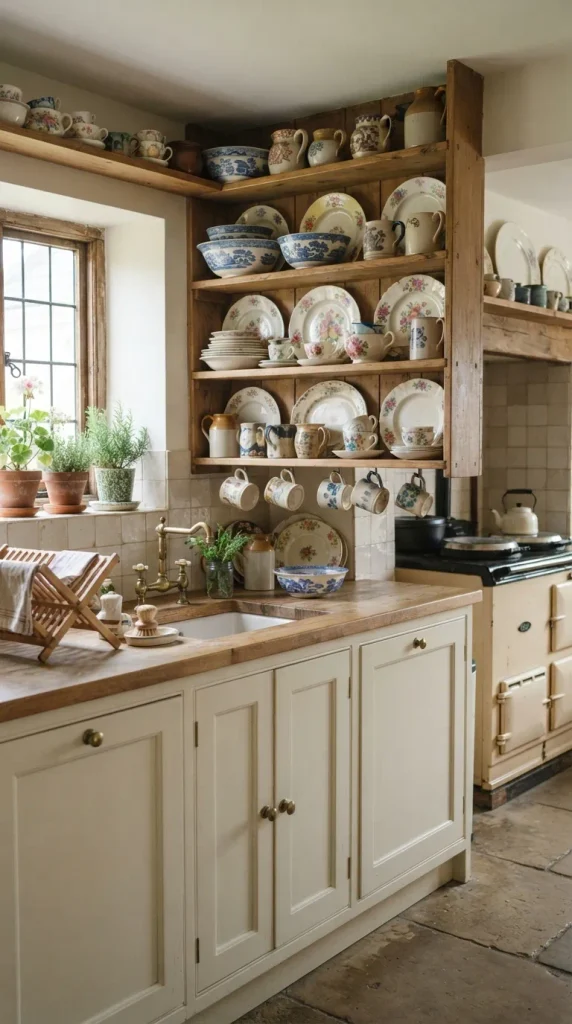
A collection of mismatched crockery can make an English cottage kitchen feel wonderfully personal. Search for plates, bowls, cups, jugs, and serving dishes with related colors but different patterns and shapes. Floral ceramics, simple transferware, stoneware, and softly colored pottery can coexist when the overall palette remains harmonious. Display favorite pieces on open shelves, inside a glass-front cabinet, or on a traditional dresser. Avoid arranging every item too precisely; a slightly casual presentation feels more authentic. The beauty of this approach is that the collection can grow gradually, allowing meaningful or secondhand pieces to become part of the kitchen’s story rather than purchasing everything as a matching set.
21. Bring in a Freestanding Wooden Table
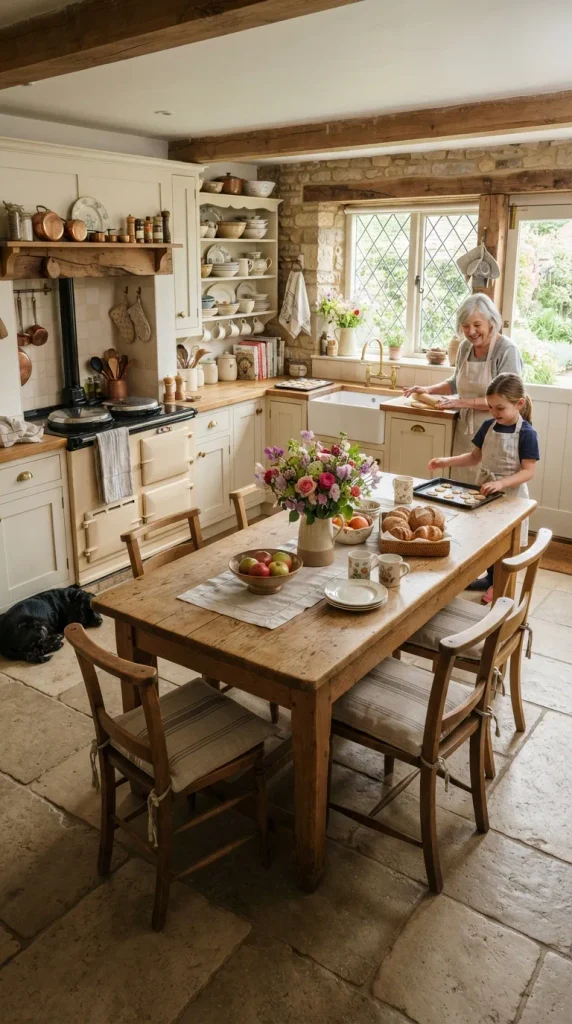
A traditional wooden table can transform a kitchen from a purely functional workspace into a room designed for gathering. Choose a solid oak, pine, or painted farmhouse table with visible grain and a comfortable, uncomplicated shape. Position it centrally if space allows, or use a smaller version beside a window or breakfast nook. Surround it with simple wooden or painted chairs, and soften the arrangement with linen cushions or a small patterned runner. The table should show some natural character rather than appearing overly pristine. Scratches, variations in color, and gentle signs of use can enhance the relaxed atmosphere that makes English cottage interiors feel genuinely welcoming.
22. Frame the Windows With Linen Café Curtains
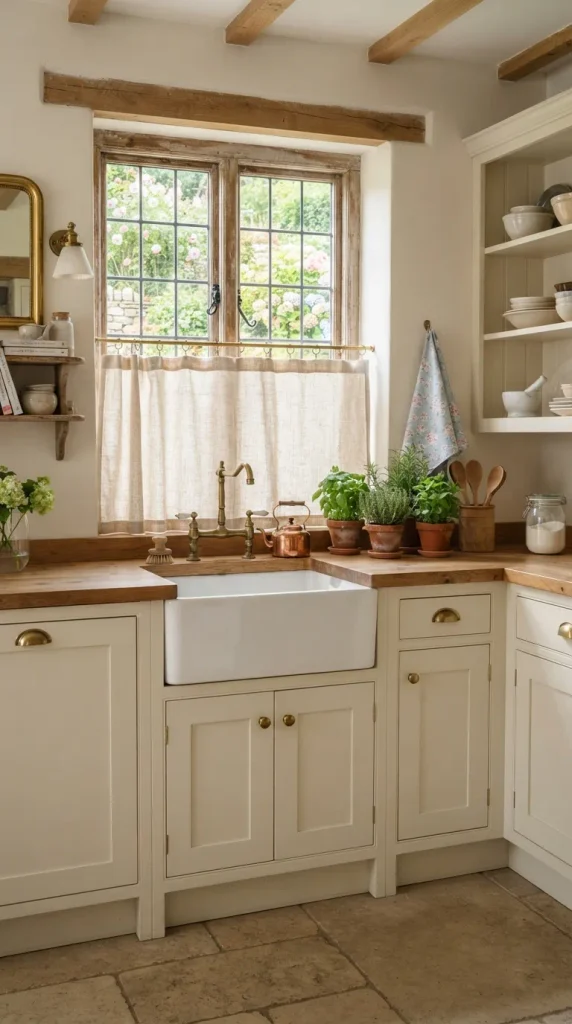
Linen café curtains provide privacy while allowing natural light to remain an important part of the room. They are particularly effective in kitchens with farmhouse sinks, traditional windows, or views toward a garden. Choose natural linen, ticking stripes, tiny checks, or understated floral patterns in colors that echo the cabinetry. Mount the curtain at the middle or lower portion of the window rather than covering the entire frame. This treatment feels casual and traditional while avoiding the heaviness of full-length curtains. Pair the fabric with a simple wooden or aged-metal curtain rod, and keep the surrounding window area relatively uncluttered so daylight remains the main feature.
23. Decorate With Seasonal Produce and Flowers
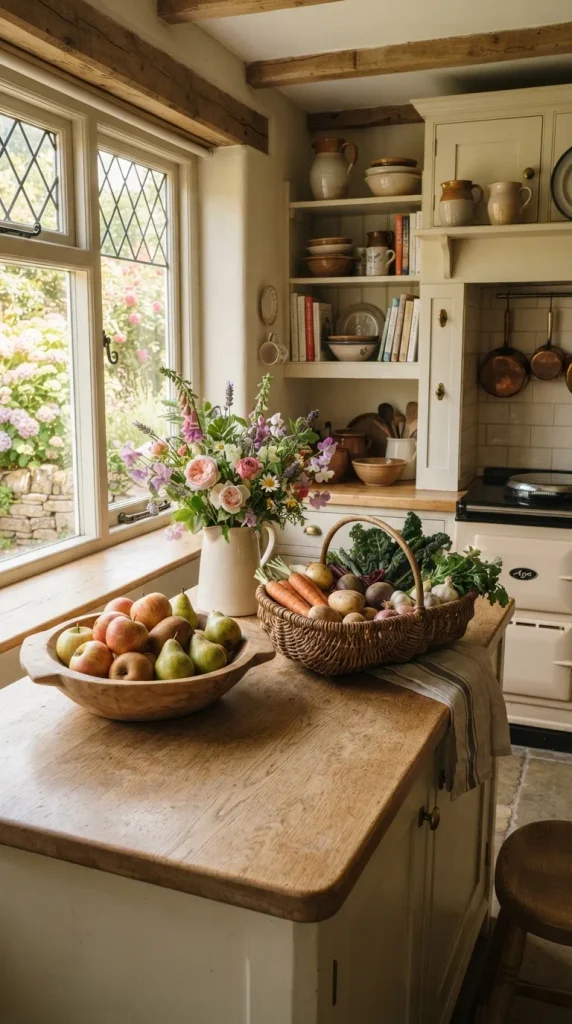
One of the easiest ways to make a cottage kitchen feel alive is to use food and flowers as part of the everyday decor. Place apples, pears, lemons, onions, or freshly harvested vegetables in a wooden bowl or woven basket where they are easy to reach. Add a small jug filled with garden flowers, branches, or simple greenery when available. The arrangement should look natural rather than overly styled, with seasonal variation keeping the room fresh throughout the year. This approach works particularly well with neutral kitchens because organic colors introduce gentle visual contrast. It also reinforces the connection between English cottage interiors and the garden, pantry, and rhythms of home cooking.
24. Combine Old and New for a Collected Cottage Look
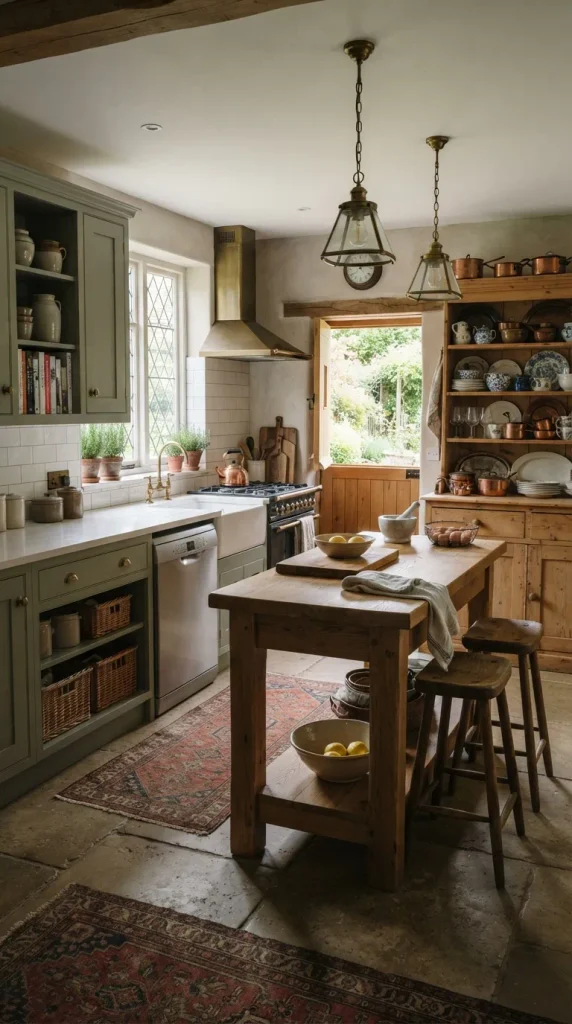
The most convincing English cottage kitchens rarely look as though every item was purchased at the same time. Combine modern appliances and practical storage with vintage furniture, handmade ceramics, antique-inspired lighting, and naturally aged materials. A contemporary refrigerator can sit comfortably beside a painted dresser, while modern lighting can illuminate a reclaimed timber island. The key is maintaining a consistent sense of warmth through materials, colors, and finishes. Avoid filling the room with artificial vintage details; instead, choose a few genuine or convincingly crafted pieces and allow them to stand out. This layered approach creates a kitchen that feels personal, functional, and comfortably connected to the past.
Conclusion
An English cottage kitchen works because it combines comfort, practicality, natural materials, and timeless character rather than depending on a single decorative trend. Painted Shaker cabinets, farmhouse sinks, warm timber, vintage crockery, floral textiles, handmade tiles, wicker baskets, and freestanding furniture can all contribute to the look, but the most important element is how naturally those details work together. Choose pieces that are useful as well as beautiful, allow materials to show their character, and avoid making every surface look perfectly coordinated.
Whether you are renovating a complete kitchen or simply searching for affordable ways to introduce cottage charm, start with a few strong elements and build gradually. A painted cabinet, vintage dresser, linen curtain, wooden shelf, or collection of favorite ceramics can make a surprisingly significant difference. By combining old-world details with modern functionality, you can create a kitchen that feels warm and authentic while remaining practical for everyday life.


