

16 Kitchens with Checkered Floors Ideas
Checkerboard patterns have grounded kitchen design for centuries. They offer a rhythmic visual break that balances cabinetry and heavy appliances. It’s a classic choice that works because it creates a clear focal point while hiding minor scuffs better than solid-colored tiles. When browsing through kitchens with checkered floors ideas, you’ll notice how the scale of the tile completely changes the room’s perceived size and energy.
Small tiles feel vintage and intimate. Oversized slabs lean toward a modern, architectural look. Choosing the right material—be it marble, linoleum, or porcelain—is the difference between a high-maintenance showpiece and a durable family hub. This approach allows you to inject personality without committing to a single, static color palette for the entire room.
1. Polished Black and White Marble

This look uses high-shine Nero Marquina and Carrara marble tiles, typically in 12-inch squares. The natural veining in the stone softens the harsh contrast between the deep black and bright white. It suits high-end traditional kitchens with white cabinetry and brass hardware. The reflective surface bounces light around the room, making even smaller spaces feel airy.
Also Read: 16 Kitchens With Light Wood Cabinets Ideas
Seal your marble tiles immediately after installation and every six months thereafter to prevent acidic spills like lemon juice or vinegar from etching the surface.
2. Matte Charcoal and Light Gray Slate
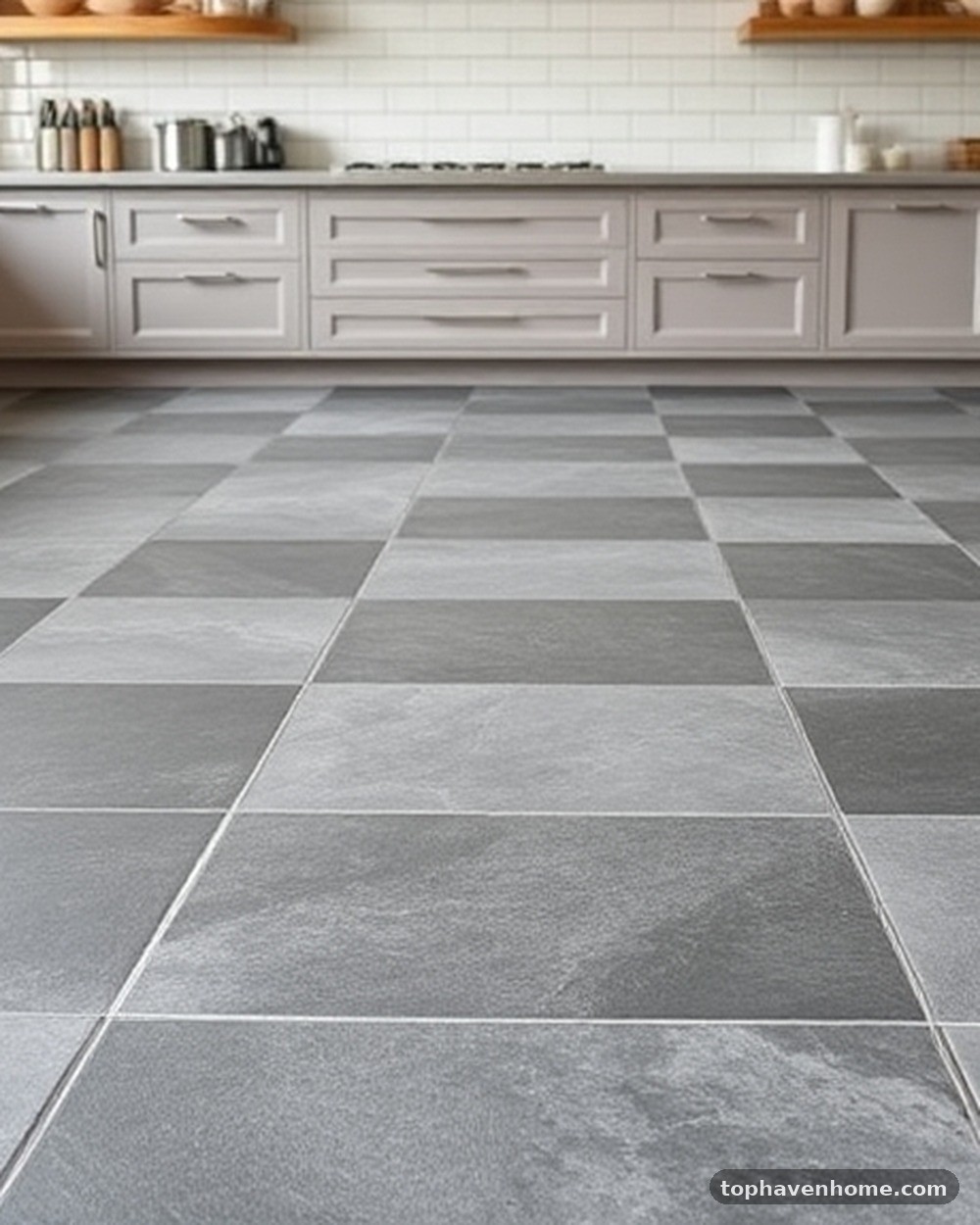
Slate provides a textured, slip-resistant surface that feels more grounded than polished stone. Using charcoal and dove gray tiles creates a softer gradient than black and white. It looks best in rustic or industrial settings with exposed brick or dark wood accents. The matte finish is excellent for high-traffic areas because it doesn’t show footprints or dust easily.
Choose a dark grout color like pewter or charcoal to hide dirt and maintain the moody aesthetic of the slate tiles over time.
3. Cream and Espresso Porcelain
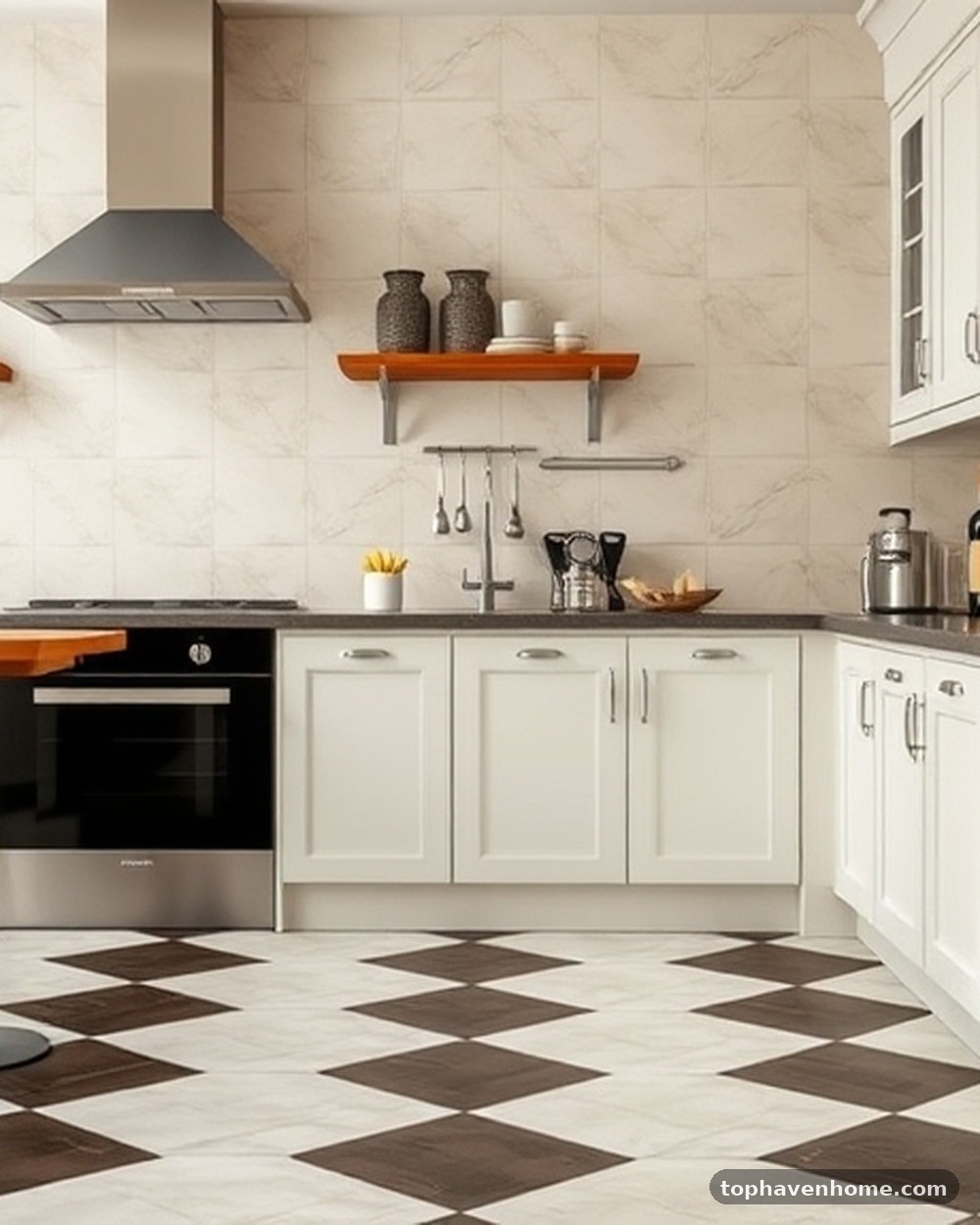
Porcelain tiles in cream and deep espresso brown offer a warmer alternative to monochrome. These tiles are incredibly durable and resistant to moisture. The combination works well in Mediterranean or traditional European-style kitchens. It pairs naturally with warm wood tones and oil-rubbed bronze fixtures. The low-contrast palette feels cozy rather than clinical.
Select a rectified porcelain tile with straight edges to allow for very thin grout lines, which creates a more sophisticated and continuous look.
4. Tumbled Travertine in Beige and Ivory

Travertine tiles have pitted surfaces and rounded edges that suggest age and history. Using two slightly different shades of beige and ivory creates a subtle, tonal checkerboard. It’s a quiet pattern that doesn’t compete with busy granite countertops. This style fits perfectly in a French Country or Tuscan-inspired kitchen. The texture provides natural grip underfoot.
Fill the natural pits in the travertine with grout during installation to prevent food crumbs and moisture from getting trapped in the stone’s surface.
5. Sage Green and White Ceramic
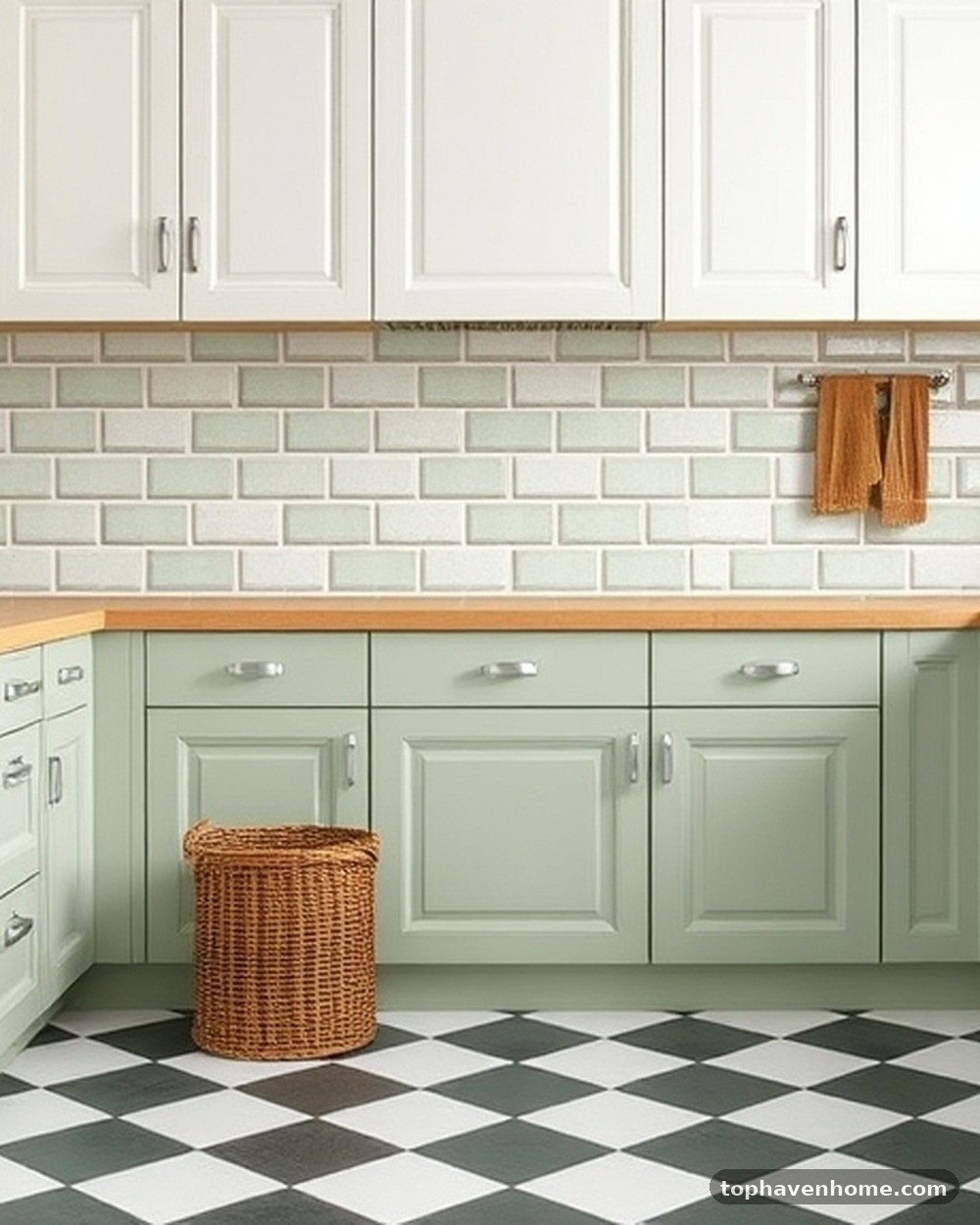
Muted sage green paired with a creamy white creates a soft, organic feel. These ceramic tiles often have a slightly undulating surface that catches the light unevenly. It works exceptionally well with natural wood accents and farmhouse sinks. The color palette feels fresh and calming. It’s a great way to bring a hint of nature indoors without using actual plants.
Order a few sample tiles in different shades of green to see how they look against your cabinet paint during different times of the day.
6. Terracotta and Cream Clay Tiles
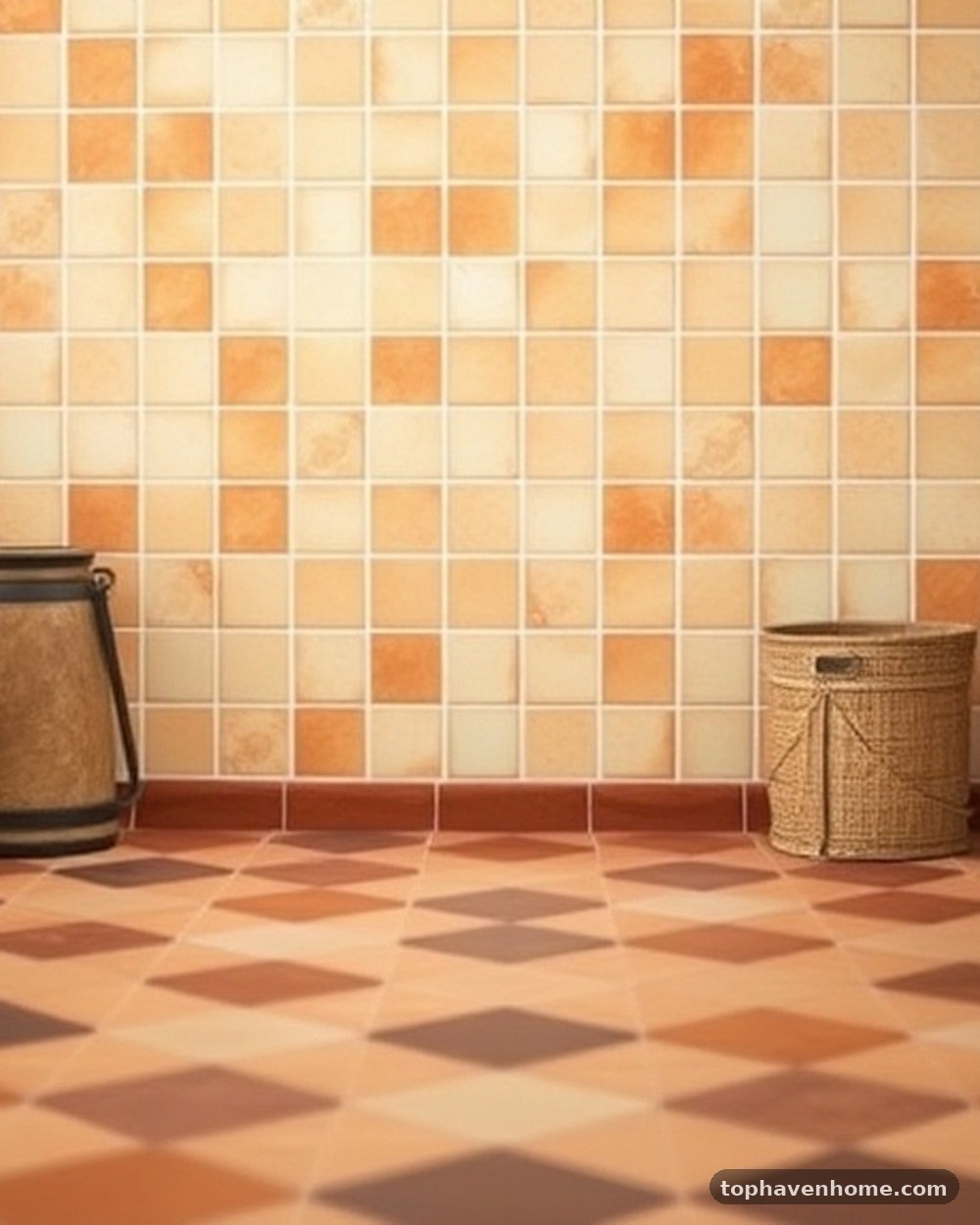
Handmade saltillo or terracotta tiles paired with cream squares offer a southwestern or Spanish colonial vibe. The variation in the clay means no two tiles are exactly the same color. This adds a rich, artisanal layer to the kitchen. It looks striking against teal or navy blue cabinets. The warmth of the clay makes the kitchen feel like the heart of the home.
Ensure you use a high-quality penetrating sealer on terracotta, as the porous clay will absorb liquids and stain almost instantly if left unprotected.
7. Navy Blue and Soft Gray Cement
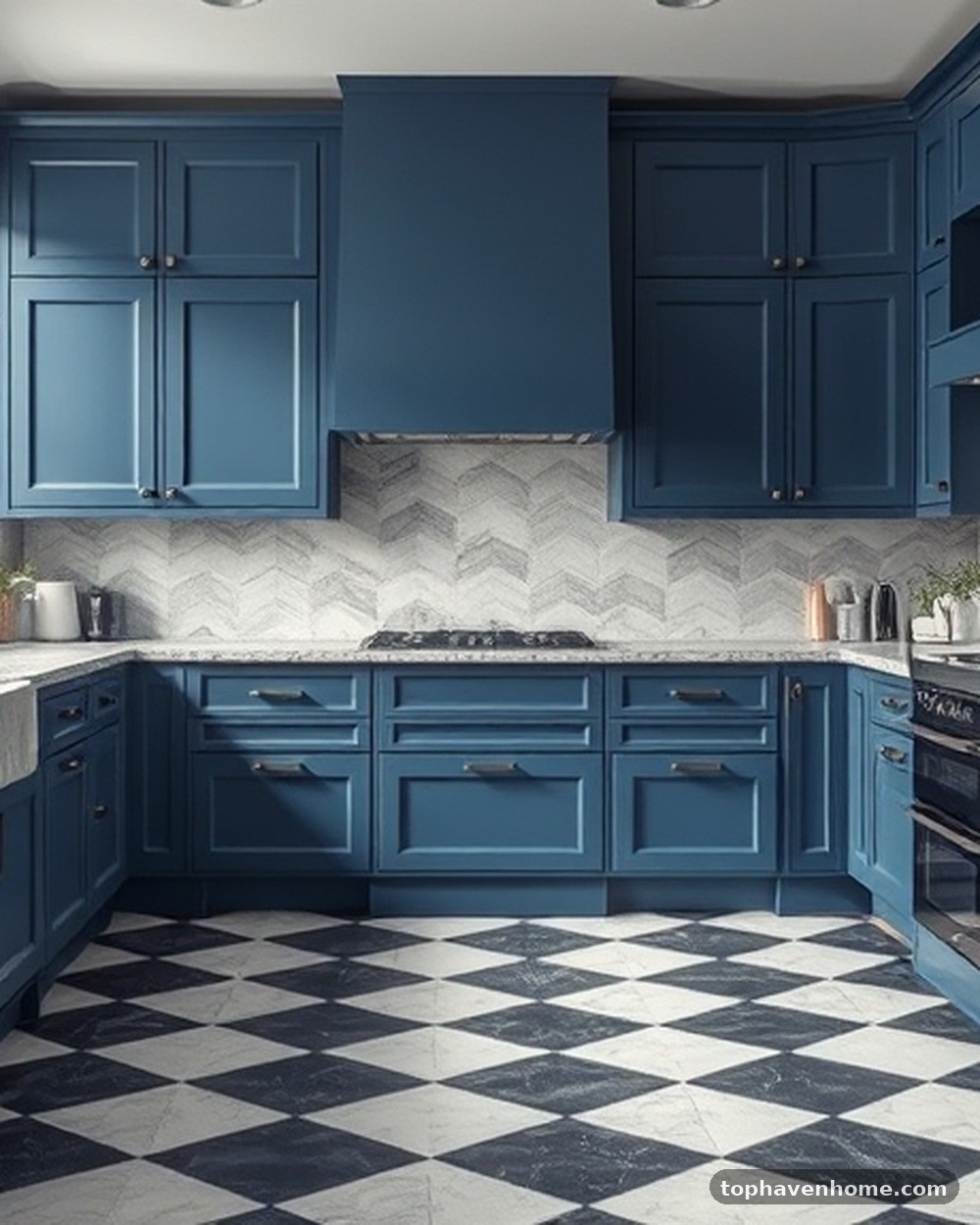
Encaustic cement tiles in navy and gray provide a matte, velvety finish that feels modern and bold. The deep blue adds a sense of luxury, while the gray keeps the room from feeling too dark. This combination is popular in coastal or transitional homes. The tiles are thick and provide a solid, substantial feel underfoot. They develop a beautiful patina over several years.
Check the weight limits of your subfloor before choosing cement tiles, as they are much heavier than standard ceramic or vinyl options.
Also Read: 16 Teal and White Kitchen Ideas for a Fresh Look
Also Read: 27 Kitchen Floor Tile Ideas for Stylish Modern Kitchens
8. Mustard Yellow and White Vinyl
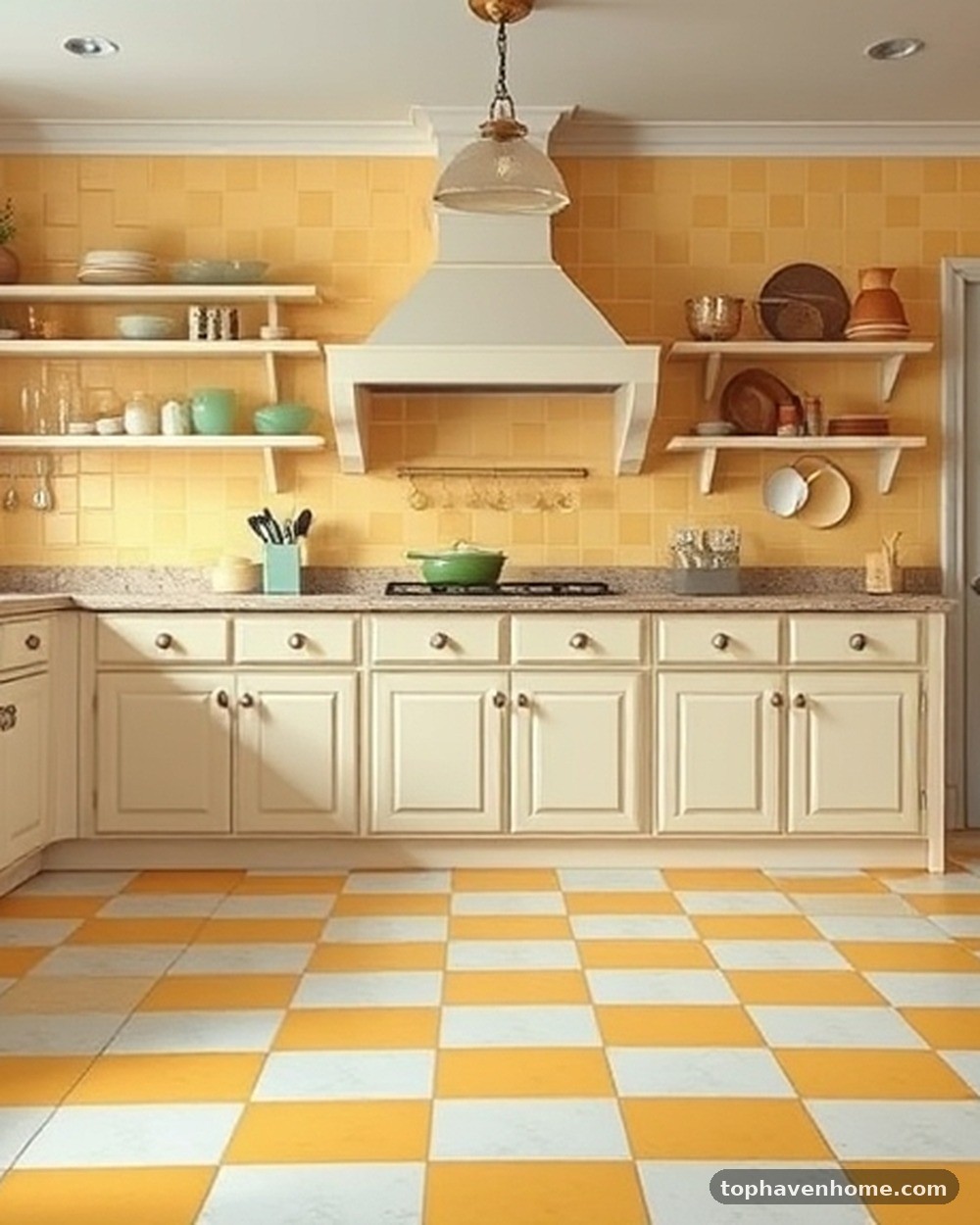
For a retro, mid-century modern aesthetic, mustard yellow and white vinyl tiles are a budget-friendly choice. The pop of yellow is cheerful and energizing. This material is soft underfoot and easy to clean with a damp mop. It’s perfect for a playful, eclectic kitchen with vintage appliances. The installation is often a simple peel-and-stick process for DIY enthusiasts.
Apply a floor primer to your subfloor before laying vinyl tiles to ensure the adhesive bonds permanently and the corners don’t peel up later.
9. Diagonal Diamond Orientation
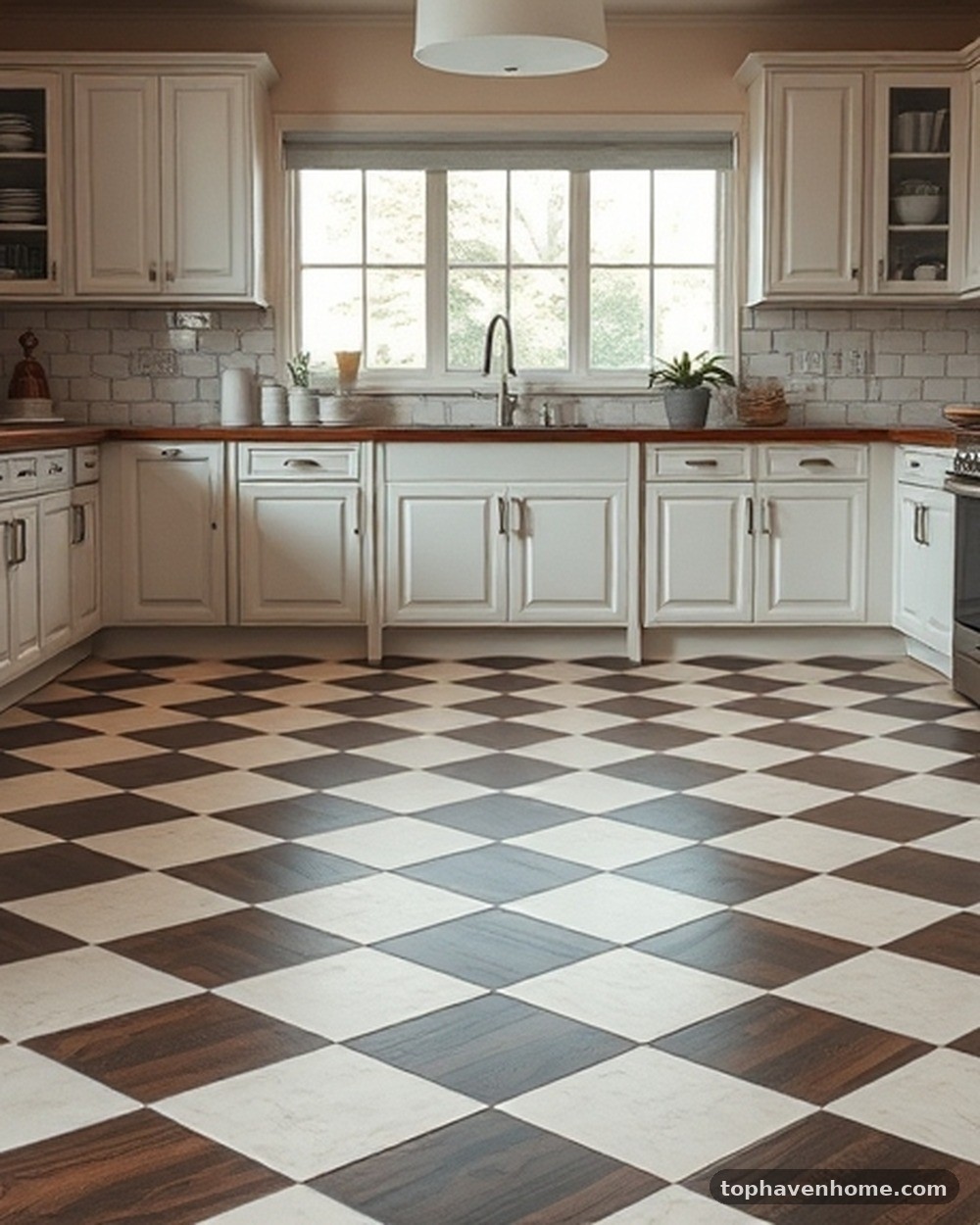
Rotating standard square tiles 45 degrees creates a diamond effect that visually pushes the walls outward. This layout uses 12-inch ceramic tiles in charcoal and white. It breaks up the boxy feel of a galley kitchen. The lines draw the eye toward the end of the room. This makes a narrow space feel significantly wider than it actually is.
Use a chalk line to mark the center of the room and start your layout there to ensure the cut tiles at the edges are symmetrical.
10. Oversized 24-Inch Large Format
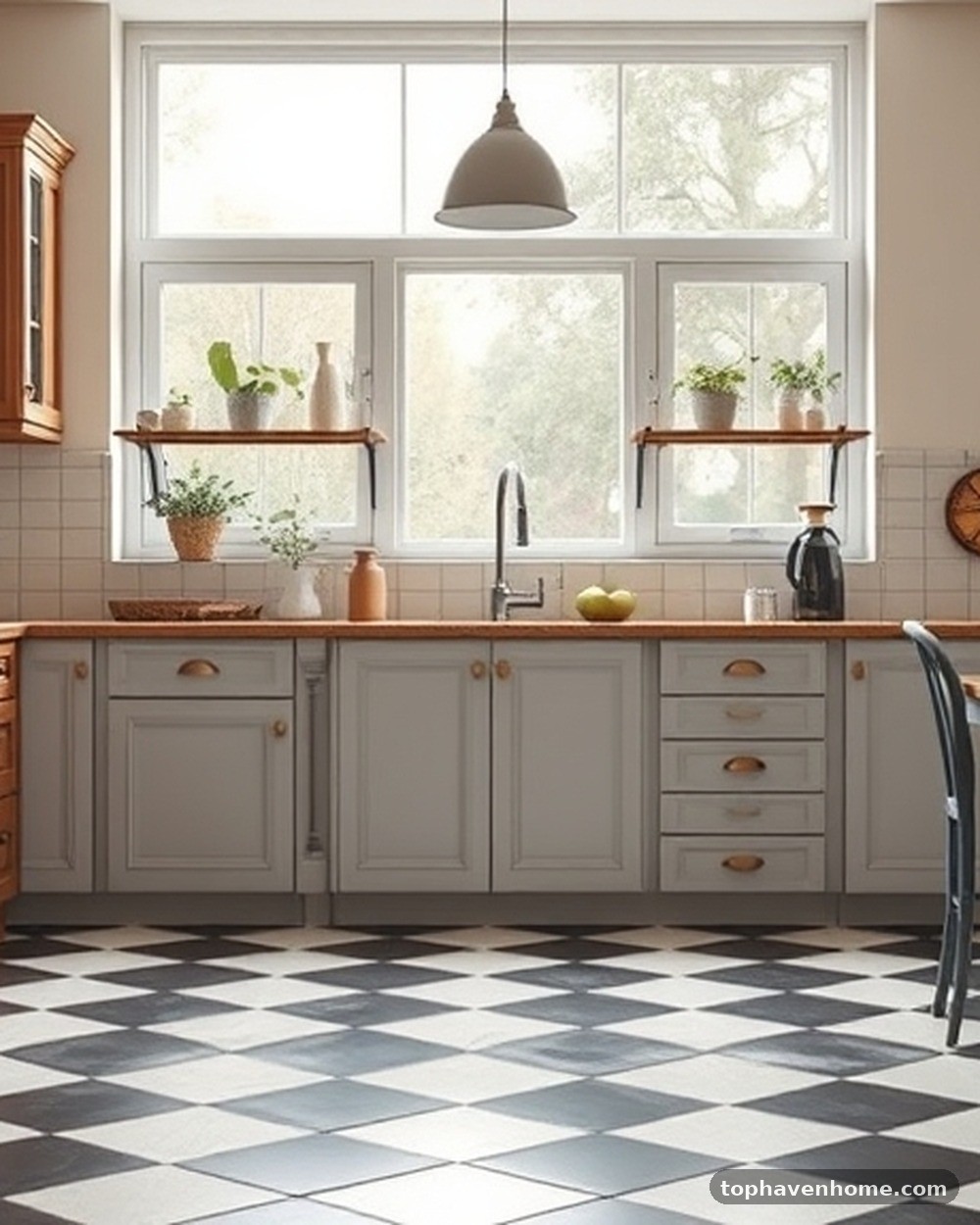
Using massive 24-inch tiles reduces the number of grout lines and makes a large kitchen feel even more expansive. This works best with light colors like soft gray and white. It creates a clean, architectural look that suits minimalist designs. The scale is unexpected and modern. It turns the floor into a bold graphic statement rather than just a background element.
Invest in a professional tile cutter or rent a large wet saw, as standard DIY tools often cannot handle the thickness of large-format porcelain.
11. Bordered Checkerboard Inlay
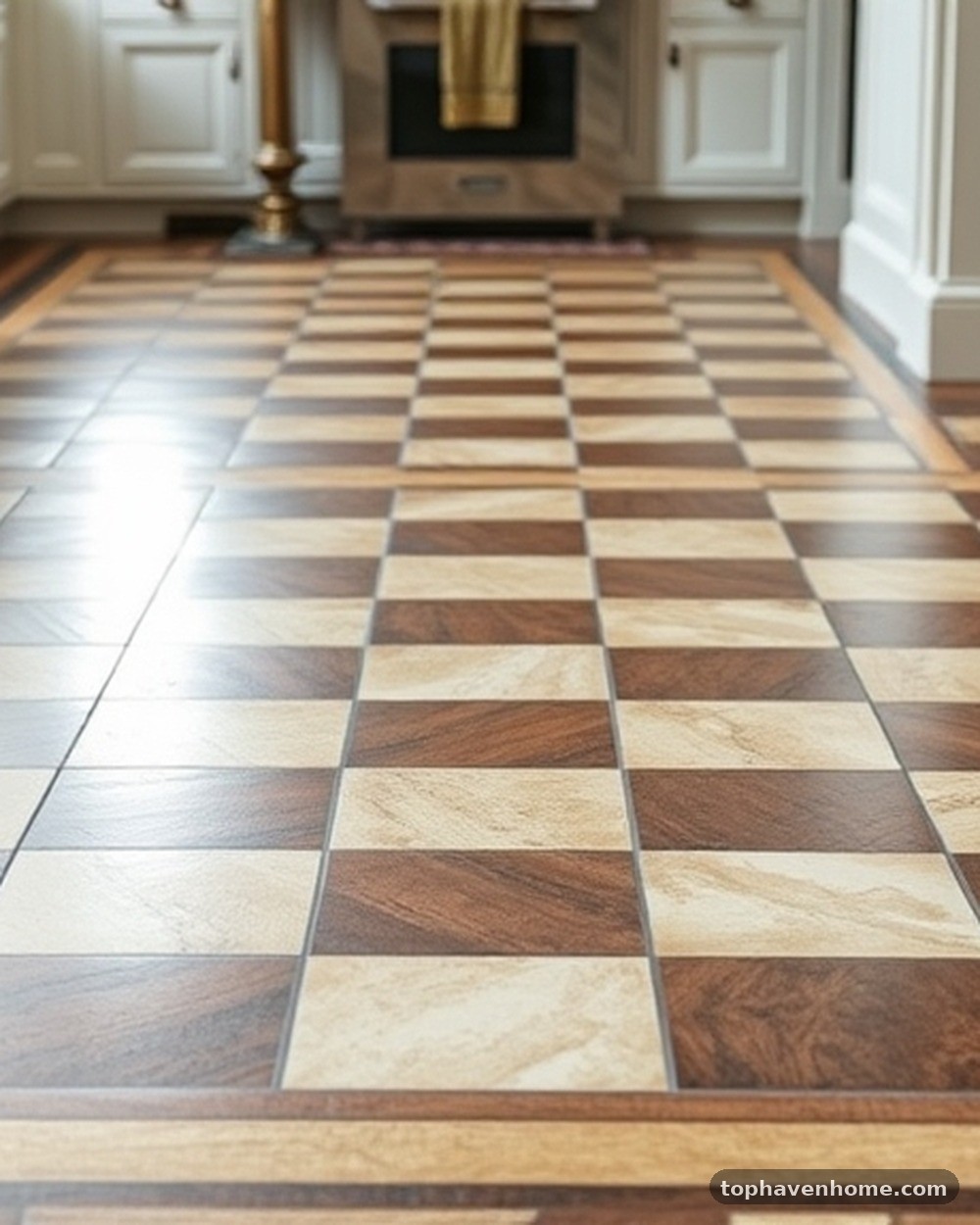
This technique involves surrounding a central checkerboard pattern with a solid-colored tile border. It acts like a permanent area rug under a kitchen island or dining table. Use 6-inch tiles for the center and long, rectangular tiles for the perimeter. It defines specific zones in an open-concept living area. The look is structured and highly custom.
Plan your cabinet installation first so you can center the “rug” perfectly around your island or between your counters for a symmetrical finish.
12. Offset Staggered Checkerboard
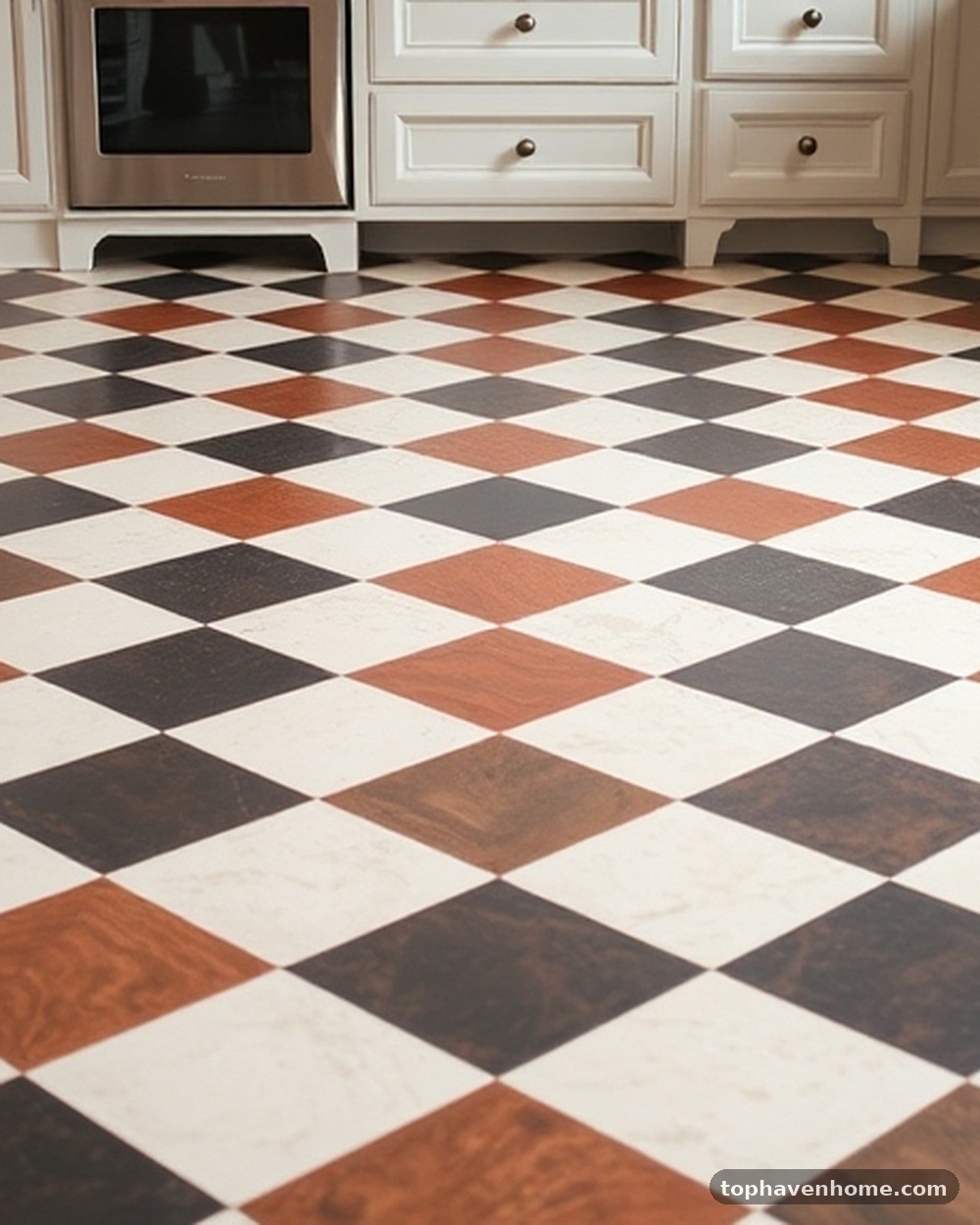
Instead of lining up the corners, the tiles are shifted so the joints are centered on the adjacent tile. This is also known as a running bond or brick pattern. Using black and white tiles in this layout creates a more movement-heavy, energetic floor. It’s a subtle twist on the classic grid. It works well to disguise a room that isn’t perfectly square.
Dry-lay at least three rows of tiles before applying mortar to ensure the offset looks consistent and you don’t end up with tiny slivers at the wall.
Also Read: 16 Kitchen Countertop Ideas to Upgrade Your Space
13. Reclaimed Wood and Painted Checks
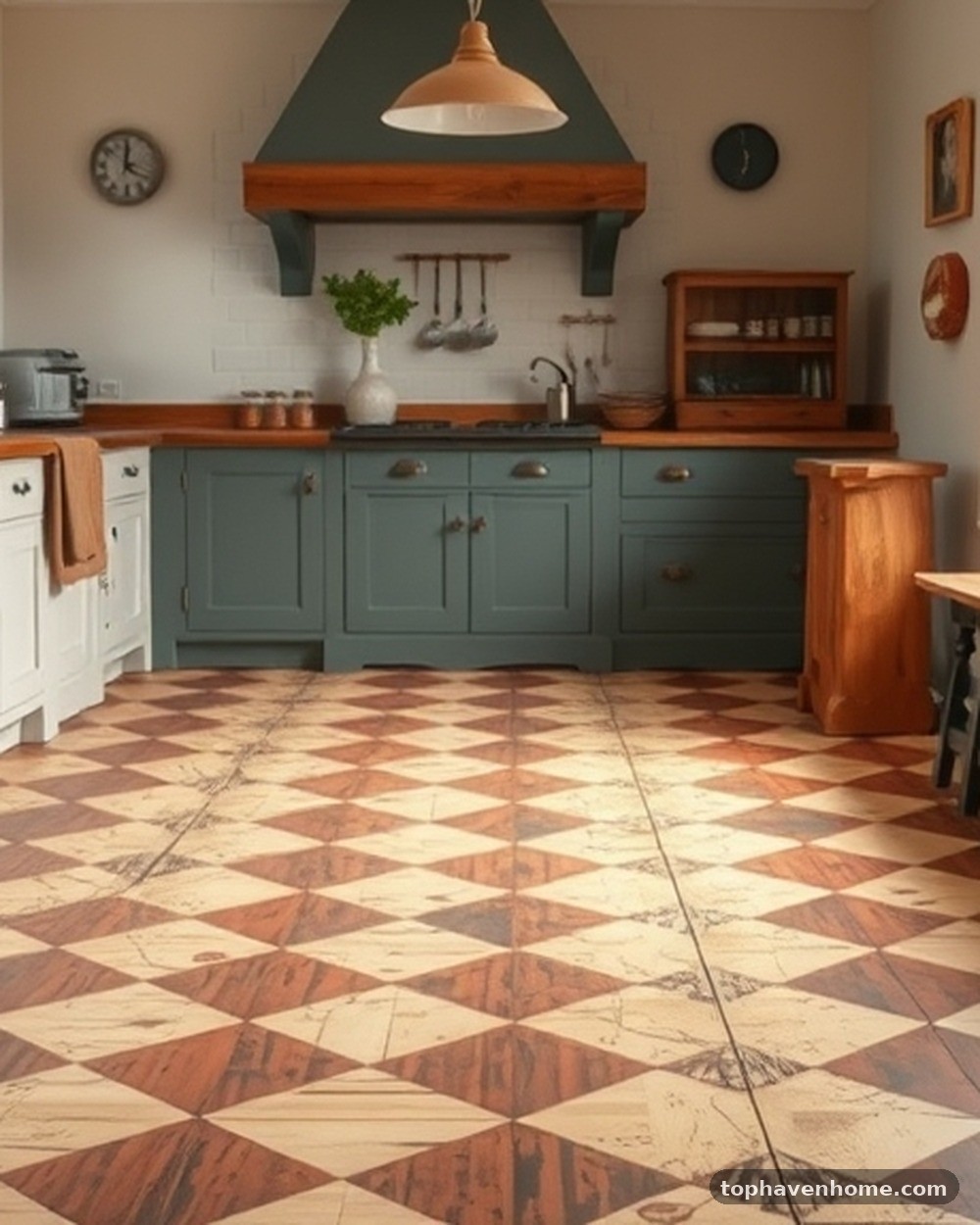
This rustic approach involves painting a checkerboard pattern directly onto wide-plank oak or pine flooring. Using a translucent gray stain for the “dark” squares allows the natural wood grain to show through. It pairs beautifully with copper pots and open shelving. The finish looks intentionally worn. This hides the inevitable scratches of a busy household.
Sand the wood thoroughly and use a high-quality painter’s tape to crisp up the edges of the squares before applying your floor-grade paint or stain.
14. Terrazzo Multi-Tone Squares

Terrazzo tiles featuring chips of marble, quartz, and glass offer a speckled texture within the checkerboard grid. You might pair a white-based terrazzo with a gray-based one. The flecks of color within the tiles help tie together different elements in the kitchen, like a backsplash or countertop. It’s an incredibly durable and heat-resistant option. The visual depth is stunning.
Pick a terrazzo tile that includes a color found in your cabinetry to create a cohesive look that feels intentional and professionally designed.
15. High-Gloss Checkerboard Linoleum

Modern linoleum is an eco-friendly material made from linseed oil and wood flour. A high-gloss finish in black and white gives a 1950s diner feel that is surprisingly comfortable to stand on for long periods. It is naturally antimicrobial and water-resistant. The surface is smooth, making it one of the easiest floors to sanitize. It’s a great choice for families with pets.
Use a specialized linoleum floor polish once a year to maintain the high-gloss shine and protect the surface from scuffs and scratches.
16. Distressed Antique Belgian Bluestone

Authentic bluestone paired with a lighter limestone creates a floor that looks hundreds of years old. The edges are often chipped or “pillowed” to enhance the antique feel. This works best in large, traditional kitchens with high ceilings. The dark blue-gray of the stone is sophisticated and timeless. It provides a cool temperature underfoot, which is pleasant in warmer climates.
Apply a stone enhancer after installation if you want to deepen the blue tones and make the contrast between the two stones more dramatic.
Finalizing Your Kitchen Design
The right flooring serves as the anchor for every other design choice in the room. By studying various kitchens with checkered floors ideas, you’ll find a balance between historical charm and modern utility that suits your specific lifestyle. Whether you prefer the sharp contrast of polished stone or the soft warmth of painted wood, the grid pattern provides a structured foundation that simplifies the rest of your decorating process.
Start by measuring your square footage and sketching the layout to see how the pattern hits the baseboards. Look for materials that match your tolerance for maintenance, as some stones require more care than synthetic alternatives. Once the floor is set, the rest of the kitchen’s personality will naturally fall into place around it. Feel free to experiment with samples in your own light before making the final commitment to a specific material.


