

25 Interior Design Ideas for a Stylish Home
Your home should feel like a reflection of your personality while still being comfortable, practical, and visually balanced. The right interior design choices can completely change how a room looks and feels, whether you are decorating a compact apartment, refreshing a family home, or creating a more polished space from scratch. These 25 interior design ideas explore a range of timeless styles, clever layouts, colors, textures, furniture choices, and decorative details that can work across different rooms and budgets.
Good interior design is not simply about buying beautiful furniture. It involves understanding proportion, lighting, color harmony, circulation, storage, texture, and the relationship between individual elements. A well-designed room can make a small space feel larger, give a large room a more intimate atmosphere, or make everyday routines easier.
From warm minimalist interiors and statement walls to layered lighting and nature-inspired spaces, these ideas provide practical inspiration for creating rooms that feel intentional rather than overly decorated. Each concept can also be adapted to modern, traditional, contemporary, Scandinavian, transitional, or eclectic homes, making these interior decorating ideas useful for a wide variety of personal styles.
1. Create a Warm Neutral Living Room
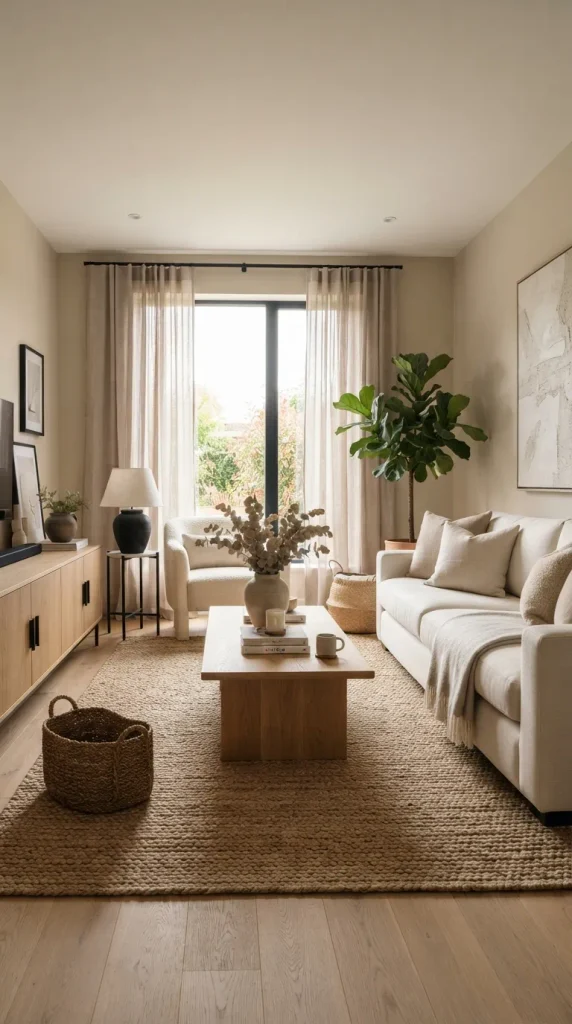
A warm neutral living room offers one of the most versatile approaches to modern interior design because it creates an inviting backdrop without overwhelming the space. Instead of relying on plain white, combine shades such as cream, beige, taupe, warm gray, and soft brown to introduce subtle visual depth. A comfortable sofa can become the foundation, while a textured area rug, linen curtains, woven baskets, and natural wood furniture add layers of interest. Use black or dark bronze accents sparingly to provide definition. Natural light should remain unobstructed whenever possible, while table lamps and floor lamps can maintain the cozy atmosphere after sunset. The result is sophisticated, relaxed, and easy to update seasonally.
2. Add an Accent Wall With Sophisticated Color
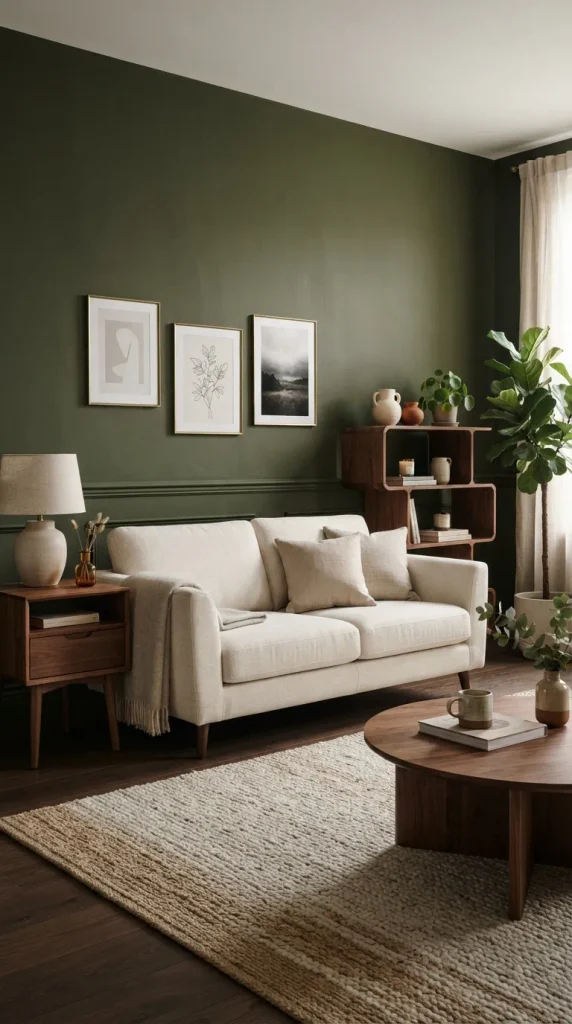
An accent wall can give an ordinary room a strong architectural focal point without requiring a complete redesign. Choose a wall that naturally attracts attention, such as the surface behind a bed, sofa, fireplace, or dining table. Deep olive green, muted navy, terracotta, charcoal, dusty blue, or warm clay can create considerably more character than a completely neutral palette. For a refined appearance, repeat small touches of the accent color through cushions, artwork, ceramics, or decorative objects elsewhere in the room. Paint is not the only option; wallpaper, limewash, wood slats, textured plaster, or panel molding can provide additional dimension. The key is to make the feature wall feel connected to the rest of the interior rather than isolated.
3. Use Layered Lighting for a Designer Look

Lighting has a powerful influence on interior atmosphere, yet it is often treated as an afterthought. A more sophisticated approach combines three layers: ambient lighting for overall illumination, task lighting for specific activities, and accent lighting for visual emphasis. A central pendant or ceiling fixture can establish the general glow, while floor lamps, table lamps, under-cabinet lights, and wall sconces provide functional illumination at different heights. Accent lights can highlight artwork, architectural details, bookshelves, or plants. Choose warm-toned bulbs for living and bedroom spaces where a relaxed atmosphere is desirable. Dimmers are especially useful because they allow one room to transition from bright daytime functionality to a softer evening environment without changing the furniture or decor.
4. Bring Natural Materials Into Modern Interiors
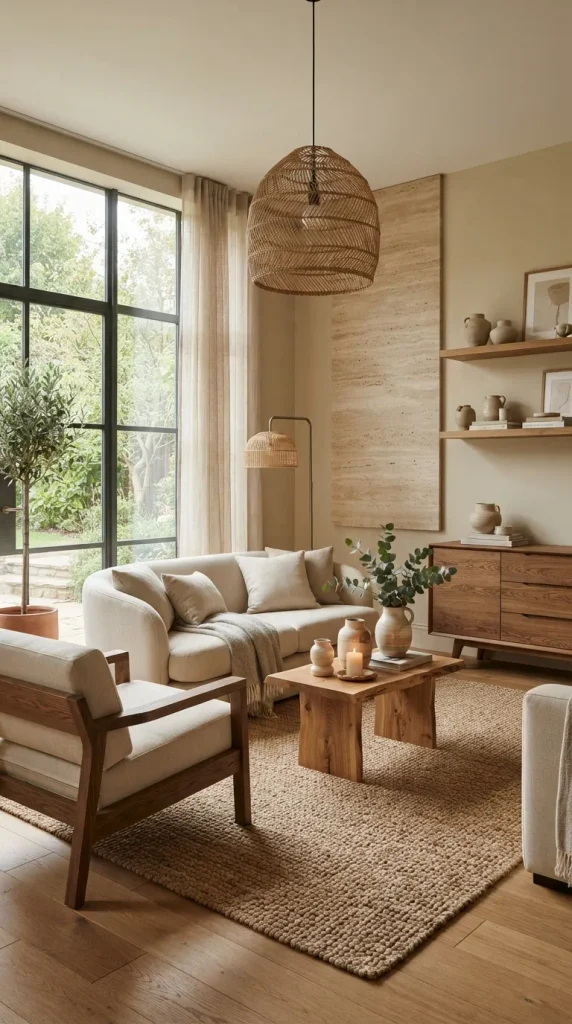
Natural materials can prevent contemporary rooms from feeling cold or overly polished. Introduce oak, walnut, rattan, bamboo, stone, linen, cotton, jute, or handmade ceramics through furniture and accessories. A modern room with a clean-lined sofa can become much warmer when paired with a wooden coffee table, woven pendant, textured rug, and linen cushions. Natural materials also work particularly well with neutral colors because their organic variations provide visual movement without introducing excessive pattern. Rather than matching every wood tone perfectly, allow two or three complementary finishes to coexist. This approach creates a collected appearance that feels authentic and comfortable while still maintaining the clean lines associated with contemporary interior design.
5. Design a Small Space With Multifunctional Furniture

Small rooms require careful planning because every piece needs to earn its place. Multifunctional furniture can dramatically improve both comfort and organization in compact interiors. Consider an ottoman with hidden storage, a sofa bed, nesting tables, a fold-down desk, or a dining bench that includes drawers underneath. Wall-mounted furniture can also preserve valuable floor space and make circulation easier. Choose pieces with visually light frames rather than extremely bulky silhouettes, and keep the color palette relatively cohesive so the room does not appear fragmented. Mirrors, vertical shelving, and furniture with exposed legs can further enhance the perception of openness. A successful small-space interior prioritizes function without making the room feel like a storage area.
6. Create a Biophilic Interior With Indoor Plants
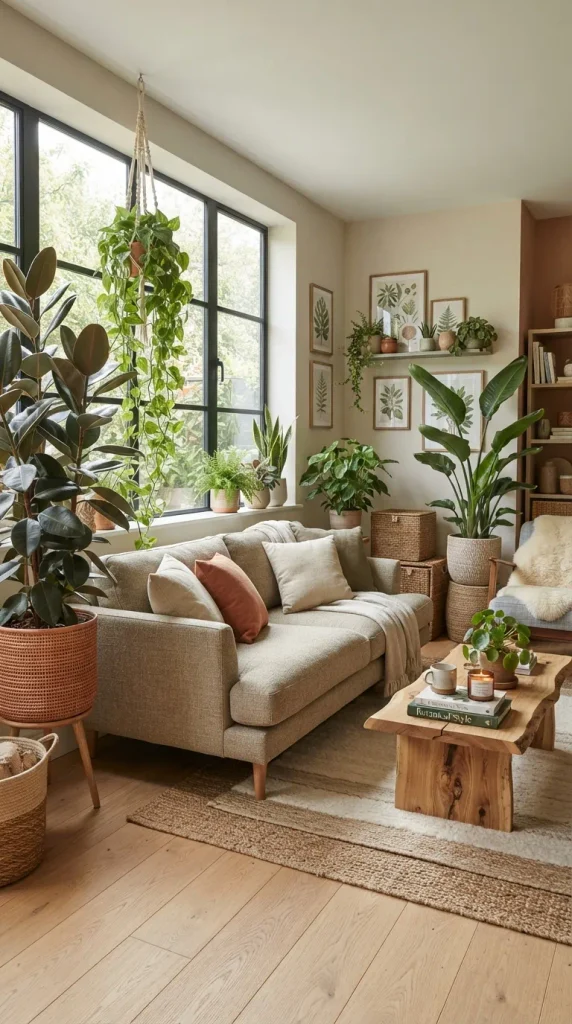
Indoor plants can make a home feel fresher, more organic, and visually connected to the natural world. Instead of placing a single plant in an empty corner, create a balanced arrangement using plants at different heights and sizes. A tall fiddle-leaf fig or rubber plant can anchor a room, while smaller pothos, snake plants, herbs, or trailing varieties can occupy shelves and side tables. Choose planters that complement the existing material palette rather than treating greenery as an unrelated accessory. Natural light should guide plant placement, and species should be selected according to the actual conditions of the room. Even a small collection of healthy plants can introduce texture, movement, and a softer visual quality.
7. Use Large-Scale Artwork as a Focal Point
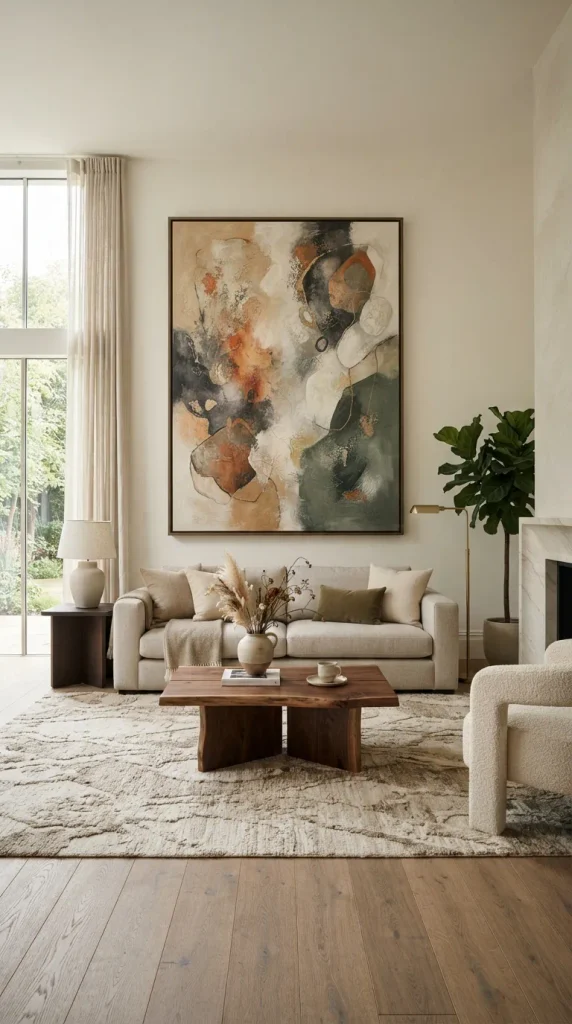
Large artwork can provide instant personality and visual structure without requiring numerous decorative accessories. A generously sized abstract painting, landscape, botanical print, or photographic piece can anchor a living room, bedroom, hallway, or dining area. Instead of choosing several tiny frames that make a wall feel cluttered, consider one substantial artwork with enough surrounding space to breathe. The colors do not need to match the furniture exactly; look for artwork that shares one or two tones with the broader palette. Position the center of the piece around eye level and ensure its scale relates appropriately to the furniture below it. This creates a deliberate focal point and gives the room the feeling of a thoughtfully designed space.
8. Introduce Curved Furniture for a Softer Interior

Curved furniture can soften interiors dominated by straight architectural lines and rectangular furniture. A rounded sofa, curved accent chair, circular coffee table, arched mirror, or gently shaped console can make a room feel more fluid and welcoming. This approach works particularly well in contemporary spaces where excessive angularity can sometimes feel formal. Curves can also improve visual flow by guiding the eye around the room rather than stopping it at rigid corners. Keep the overall composition balanced by pairing curved pieces with simpler linear elements. For example, a rounded coffee table can sit comfortably between a straight sofa and rectangular rug. The contrast creates visual interest without requiring bold colors or excessive decoration.
9. Build a Cozy Reading Nook
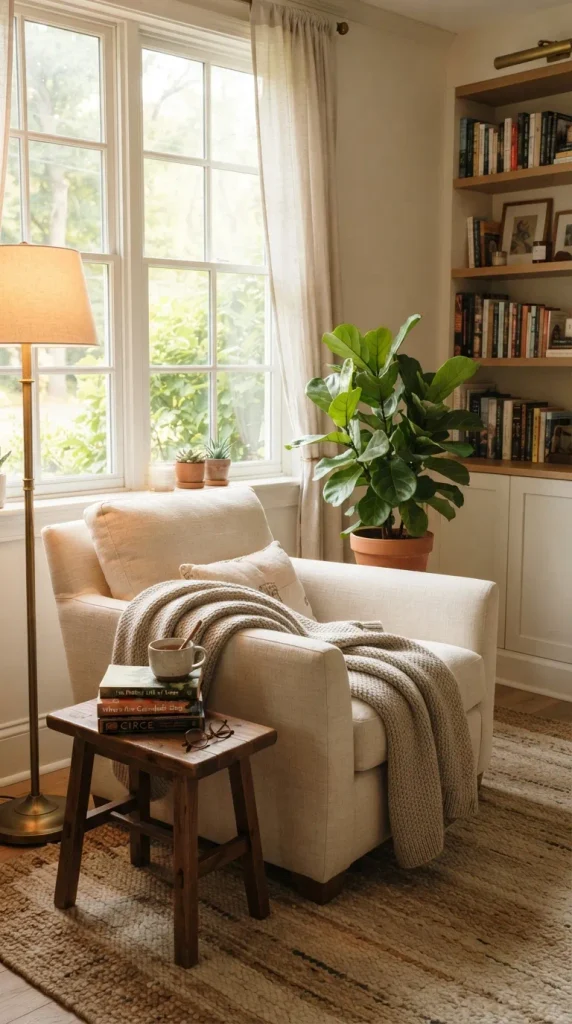
A dedicated reading nook transforms an unused corner into a purposeful part of the home. Start with a comfortable armchair positioned near natural light, then add a small side table for books, a drink, or a reading lamp. A floor lamp can provide focused illumination after dark, while a soft throw and cushion introduce comfort and texture. Built-in shelving is ideal when available, but a narrow freestanding bookcase can work just as well. Use artwork, plants, or a small rug to visually define the area from the surrounding room. The most successful reading corners are not necessarily large; they simply create a distinct sense of retreat within the larger interior.
10. Add Architectural Interest With Wall Molding
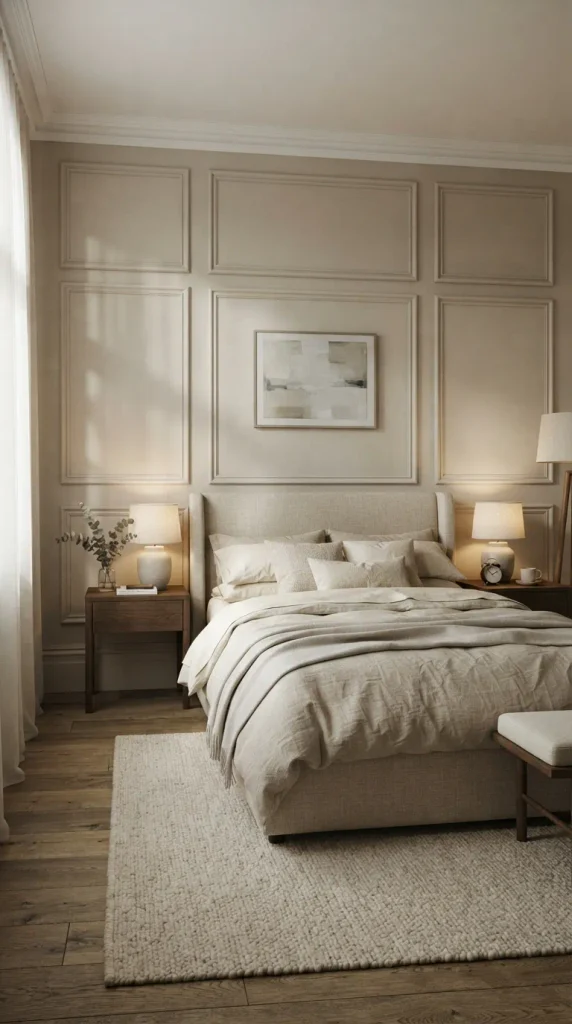
Wall molding can give a plain room a custom-designed appearance while preserving a timeless aesthetic. Picture-frame molding, board-and-batten detailing, vertical paneling, and simple trim can add rhythm and architectural character to walls that otherwise feel empty. For a subtle result, paint the molding the same color as the wall so that shadows create the visual interest. A contrasting color can create a stronger statement in dining rooms, bedrooms, or entryways. Keep the proportions appropriate to the room, especially when working with low ceilings or narrow walls. The surrounding furniture should remain relatively controlled so the architectural detail becomes a feature rather than competing with numerous patterns and accessories.
11. Design a Calm Scandinavian-Inspired Bedroom

Scandinavian-inspired bedrooms emphasize simplicity, natural materials, functionality, and a calm atmosphere. Start with a restrained palette of warm white, soft gray, beige, pale wood, or muted earthy tones. Choose a simple bed frame, breathable bedding, and furniture with clean silhouettes. Instead of filling the room with decorations, select a few meaningful objects such as a ceramic lamp, framed print, woven basket, or small plant. Layering textures is especially important because a limited color palette can otherwise feel flat. Linen bedding, wool throws, knitted cushions, and a soft rug introduce warmth without visual clutter. Keep pathways open and allow natural daylight to play an important role in the overall composition.
12. Make a Statement With a Textured Rug
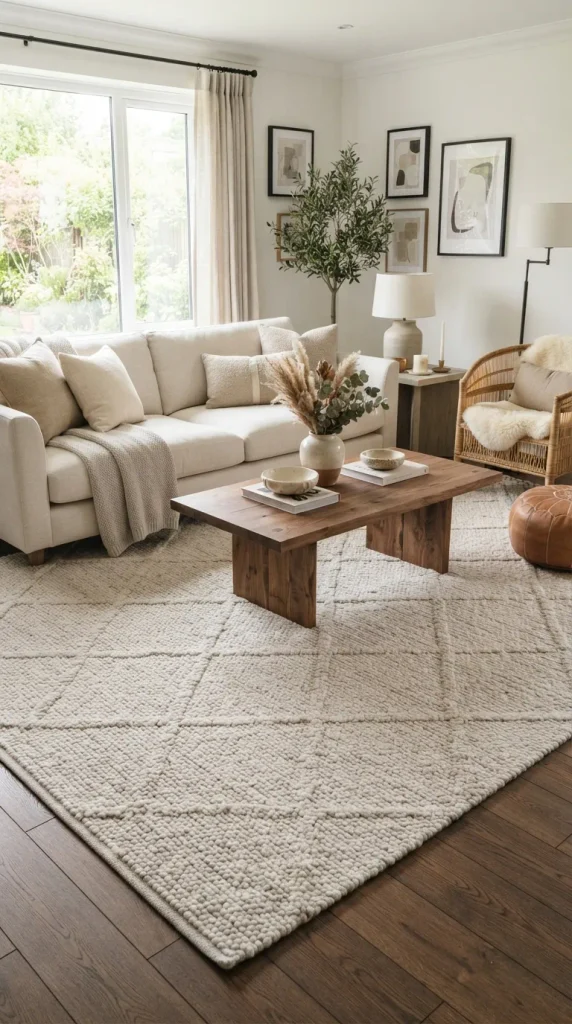
A textured rug can influence the entire character of a room while adding comfort underfoot. Rather than choosing a rug solely for its color, consider pile, weave, material, and pattern. Wool provides warmth and durability, while jute introduces a natural handcrafted quality. A subtle geometric design can add structure to a minimalist room, whereas a vintage-inspired pattern can give a contemporary interior more personality. Ensure the rug is large enough to connect the main furniture pieces instead of appearing like a small floating island. In living rooms, at least the front legs of major seating can sit on the rug. Proper scale makes the room feel cohesive and intentionally planned.
13. Create an Elegant Modern Dining Area

A dining area can become a strong design feature even when space is limited. Choose a dining table with a silhouette that suits the room, then build the surrounding design around its proportions. A round table works especially well in compact spaces because it improves circulation, while a rectangular table can emphasize length in larger rooms. Add pendant lighting above the table to establish a visual center, and consider upholstered or sculptural chairs for comfort and personality. A mirror, artwork, or textured wall treatment can provide a backdrop without requiring extensive decoration. Keep table styling restrained with a ceramic vase, natural branches, or a simple centerpiece that does not interfere with conversation.
14. Use Mirrors to Enhance Light and Space
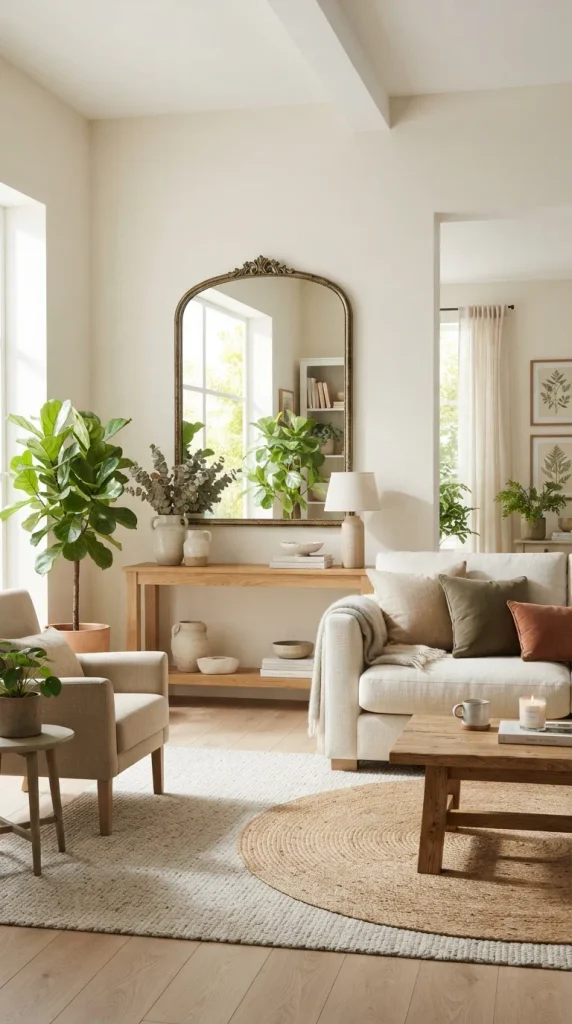
Mirrors are both decorative and functional tools for interior design. A large mirror positioned opposite or adjacent to a window can help distribute natural light and visually expand the room. Floor-length mirrors can make bedrooms and dressing areas feel more spacious, while smaller decorative mirrors can fill narrow walls or entryways. Frame selection matters: wood introduces warmth, metal can create a modern edge, and an ornate frame suits more traditional interiors. Avoid placing mirrors randomly simply because a wall is empty. Think about what the reflection will show. A mirror that reflects greenery, artwork, architectural detail, or natural light contributes to the composition rather than creating distracting visual clutter.
15. Create a Sophisticated Dark Interior

Dark interiors can feel intimate, dramatic, and surprisingly sophisticated when the palette is carefully controlled. Charcoal, deep green, chocolate brown, navy, and muted black can be used on walls, cabinetry, furniture, or textiles. The important consideration is balance. Introduce lighter upholstery, natural wood, metallic accents, or warm lighting to prevent the space from becoming visually heavy. Matte finishes often create a more refined effect than excessive gloss, while layered textures keep darker rooms from appearing flat. Large windows are particularly valuable because daylight provides natural contrast. Dark interiors are especially effective in bedrooms, studies, dining rooms, and cozy living areas where a more enveloping atmosphere is desirable.
16. Style Open Shelving With Purpose
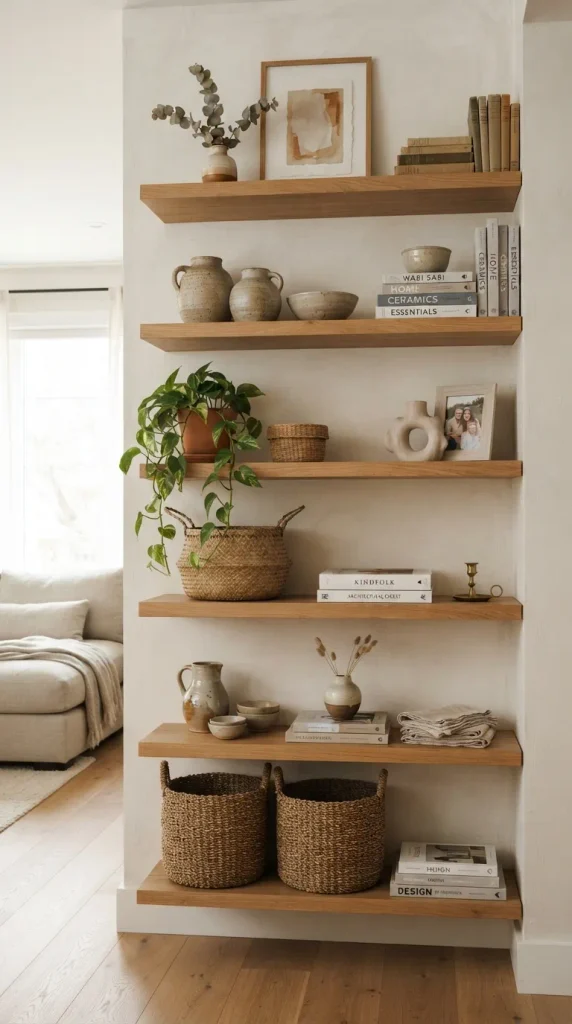
Open shelving can combine storage and decoration when it is arranged thoughtfully. Rather than filling every shelf with objects, leave some negative space so individual pieces remain visible. Group books horizontally and vertically, then introduce ceramics, framed artwork, plants, baskets, and sculptural objects at different heights. Repeating a small number of colors can keep the display cohesive even when the objects vary in shape. In kitchens, open shelving can hold frequently used dishes and glassware, making everyday items part of the decor. In living spaces, shelving can showcase personal collections. Avoid treating shelves as a place to hide clutter; the best displays balance practical storage with intentional visual composition.
17. Use Earthy Colors for a Relaxed Home

Earthy colors create a grounded interior inspired by landscapes and natural materials. Terracotta, sand, clay, olive, warm beige, muted ochre, rust, and brown can work beautifully together when their saturation is carefully balanced. These tones are particularly effective in spaces where comfort is the priority because they tend to feel warm rather than overly energetic. Introduce earthy colors through painted walls, upholstery, rugs, ceramics, curtains, and artwork rather than applying every shade equally. A neutral base allows richer tones to stand out without dominating. Pairing these colors with natural wood, woven textures, and soft lighting creates a relaxed environment that feels timeless and connected to nature.
18. Design a Minimalist Home Without Making It Cold

Minimalist interior design works best when simplicity is paired with warmth and thoughtful material selection. Instead of removing everything from a room, focus on keeping only furniture and objects that contribute to function, comfort, or visual balance. Use a restrained palette and prioritize quality over quantity. Soft textiles, natural wood, textured plaster, warm lighting, and handmade accessories can prevent a minimalist space from feeling sterile. Furniture should have enough breathing room around it, allowing architectural details and negative space to become part of the design. The goal is not an empty room; it is an environment where each remaining element has a clear purpose and the overall atmosphere feels calm rather than unfinished.
19. Create a Stylish Entryway With Smart Storage

The entryway establishes the visual tone of the home while handling practical daily needs, making it an important but frequently neglected design opportunity. A slim console can provide a surface for keys and decorative objects without obstructing circulation. Add hooks or a closed cabinet for coats, bags, and shoes, depending on the available space. A mirror near the entrance is useful for last-minute checks and can make a narrow hallway appear wider. A small bench can provide convenient seating, while a durable runner protects the floor and adds color or pattern. Keep frequently used items organized and reserve visible surfaces for a few carefully selected accessories to maintain a polished first impression.
20. Mix Vintage and Modern Furniture

Combining vintage pieces with contemporary furniture creates an interior that feels collected over time rather than purchased as a matching set. A modern sofa can be paired with an antique side table, vintage cabinet, traditional rug, or retro lighting fixture. The contrast works best when there is some visual connection between the pieces, such as repeated wood tones, similar proportions, or complementary colors. Avoid filling the room with too many competing periods. One or two distinctive vintage elements can provide character while contemporary pieces keep the space comfortable and functional. This layered approach is especially useful for homeowners who want personality and history without committing to a completely traditional decorating style.
21. Turn a Home Office Into an Inspiring Workspace

A thoughtfully designed home office can improve both the appearance and usability of a work area. Position the desk where natural light is available without creating screen glare, and select a chair that supports comfortable working for extended periods. Vertical shelving can provide storage while using minimal floor space, whereas closed cabinets help conceal paperwork and equipment. Add a task lamp, small plant, artwork, or pinboard to personalize the environment without creating distractions. Cable management is another important design detail because visible wires can quickly make an otherwise organized workspace look messy. Choose colors and materials that feel connected to the rest of the home so the office becomes an integrated part of the interior.
22. Use Layered Textures for a Luxurious Feel
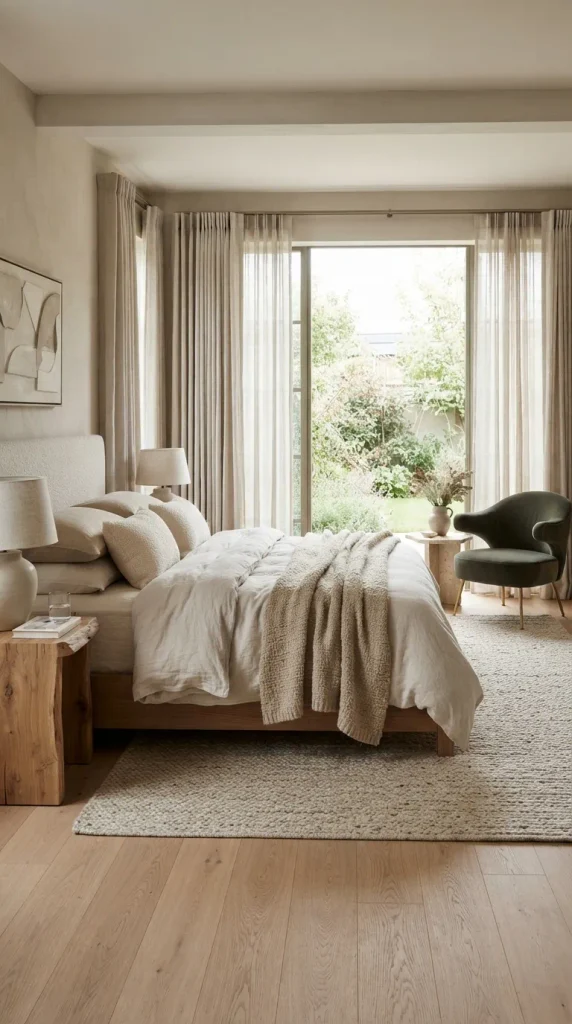
Luxury does not always require expensive furniture or elaborate decoration; texture can create a rich visual experience with relatively simple pieces. Combine materials such as velvet, linen, wool, boucle, wood, stone, glass, metal, and woven fibers to give the room dimension. A smooth coffee table becomes more interesting beside a chunky textured rug, while crisp curtains can contrast with soft upholstery. Keep the color palette controlled so the different surfaces do not compete. Texture is especially useful in neutral rooms because it creates variation without relying heavily on color. Pay attention to both visual and tactile qualities, as interiors feel more luxurious when they invite people to interact with the space.
23. Create a Cozy Modern Kitchen

A modern kitchen can feel warm and welcoming when clean cabinetry is balanced with natural materials and carefully selected accessories. Flat-panel cabinets provide a streamlined foundation, while wood accents, stone countertops, textured backsplashes, or open shelving introduce character. Pendant lights above an island can create a strong visual anchor while providing useful task lighting. Keep countertops relatively uncluttered, but display a few attractive everyday objects such as wooden boards, ceramic vessels, or fresh herbs. Hardware in brushed metal, matte finishes, or warm tones can subtly influence the overall style. A cohesive combination of practical storage, durable surfaces, and comfortable lighting makes the kitchen feel both contemporary and lived-in.
24. Use a Monochromatic Color Scheme

A monochromatic interior uses variations of one primary color to create a cohesive and sophisticated visual language. This does not mean every surface must be identical. Instead, combine lighter and darker versions of the chosen hue through walls, furniture, textiles, artwork, and accessories. A blue room, for example, could move from pale blue curtains to medium-toned upholstery and deeper navy accents. Texture becomes particularly important because color variation alone may not provide enough depth. Introduce wood, woven materials, metal, glass, or stone to break up large areas of similar color. When carefully balanced, a monochromatic scheme can feel calm and intentional while giving the room a distinctive personality.
25. Create a Personalized Gallery Wall

A gallery wall can transform an ordinary surface into a personal visual story. Combine artwork, photography, illustrations, typography, mirrors, or meaningful objects rather than relying on identical frames and prints. Before hanging everything, arrange the pieces on the floor to experiment with spacing and composition. A consistent frame finish creates a more orderly appearance, while varied frames can produce an eclectic effect. Keep a visual connection between the pieces through recurring colors or subject matter. Gallery walls work especially well above sofas, staircases, consoles, beds, and dining areas. The most appealing arrangements feel personal rather than overly coordinated, allowing the wall to communicate something about the people who live there.
Conclusion
Great interior design is ultimately about creating a home that works beautifully for everyday life. These 25 interior design ideas demonstrate how thoughtful choices involving color, lighting, furniture, texture, storage, materials, artwork, and layout can transform an ordinary room without requiring every element to be replaced. Whether your preference leans toward warm minimalism, modern sophistication, Scandinavian simplicity, earthy interiors, or an eclectic combination of styles, the strongest spaces usually share the same foundation: good proportions, purposeful furniture, comfortable lighting, visual balance, and personal details.
Rather than copying an entire room, choose the ideas that genuinely suit your home’s architecture, available space, lifestyle, and personality. A single accent wall, carefully selected rug, improved lighting plan, statement artwork, or collection of natural materials can sometimes create a bigger difference than a complete redesign. The most successful interiors evolve gradually, combining practical decisions with pieces that make the space feel distinctly yours.


