

22 Sunroom Ideas to Create a Bright, Cozy Retreat
Looking for the best sunroom ideas to make your space brighter, cozier, and more inviting? A well-designed sunroom can become a relaxing retreat for reading, morning coffee, entertaining guests, or simply enjoying the view outside. Whether you have a small sunroom, a spacious four-season room, or a glass-enclosed extension, the right furniture, colors, lighting, plants, and natural textures can completely transform the space. From modern minimalist designs and cozy reading corners to farmhouse-inspired decor and indoor garden ideas, these 22 sunroom ideas offer practical inspiration for creating a beautiful, functional room that feels naturally connected to the outdoors.
1. Create a Cozy Sunroom Reading Nook

Turn an overlooked corner of the sunroom into a dedicated reading retreat by placing a comfortable armchair beside the brightest window. Choose a chair with supportive cushioning and pair it with a small wooden or rattan side table for books, a cup of coffee, or decorative objects. A soft throw blanket and textured lumbar pillow can make the seating area feel more inviting without visually crowding the room. Add a slim floor lamp for cloudy afternoons and a small indoor plant to reinforce the connection with nature. If your windows overlook a garden or trees, position the chair toward the view so the scenery becomes part of the room’s decor.
2. Design a Sunroom with Natural Rattan Furniture
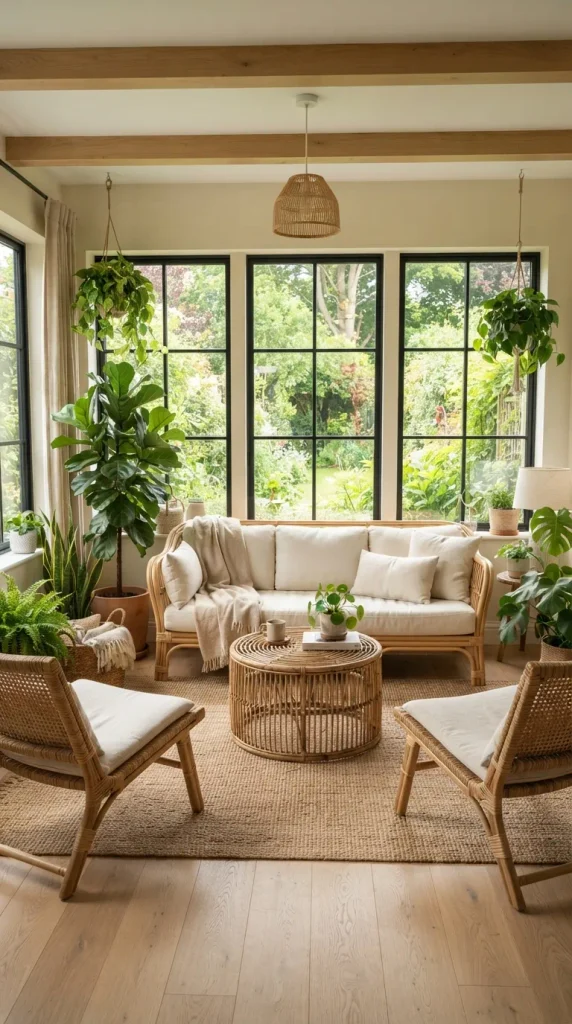
Rattan and wicker furniture are natural choices for sunroom decorating because their woven textures complement the outdoor views visible through large windows. Build the room around a rattan sofa, matching lounge chairs, or a woven coffee table, then soften the harder surfaces with neutral cushions and lightweight linen textiles. Shades of cream, beige, warm white, and muted green create an organic palette that feels relaxed rather than overly coordinated. A jute rug can anchor the furniture arrangement while wooden accessories add warmth. For a polished result, mix several natural materials instead of using rattan everywhere, allowing woven pieces to act as distinctive focal points.
3. Add an Indoor Sunroom Garden

A bright sunroom provides an excellent environment for creating an indoor plant collection, especially when the available light matches the needs of your chosen species. Arrange plants at different heights using plant stands, baskets, stools, and shelving to create a layered indoor garden rather than placing everything directly on the floor. Large leafy plants can occupy empty corners, while smaller pots work well on tables and window ledges. Use ceramic planters for a refined look or woven baskets for a more relaxed aesthetic. Before selecting plants, consider the direction of your windows and the amount of direct sunlight the room receives throughout the day.
4. Choose a Soft Neutral Sunroom Color Scheme
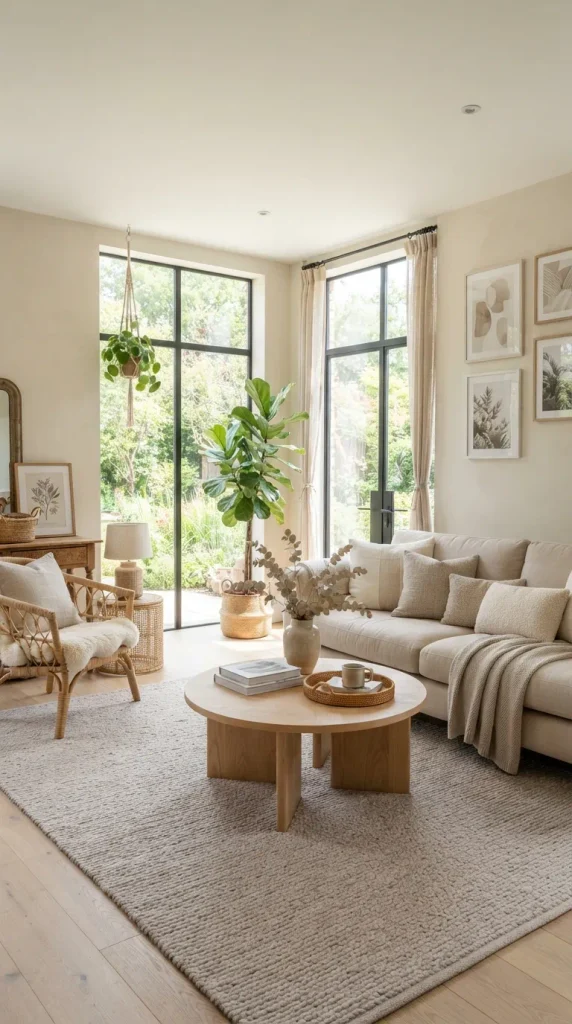
A neutral color palette can make a sunroom feel spacious, calm, and timeless while allowing the surrounding outdoor scenery to become part of the visual design. Start with warm white or creamy walls and introduce beige upholstery, natural wood, pale taupe rugs, and soft gray accessories. Rather than making every surface the same shade, create interest by combining different textures such as linen, cotton, wool, cane, and lightly weathered wood. Neutral decor is particularly effective in rooms with large windows because it reflects natural light without competing with the garden or landscape outside. A few muted green or terracotta accents can add subtle color.
5. Build a Modern Minimalist Sunroom

For a contemporary home, keep the sunroom clean and uncluttered with streamlined furniture, simple silhouettes, and a restrained color palette. A low-profile sofa can serve as the main seating piece, accompanied by a sculptural coffee table and one or two uncomplicated accent chairs. Choose materials such as light oak, black metal, glass, and textured upholstery to create contrast without visual clutter. Window treatments should remain simple, using roller shades or sheer panels when privacy is necessary. Instead of decorating every surface, select a few meaningful objects and allow open floor space to become part of the design. This approach makes the natural light and outdoor view the room’s primary features.
6. Make a Small Sunroom Feel Larger

Small sunrooms benefit from furniture that provides comfort without overwhelming the available floor area. Instead of a bulky sectional, consider a compact loveseat, two lightweight chairs, or a built-in bench along one wall. Choose furniture with visible legs because the open space underneath helps the room feel less crowded. A round coffee table can improve circulation by eliminating sharp corners, while a pale rug visually connects the seating area. Mirrors can also reflect daylight and make the space appear more expansive when positioned thoughtfully. Keep accessories selective and use vertical shelving for plants and decor so the limited floor space remains open and functional.
7. Create a Farmhouse-Style Sunroom

A farmhouse sunroom can combine relaxed comfort with rustic architectural details and traditional materials. Start with a comfortable slipcovered sofa in white, cream, or soft beige, then introduce a reclaimed-wood coffee table and woven baskets for storage. Vintage-inspired cushions, checked textiles, ceramic vases, and simple botanical arrangements can reinforce the farmhouse character without making the room feel themed. If the architecture allows, exposed wood beams or painted shiplap can add additional texture. Keep the color scheme restrained with warm neutrals, sage green, dusty blue, and natural wood tones. The result should feel collected and welcoming rather than excessively rustic.
8. Use a Sunroom as a Casual Dining Area

A sunroom can become a beautiful breakfast or dining space when the windows provide plenty of daylight and a pleasant outdoor view. Place a compact dining table near the center of the room and surround it with comfortable chairs that are easy to move. A round table works particularly well in smaller spaces because it improves circulation and creates an intimate arrangement. Pendant lighting can define the dining zone after sunset, while a simple centerpiece of fresh flowers or greenery adds seasonal character. Choose durable materials if the room experiences significant temperature or sunlight changes, and use washable textiles where possible for easy everyday maintenance.
9. Decorate a Sunroom with Coastal Style

Coastal-inspired sunroom decor works naturally with bright spaces because it emphasizes airy colors, relaxed materials, and an effortless connection to the outdoors. Use a palette of white, sandy beige, pale blue, and soft sea green, then introduce woven furniture, linen cushions, and natural wood accessories. Avoid filling the room with obvious nautical decorations; instead, let texture and color communicate the coastal atmosphere. A striped rug or subtly patterned throw can add visual movement without overwhelming the windows. Driftwood-inspired accents, ceramic vessels, and simple greenery can complete the look while keeping the room sophisticated enough to remain timeless.
10. Add a Comfortable Sunroom Daybed

A daybed can turn a sunroom into an especially relaxing space for afternoon naps, reading, or quiet time. Position it alongside a window where the user can enjoy natural light and outdoor views, but avoid placing it where direct sunlight could make the upholstery excessively hot. Layer the daybed with a supportive mattress, several pillows, and a lightweight throw. Built-in drawers underneath can provide useful storage for blankets and books in smaller rooms. For a relaxed appearance, choose linen or cotton upholstery in a neutral shade and pair it with woven baskets, natural wood accents, and one or two leafy plants.
11. Introduce a Bold Accent Wall

Although sunrooms are often decorated in pale colors, an accent wall can give the space considerably more personality. Select one wall for a rich botanical green, muted terracotta, deep blue, warm clay, or another color that complements the surrounding landscape. Because the room receives abundant daylight, deeper shades can create dramatic contrast without necessarily making the entire space feel dark. Keep the remaining walls and larger furniture pieces relatively understated so the accent wall remains intentional rather than competing with the windows. Wallpaper with a subtle botanical or geometric pattern can provide a similar effect while adding texture and visual character.
12. Create a Bohemian Sunroom Retreat
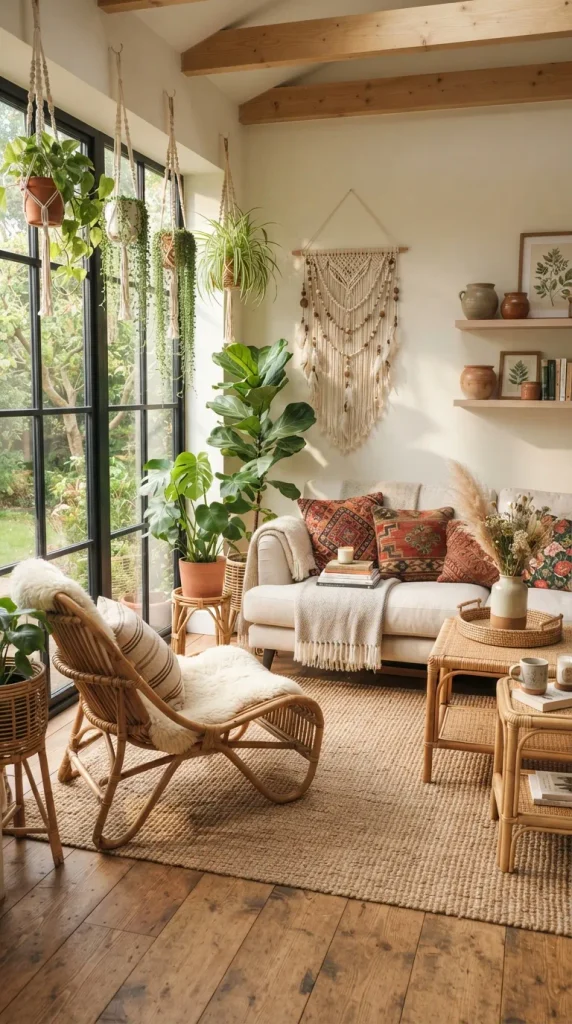
A bohemian-inspired sunroom is ideal for homeowners who prefer layered textures, relaxed furniture, and a less formal atmosphere. Combine a low-profile sofa with woven lounge chairs, patterned cushions, a textured area rug, and several hanging or floor plants. Materials such as rattan, cane, macramé, linen, jute, and unfinished wood work particularly well together. Instead of matching every item, choose pieces that share a compatible color story while allowing patterns and textures to vary. Floor cushions can provide flexible extra seating, while lantern-style lighting and handmade ceramics add warmth. Keep enough open space around the furniture so the room remains comfortable rather than visually overloaded.
13. Install Sheer Curtains for Soft Natural Light

Sheer curtains can transform the atmosphere of a sunroom by filtering harsh sunlight while maintaining the bright appearance that makes the space appealing. Choose lightweight white, ivory, or natural linen-look panels and hang them high enough to emphasize the room’s vertical proportions. During the brightest part of the day, the curtains can soften glare and protect furnishings from some direct exposure, while still allowing the outdoor landscape to remain visible. Full-length panels also introduce movement and softness to rooms dominated by glass and hard architectural lines. For greater flexibility, pair sheer curtains with adjustable shades that provide additional privacy when needed.
14. Add a Sunroom Workspace

A sunroom can serve as an inspiring home office when the desk is positioned carefully to control glare on screens. Choose a compact desk with drawers or shelving for everyday organization and place it perpendicular to the brightest window when possible. A comfortable ergonomic chair is more important than decorative seating because the space needs to support extended work sessions. Add a small plant, a desk lamp, and a pinboard or artwork to personalize the area without creating clutter. Natural wood furniture can soften a technology-heavy workspace, while sheer window treatments help control changing sunlight throughout the day.
15. Create a Luxurious Sunroom Lounge

For a more sophisticated approach, treat the sunroom as a private lounge rather than a casual porch extension. Choose generously upholstered seating in velvet, performance fabric, or high-quality linen and combine it with a substantial coffee table and carefully selected decorative accessories. A large area rug can define the entire seating arrangement and introduce visual depth. Metallic accents, sculptural lamps, marble-topped tables, or refined ceramics can provide subtle luxury without overpowering the natural setting. Keep the color palette cohesive and allow the outdoor scenery to remain visible. The best luxury sunrooms feel elegant because of proportion, material quality, and restraint rather than excessive decoration.
16. Use Built-In Window Seating

Built-in window seating can maximize an awkward sunroom layout while creating a charming architectural focal point. A custom bench fitted beneath a bank of windows provides comfortable seating without taking up as much floor space as individual chairs. Add a durable cushion across the bench and layer it with pillows in complementary colors and patterns. Drawers or lift-up compartments beneath the seat can provide valuable storage for blankets, books, games, and seasonal accessories. Finish the area with a small side table or wall-mounted reading light. This approach works particularly well in compact sunrooms where every square foot needs to serve a practical purpose.
17. Design a Scandinavian-Inspired Sunroom

Scandinavian decor can make a sunroom feel bright, peaceful, and intentionally simple by combining pale wood, comfortable textiles, functional furniture, and understated accessories. Use a foundation of white, warm beige, light gray, or soft taupe, then introduce natural oak or ash furniture for warmth. A textured wool rug can add comfort underfoot while simple linen curtains soften the windows. Keep decorative objects purposeful rather than numerous, and use greenery to introduce a natural color accent. Rounded furniture shapes can make the room feel welcoming, while clean lines prevent the abundant sunlight and multiple windows from becoming visually overwhelming.
18. Turn the Sunroom into a Conversation Area
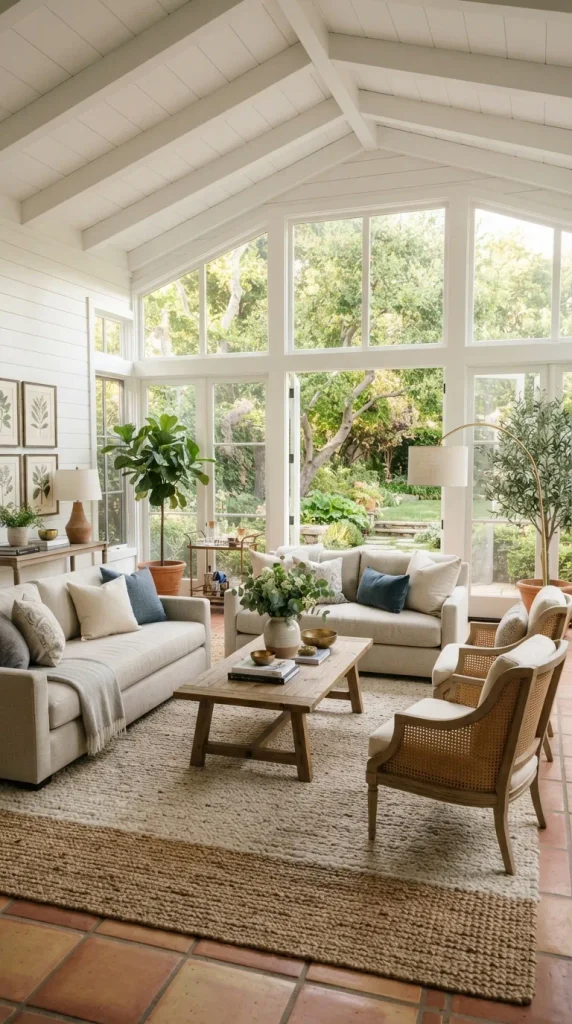
If your goal is entertaining, arrange the furniture to encourage face-to-face conversation rather than pointing every seat toward a television. Two comfortable sofas facing one another or a sofa paired with two accent chairs can create a balanced conversational layout. Place a central coffee table within easy reach of every seat and leave sufficient space for people to walk around the arrangement. A large rug can visually unite the furniture while pendant or floor lighting provides evening illumination. Add a console table behind the sofa for drinks, books, and decorative objects. This arrangement makes the sunroom feel social while preserving its connection to the outdoors.
19. Add Warm Wood Accents

Wood can balance the abundance of glass and natural light found in many sunrooms, adding warmth and visual grounding to the architecture. Introduce the material through a coffee table, exposed beams, shelving, flooring, side tables, or decorative stools. Lighter woods such as oak and maple create an airy appearance, while walnut and darker finishes can produce a more dramatic atmosphere. Avoid using identical wood tones everywhere; combining complementary finishes can make the room appear more naturally collected. Pair wood with linen, woven fibers, ceramics, and greenery for a balanced palette that feels organic rather than overly polished.
20. Create a Four-Season Sunroom
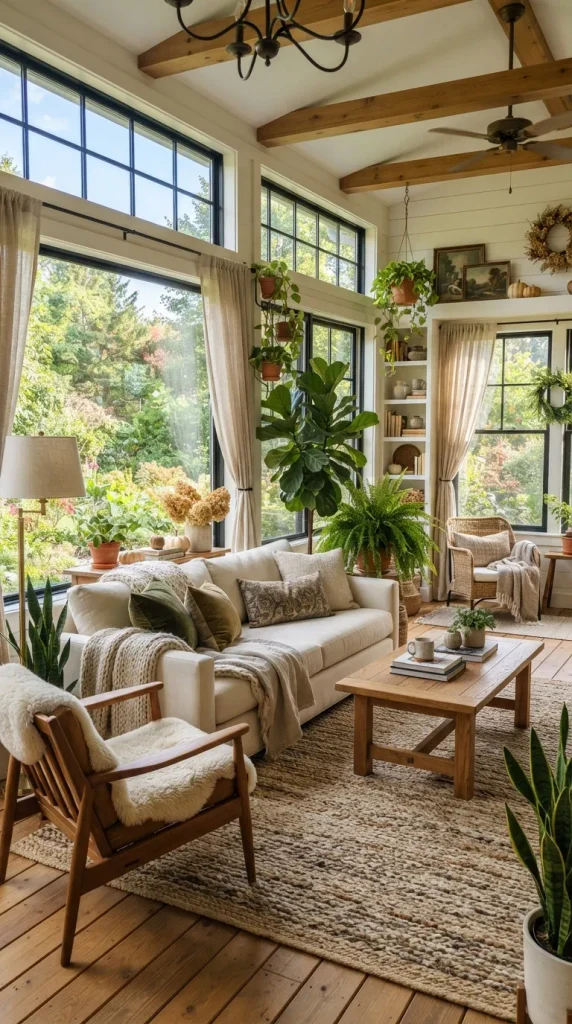
A four-season sunroom needs to function comfortably beyond the warmer months, so its design should prioritize insulation, temperature control, and furniture materials alongside aesthetics. Choose upholstery designed to withstand strong daylight and select rugs and textiles that add warmth during colder weather. Layering is particularly useful: curtains can reduce drafts, while throws and cushions make the seating comfortable throughout the year. A durable sofa, flexible side tables, and practical storage allow the room to adapt between seasons. Decor can change subtly with the calendar, using fresh greenery in spring and summer and warmer textiles or earthy accessories during fall and winter.
21. Use Terracotta and Earthy Tones

Terracotta, clay, ochre, rust, olive, and warm beige can bring a grounded character to a sunroom filled with bright natural light. Use earthy colors selectively through cushions, ceramic planters, rugs, artwork, or an accent chair rather than covering every surface. These tones work especially well with natural wood, rattan, linen, and green plants, creating a palette inspired by gardens and outdoor landscapes. If the room has white walls, terracotta accessories can provide enough contrast to make the furniture arrangement feel more intentional. Keep the largest pieces neutral so seasonal accessories can be changed without redesigning the entire room.
22. Create an Indoor-Outdoor Sunroom Connection

The most successful sunrooms often feel like a natural transition between the home’s interior and the garden beyond the windows. Reinforce that relationship by repeating a few outdoor-inspired materials and colors indoors, such as stone, wood, woven fibers, greenery, and earthy neutrals. If doors open directly to a patio or garden, keep the circulation route clear and select furniture that does not visually block the transition. Matching or complementary colors between indoor cushions and outdoor furnishings can make both spaces feel connected. Large plants near the windows can further blur the boundary, while natural textures help the room feel like part of the landscape rather than a separate enclosed area.
Conclusion
A thoughtfully decorated sunroom can become far more than an additional sitting area. Whether the goal is a peaceful reading nook, productive workspace, indoor garden, casual dining room, or elegant entertaining space, the best design begins with the room’s natural advantages: abundant daylight, views, and a strong connection to the outdoors. These sunroom ideas demonstrate how furniture scale, natural materials, layered textiles, greenery, color, and practical storage can work together to create a space that feels both beautiful and genuinely useful. For Pinterest-friendly inspiration, focus on strong visual details such as rattan furniture, botanical plants, neutral palettes, built-in seating, cozy textiles, and indoor-outdoor connections while keeping the overall design comfortable and livable.


