

22 Simple Screened In Porch Ideas for Cozy Living
A screened-in porch can turn an ordinary outdoor area into one of the most useful and inviting spaces in a home. By adding simple furniture, comfortable textiles, practical lighting, and a few carefully chosen decorative touches, you can create a relaxing retreat without taking on an expensive renovation. These simple screened in porch ideas are designed for homeowners who want an outdoor living space that feels comfortable, stylish, and easy to maintain.
Whether your porch is large enough for a full dining set or small enough for two chairs and a side table, the right design choices can make a noticeable difference. A screened porch offers protection from insects while still allowing fresh air and natural light to flow through, making it ideal for morning coffee, afternoon reading, casual entertaining, or quiet evenings.
The best screened-in porch designs do not necessarily depend on expensive furniture or elaborate construction. Instead, they focus on scale, comfort, texture, function, and the relationship between indoor and outdoor spaces. Neutral cushions, woven materials, weather-resistant rugs, greenery, and warm lighting can completely change the atmosphere of a basic porch.
From a compact reading corner to a farmhouse-inspired gathering area, these 22 simple screened in porch ideas cover practical decorating solutions for different sizes, budgets, and styles. Each concept can also be adapted to suit a modern home, traditional property, cottage, farmhouse, or relaxed coastal aesthetic.
1. Create a Cozy Seating Area With Deep Cushions

Comfort should be the starting point of any inviting screened porch, and a generous seating arrangement can immediately make the space feel more like an outdoor living room. Choose a loveseat, compact outdoor sofa, or pair of generously cushioned chairs depending on the available floor space. Weather-resistant cushions in cream, beige, soft gray, or muted green create a calm foundation, while a few patterned throw pillows introduce personality without overwhelming the porch. Add a small coffee table within easy reach so drinks, books, and snacks have a convenient place to land. Keeping the furniture arrangement conversational rather than pushed against every wall makes even a modest porch feel intentional and welcoming.
2. Add a Simple Outdoor Rug for Instant Warmth
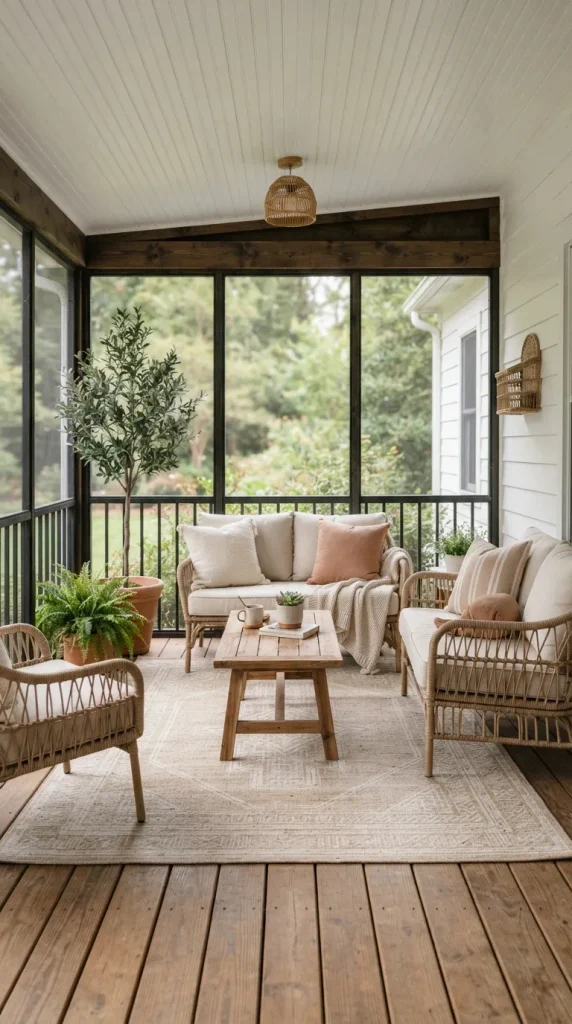
An outdoor rug is one of the easiest ways to make a screened-in porch feel finished without changing its structure. Select a low-pile, weather-resistant design that complements the existing flooring and furniture rather than competing with them. A subtle geometric pattern can add visual interest to a modern porch, while a faded traditional motif works beautifully with farmhouse or cottage decor. Position the rug beneath the main seating group so the furniture visually belongs together. Natural tones such as sand, oatmeal, charcoal, or soft blue are especially versatile. Besides adding color and texture, a rug also creates a softer surface underfoot and helps transition the porch from a purely outdoor area into a comfortable extension of the home.
3. Use Wicker Furniture for a Relaxed Natural Look

Wicker furniture brings texture and an unmistakable outdoor character to a screened porch while remaining easy to coordinate with other decorating styles. Choose a simple wicker sofa, lounge chair, or dining set in a natural or neutral finish, then soften the look with washable cushions and lightweight throws. Synthetic all-weather wicker is particularly useful because it is designed to handle changes in temperature and humidity better than untreated natural materials. Pairing wicker with wood accents, woven baskets, linen-look fabrics, and greenery creates a relaxed atmosphere that works especially well in coastal, cottage, farmhouse, and transitional homes. The result feels comfortable and collected without requiring an elaborate decorating scheme.
4. Hang a Swing Chair in an Unused Corner

A hanging chair can transform an otherwise unused porch corner into a dedicated relaxation spot. Look for a sturdy outdoor swing chair with a comfortable cushion and enough clearance for gentle movement. A woven rattan-style design creates a warm bohemian appearance, while a streamlined hanging chair can suit a contemporary porch. Add one small lumbar pillow and a lightweight throw for extra comfort without making the corner look crowded. Before installation, make sure the ceiling structure and mounting hardware are appropriate for the chair and its intended weight capacity. With the right placement, a swing chair becomes both a practical reading nook and a strong visual feature that gives a simple screened porch more personality.
5. Design a Small Porch Reading Nook

A screened porch can become an excellent reading retreat with surprisingly little furniture. Place a comfortable armchair near a screened wall where daylight is plentiful, then add a compact side table for books, tea, or a reading lamp. A soft outdoor cushion and lightweight throw can make the chair feel especially inviting. If space permits, include a narrow bookshelf or weather-resistant storage cabinet nearby. Keep the color palette quiet with warm whites, natural wood, muted greens, or soft blues to encourage a peaceful atmosphere. The important detail is maintaining enough open floor area around the chair so the nook feels airy rather than cramped. This approach works particularly well for small screened porches.
6. Bring in Potted Plants and Lush Greenery
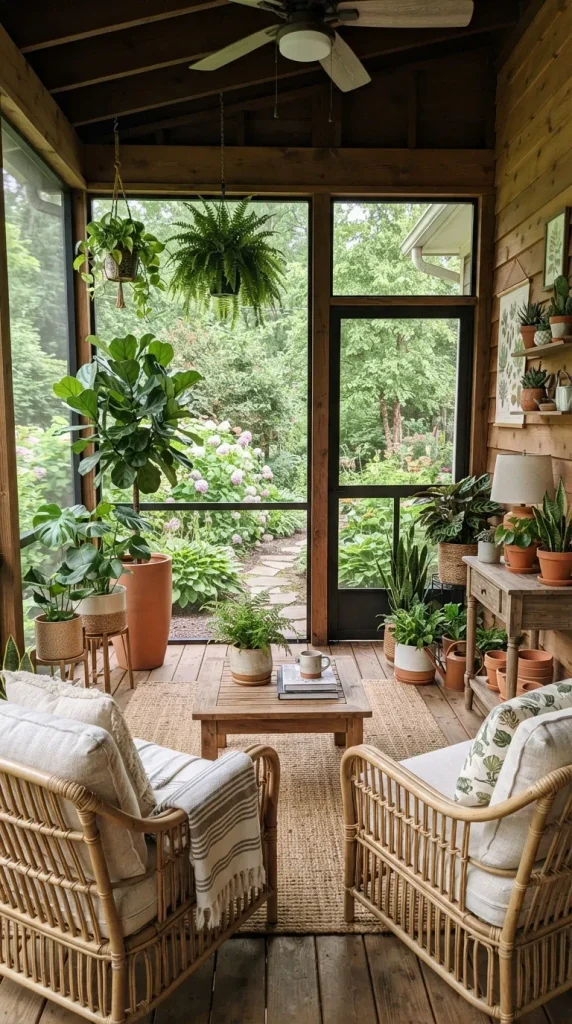
Plants can make a screened porch feel connected to the surrounding garden while adding color and natural texture. Use a combination of floor planters, tabletop pots, hanging containers, and compact greenery to create layers without blocking movement. Hardy plants that tolerate the light and temperature conditions of your particular porch are preferable to delicate varieties that require constant attention. Large leafy plants can fill an empty corner, while smaller pots work well on shelves or side tables. Choose containers in complementary materials such as terracotta, ceramic, concrete, or woven-look finishes. Keeping the plant collection slightly varied rather than perfectly matched creates a more natural appearance and makes the porch feel like an organic extension of the landscape.
7. Install Warm String Lights for Evening Ambiance

Lighting can completely change the atmosphere of a screened porch after sunset, and string lights provide an inexpensive way to create a warm, relaxed mood. Instead of covering every surface with lights, arrange a single strand around the perimeter, along a ceiling beam, or above the main seating area. Warm-white bulbs are generally more comfortable for evening entertaining than very bright, cool-toned lighting. Combine the string lights with a floor lamp, table lamp, or lantern for layered illumination. The goal is to avoid one harsh overhead source and create several gentle pools of light instead. This simple approach makes the porch suitable for late dinners, conversations, reading, and quiet evenings outdoors.
8. Choose a Simple Farmhouse-Inspired Porch Palette
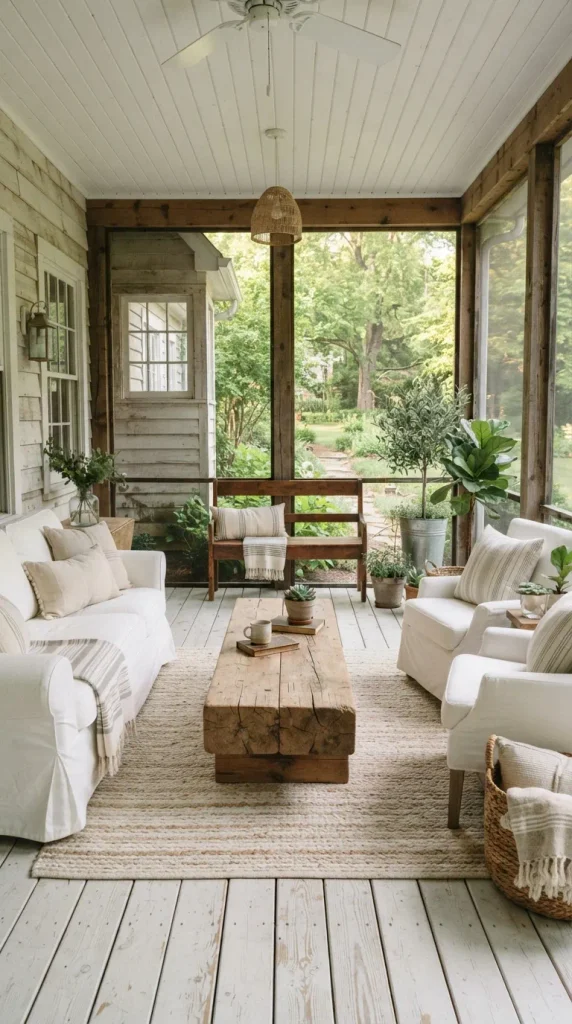
A farmhouse-inspired screened porch can feel timeless when its materials and colors remain uncomplicated. Start with a neutral foundation of white, cream, beige, or warm gray, then introduce natural wood and small touches of black or muted green. A wooden coffee table, simple bench, galvanized-style planter, and striped cushions can establish the look without making the space feel themed. Avoid filling every corner with farmhouse accessories; instead, let a few functional pieces provide the character. Soft textiles and woven baskets can balance harder materials while maintaining the relaxed quality associated with farmhouse interiors. This design works particularly well when the porch connects directly to a kitchen, dining room, or family room with similar neutral finishes.
9. Add a Compact Bistro Table for Morning Coffee

Not every screened porch needs a large dining table. For a narrow or compact space, a small round bistro table with two comfortable chairs can create a useful breakfast or coffee station without consuming valuable floor area. Metal, wood, or weather-resistant composite furniture can all work depending on the home’s style. Place the table near a screened opening or window to take advantage of morning light and views of the yard. A small centerpiece such as a potted herb, simple vase, or candle can add personality while keeping the tabletop functional. This arrangement is particularly practical for couples or homeowners who want a dedicated place to enjoy coffee outdoors without designing the entire porch around dining.
10. Use Neutral Colors for a Calm Outdoor Living Room

A neutral color scheme is an effective way to make a screened porch feel spacious, peaceful, and easy to update. Begin with foundational colors such as ivory, taupe, beige, warm white, gray, or natural wood, then introduce subtle variations through cushions, rugs, curtains, and accessories. Instead of relying on one shade throughout the room, combine different textures to prevent the neutral palette from appearing flat. Woven furniture, knitted throws, natural-fiber rugs, ceramic planters, and wood surfaces can all add visual depth. Neutral decor also gives you flexibility because seasonal accents can be introduced without replacing the main furniture. A few blue pillows in summer or rust-colored textiles in autumn can change the mood without requiring a complete redesign.
11. Create a Simple Outdoor Dining Space

If your screened porch is wide enough, consider turning one section into a casual outdoor dining area. A rectangular table with four to six chairs provides enough room for everyday meals, weekend breakfasts, and informal gatherings. Choose furniture with a profile appropriate to the porch so circulation remains easy around the table. A washable runner, simple centerpiece, and pendant-style fixture can make the dining zone feel intentional. Keep decorative objects limited so the table remains practical for serving food. If the porch connects directly to the kitchen, position the dining area as close to the doorway as possible to simplify meals and entertaining. This arrangement makes the porch function as a genuine extension of the home’s living space.
12. Add a Wooden Bench for Flexible Seating
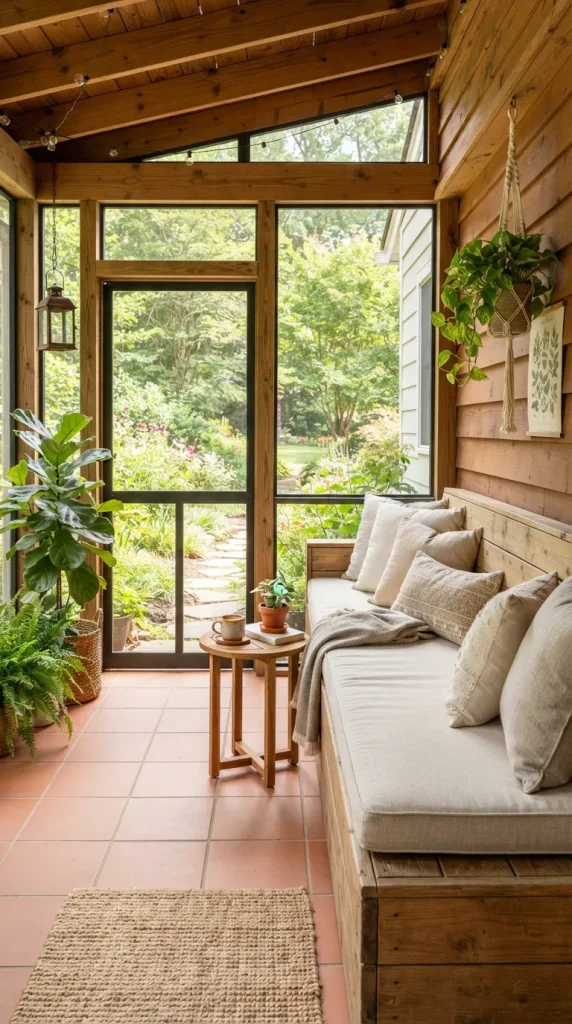
A wooden bench offers a practical seating solution when you need flexibility without filling the porch with bulky furniture. Place a long bench against one wall and add a weather-resistant seat cushion for comfort. It can accommodate several people during gatherings but remain visually simple when the porch is used by only one or two people. A bench can also double as a decorative surface when not occupied, particularly if you add a few pillows or a folded throw. Choose a finish that complements existing wood tones rather than introducing too many competing materials. For narrow screened porches, a bench can be especially efficient because it provides seating while maintaining a relatively small footprint.
13. Make the Ceiling a Decorative Feature
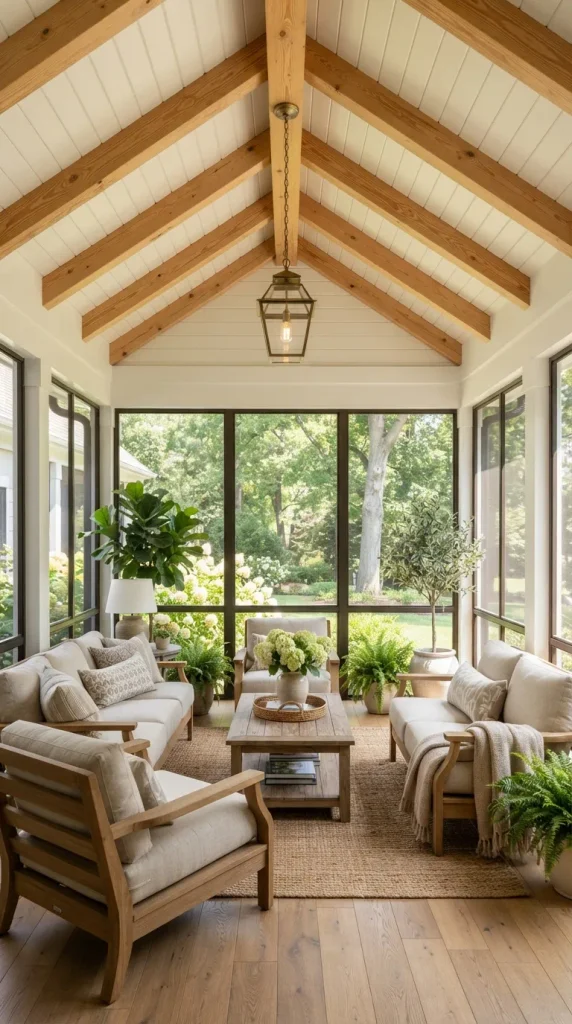
The ceiling is often overlooked when decorating a screened porch, yet it can have a major effect on the room’s overall character. A painted ceiling in white, soft blue, warm beige, or another restrained shade can visually define the space without making it feel busy. If the architecture permits, natural wood planks or a wood-look finish can introduce warmth and texture. Keep the rest of the decor relatively simple so the ceiling remains a subtle architectural feature rather than competing with furniture and accessories. A ceiling fan or understated pendant light can complete the design while improving comfort and function. Even when the floor and walls remain unchanged, attention to the ceiling can give a basic porch a more finished appearance.
14. Layer Throw Pillows for Comfortable Style
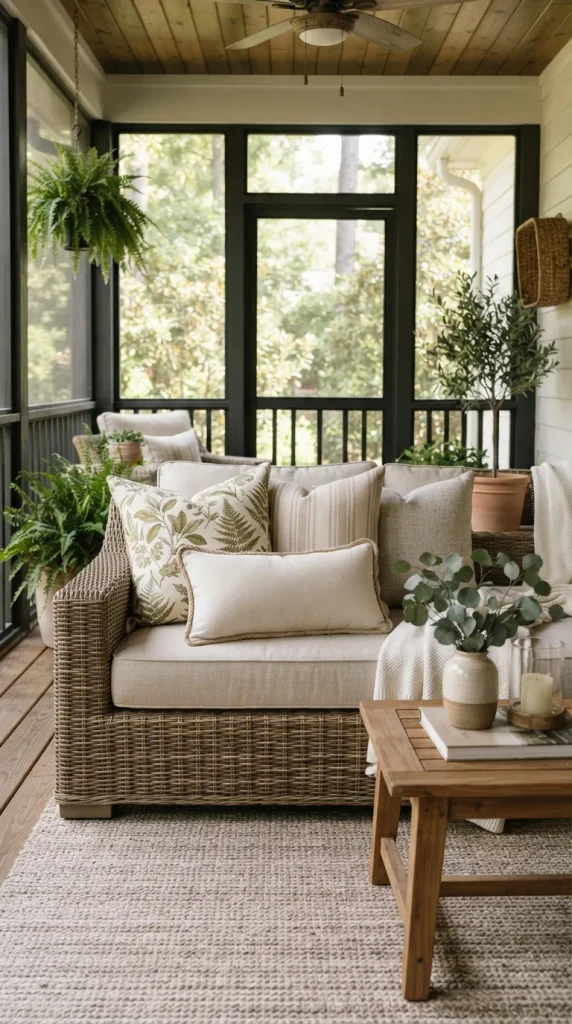
Throw pillows are a simple way to refresh a screened porch without purchasing new furniture. Start with two or three coordinating colors and mix solids with restrained patterns such as stripes, botanical prints, checks, or small geometric designs. Outdoor-rated fabrics are preferable because they are generally more resistant to moisture, fading, and everyday wear. Rather than placing identical pillows everywhere, vary their sizes and orientations to make seating look naturally comfortable. A lumbar pillow can add support to a deep chair, while larger square pillows can create a relaxed sofa arrangement. Seasonal covers are also easy to store and replace, allowing the same basic furniture to take on a different appearance throughout the year.
15. Use Curtains for Privacy and Softness
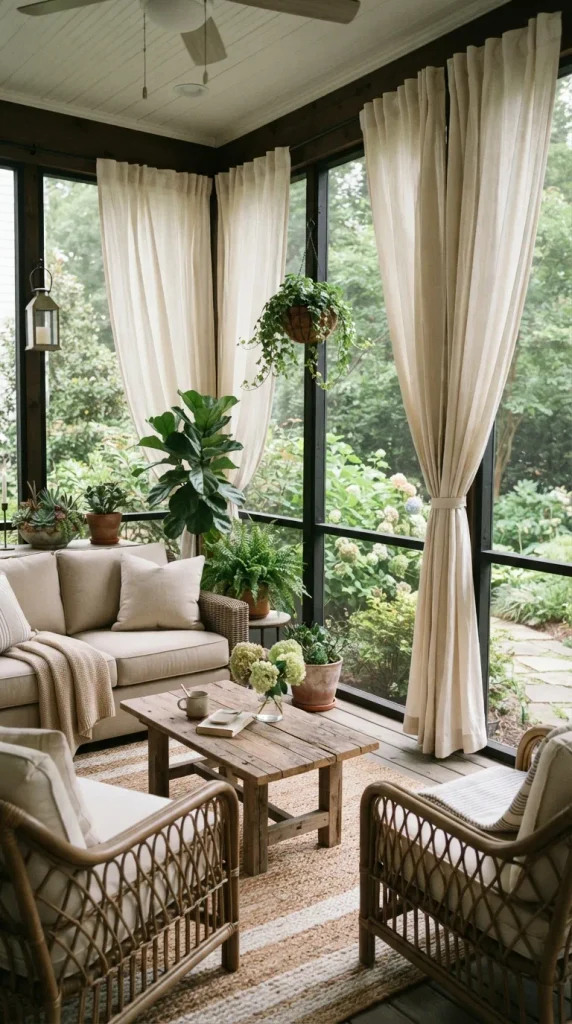
Outdoor curtains can make a screened porch feel more private while introducing movement and softness into an otherwise architectural space. Choose lightweight, weather-appropriate panels that can be opened during the day and drawn when additional privacy or shade is desired. Neutral white, cream, oatmeal, and pale gray fabrics keep the design airy, while deeper tones can create a more intimate atmosphere. Hang the panels high enough to emphasize ceiling height and allow them to fall naturally toward the floor. Curtains are especially useful for porches that overlook neighboring homes or busy outdoor areas. They can also help visually divide the porch into separate zones without installing permanent walls or screens.
16. Add a Small Coffee Table With Natural Texture

A coffee table serves an important practical purpose, but it can also introduce another layer of texture to a screened porch. Consider a round wood table, woven tabletop, stone-look surface, or simple weather-resistant design depending on the surrounding furniture. Round tables are particularly useful in smaller spaces because they reduce sharp corners and allow people to move more easily around the seating area. Keep the tabletop styling uncomplicated with a small tray, potted plant, lantern, or stack of outdoor-safe books. Avoid excessive decoration that reduces usable space. A well-proportioned coffee table should provide enough room for everyday essentials while leaving comfortable walking clearance between the seating and surrounding walls.
17. Turn One Corner Into a Hammock Retreat
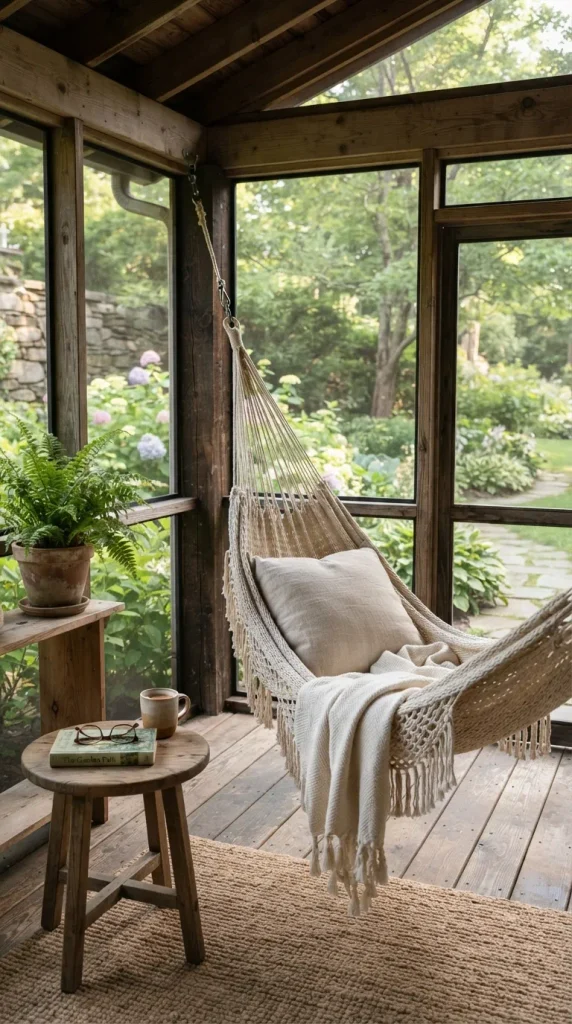
For a porch with enough structural space, a hammock can create a wonderfully relaxed destination without requiring an extensive furniture arrangement. Install a properly rated hammock or hammock chair according to manufacturer and structural requirements, then surround it with only a few carefully selected accessories. A small side table, soft cushion, lightweight blanket, and nearby plant can complete the retreat. Keep the surrounding area open so the hammock remains the obvious focal point. Natural woven materials work particularly well for this concept because they reinforce the casual outdoor character. This design is ideal for homeowners who want their screened porch to feel more like a personal getaway than a formal entertaining space.
18. Combine Black Accents With Warm Wood

Black accents can give a simple screened porch a modern, defined appearance when balanced with warmer materials. Rather than using black throughout the entire space, introduce it through a metal coffee table, light fixture, window-style details, planter stands, or chair frames. Pair those elements with natural wood furniture, beige upholstery, woven baskets, or warm neutral textiles. The contrast creates visual structure while preventing the porch from feeling overly stark. This combination works particularly well in transitional and modern farmhouse homes. Because black is visually strong, using it selectively is important; a few repeated accents are usually more effective than covering multiple large surfaces in the same dark tone.
19. Create a Cozy Porch With Layered Textures
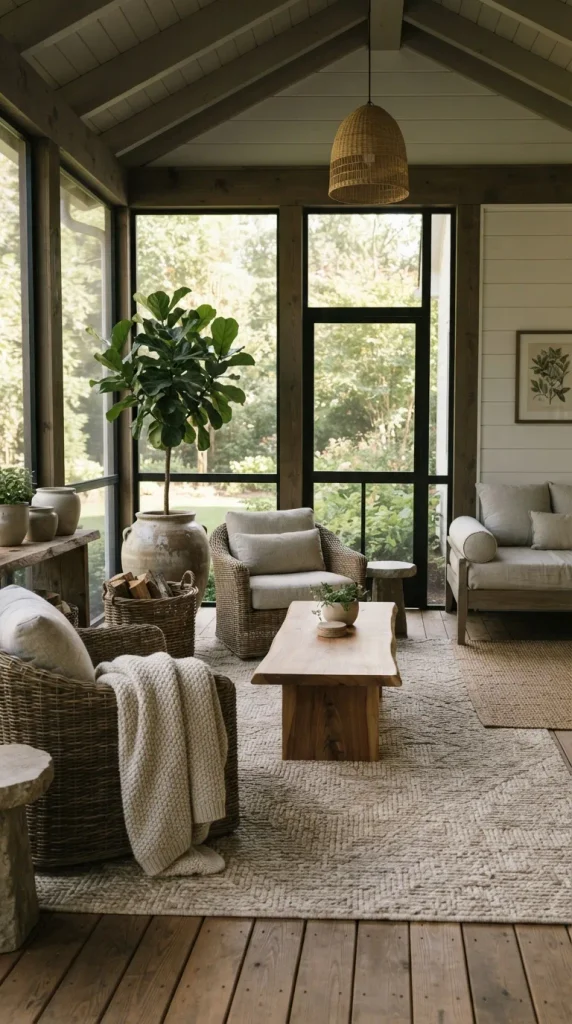
Texture can make a screened porch feel warm even when the color palette is extremely simple. Combine smooth painted surfaces with woven furniture, soft cushions, textured rugs, wood accents, ceramic pots, and loosely folded throws. Each material should contribute something different rather than repeating the same finish throughout the room. For example, a woven chair can sit beside a smooth wood table while a textured outdoor rug anchors both pieces. Layering materials creates visual interest without relying heavily on bold colors or elaborate accessories. This is particularly useful for minimalist porch designs because texture provides depth while maintaining the clean, uncluttered appearance that defines the style.
20. Design a Porch With a Coastal-Inspired Feel

A coastal-inspired screened porch does not need obvious nautical decorations to communicate a relaxed seaside mood. Instead, focus on a light palette, natural textures, breathable fabrics, and an uncluttered furniture arrangement. White or pale wood furniture can be paired with soft blue, sandy beige, faded green, or subtle striped textiles. Woven baskets, driftwood-inspired accessories, and simple ceramic planters can add character without becoming overly thematic. Keep the space bright and open, allowing the surrounding landscape to become part of the decor. A coastal approach works particularly well when the porch receives abundant natural light because the combination of pale colors and sunlight creates a fresh, spacious atmosphere throughout the day.
21. Add a Small Outdoor Bar Cart
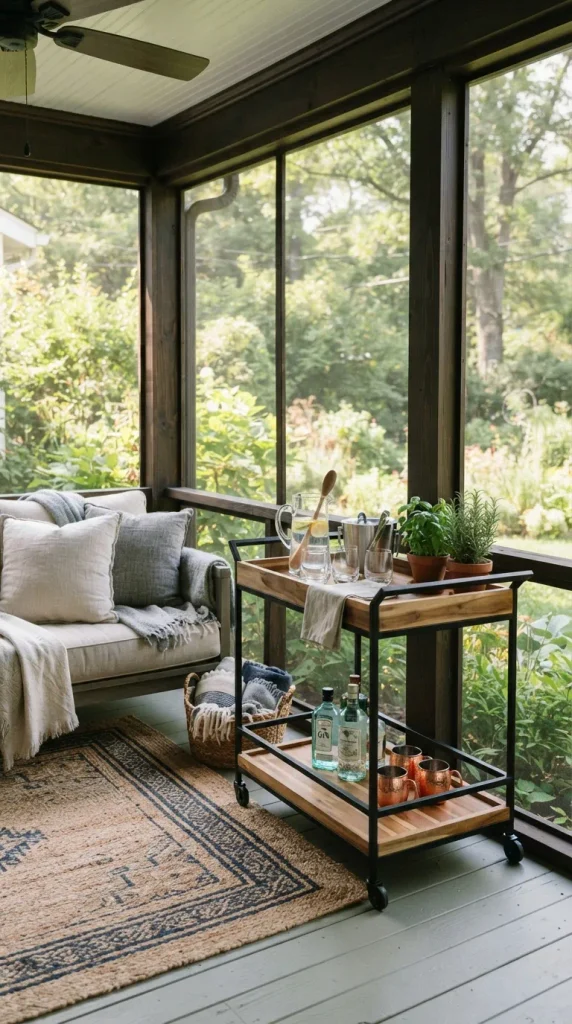
A compact bar cart can give a screened porch a practical entertaining station without requiring a permanent built-in counter. Choose a weather-resistant cart with two shelves so glasses, pitchers, serving pieces, and nonperishable accessories remain organized. When not being used for entertaining, the cart can hold potted herbs, lanterns, books, or decorative containers. Position it near the dining or seating area but leave enough space for people to walk around comfortably. A wood or metal finish can be selected to match the existing furniture. This idea is especially useful for homeowners who regularly host casual gatherings because the cart makes refreshments easier to serve while keeping the main seating area uncluttered.
22. Keep a Small Screened Porch Minimal and Functional

A small porch does not need to contain every decorating element to feel complete. In fact, a restrained arrangement of one loveseat or two chairs, a compact table, one rug, and a few plants can create a remarkably comfortable outdoor room. Choose furniture that fits the scale of the space rather than oversized pieces that restrict movement. Use vertical space for hanging plants or lighting and select accessories that serve a practical purpose whenever possible. Keeping the palette cohesive also helps the porch appear larger and more organized. The finished design should leave enough open floor area to move comfortably, proving that thoughtful proportions and carefully selected essentials often matter more than the number of decorative objects.
Conclusion
Simple screened-in porch decorating is ultimately about creating a space that supports the way you actually live. You do not need an oversized porch, expensive furniture, or a complicated renovation to make the area comfortable and attractive. A carefully chosen seating arrangement, weather-resistant textiles, natural materials, soft lighting, greenery, and a few useful accessories can transform an ordinary screened porch into a genuine outdoor living room.
The most successful simple screened in porch ideas balance beauty with everyday practicality. Before buying anything, consider how the porch will be used, how much space you need for comfortable movement, how much maintenance you are willing to handle, and which materials work best in your climate. From a peaceful reading nook and compact coffee station to a welcoming dining area or hammock retreat, even a small screened porch can serve a meaningful purpose.
For a timeless result, focus on comfortable furniture, cohesive colors, layered textures, and flexible pieces that can adapt as your needs change. Whether your style leans farmhouse, modern, coastal, rustic, or minimalist, the goal is the same: create an inviting outdoor space that feels naturally connected to the rest of your home and enjoyable in everyday life.


