

23 Elementary Data Wall Ideas for Inspiring Classrooms
An elementary data wall can turn a plain classroom display into a purposeful learning tool that helps students understand their progress, celebrate growth, and stay connected to classroom goals. More than a collection of charts or colorful decorations, a well-designed data wall gives teachers a practical way to organize assessment information while creating an encouraging visual environment for young learners. When thoughtfully arranged, it can support goal setting, reflection, classroom discussions, and student motivation without making the room feel overly formal or cluttered.
The best elementary data wall ideas balance educational function with attractive classroom decor. Bright colors, simple graphics, student-friendly labels, pockets, movable markers, goal trackers, and clearly defined sections can make assessment information easier to understand. A data wall can also complement a classroom theme, allowing teachers to incorporate natural wood, rainbow colors, neutral tones, playful illustrations, or modern typography without losing its instructional purpose.
Whether you teach kindergarten, first grade, second grade, third grade, fourth grade, or fifth grade, the following ideas can be adapted to different ages and assessment systems. The key is to keep information easy to update, visually organized, and appropriate for the developmental level of students. These classroom data wall ideas are designed to inspire practical displays that look polished while helping children see learning as a process of growth.
1. Color-Coded Elementary Data Wall
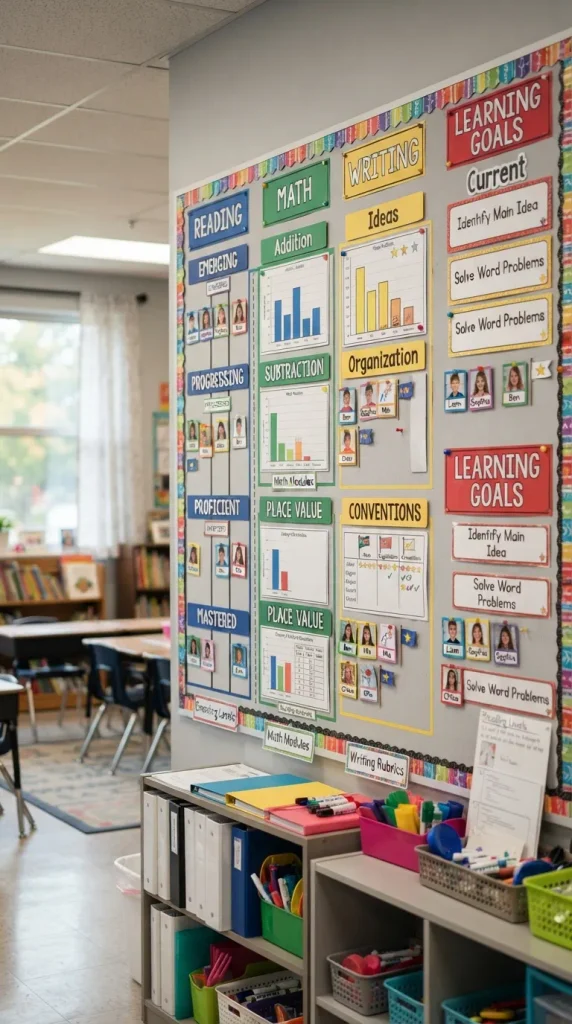
A color-coded elementary data wall creates an immediate visual system that young students can understand without needing complicated explanations. Divide the display into clearly marked categories using a consistent palette, such as blue for reading, green for math, yellow for writing, and orange for learning goals. Student markers, cards, or magnets can be placed within the appropriate sections according to the classroom’s assessment system. Keep the background relatively simple so the color coding remains easy to follow. Laminated labels make the display durable, while matching borders or small classroom accents can connect the data wall to the rest of the room. This approach works particularly well when teachers regularly update multiple academic areas.
2. Rainbow Growth Tracker Data Wall

A rainbow growth tracker brings cheerful classroom decor into an elementary data wall while keeping student progress at the center of the design. Create several curved sections representing stages of progress, with each student’s name or private identifier attached to a movable marker. Instead of emphasizing competition, position the display around individual growth and achievable learning goals. Soft rainbow colors can make the wall appealing without overwhelming the classroom, especially when paired with white backgrounds and simple typography. Teachers can add small motivational phrases such as “Keep Growing” or “Learning in Progress.” This design is particularly suitable for younger elementary classrooms where colorful visual cues can make abstract progress concepts easier to discuss.
3. Pocket Chart Student Data Wall

A pocket chart offers one of the most flexible solutions for an elementary data wall because individual cards can be moved, replaced, or reorganized without rebuilding the entire display. Use labeled pockets for reading, mathematics, writing, fluency, vocabulary, or other classroom learning targets. Student cards can contain goal information, progress indicators, or teacher-created codes rather than sensitive assessment details. Choose sturdy fabric or plastic pockets with a neutral background so the information remains visually prominent. Adding a title banner above the chart gives the display a finished appearance. This format is especially useful for teachers who assess students frequently because updates can be completed quickly while keeping the wall neat and consistent.
4. Goal-Setting Elementary Data Wall

A goal-setting data wall shifts attention from scores alone toward what students are working to accomplish next. Divide the display into sections such as “My Goal,” “My Progress,” and “My Next Step,” using simple language appropriate for elementary learners. Students can place goal cards beneath the relevant subject area and update them as their learning develops. Small icons, pencils, stars, arrows, or speech bubbles can make the display approachable without turning it into visual clutter. Teachers may also reserve a small area for class-wide goals. This design encourages reflection and helps children understand that assessment information can guide future learning rather than simply describe what happened on a previous assignment.
5. Neutral Montessori-Inspired Data Wall
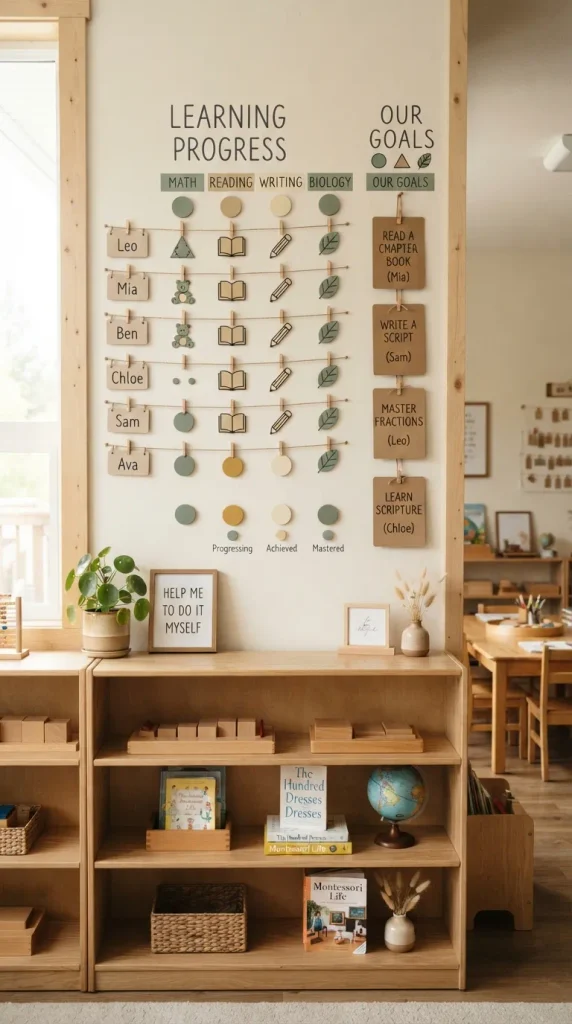
For classrooms that favor a calmer aesthetic, a Montessori-inspired elementary data wall can combine purposeful organization with restrained classroom decor. Use natural wood tones, cream, beige, muted green, soft gray, and simple black typography instead of highly saturated colors. Arrange assessment categories in clean rectangular sections with generous spacing between them. Wooden clips, kraft-paper cards, and simple geometric icons can reinforce the natural style. The display should remain highly readable, with each category clearly identified and unnecessary decorative elements minimized. This approach is particularly effective when the classroom already uses neutral furniture and natural materials, creating a cohesive environment while still giving the teacher a functional place to monitor learning goals and progress.
6. Data Wall With Student Goal Pockets
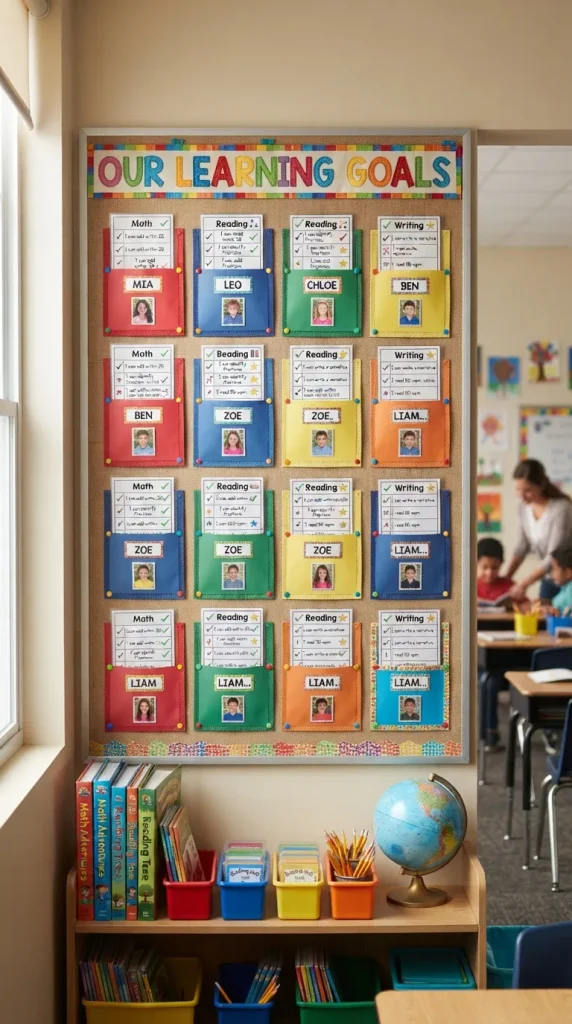
Small individual pockets can transform a traditional bulletin board into an interactive elementary data wall. Give each student a designated pocket containing goal cards, reflection slips, progress notes, or teacher-selected learning targets. Arrange the pockets in rows so every section is easy to access and update. For privacy, teachers can use first names, initials, numbers, or other classroom identifiers depending on school policies and the intended audience. Add a clearly visible heading such as “Our Learning Goals” and use a consistent border around the entire display. The pocket system also makes it easy to differentiate instruction because students can have personalized goals without requiring a completely separate display for each child.
7. Reading Progress Data Wall
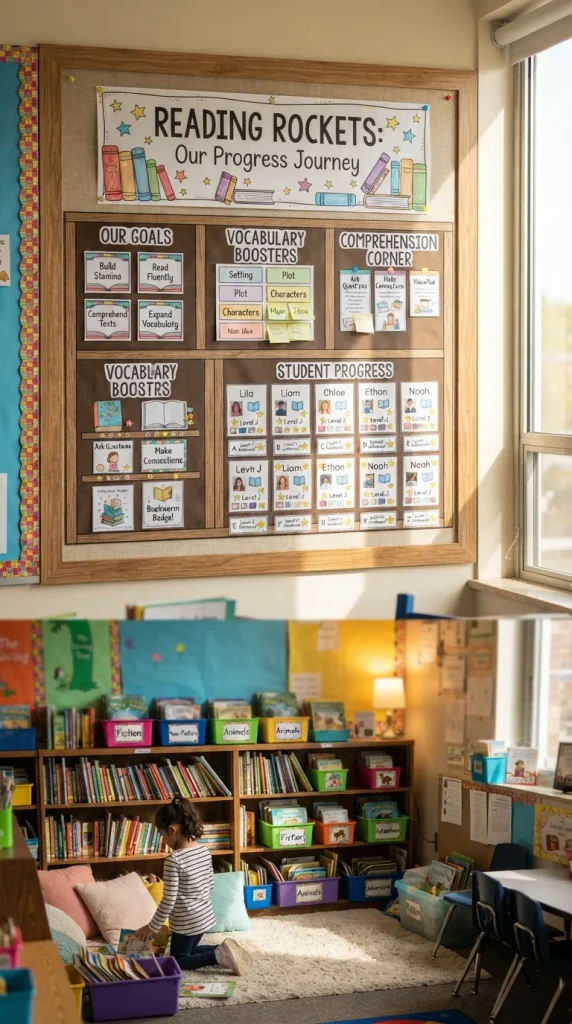
A reading-focused data wall can become an attractive feature in an elementary literacy classroom when it is organized around meaningful learning milestones. Create sections for reading goals, fluency, comprehension, vocabulary, or independent reading habits, depending on the classroom’s needs. Rather than displaying sensitive scores publicly, use private codes, individual folders, or teacher-facing markers where appropriate. A bookshelf-inspired background, paper-book graphics, or simple illustrated reading icons can give the wall a literary personality. Teachers can also include a small “Next Reading Goal” area for students to revisit regularly. The strongest design keeps decoration secondary to organization, ensuring that children and teachers can quickly locate the information they need.
8. Math Growth Elementary Data Wall
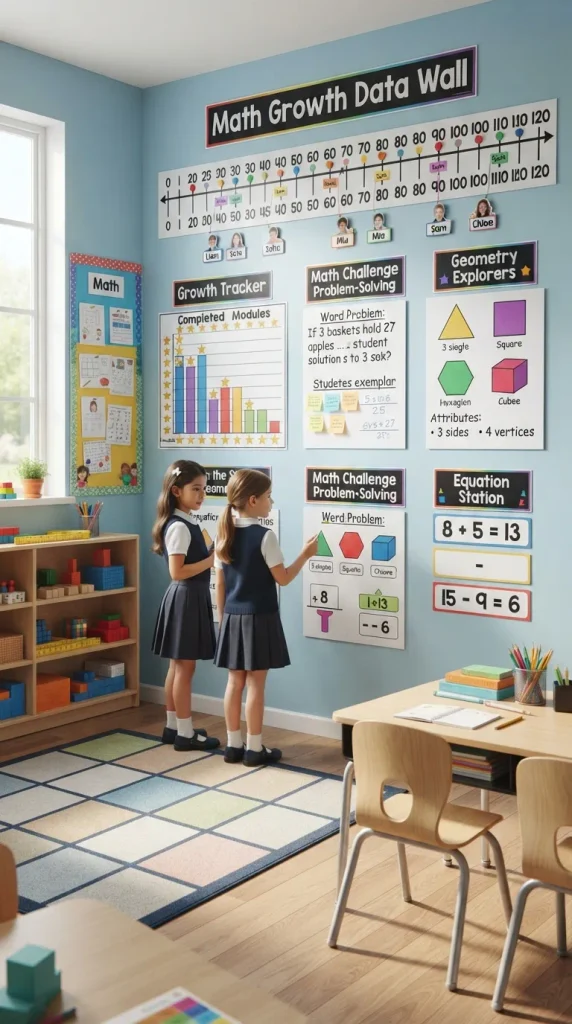
A math growth data wall can make numerical progress easier for elementary students to visualize by using clear categories such as computation, problem solving, number sense, geometry, or mathematical reasoning. Consider using movable numbers, equation cards, geometric shapes, or calculator-inspired graphics as subtle decorative elements. Students can have individual progress markers that move toward personal goals rather than competing against classmates. A large number line can work particularly well as the central visual feature, while smaller sections around it hold specific learning targets. For a polished classroom appearance, use two or three coordinating colors rather than a different color for every category. This creates a display that feels energetic while remaining academically focused.
9. Data Wall With Climbing Growth Chart
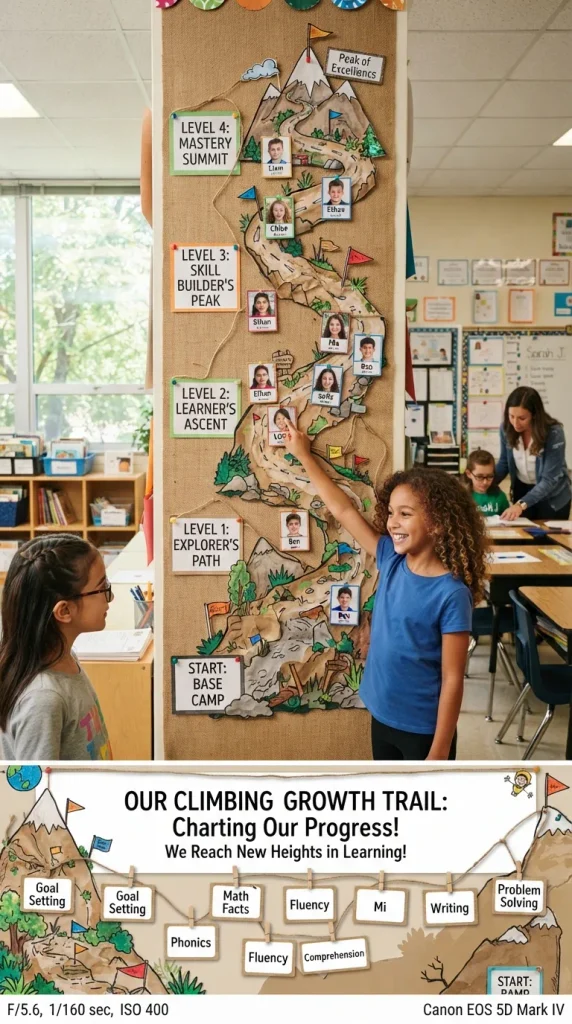
A climbing growth chart uses a vertical pathway to symbolize learning progress. Students can have individual markers that move upward as they demonstrate progress toward selected learning goals. The pathway might resemble a mountain trail, staircase, ladder, tree trunk, or series of stepping stones, depending on the classroom theme. Keep the language focused on growth rather than ranking, with labels such as “Starting,” “Practicing,” “Growing,” and “Ready to Apply.” This design works especially well in elementary classrooms because the movement of a marker provides a concrete visual representation of an otherwise abstract idea. A restrained background and large readable labels ensure that the metaphor remains useful rather than becoming merely decorative.
10. Farmhouse-Style Elementary Data Wall

A farmhouse-style data wall can blend rustic classroom decor with practical assessment organization. Use a warm neutral background, faux wood textures, black or charcoal lettering, and simple gingham-inspired accents. Galvanized-style buckets, clothespins, kraft-paper cards, or wooden clips can hold individual goal cards without making the display feel overly busy. The academic categories should remain clearly separated so the rustic styling never interferes with readability. Small illustrations such as apples, leaves, pencils, or schoolhouse motifs can reinforce the classroom atmosphere. This design is particularly appealing for teachers who want their data wall to coordinate with a cozy farmhouse classroom while still maintaining a professional and purposeful instructional display.
11. Modern Minimalist Data Wall

A modern minimalist elementary data wall demonstrates that classroom assessment displays do not need to be brightly decorated to be engaging. Start with a white, cream, or soft gray background and use one accent color for headings and student markers. Thin borders, simple icons, clean typography, and consistent spacing create a polished appearance. Organize the display into clearly defined modules for different academic areas or learning goals. Magnetic strips can make student cards easy to move, while laminated materials allow repeated use throughout the school year. This approach is ideal for contemporary classrooms where teachers prefer uncluttered walls. Its greatest strength is clarity: students and educators can identify important information without navigating excessive visual decoration.
12. Interactive Data Wall With Moveable Magnets
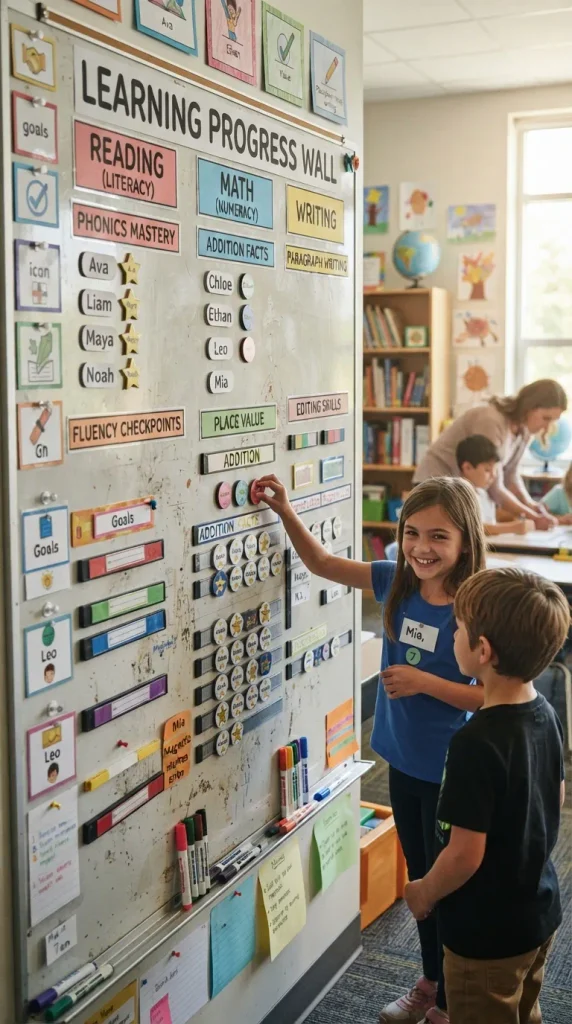
An interactive magnetic data wall allows teachers to update classroom information quickly while giving students a tangible connection to their learning goals. Install magnetic strips, a magnetic whiteboard, or individual magnetic pockets across the display. Each section can represent an academic skill, assessment category, or instructional goal. Students can use personalized magnets to indicate a goal, reflection stage, or completed milestone, provided the system protects private information. Choose simple shapes such as circles, stars, arrows, or pencils for the markers. Because pieces can be rearranged repeatedly, this design is particularly practical for classrooms where progress is monitored throughout the year and teachers want to avoid constantly printing replacement materials.
13. Data Wall With Learning Target Banners
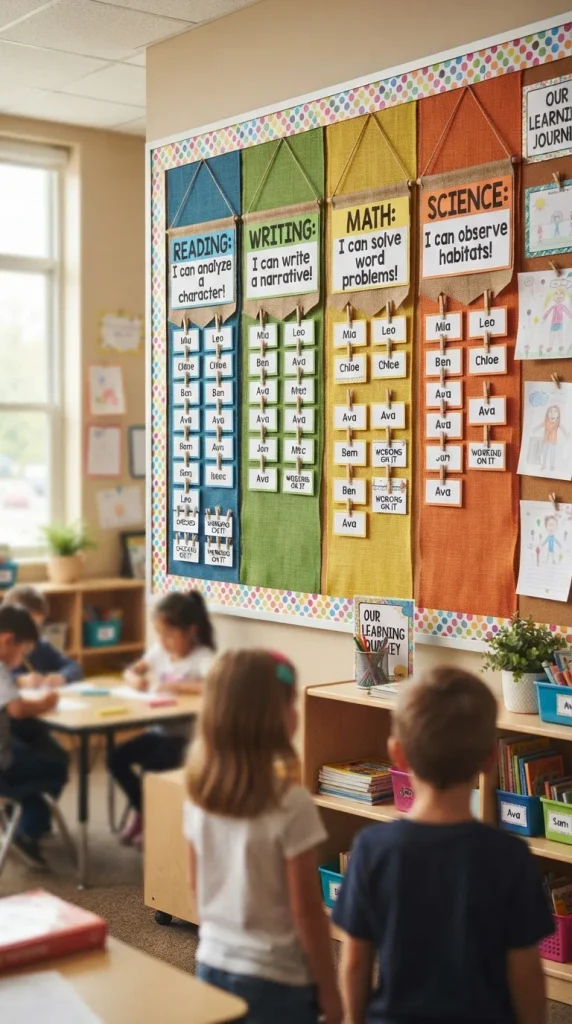
Learning target banners give an elementary data wall a structured appearance while making classroom objectives easier to communicate. Create separate banner headings for reading, mathematics, writing, science, or other relevant areas, then place progress indicators beneath each one. Keep the wording short and student-friendly, using phrases such as “I Can Explain,” “I Can Solve,” or “I Can Show My Thinking.” Fabric, cardstock, or laminated banner pieces can be used depending on the desired classroom style. Pairing banners with individual student cards creates a clear hierarchy, with the learning target serving as the destination and the student marker representing progress toward it. The result is both decorative and instructionally useful.
14. Data Wall Designed Like a Classroom Roadmap
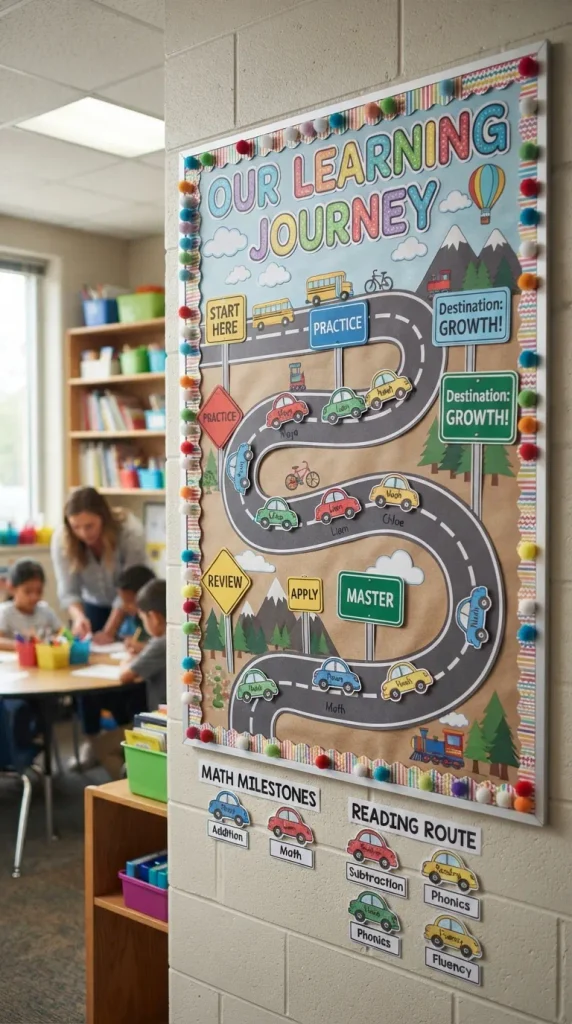
A roadmap-style data wall can visually represent learning as a journey with checkpoints along the way. Use a winding road, pathway, or series of connected destinations across the display, with each checkpoint representing a classroom learning target. Students can have individual markers positioned along the route according to their own progress. Avoid framing the journey as a race; the purpose is to show that students may move at different speeds while working toward meaningful goals. Road signs can label concepts such as “Practice,” “Review,” “Apply,” and “Master.” The design can be adapted to transportation-themed classrooms, but the underlying structure remains useful even with a simple neutral aesthetic.
15. Growth Tree Elementary Data Wall

A growth tree provides a warm visual metaphor for learning and can work beautifully as a classroom focal point. Create a large tree trunk with branches representing academic areas, then use leaves, apples, or small cards as movable student markers. Each branch might correspond to reading, math, writing, vocabulary, or another learning category. The display can evolve throughout the year as new leaves are added or moved to indicate completed goals. Keep the tree visually balanced by leaving enough open space between categories. Natural greens and browns can create a calming effect, while brighter leaves can add seasonal interest. This idea is especially suitable for younger elementary classrooms that respond well to nature-inspired visuals.
16. Data Wall With Individual Student Goal Cards
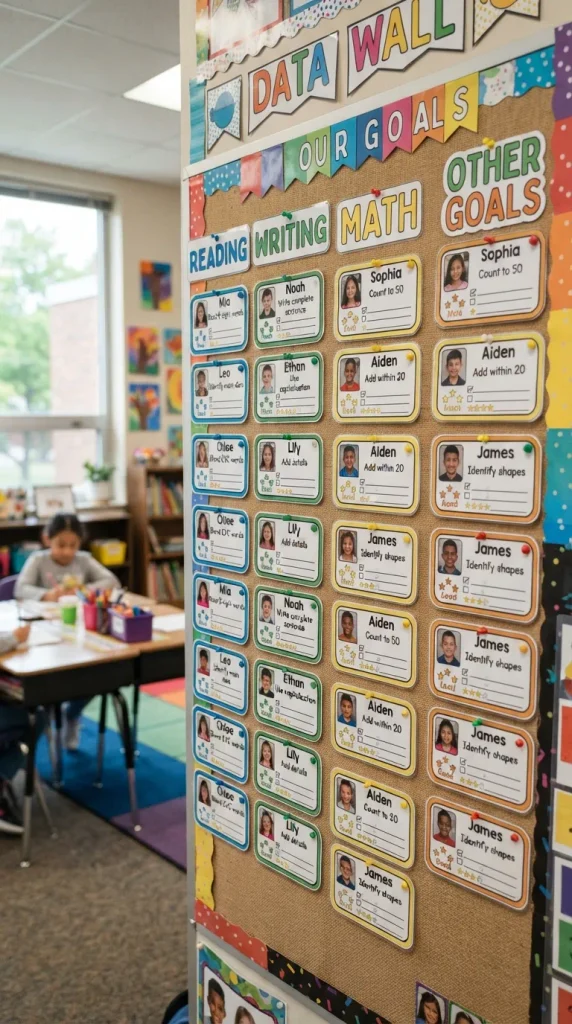
Individual goal cards make an elementary data wall more personalized without requiring complicated graphics or elaborate construction. Each student can have a designated card containing a current learning target, a small progress indicator, and a space for a future goal. Arrange the cards beneath broader academic headings so the entire class display remains organized. Use laminated cards with dry-erase sections if goals change frequently. For a more polished look, choose one card shape and repeat it consistently across the board. This structure also allows teachers to create differentiated targets, ensuring that students can work toward appropriate goals rather than being expected to follow exactly the same progression.
17. Seasonal Elementary Data Wall
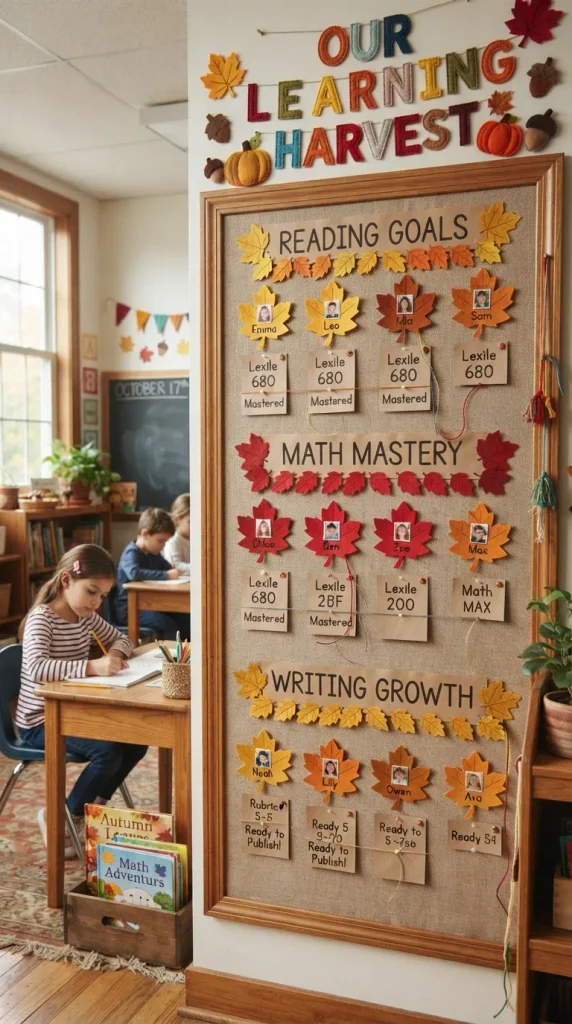
A seasonal data wall can refresh classroom decor throughout the year while keeping the underlying organizational structure consistent. For autumn, students might have leaf-shaped markers; winter can use snowflakes; spring can introduce flowers; and summer-inspired displays can use suns or colorful kites. The academic categories and progress system should remain stable even as the decorative elements change. This prevents the teacher from rebuilding the entire display every few months. Seasonal styling is especially effective for elementary classrooms because it adds visual variety without requiring excessive wall space. Use laminated seasonal pieces whenever possible so they can be stored and reused in future school years.
18. Data Wall With Student Reflection Station
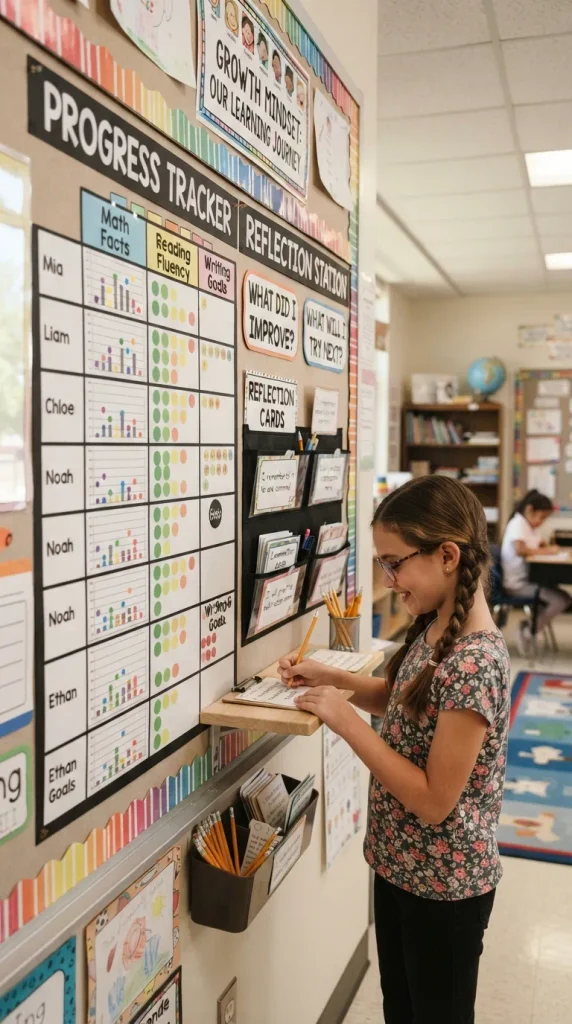
Combining a data wall with a reflection station makes the display more than a passive classroom decoration. Reserve one portion of the board for progress information and a neighboring section for short student reflections. Prompts might include “What did I improve?”, “What am I practicing?”, or “What will I try next?” Younger students can respond with drawings, symbols, or sentence starters, while older elementary students can write brief reflections. A clipboard, small pocket, or rotating reflection cards can keep the area organized. The design encourages children to connect assessment information with their own thinking, making the wall a practical part of classroom routines rather than simply something displayed for visitors.
19. Data Wall With Star and Badge Motifs
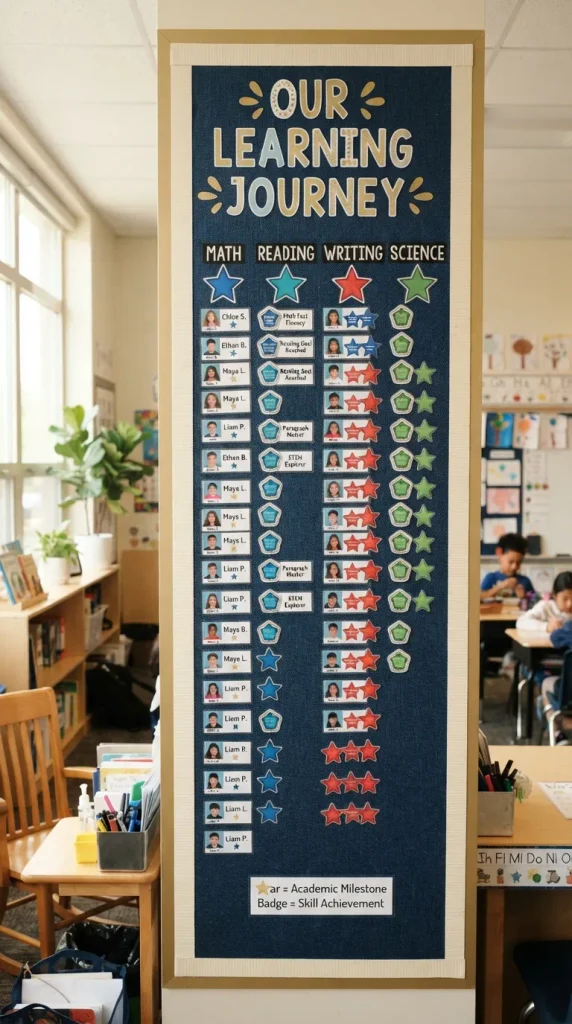
Stars and badges can add a playful classroom aesthetic to an elementary data wall while emphasizing milestones and learning accomplishments. Instead of using badges to rank students, assign them to individual learning targets or completed stages. For example, a student might earn a “Reading Strategy” badge or a “Problem-Solving Practice” marker after demonstrating a particular skill. Arrange the badges beneath clearly labeled academic sections and leave room for new milestones throughout the year. A navy, cream, gold, or primary-color palette can make the display feel polished without becoming overly decorative. The key is to celebrate evidence of learning rather than comparing one child’s achievement with another’s.
20. Small-Space Elementary Data Wall

Teachers working with limited wall space can create an effective data wall by using a narrow vertical board, rolling chart, door-side display, or compact bulletin board. Divide the available area into stacked sections and prioritize only the information that is genuinely useful for classroom instruction. Slim pockets, magnetic labels, and fold-out charts can provide more functionality without expanding the physical footprint. A consistent font size and strong headings are particularly important in a compact design because crowded displays quickly become difficult to read. Neutral backgrounds with one or two accent colors can visually reduce clutter. This solution proves that an effective elementary data wall does not require an entire classroom wall.
21. Data Wall With Private Student Tracking

A privacy-conscious data wall can give teachers the organizational benefits of progress tracking without publicly displaying sensitive individual assessment results. Use student numbers, private symbols, initials where appropriate, or teacher-facing tracking cards according to school policies. The public portion of the display can focus on class goals, learning targets, instructional strategies, and overall growth concepts rather than individual scores. A separate teacher-accessible binder or secure digital system can hold detailed assessment information. This approach is especially valuable when the data wall is visible to visitors, other classes, or families. Thoughtful privacy design allows the classroom to benefit from visual goal tracking while respecting students’ personal information.
22. Data Wall With Classroom Color Theme

Matching the data wall to the classroom’s existing color theme creates a cohesive interior rather than making the display look like an isolated bulletin board. If the room uses sage green, incorporate complementary cream and natural wood accents; for a rainbow classroom, use coordinated blocks of color; for a blue-and-white theme, rely on varying shades and neutral space. The important consideration is maintaining enough contrast between headings, student markers, and the background. Repeating the classroom’s existing typography, border style, or decorative motifs can make the entire room feel intentionally designed. This approach is particularly useful for teachers who want instructional displays to contribute to the overall aesthetic rather than compete with it.
23. Year-Long Elementary Data Wall Journey
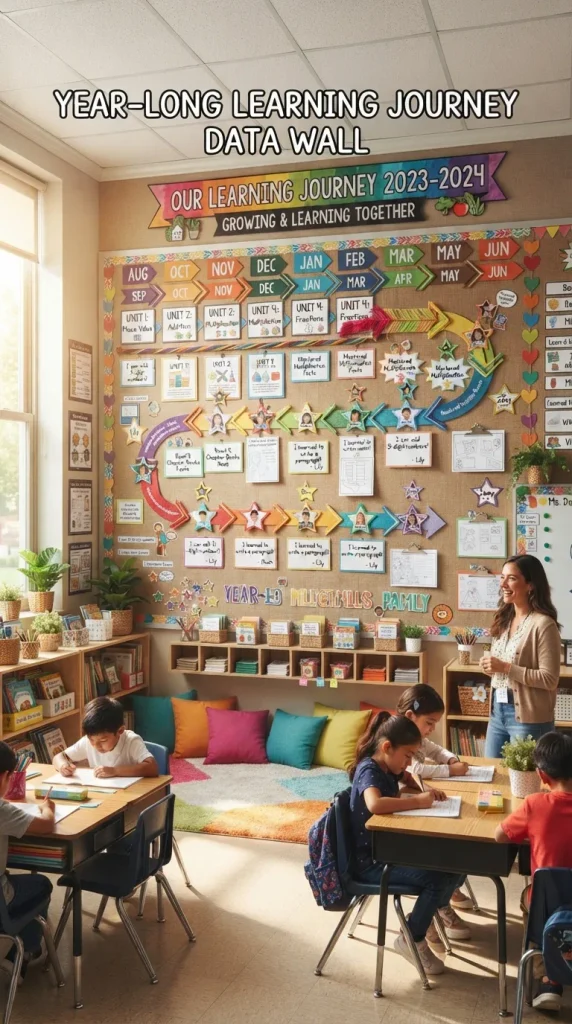
A year-long data wall can document the evolution of classroom learning from the first weeks of school through the final months. Begin with broad learning goals and gradually add milestones, reflections, completed targets, and new challenges as instruction progresses. A timeline, pathway, growing tree, or series of connected panels can provide the physical structure. Leave enough space for the display to expand so the wall does not become crowded later in the year. At appropriate points, students can look back at earlier goals and recognize how their skills have developed. This design turns the elementary data wall into a visual record of learning while giving the classroom a meaningful sense of progression.
Conclusion
An effective elementary data wall does more than fill an empty classroom wall. It can make learning goals visible, encourage thoughtful reflection, organize assessment information, and help students recognize that progress develops over time. The strongest designs are not necessarily the most elaborate; they are the ones that combine clear organization, age-appropriate visuals, practical updating systems, and a classroom atmosphere that makes students feel supported.
From colorful growth trackers and interactive magnetic displays to minimalist boards, goal pockets, reading trackers, growth trees, and privacy-conscious systems, these 23 elementary data wall ideas offer flexible starting points for different teaching styles and classroom aesthetics. Choose a structure that fits the information you actually use, then adapt the colors, materials, typography, and decorative details to match your room.
For Pinterest-friendly classroom design, focus on strong visual hierarchy, attractive but uncluttered backgrounds, readable labels, and a clear central concept. A beautiful data wall should still have a job to do: helping teachers organize learning information and helping students see themselves as active participants in their own growth.


