

24 Kitchen Color Scheme Ideas for a Stylish Home
Choosing the right kitchen colors can completely change how a room feels, from making a compact kitchen appear brighter to giving a large open-plan space a sophisticated designer finish. The best kitchen color scheme ideas balance cabinetry, walls, countertops, backsplashes, flooring, hardware, and natural light rather than relying on a single shade. Whether you love timeless neutrals, earthy tones, dramatic dark kitchens, or cheerful modern palettes, the right combination can make your kitchen feel cohesive and welcoming.
Color also plays an important role in defining the personality of a kitchen. Soft greens can create a connection with nature, warm beige can make a space feel comfortable and relaxed, while navy blue can introduce depth without feeling as heavy as black. For homeowners planning a renovation or simply looking for an affordable kitchen refresh, changing cabinet paint, wall color, textiles, lighting, or accessories can produce a noticeable transformation without replacing every major element.
These 24 kitchen color scheme ideas cover a wide range of decorating styles, including modern, farmhouse, traditional, Scandinavian, coastal, contemporary, and transitional kitchens. Each palette explains how to combine colors successfully so the finished room looks intentional rather than mismatched.
1. Classic White and Warm Wood Kitchen Color Scheme

White and natural wood remain one of the most versatile kitchen color combinations because they create a bright foundation without making the room feel sterile. Crisp white cabinetry works beautifully with oak, walnut, or light ash accents, while wood flooring or open shelving can introduce warmth and texture. For countertops, consider white quartz with subtle veining to maintain the airy appearance. Brushed brass hardware adds a refined touch, whereas matte black fixtures create a more contemporary contrast. This palette is particularly effective in kitchens with limited natural light because white surfaces reflect available sunlight, while the wood elements prevent the space from feeling overly cold or clinical.
2. Sage Green and Cream Kitchen Color Scheme

Sage green has become a favorite among homeowners seeking a calm, nature-inspired kitchen palette. Pairing muted sage cabinets with creamy walls creates a softer look than a high-contrast green-and-white combination. Warm cream backsplash tiles, natural stone countertops, and light oak accessories complement the earthy character of the green beautifully. Instead of using bright metallic finishes, choose aged brass or antique bronze for cabinet pulls and faucets. This color scheme works especially well in farmhouse, cottage, and transitional kitchens because sage provides visual interest while remaining understated. Add woven baskets, linen curtains, or indoor herbs to reinforce the organic atmosphere without overwhelming the cabinetry.
3. Navy Blue and White Kitchen Color Scheme

Navy blue offers a sophisticated way to introduce color into a kitchen while retaining a timeless appearance. Deep navy lower cabinets or a large kitchen island can anchor the room, while white upper cabinets and walls keep the overall design visually light. A white subway tile backsplash creates a clean transition between the two shades, and quartz countertops with gray or soft veining can tie the palette together. Brass hardware brings warmth to the dark blue cabinetry, while stainless steel works well for a more modern approach. This combination is particularly appealing in open-plan homes because navy creates a strong focal point without looking as intense as an entirely dark kitchen.
4. Beige and Greige Kitchen Color Scheme
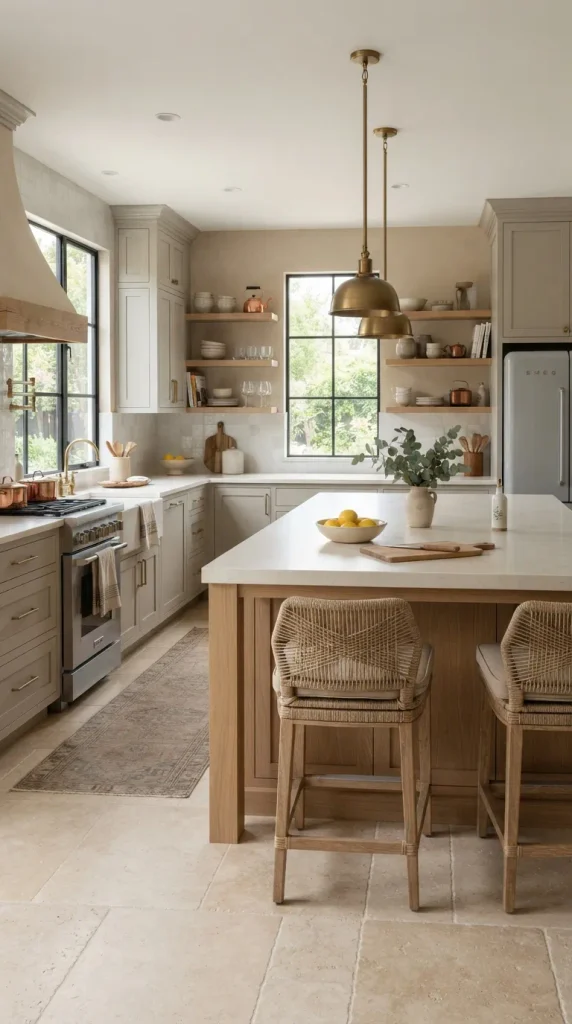
For a sophisticated neutral kitchen, combine warm beige with greige, a balanced mixture of gray and beige. This palette is ideal for homeowners who want something softer than stark white but more contemporary than traditional cream. Greige cabinetry can be paired with beige walls, limestone-inspired flooring, and a warm white countertop. To prevent multiple neutral tones from appearing flat, introduce variations through wood grain, stone texture, ceramic tile, and woven accessories. Brushed nickel or aged brass hardware can complete the look depending on the desired style. The result is an understated kitchen color scheme that works across modern, transitional, and classic interiors while remaining easy to update over time.
Also Read: 23 Lemon Kitchen Decor Ideas for a Bright Kitchen
5. Black and White Modern Kitchen Color Scheme

Black and white create a dramatic contrast that suits sleek contemporary kitchens particularly well. Matte black lower cabinets or a black island can provide visual weight, while white upper cabinetry and walls maintain brightness. A white marble-look backsplash with delicate gray veining softens the contrast and adds a luxurious element. Black pendant lights, window frames, and bar stools can repeat the darker tone throughout the room for consistency. If the palette feels too stark, introduce natural wood through cutting boards, shelving, or stools. The key is to distribute black strategically rather than covering every surface. This creates a polished, architectural appearance while keeping the kitchen functional and visually balanced.
6. Terracotta and Cream Kitchen Color Scheme

Terracotta brings warmth and personality to kitchens, making it an excellent choice for Mediterranean, rustic, and earthy interiors. Pair terracotta-colored lower cabinets or accent walls with warm cream cabinetry to prevent the palette from becoming visually heavy. Handmade-look ceramic tiles can reinforce the artisanal character, while natural wood and stone countertops provide additional organic texture. Copper or aged brass hardware works especially well with the reddish-orange undertones. Because terracotta is naturally warm, choose lighting with a soft temperature and avoid excessive cool gray elements. This palette is particularly inviting in kitchens designed for entertaining, creating a relaxed atmosphere reminiscent of sun-warmed Mediterranean homes.
7. Soft Blue and Natural Oak Kitchen Palette
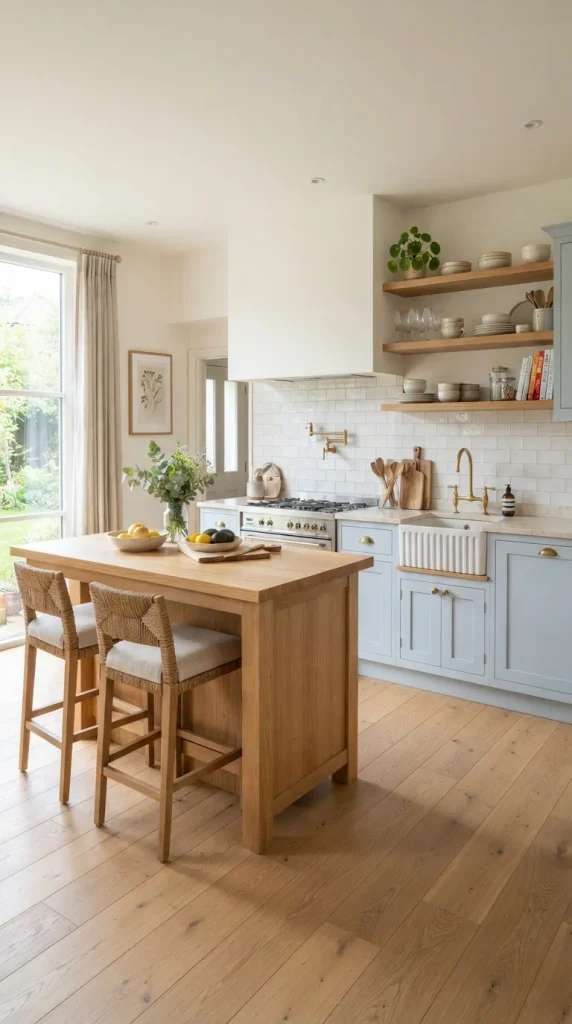
Soft blue cabinetry paired with natural oak creates a relaxed kitchen that feels fresh without becoming overly coastal. Pale blue works especially well on shaker cabinets because the color highlights the traditional detailing while maintaining a contemporary mood. Warm oak flooring, shelves, or an island countertop can balance the cool undertones of blue. White or ivory walls provide a clean background, while brushed brass or polished nickel hardware adds subtle sophistication. For the backsplash, consider simple white ceramic tile rather than introducing another strong color. This palette is a strong choice for family kitchens because it feels cheerful and approachable while remaining sophisticated enough for a carefully designed interior.
8. Charcoal Gray and Warm White Kitchen Color Scheme

Charcoal gray can create a sophisticated kitchen without the visual intensity of true black. Use charcoal on base cabinets or a kitchen island and balance it with warm white walls and upper cabinetry. The slightly creamy white prevents the contrast from becoming too severe and works beautifully with natural stone surfaces. Light oak accessories can introduce warmth, while black or brushed metal fixtures reinforce the contemporary character. This color scheme is particularly effective in kitchens with generous natural light, where dark cabinetry can create depth without making the space feel enclosed. For a cohesive finish, repeat charcoal in small details such as pendant shades, stools, or framed artwork.
Also Read: 22 Modern Outdoor Kitchen Ideas for Stylish Backyards
9. Olive Green and Natural Stone Kitchen Scheme

Olive green offers a deeper, earthier alternative to popular sage tones. It pairs naturally with limestone, travertine, marble, and other stone-inspired surfaces, creating a kitchen that feels connected to nature. Olive cabinets can be complemented by warm white walls and a softly textured backsplash in cream or beige. Choose natural wood shelving or stools to add another organic element without introducing competing colors. Aged brass hardware enhances the richness of olive green, while dark bronze gives the room a more rustic personality. This palette works beautifully in both traditional and modern kitchens because the muted green feels colorful while maintaining the grounded quality associated with sophisticated neutral interiors.
10. Warm White and Brass Kitchen Color Scheme

A warm white kitchen becomes considerably more interesting when paired with carefully selected brass accents. Rather than using a stark white, choose an ivory or creamy shade with warm undertones for the cabinets and walls. Brass can then appear through cabinet handles, faucets, pendant lights, and decorative details. To add depth, incorporate pale natural wood and a backsplash featuring subtle handmade texture. Marble or quartz countertops with soft beige veining can complete the palette. The most successful versions avoid excessive shine by mixing polished and aged finishes thoughtfully. This color combination is especially suitable for classic, transitional, and Parisian-inspired kitchens where understated elegance is more important than bold contrast.
11. Forest Green and White Kitchen Color Scheme
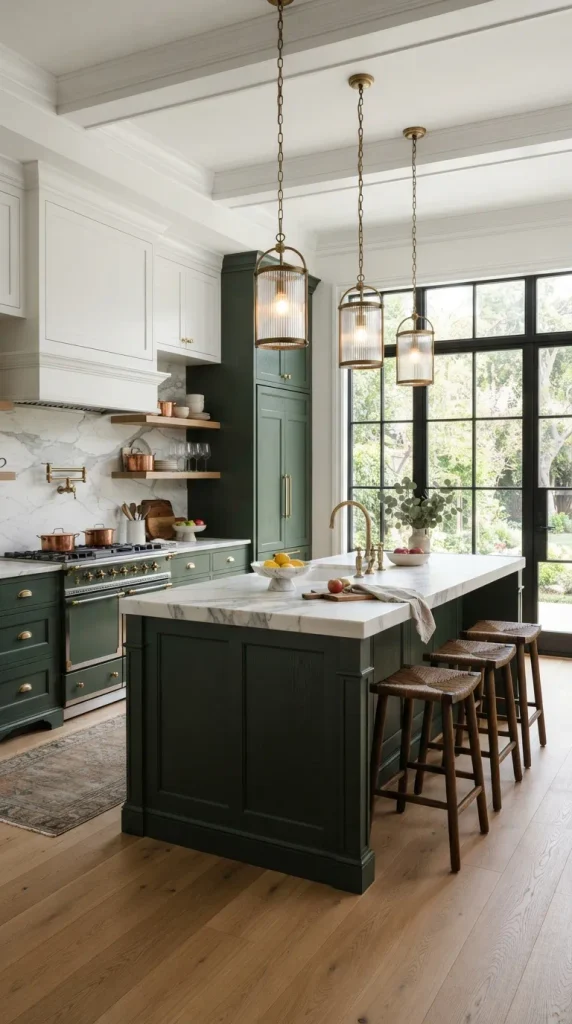
Forest green creates a rich and sophisticated kitchen when balanced with plenty of white. Deep green cabinetry can serve as the room’s primary color, while white walls, countertops, and backsplash surfaces prevent the palette from becoming too dark. Natural wood stools or shelves can add warmth, and unlacquered brass hardware provides a beautiful contrast against the saturated green. If the kitchen receives strong daylight, this scheme can feel dramatic and luxurious; in darker rooms, use generous layered lighting to maintain visual clarity. Forest green is particularly effective on a kitchen island, where it creates a statement focal point without requiring every cabinet to be painted a bold shade.
12. Dusty Pink and Warm Neutral Kitchen Palette

Dusty pink can bring unexpected softness to a kitchen when combined with warm neutrals rather than bright white. Muted blush cabinetry works particularly well with beige walls, creamy countertops, and natural oak details. The result feels sophisticated rather than overly feminine because the surrounding materials provide visual balance. Brushed brass or antique bronze hardware can enhance the warm undertones, while simple ceramic backsplash tiles keep the palette grounded. This color combination suits cottage, vintage-inspired, and contemporary kitchens alike. If painting an entire cabinet run feels too adventurous, use dusty pink on a central island or pantry cabinetry as a controlled accent while keeping the remaining surfaces neutral.
13. Teal and Light Gray Kitchen Color Scheme
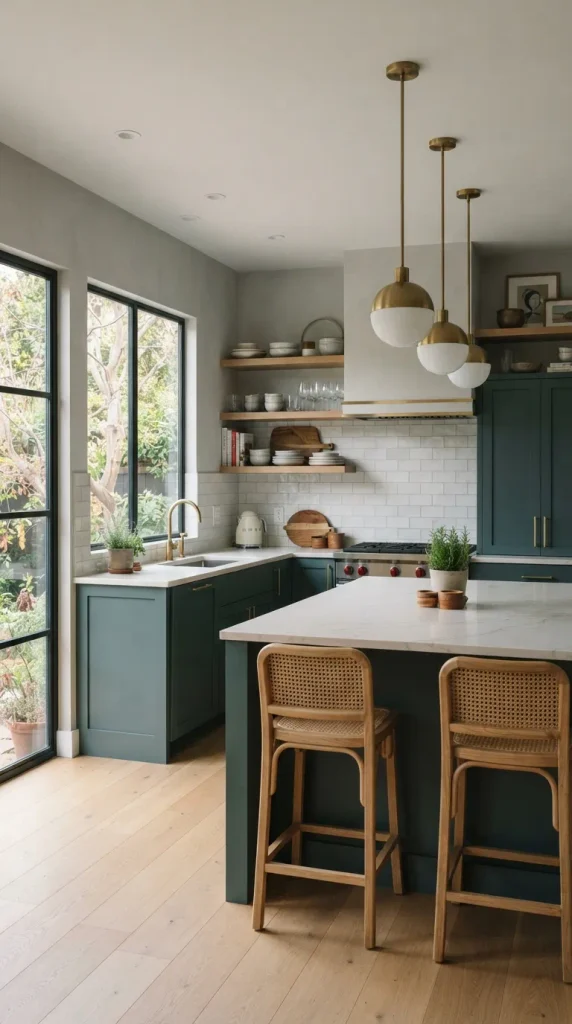
Teal introduces more personality than traditional blue while remaining surprisingly versatile when paired with a soft gray. Deep or muted teal cabinetry can anchor the kitchen, while light gray walls and countertops create a quieter supporting background. White tile can brighten the backsplash, and natural wood can soften the cooler colors. For hardware, choose brushed brass for warmth or matte black for a stronger contemporary effect. Because teal can vary dramatically depending on lighting, test paint samples at different times of day before committing. This palette is ideal for homeowners who want colorful kitchen cabinets that feel intentional and sophisticated rather than overly bright or trend-driven.
Also Read: 25 Boho Kitchen Ideas for a Warm, Cozy Home
14. Cream, Taupe, and Dark Wood Kitchen Scheme
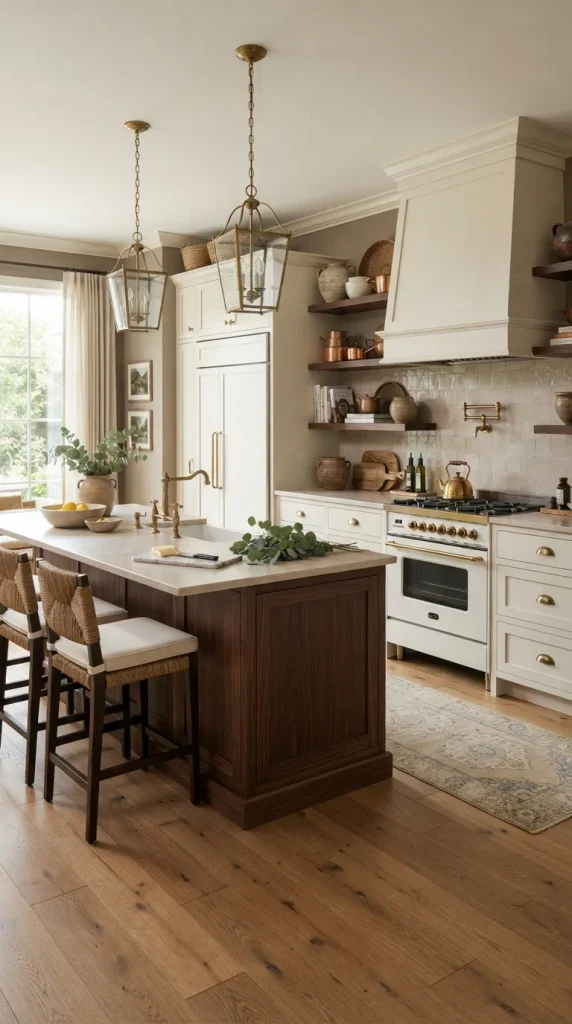
A combination of cream, taupe, and dark wood creates a warm, layered kitchen with a timeless quality. Cream cabinetry keeps the space bright, while taupe walls or backsplash tiles add subtle tonal variation. Dark walnut or espresso wood can then provide contrast through an island, flooring, shelving, or dining furniture. The palette benefits from tactile materials such as honed stone, textured ceramics, and woven seating because the colors themselves are intentionally restrained. Brass or bronze hardware can add a decorative finishing layer. This scheme is especially effective in large kitchens where multiple warm neutrals can create depth and prevent the room from feeling excessively open or visually empty.
15. Light Gray and White Scandinavian Kitchen Scheme

For a Scandinavian-inspired kitchen, combine pale gray cabinetry with clean white walls and natural wood accents. The restrained palette emphasizes simplicity, daylight, and functional design rather than elaborate decoration. Light gray cabinets provide enough contrast to define the kitchen while keeping the room visually calm. White quartz countertops and simple ceramic backsplash tiles reinforce the clean aesthetic, while pale oak stools and shelving introduce warmth. Keep hardware minimal and choose simple pendant lighting with an understated silhouette. A few green plants can add natural color without disrupting the palette. This combination is particularly useful in smaller kitchens because its light tonal range helps maximize the feeling of openness.
16. Deep Blue and Warm Wood Kitchen Palette

Deep blue cabinetry paired with warm wood creates a rich yet comfortable kitchen color scheme. Rather than using blue throughout the entire room, consider concentrating the darker shade on base cabinets or a large island and using warm white on surrounding walls. Walnut shelves, oak stools, or a wood range hood can introduce organic warmth and soften the saturated blue. A light stone countertop provides a visual break between the materials. Brass hardware can make the palette feel elegant, while black fixtures create a more modern direction. This approach works especially well in kitchens that need a strong focal point but still require enough warm and light elements to feel welcoming.
17. Earthy Brown and Cream Kitchen Color Scheme
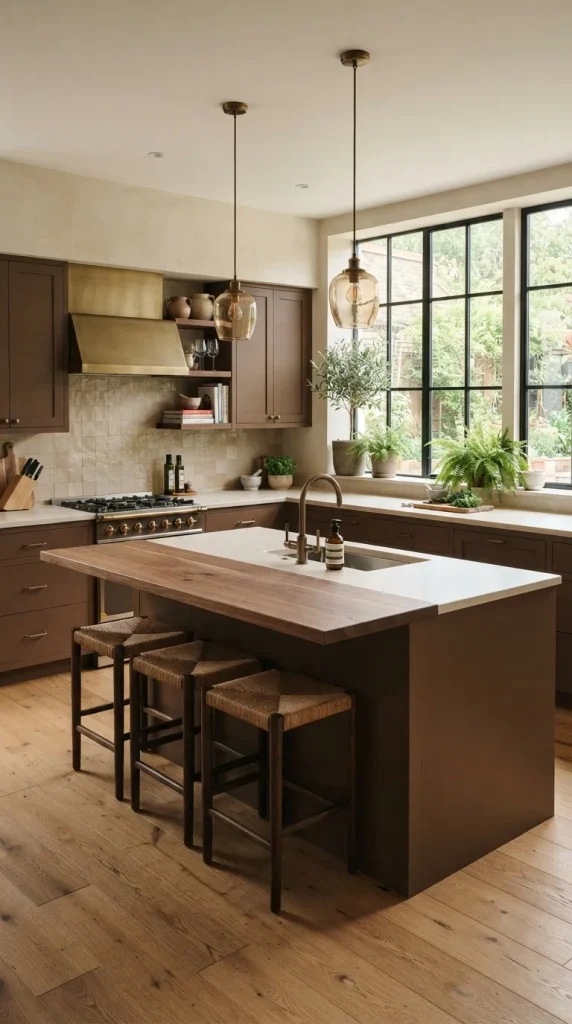
Brown is returning to contemporary interiors as homeowners seek warmer alternatives to cool gray. In a kitchen, earthy brown cabinetry can be paired with cream walls and light stone countertops to create an inviting, grounded atmosphere. Choose a chocolate, mushroom, clay, or medium walnut-inspired tone depending on how dramatic you want the room to feel. Natural wood flooring can reinforce the palette, while ceramic accessories in beige and off-white add texture without introducing competing colors. Aged bronze or brass hardware works naturally with brown finishes. This color combination is particularly attractive for kitchens designed around natural materials because every component contributes to a warm, cohesive visual story.
Also Read: 23 Kitchen Counter Organization Ideas for a Clutter-Free Space
18. Pale Green and White Cottage Kitchen Scheme

Pale green is an excellent choice for creating a charming cottage kitchen with a fresh, timeless character. Soft green cabinets can be combined with white walls, cream countertops, and traditional backsplash tile for an easygoing look. Open shelving in natural wood can display everyday ceramics while adding warmth to the cool green undertones. Small accents such as botanical artwork, linen textiles, and aged metal hardware can reinforce the cottage aesthetic without turning the room into a themed space. The beauty of this palette lies in its flexibility: it can feel traditional with shaker cabinetry and vintage lighting or more contemporary when paired with streamlined hardware and modern stone surfaces.
19. Moody Black, Green, and Brass Kitchen Scheme

For a dramatic kitchen with an intimate atmosphere, combine near-black surfaces with deep green cabinetry and warm brass accents. Instead of making every cabinet black, use black on an island, pantry wall, or architectural feature and let deep green provide the primary color. Brass hardware and lighting introduce warmth that keeps the darker palette from appearing flat. A pale stone countertop can provide necessary visual relief, while natural wood accessories prevent the room from feeling overly formal. This approach is particularly effective in evening-oriented kitchens, dining spaces, or rooms with strong architectural details. Careful lighting is essential, so combine ceiling fixtures, under-cabinet lighting, and decorative pendants.
20. Coastal Blue, White, and Sand Kitchen Palette

A coastal-inspired kitchen does not need obvious nautical decorations. Instead, capture the relaxed feeling of the coast through a restrained palette of soft blue, white, and sandy beige. Blue cabinets can be paired with warm white walls and countertops that resemble pale natural stone. Sand-colored stools, woven pendants, and light oak accents introduce texture while maintaining the beach-inspired character. Avoid excessive bright turquoise or themed accessories if you want an elegant result. This combination works especially well in kitchens with abundant sunlight because natural illumination enhances the airy colors. It is suitable for both seaside homes and inland kitchens where homeowners want a relaxed, vacation-like atmosphere.
21. Muted Yellow and White Kitchen Color Scheme

Muted yellow can make a kitchen feel cheerful without the intensity associated with bright primary yellow. Look for buttery, ochre-softened, or creamy yellow tones and pair them with white cabinetry or walls. Natural wood is an excellent supporting material because its warm undertones blend naturally with yellow. A simple white backsplash keeps the palette fresh, while black or aged brass hardware adds definition. This color scheme works particularly well in farmhouse, vintage, and eclectic interiors where personality is encouraged. If full yellow cabinetry feels too bold, introduce the shade through an island, breakfast nook, painted door, or carefully selected kitchen accessories for a smaller but still noticeable impact.
22. Greige and Natural Stone Kitchen Scheme

Greige paired with natural stone creates a refined palette that feels modern while retaining warmth. Choose medium greige cabinetry and combine it with limestone-look flooring, marble-inspired countertops, or a travertine backsplash. Because the colors are relatively subtle, material variation becomes an important design tool. Look for veining, rough edges, honed surfaces, and natural grain to create visual interest. Warm wood shelving can provide contrast, while aged brass or bronze hardware adds character. This kitchen color scheme is especially useful for homeowners seeking an upscale appearance that will not quickly feel dated. Its neutral foundation also makes seasonal decorating and future accessory changes remarkably easy.
23. Burgundy and Cream Statement Kitchen Scheme

Burgundy can create a sophisticated statement kitchen when used as a controlled accent rather than covering every surface. Deep burgundy cabinetry works beautifully with creamy walls, warm white countertops, and natural wood. Because the color has strong red undertones, avoid pairing it with overly cool gray unless a deliberately contemporary contrast is desired. Aged brass hardware enhances its traditional character, while black fixtures create a more dramatic modern look. Burgundy is particularly effective on a kitchen island, lower cabinets, or a built-in hutch. When balanced with enough light surfaces, the rich color adds personality and depth while retaining a polished, livable appearance.
24. Two-Tone Blue and Natural Wood Kitchen Color Scheme
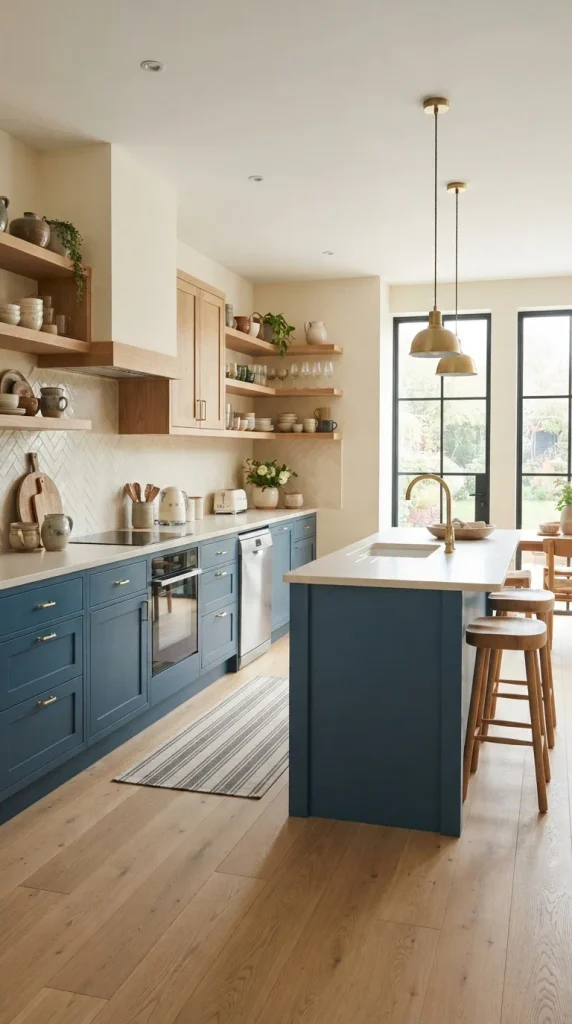
Two-tone kitchens allow homeowners to combine color with natural material while giving the cabinetry greater architectural definition. A medium or deep blue can be used on the lower cabinets and island, while natural wood appears on upper cabinetry, open shelves, or a range hood. White or warm cream walls provide a neutral backdrop so the two primary materials remain the focus. Keep countertops relatively quiet, using pale quartz or stone with subtle movement rather than an overly dramatic pattern. This palette suits contemporary, transitional, and modern farmhouse kitchens because the blue supplies personality while the wood prevents the room from feeling overly manufactured or monochromatic.
Conclusion
The most successful kitchen color schemes are not necessarily the boldest or most expensive. They work because the colors, materials, lighting, and architectural features have been considered together. A palette of white and wood can create timeless warmth, while sage green, navy, olive, or forest green can bring personality and depth. Warmer combinations such as beige, cream, terracotta, brown, and taupe are especially useful for creating inviting interiors, while black, charcoal, and deep blue can give contemporary kitchens a dramatic edge.
When selecting colors for your own kitchen, consider how much natural light the room receives, the existing countertop and flooring colors, the size of the space, and how permanent each finish will be. Cabinet colors tend to dominate visually, so test samples before committing and observe them in both daylight and evening lighting. The goal is not simply to choose attractive colors individually but to create a palette that feels balanced throughout the entire room.


